







Question: The elements in a firm's capital structure. A table or graph of a firm's potential investments listed in decreasing order of their internal rates of
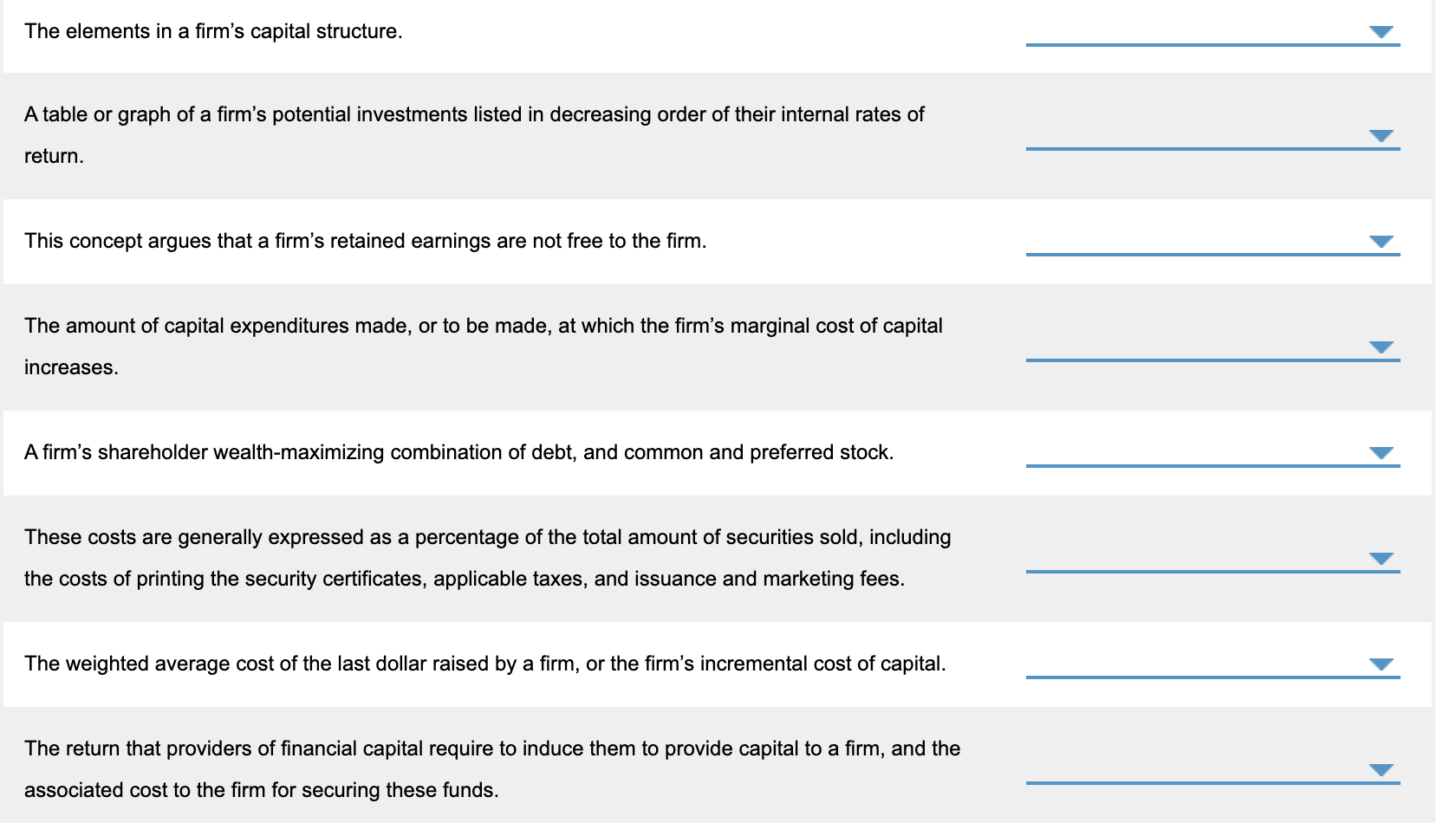

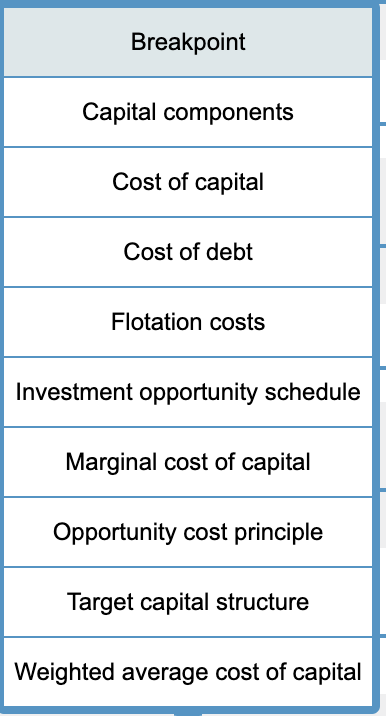
The elements in a firm's capital structure. A table or graph of a firm's potential investments listed in decreasing order of their internal rates of return. This concept argues that a firm's retained earnings are not free to the firm. The amount of capital expenditures made, or to be made, at which the firm's marginal cost of capital increases. A firm's shareholder wealth-maximizing combination of debt, and common and preferred stock. These costs are generally expressed as a percentage of the total amount of securities sold, including the costs of printing the security certificates, applicable taxes, and issuance and marketing fees. The weighted average cost of the last dollar raised by a firm, or the firm's incremental cost of capital. The return that providers of financial capital require to induce them to provide capital to a firm, and the associated cost to the firm for securing these funds. The average cost of a firm's financial capital when averaged across all of its outstanding debt and equity capital. The cost associated with a firm's borrowed financial capital. Breakpoint Capital components Cost of capital Cost of debt Flotation costs Investment opportunity schedule Marginal cost of capital Opportunity cost principle Target capital structure Weighted average cost of capital The elements in a firm's capital structure. A table or graph of a firm's potential investments listed in decreasing order of their internal rates of return. This concept argues that a firm's retained earnings are not free to the firm. The amount of capital expenditures made, or to be made, at which the firm's marginal cost of capital increases. A firm's shareholder wealth-maximizing combination of debt, and common and preferred stock. These costs are generally expressed as a percentage of the total amount of securities sold, including the costs of printing the security certificates, applicable taxes, and issuance and marketing fees. The weighted average cost of the last dollar raised by a firm, or the firm's incremental cost of capital. The return that providers of financial capital require to induce them to provide capital to a firm, and the associated cost to the firm for securing these funds. The average cost of a firm's financial capital when averaged across all of its outstanding debt and equity capital. The cost associated with a firm's borrowed financial capital. Breakpoint Capital components Cost of capital Cost of debt Flotation costs Investment opportunity schedule Marginal cost of capital Opportunity cost principle Target capital structure Weighted average cost of capital
Step by Step Solution
There are 3 Steps involved in it

Get step-by-step solutions from verified subject matter experts
 Study Help