







Question: The first four do not need answered. I only need answers for debt to assets, receivables turnover, avg. collection period, inventory turnover, return on equity
The first four do not need answered. I only need answers for debt to assets, receivables turnover, avg. collection period, inventory turnover, return on equity and times interest earned. Thanks!
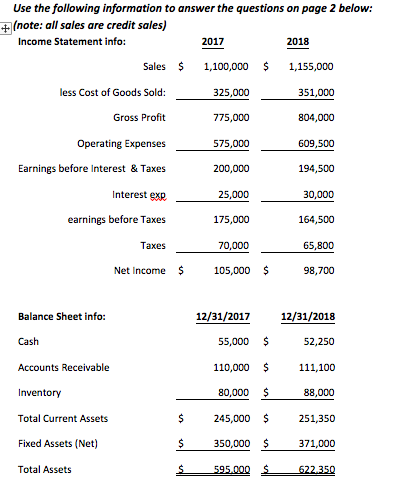
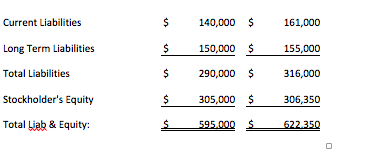
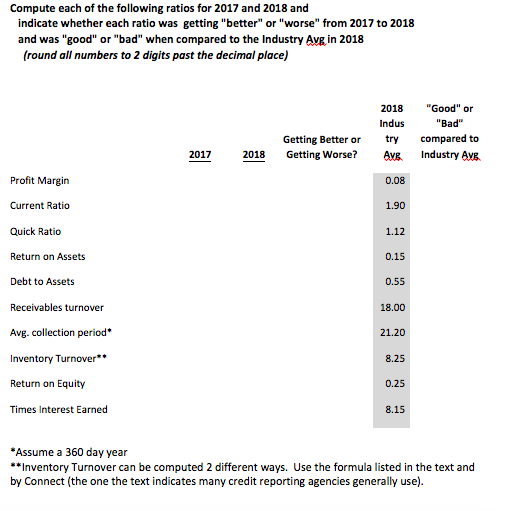
Use the following information to answer the questions on page 2 below: +(note: all sales are credit sales) Income Statement info: 2017 2018 Sales 1,100,000 1,155,000 less Cost of Goods Sold: 325,000 351,000 Gross Profit 775,000 804,000 Operating Expenses 575,000 609,500 Earnings before Interest & Taxes 200,000 194,500 Interest exp 25,000 30,000 earnings before Taxes 175,000 164,500 Taxes 70,000 65,800 $ $ Net Income 105,000 98,700 Balance Sheet info: 12/31/2017 12/31/2018 Cash 55,000 52,250 Accounts Receivable 110,000 111,100 Inventory 80,000 88,000 Total Current Assets 245,000 251,350 Fixed Assets (Net) 350,000 371,000 Total Assets 595.000 $ 622.350 Current Liabilities $ 140,000 161,000 Long Term Liabilities $ 150,000 155,000 Total Liabilities $ 290,000 316,000 Stockholder's Equity 306,350 305,000 Total Liab & Equity 595.000 622.350 Compute each of the following ratios for 2017 and 2018 and indicate whether each ratio was getting "better" or "worse" from 2017 to 2018 and was "good" or "bad" when compared to the Industry AVg in 2018 (round all numbers to 2 digits past the decimal place) "Good" or 2018 "Bad" Indus compared to Industry Avg Getting Better or try Getting Worse? 2017 2018 Avg Profit Margin 0.08 Current Ratio 1.90 Quick R 1.12 Return on Assets 0.15 Debt to Assets 0.55 Receivables turnover 18.00 Avg. collection period* 21.20 Inventory Turnover 8.25 Return on Equity 0.25 Times Interest Earned 8.15 Assume a 360 day year **Inventory Turnover can be computed 2 different ways. Use the formula listed in the text and by Connect (the one the text indicates many credit reporting agencies generally use)
Step by Step Solution
There are 3 Steps involved in it

Get step-by-step solutions from verified subject matter experts
 Study Help