







Question: The following, for example, are different: First form if (a > b) { if (c > d) (1) e = f; } else =
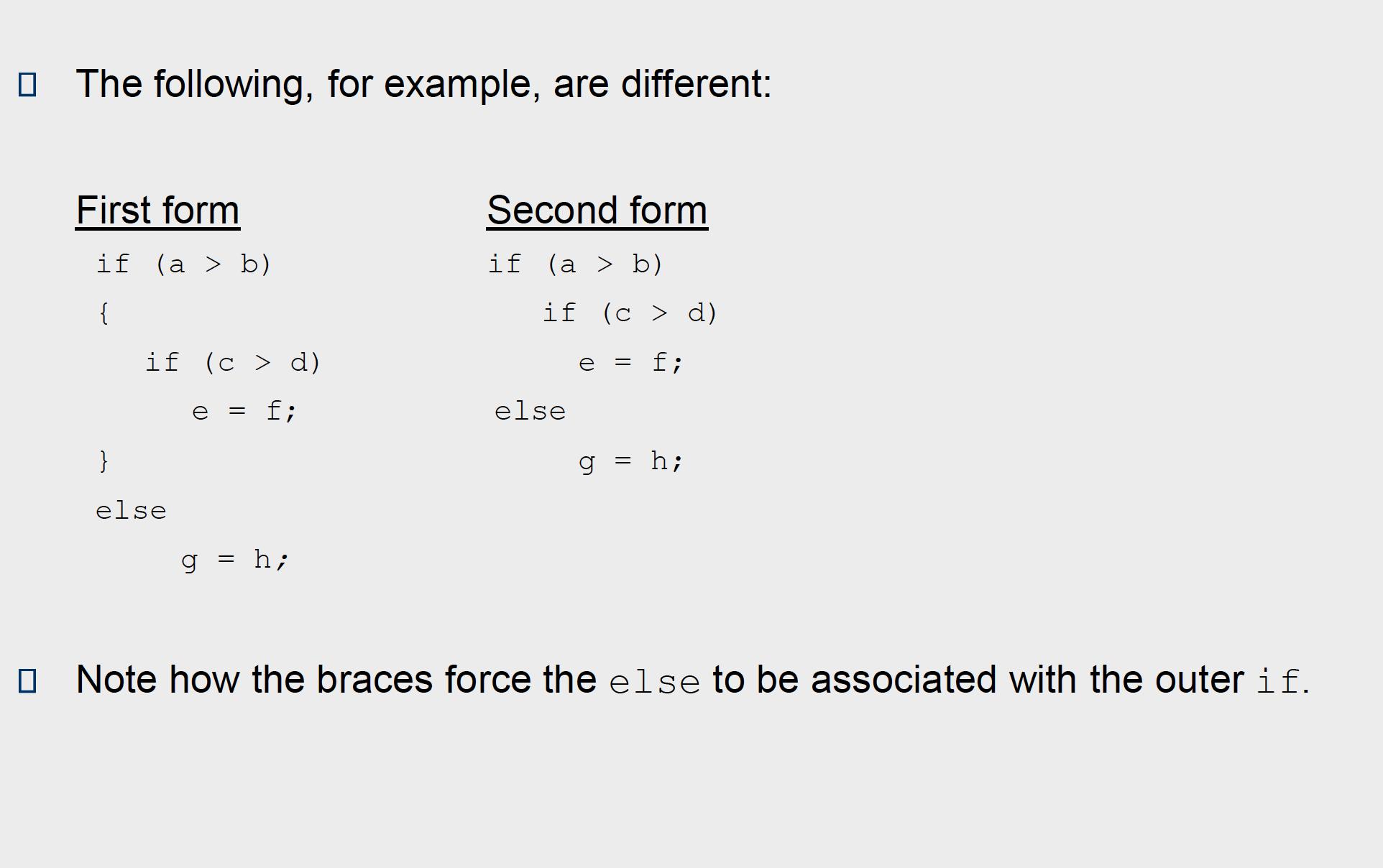
The following, for example, are different: First form if (a > b) { if (c > d) (1) e = f; } else = g h; Second form if (a > b) if (cd) f; e = else g = h; Note how the braces force the else to be associated with the outer if.
Step by Step Solution
★★★★★
3.45 Rating (152 Votes )
There are 3 Steps involved in it
1 Expert Approved Answer
Step: 1 Unlock

Yes you are correct In the first form if the condition a b is false the else statement will ... View full answer
Question Has Been Solved by an Expert!
Get step-by-step solutions from verified subject matter experts
Step: 2 Unlock
Step: 3 Unlock
 Study Help