







Question: The following processes are being scheduled using a preemptive, round robin schedulingalgorithm. Each process is assigned a numerical priority, with a higher number indicating a
The following processes are being scheduled using a preemptive,
round robin schedulingalgorithm. Each process is assigned a numerical priority, with a
higher number indicating a higherrelative priority. In addition to the processes listed below,
the system also has an idle task whichconsumes no CPU resources and is identified as Pidle
This task has priority and is scheduledwhenever the system has no other available processes to run. The
length of a time quantum is units. If a process is preempted by a higherpriority process,
the preempted process is placed atthe end of the queue.
Thread
Priority
Burst
Arrival
P
P
P
P
P
P
a Show the scheduling order of the processes using a Gantt
chart.b What is the turnaround time for each process?c What is the waiting time for each process?d What is the CPU utilization rate?
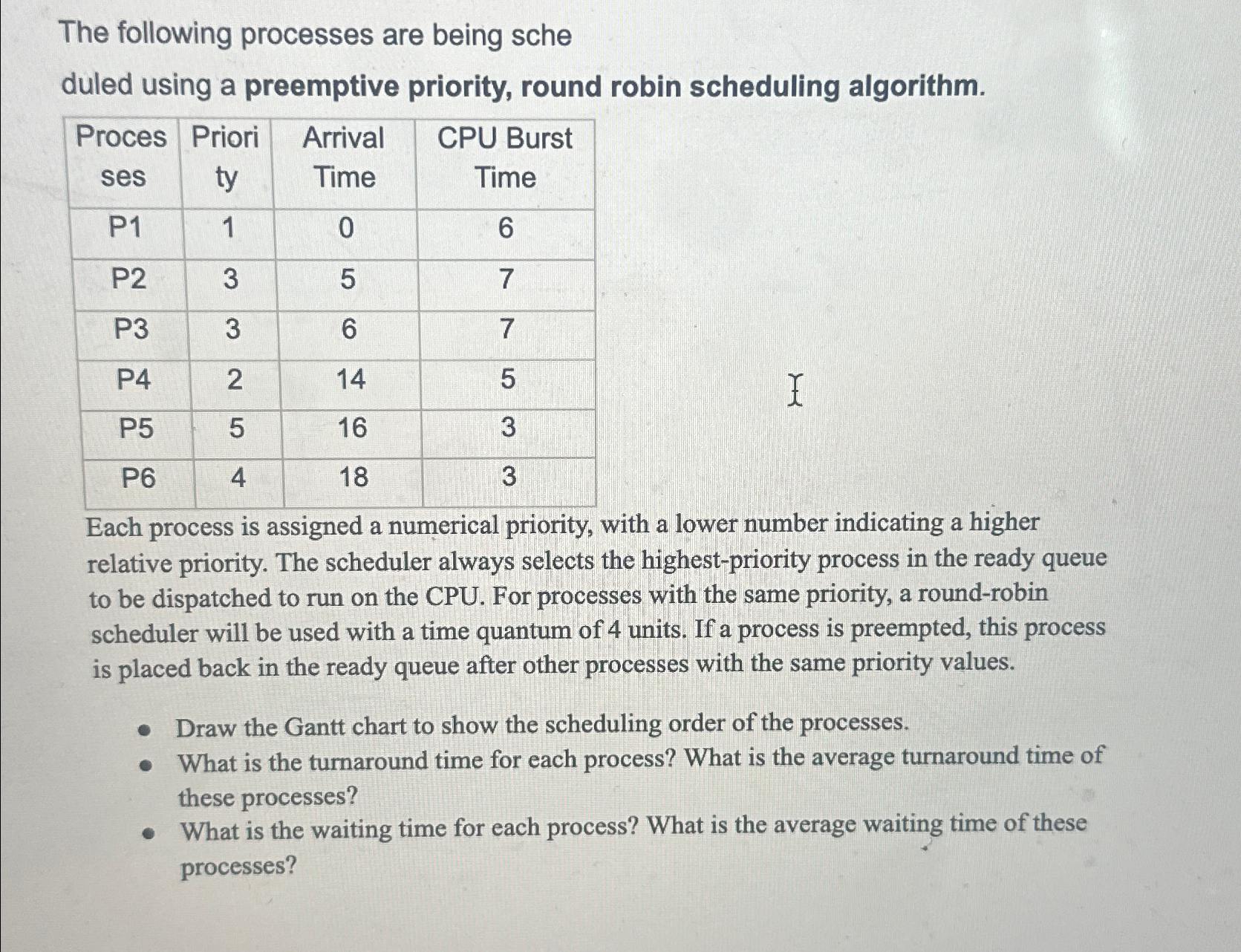
The following processes are being sche
duled using a preemptive priority, round robin scheduling algorithm.
tabletableProcessestablePrioritytableArrivalTimetableCPU BurstTimePPPPPP
Each process is assigned a numerical priority, with a lower number indicating a higher relative priority. The scheduler always selects the highestpriority process in the ready queue to be dispatched to run on the CPU. For processes with the same priority, a roundrobin scheduler will be used with a time quantum of units. If a process is preempted, this process is placed back in the ready queue after other processes with the same priority values.
Draw the Gantt chart to show the scheduling order of the processes.
What is the turnaround time for each process? What is the average turnaround time of these processes?
What is the waiting time for each process? What is the average waiting time of these processes?
Step by Step Solution
There are 3 Steps involved in it
1 Expert Approved Answer
Step: 1 Unlock

Question Has Been Solved by an Expert!
Get step-by-step solutions from verified subject matter experts
Step: 2 Unlock
Step: 3 Unlock
 Study Help