



Question: The following table provides a frequency distribution for the number of rooms in this country's a. Determine the number of outcomes (housing units) that constitute
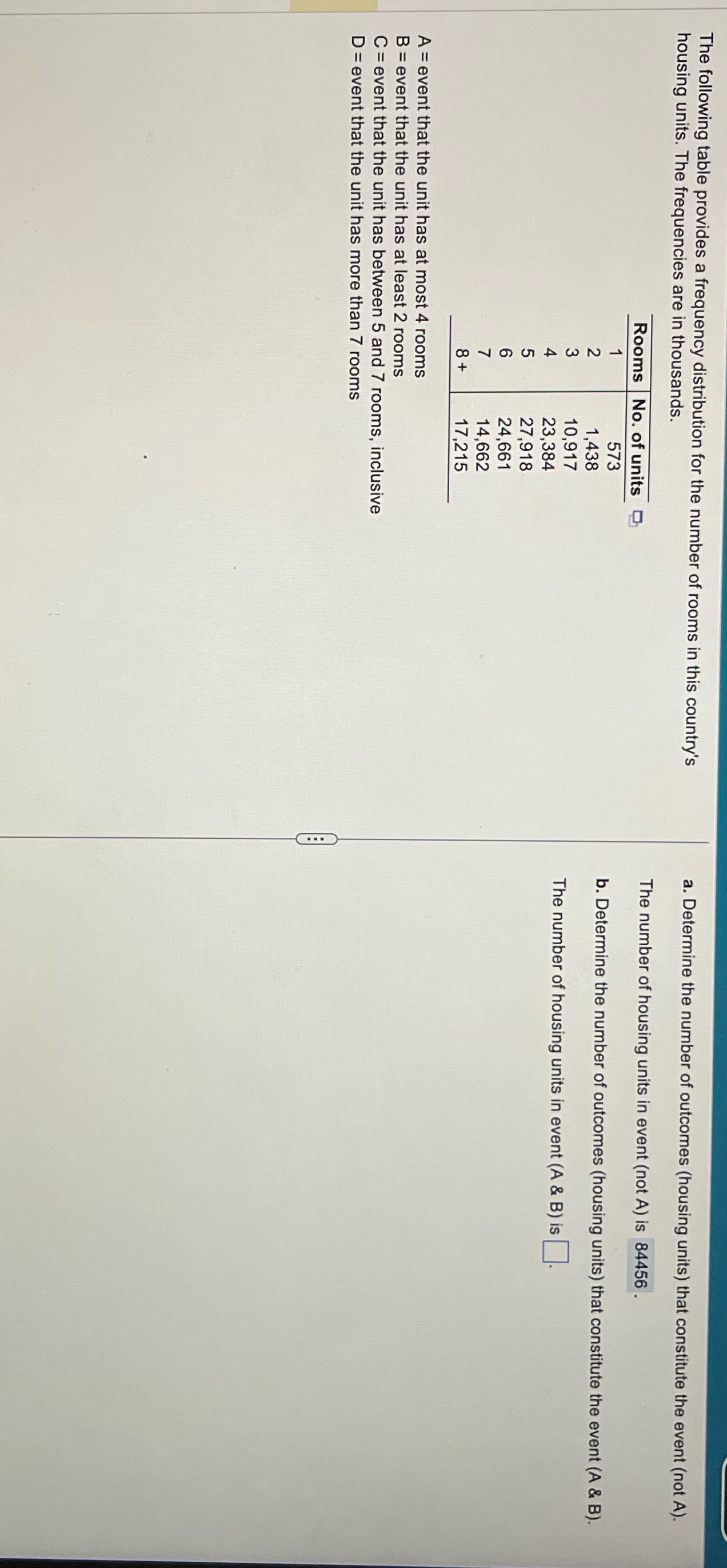
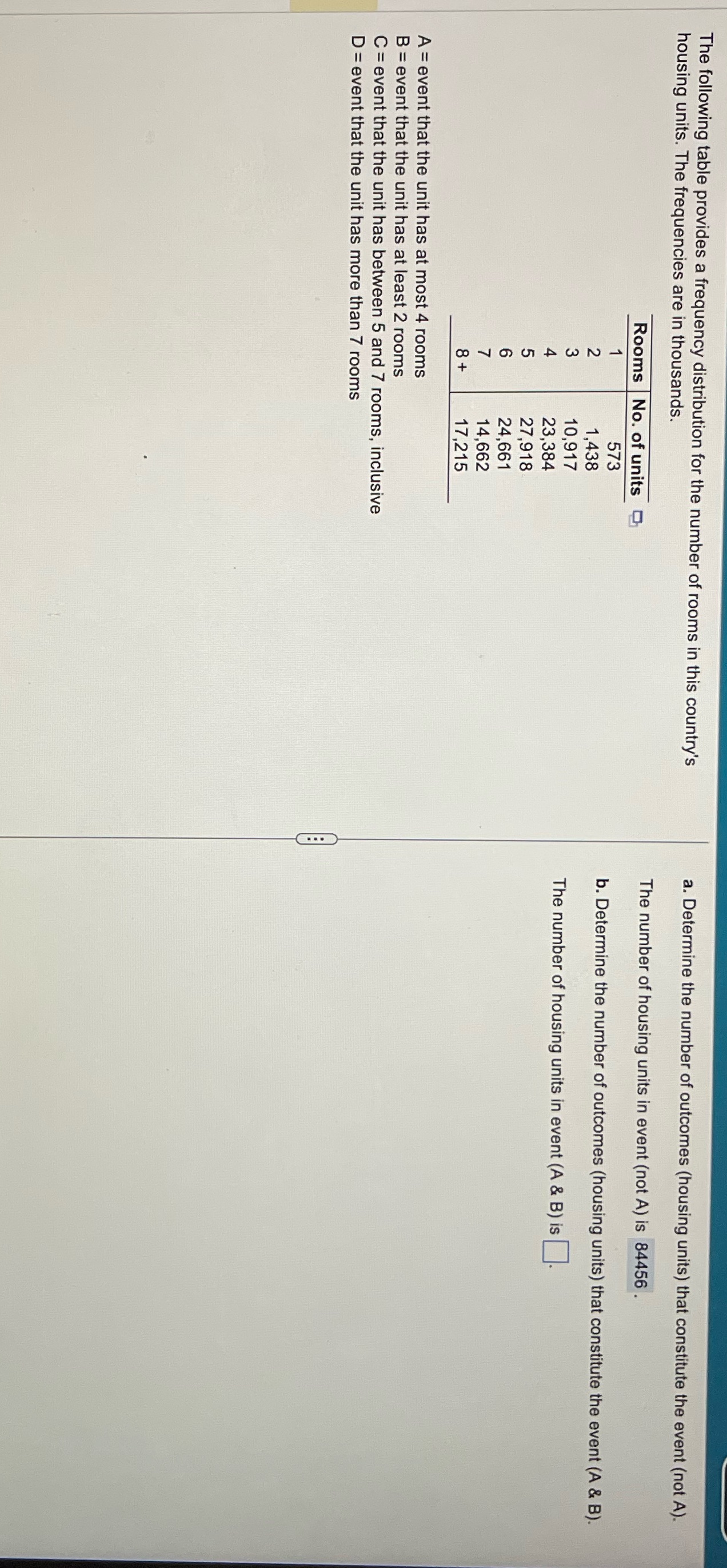
The following table provides a frequency distribution for the number of rooms in this country's a. Determine the number of outcomes (housing units) that constitute the event (not A). housing units. The frequencies are in thousands. Rooms No. of units The number of housing units in event (not A) is 84456 . 573 b. Determine the number of outcomes (housing units) that constitute the event (A & B). 1,438 10,917 The number of housing units in event (A & B) is 23,384 27,918 24,661 14,662 17,215 A = event that the unit has at most 4 rooms B = event that the unit has at least 2 rooms C = event that the unit has between 5 and 7 rooms, inclusive D = event that the unit has more than 7 rooms
Step by Step Solution
There are 3 Steps involved in it

Get step-by-step solutions from verified subject matter experts