







Question: The graph attached to this question has 7 consecutive intervals (AB, BC, CD, DE, EF, FG, and GH). a. During which interval(s) is the average
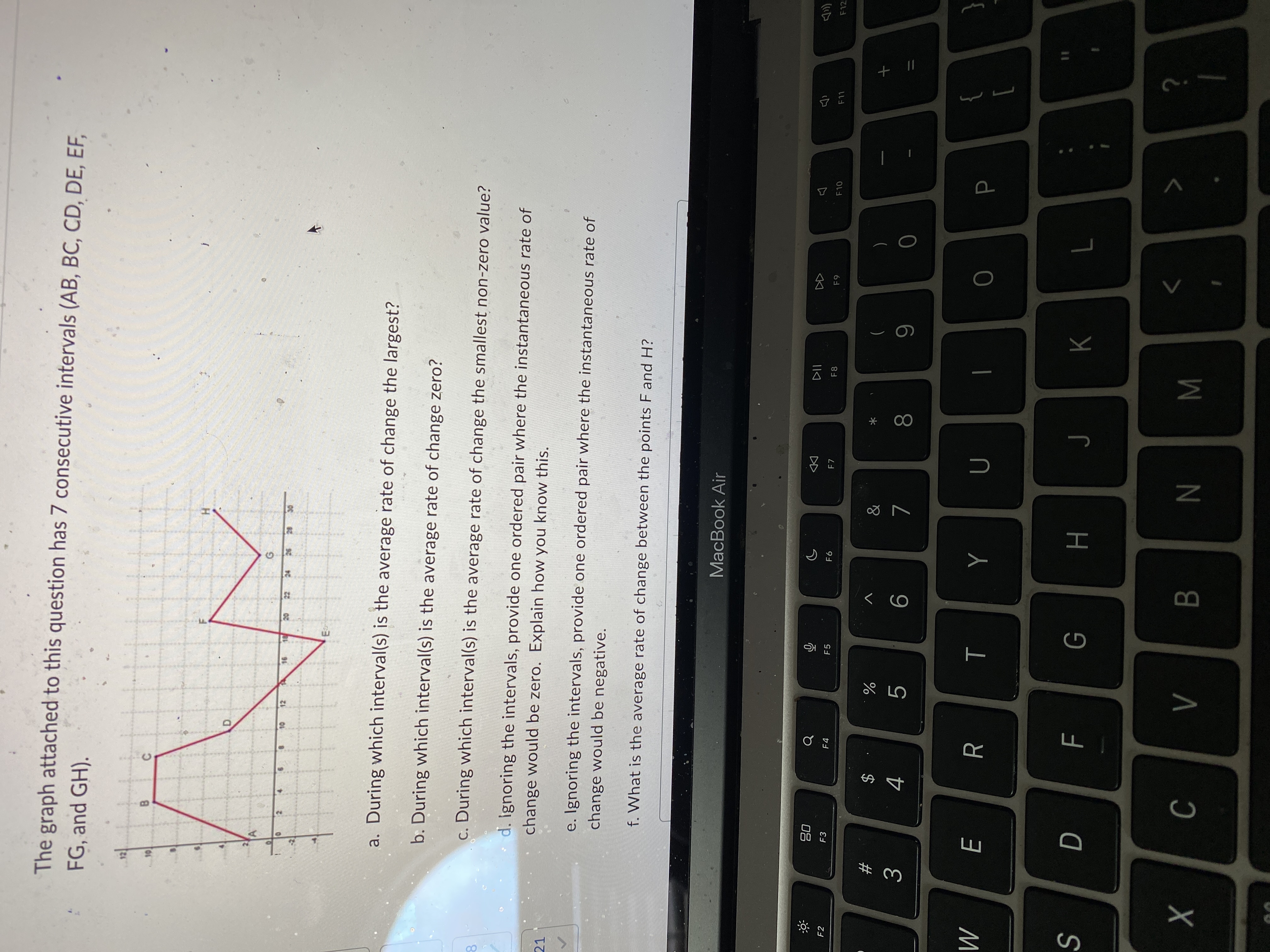
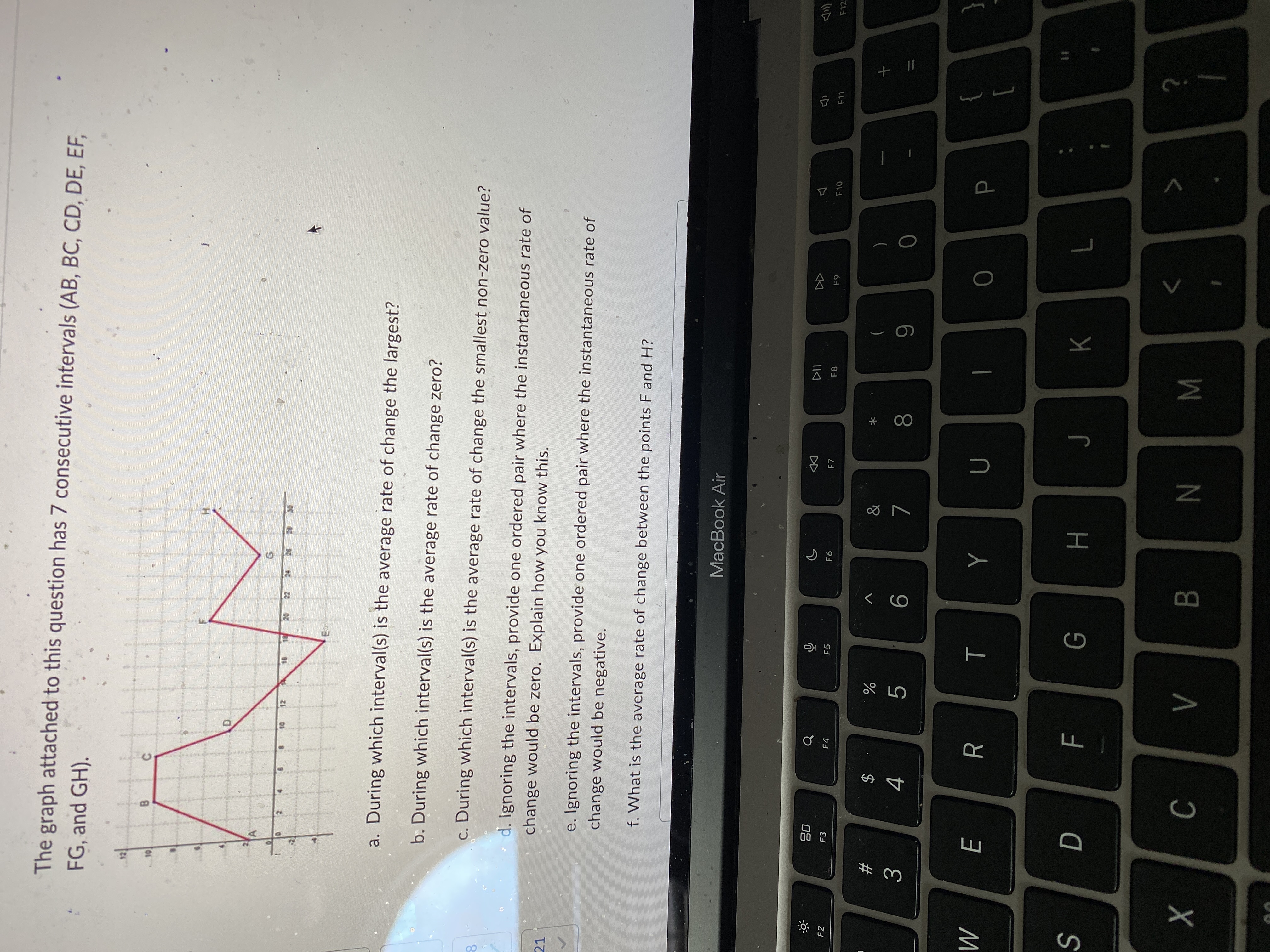
The graph attached to this question has 7 consecutive intervals (AB, BC, CD, DE, EF, FG, and GH). a. During which interval(s) is the average rate of change the largest? b. During which interval(s) is the average rate of change zero? c. During which interval(s) is the average rate of change the smallest non-zero value? d. ignoring the intervals, provide one ordered pair where the instantaneous rate of change would be zero. Explain how you know this. e. Ignoring the intervals, provide one ordered pair where the instantaneous rate of change would be negative. f. What is the average rate of change between the points F and H? MacBook Air 30 DD F2 6 F7 F9 F10 F11 % A & 6 8 9 O = 3 W E R T Y U O P S D F G H K X C V B N M
Step by Step Solution
There are 3 Steps involved in it

Get step-by-step solutions from verified subject matter experts
 Study Help