







Question: The Hazard and Operability (HAZOPS) Analysis technique is primarily used to identify hazards that are likely to interrupt or result in deviations from the normal
The Hazard and Operability (HAZOPS) Analysis technique is primarily used to identify hazards that are likely to interrupt or result in deviations from the normal operations of a system. With the use of guidewords and operational processes, hazards provide guidance to management on prioritizing the use of resources to mitigate risks. This technique also allows us to examine potential deviations at different points in the systems lifecycle and within different system levels to detect potential deviations in operations.
You are to complete the HAZOP Analysis below for the gasoline supply for a late-model internal combustion vehicle. You will need to identify the following:
- the level of the fuel supply system
- the purpose of the system
- at least three Processes Parameters along with applicable guide words and resulting deviations
After completing the HAZOPS worksheet, provide corrective actions that would likely reduce the risk of the deviations noted on the worksheet. Be sure to identify and briefly describe at least four other subsystems for the vehicle described above.
Use the Risk Matrix for the Risk part.
| HAZOP Analysis | ||||||||||
|
| ||||||||||
| No. | Item | Function/ Purpose | Parameter | Guide Word | Consequence | Cause | Hazard | Risk | Recommendation | Comments |
|
| ||||||||||
|
|
|
|
|
|
|
|
|
|
|
|
Risk Matrix
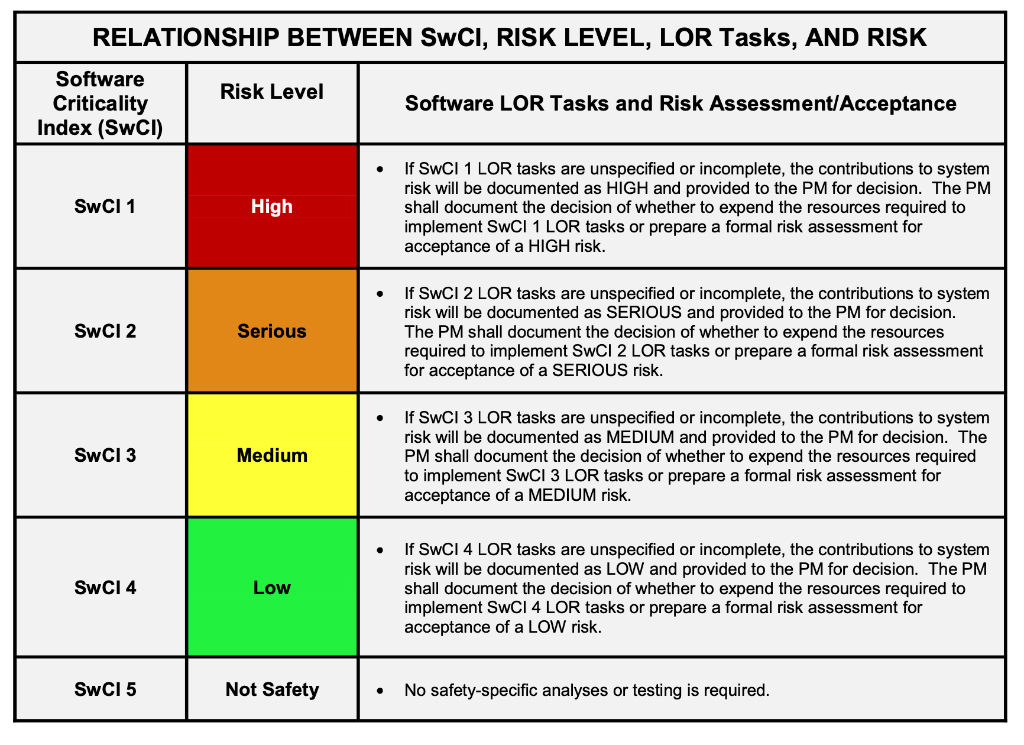
RELATIONSHIP BETWEEN SwCl, RISK LEVEL, LOR Tasks, AND RISK
Step by Step Solution
There are 3 Steps involved in it

Get step-by-step solutions from verified subject matter experts
 Study Help