







Question: The Iterator design pattern provides a way for the user to visit all of the items in a data structure, performing an operation on each
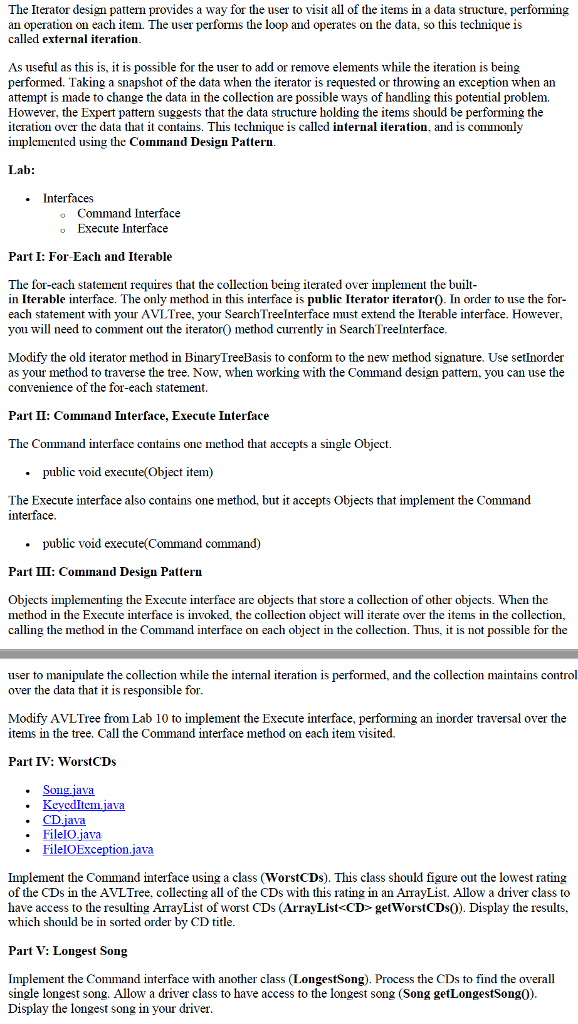
The Iterator design pattern provides a way for the user to visit all of the items in a data structure, performing an operation on each item The user performs the loop and operates on the data, so this technique is called external iteration As useful as this is, it is possible for the user to add or remove elements while the iteration is being performed. Taking a snapshot of the data when the iterator is requested or throwing an exception when an attempt is made to change the data in the collection are possible ways of handling this potential problem. However, the Expert pattern suggests that the data structure holding the items should be performing the iteration over the data that it contains. This technique is called internal iteration, and is cononly Iip lemented using the Command Design Pattern Lab Interfaces Command Interface Execute Interface o Part I: For-Each and Iterable The for-each statement requires that the collection being iterated over implement the built in Iterable interface. The only method in this interface is public Iterator iterator). In order to use the for- each statement with your AVLTree, your SearchTreelnterface must extend the Iterable interface. However you will need to comment out the iteratorO method currently in SearchTreeInterface Modify the old iterator method in BinaryTreeBasis to conform to the new method signature. Use setInorder as your method to traverse the tree. Now, when working with the Command design pattern, you can use the convenience of the for-each statement. Part II: Command Interface, Execute Interface The Command interface contains one mcthod that accepts a single Object. public void execute(Object item) . The Execute interface also contains one method, but it accepts Objects that implement the Command interface. public void execute(Command command) Part III: Command Design Pattern Objects implementing the Execute interface are objects that store a collection of other objects. When the method in the Execute interface is invoked, the collection object will iterate over the items in the collection, calling the method in the Command interface on each object in the collection. Thus, it is not possible for the user to manipulate the collection while the internal iteration is performed, and the collection maintains control over the data that it is responsible for Modify AVLTree from Lab 10 to implement the Execute interface, performing an inorder traversal over the items in the tree. Call the Command interface method on each item visited. Part IV: WorstCDs .Song ava dItcm.iava CD.java FilelO.java . FileIOException.java Implement the Command interface using a class (WorstCDs). This class should figure out the lowest rating of the CDs in the AVLTree, collecting all of the CDs with this rating in an ArrayList. Allow a driver class to have access to the resulting ArrayList of worst CDs (ArrayList
Step by Step Solution
There are 3 Steps involved in it

Get step-by-step solutions from verified subject matter experts
 Study Help