







Question: The key difference between job order costing and process costing systems relates to: Multiple Choice The types of raw materials used. The wage rates paid
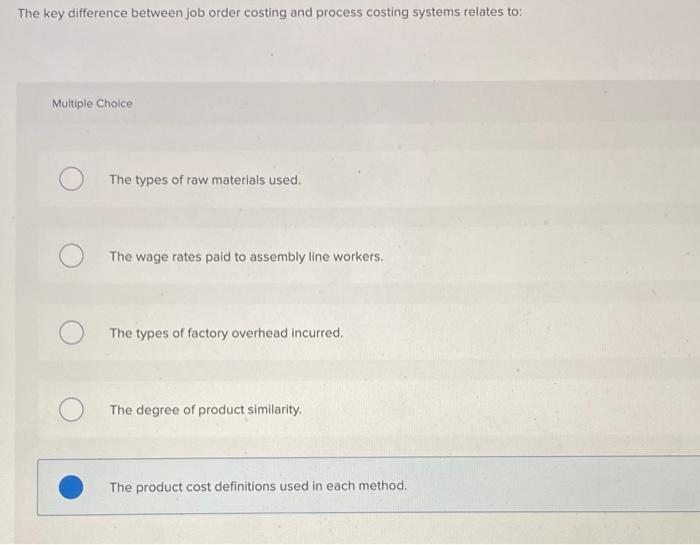
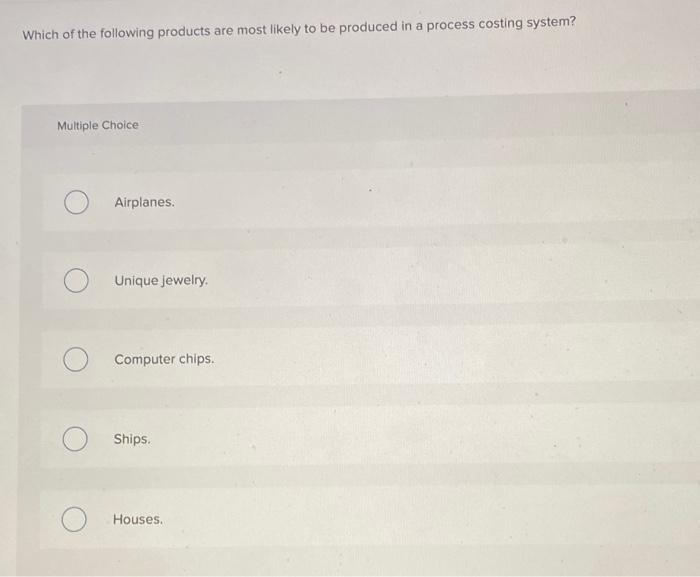
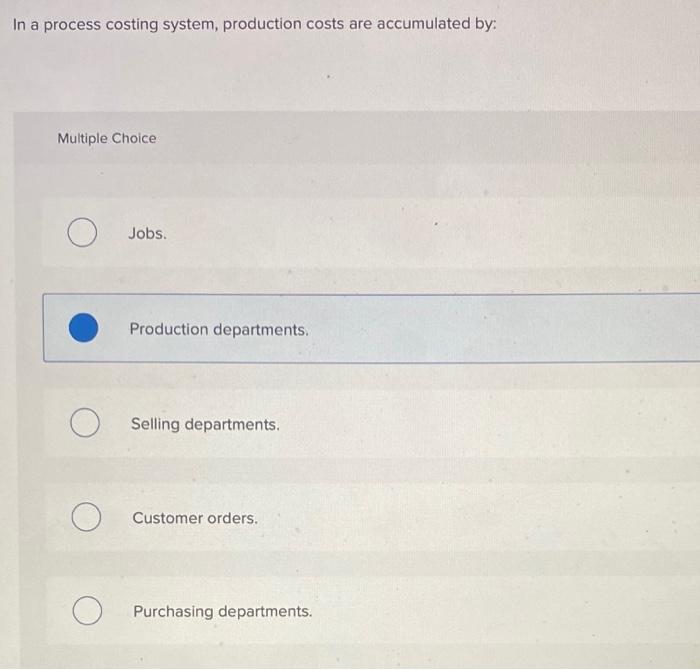
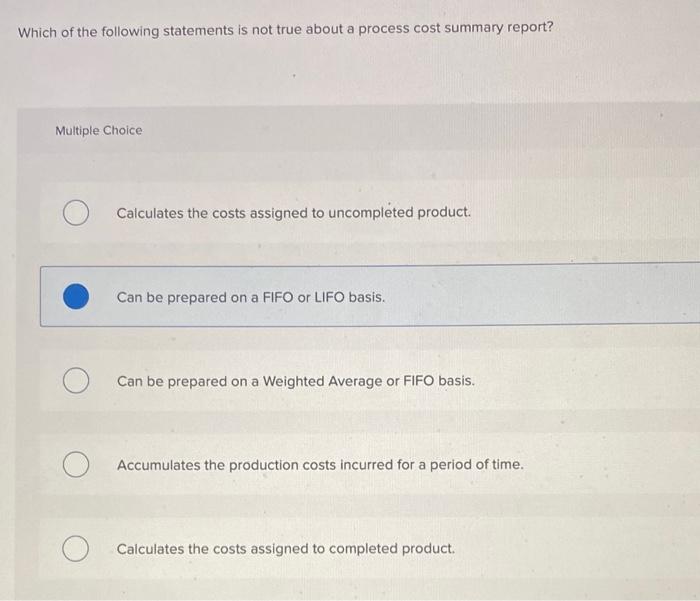
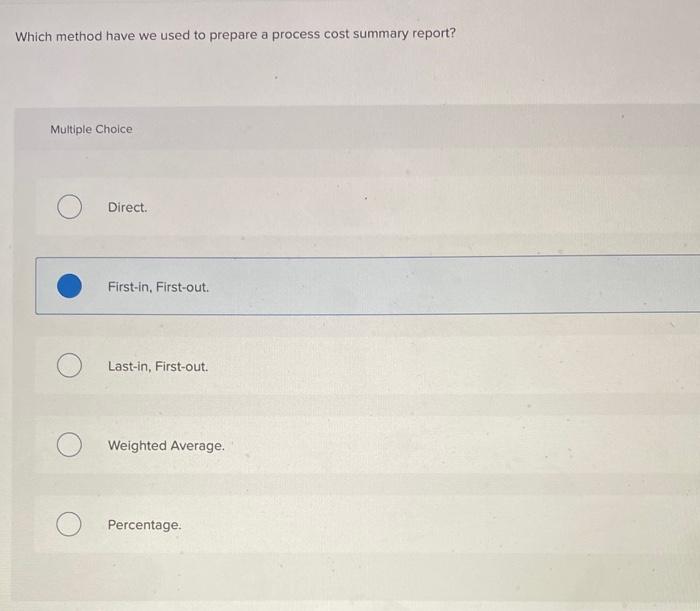
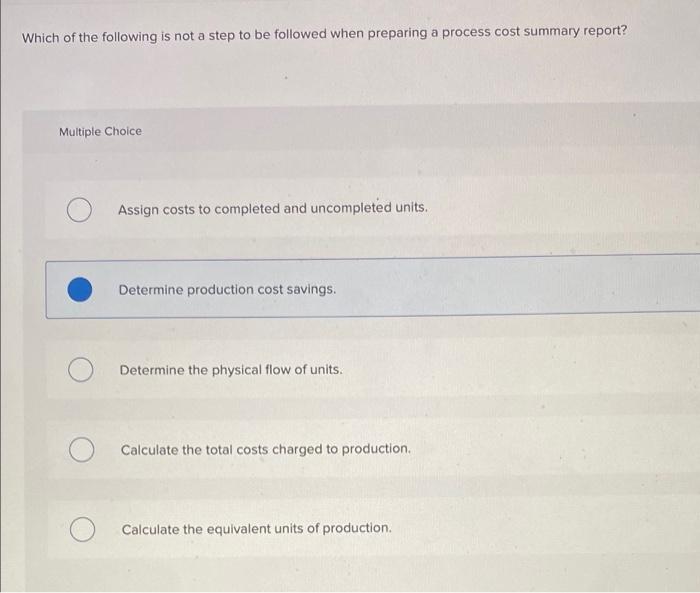
The key difference between job order costing and process costing systems relates to: Multiple Choice The types of raw materials used. The wage rates paid to assembly line workers. The types of factory overhead incurred. The degree of product similarity. The product cost definitions used in each method. Which of the following products are most likely to be produced in a process costing system? Multiple Choice Airplanes. Unique jewelry. Computer chips. Ships. Houses. In a process costing system, production costs are accumulated by: Multiple Choice Jobs. Production departments. Selling departments. Customer orders. Purchasing departments. Which of the following statements is not true about a process cost summary report? Multiple Choice Calculates the costs assigned to uncompleted product. Can be prepared on a FIFO or LIFO basis. Can be prepared on a Weighted Average or FIFO basis. Accumulates the production costs incurred for a period of time. Calculates the costs assigned to completed product. Which method have we used to prepare a process cost summary report? Multiple Choice Direct. First-in, First-out. Last-in, First-out. Weighted Average. Percentage. Which of the following is not a step to be followed when preparing a process cost summary report? Multiple Choice Assign costs to completed and uncompleted units. Determine production cost savings. Determine the physical flow of units. Calculate the total costs charged to production. Calculate the equivalent units of production
Step by Step Solution
There are 3 Steps involved in it

Get step-by-step solutions from verified subject matter experts
 Study Help