



Question: The key to develop a deeper understanding of the conceptual grounding of place and sense of place in relation to a significant place in your
The key to develop a deeper understanding of the conceptual grounding of place and sense of place in relation to a significant place in your everyday life. Identify a significant place in your everyday life that holds special meaning - that connects to some or many of the ideas you have generated so far.
What is your place? What 'traces' (materialon-material) define your connections to this place? What is its 'sense of place' meaning to you? How did this sense of place and belonging develop? What are the histories, biographies, and geographies of place? Where are such 'place' feelings, memories, and experiences anchored and how? A reflective but critical short essay on a place - connected to some part of your everyday life - that holds significant meaning for you. Your paragraph must develop your ideas, thoughts, images, experiences, memories, imaginings and imaginations about this place and your relationship to it. In other words, you should have a strong 'sense of place' - an emotional, meaningful attachment - that you identify with this place. The first sentence should be your central topic/argument/focus - followed by supporting reflective and analytical discussion and then short conclusion.
The following is for reference only?
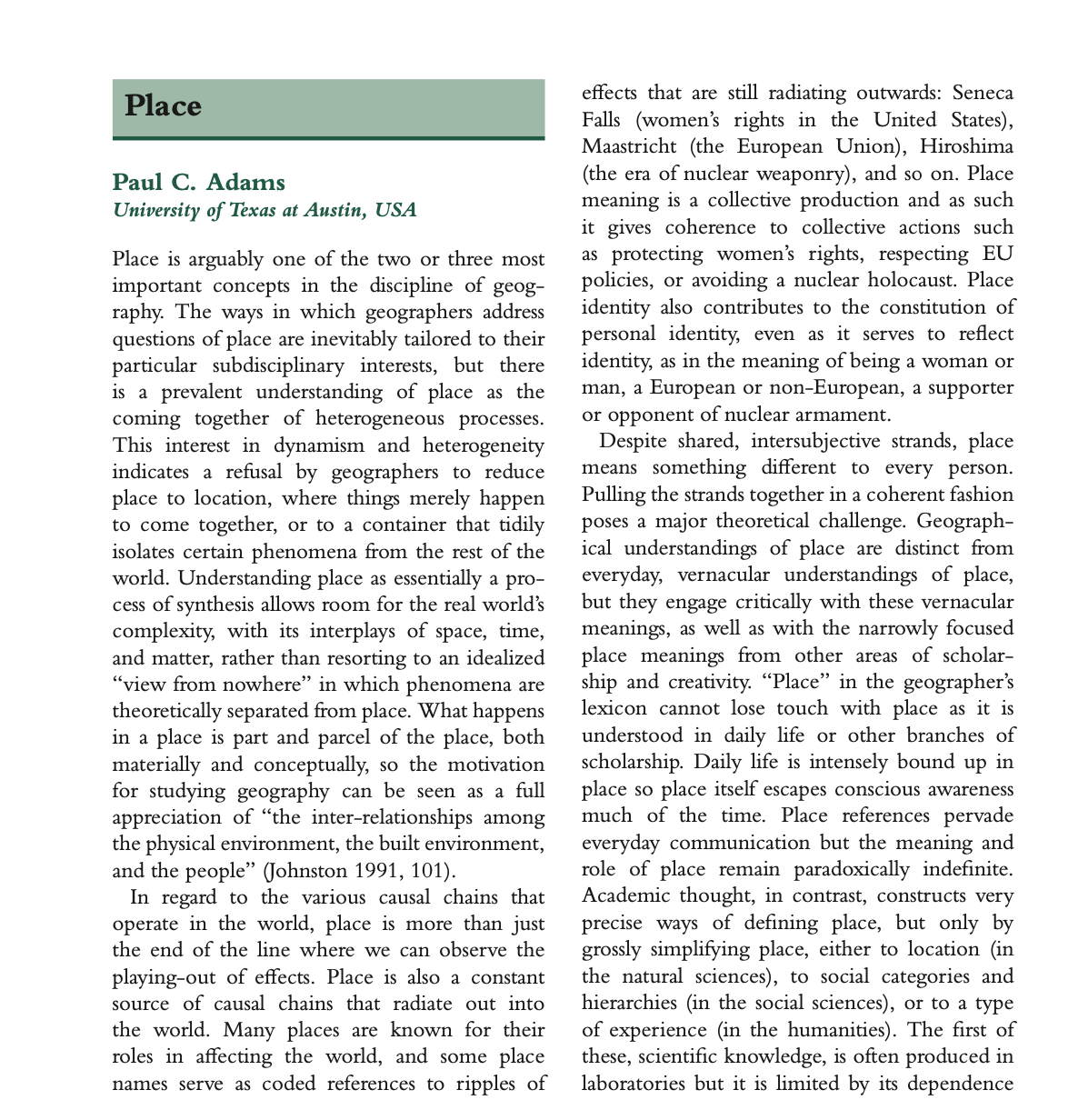
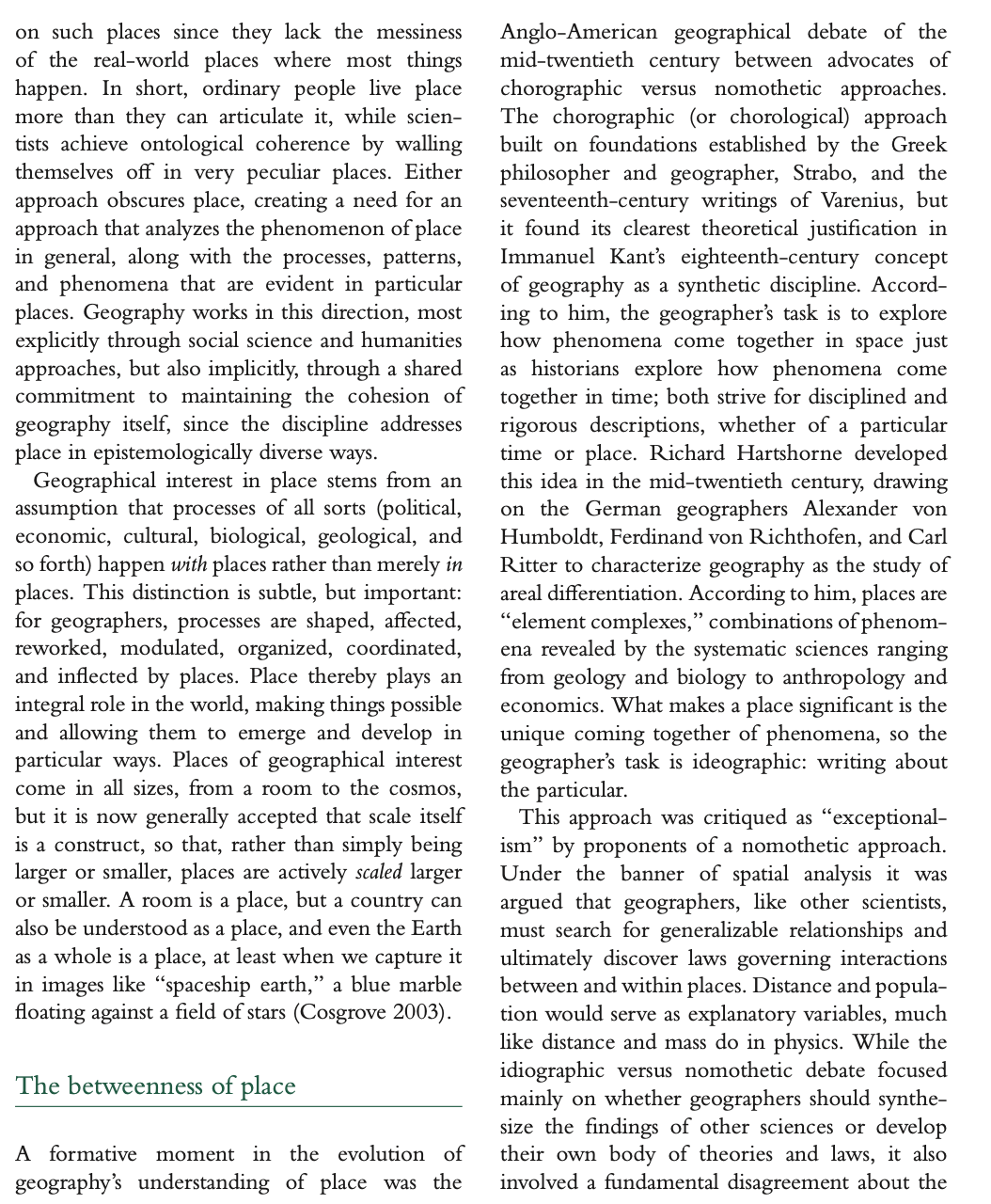
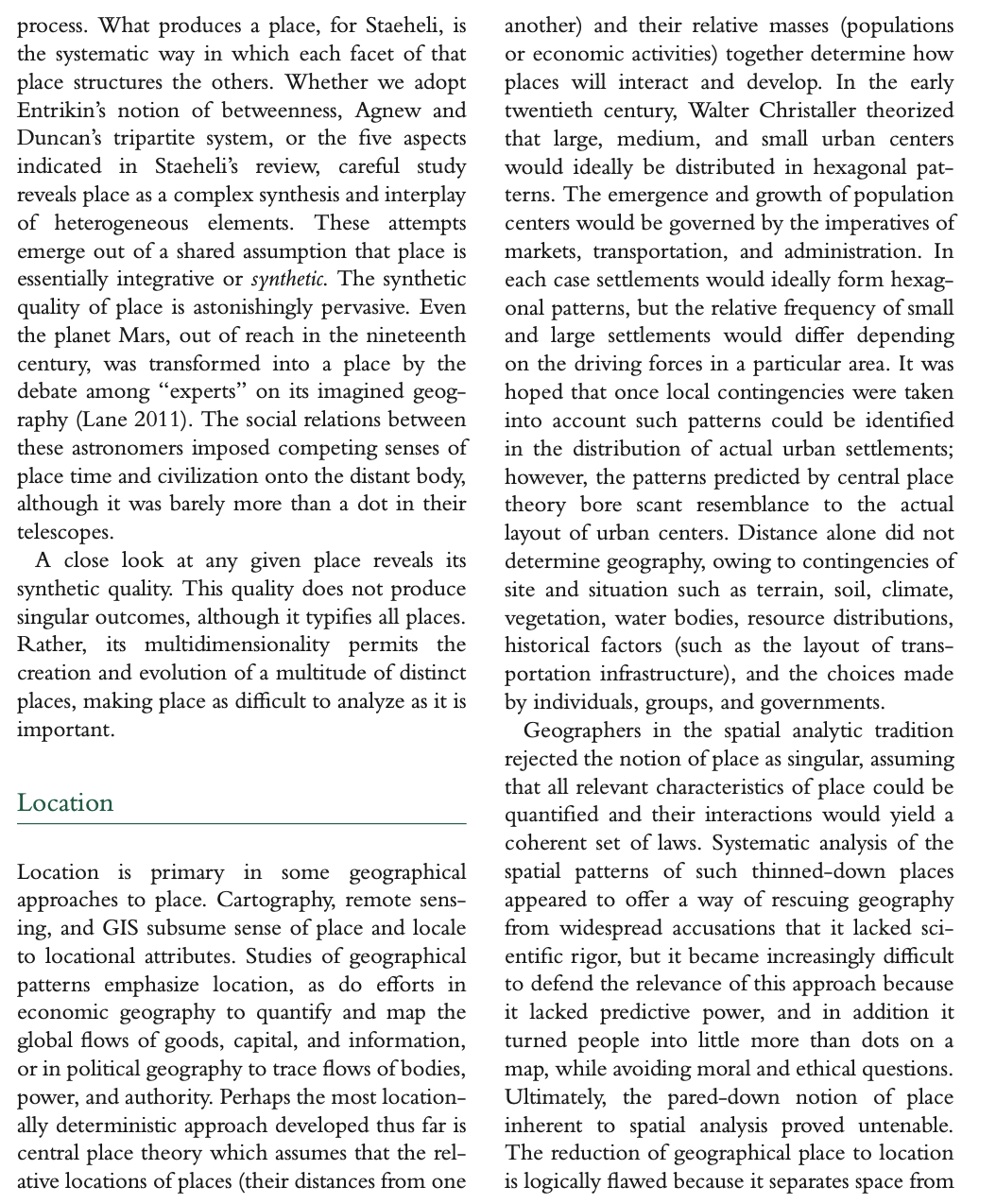
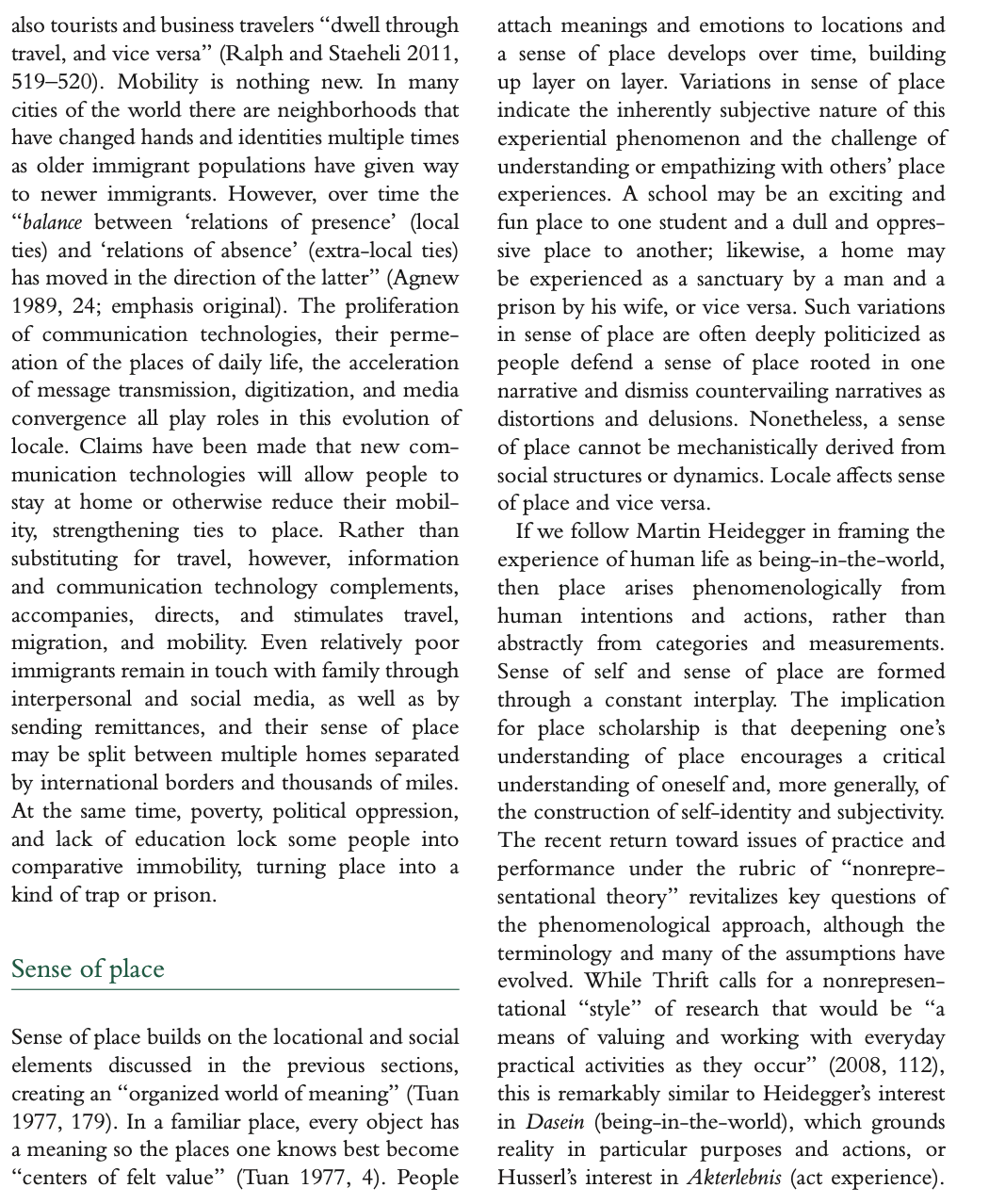
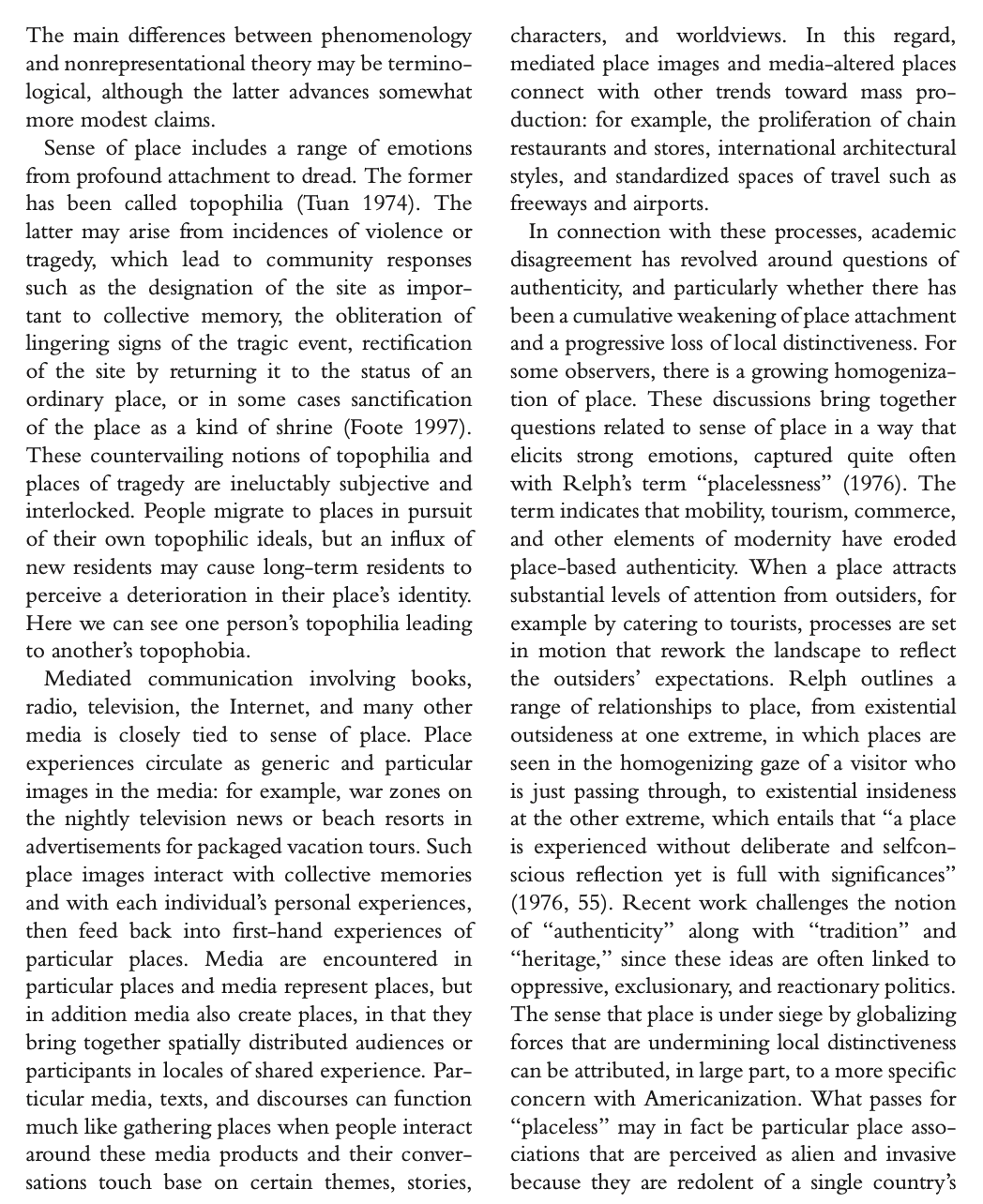
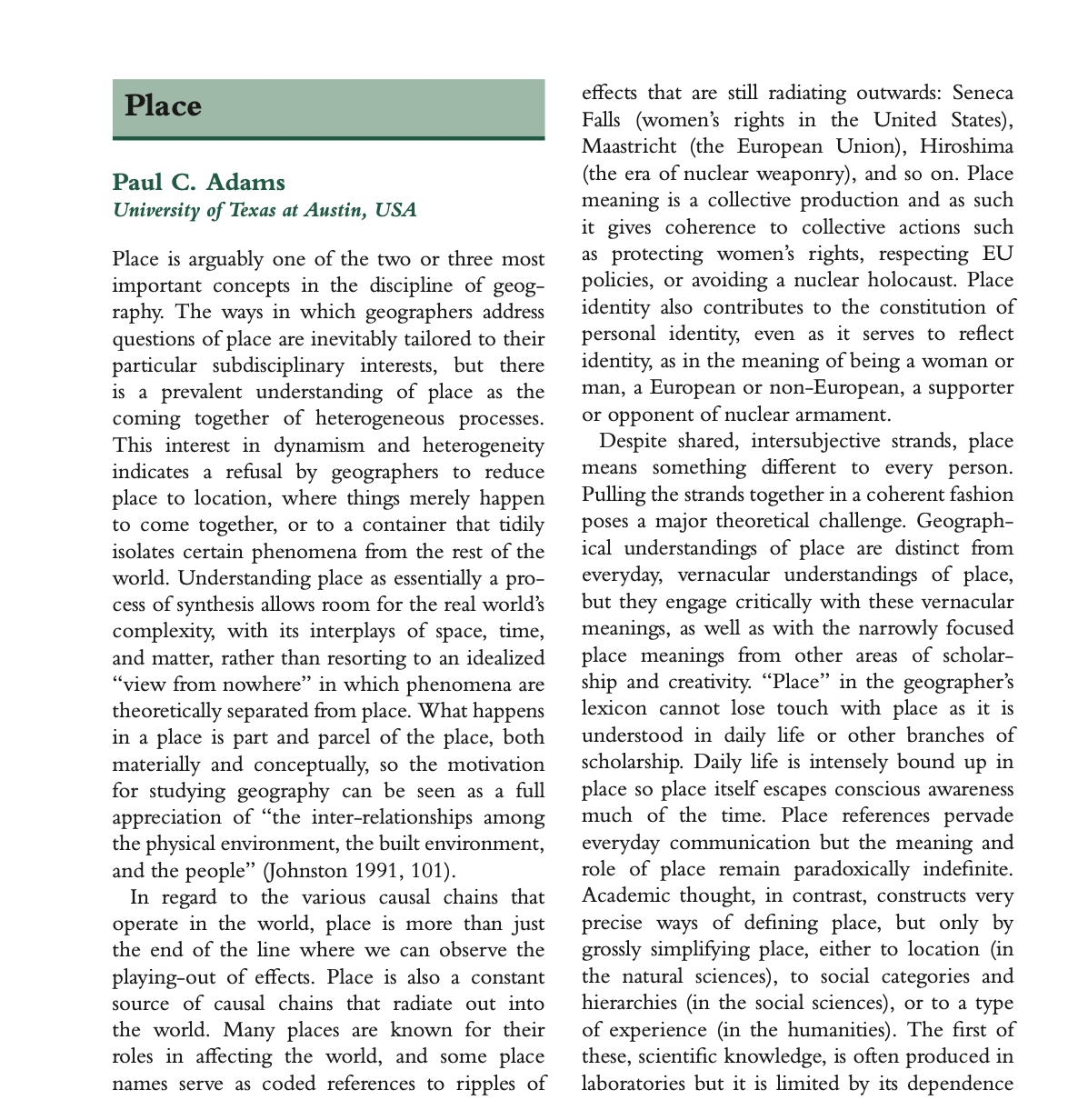
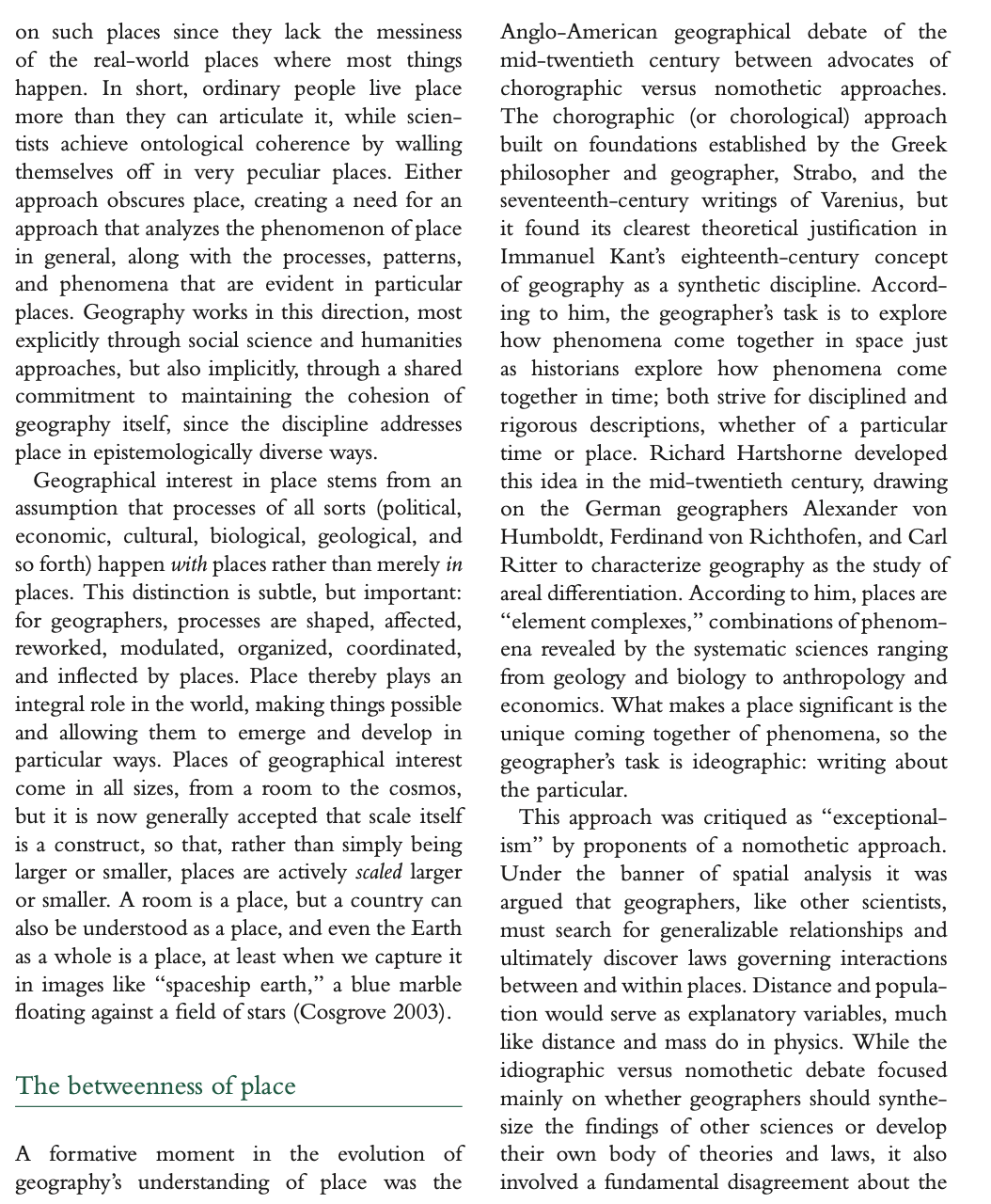
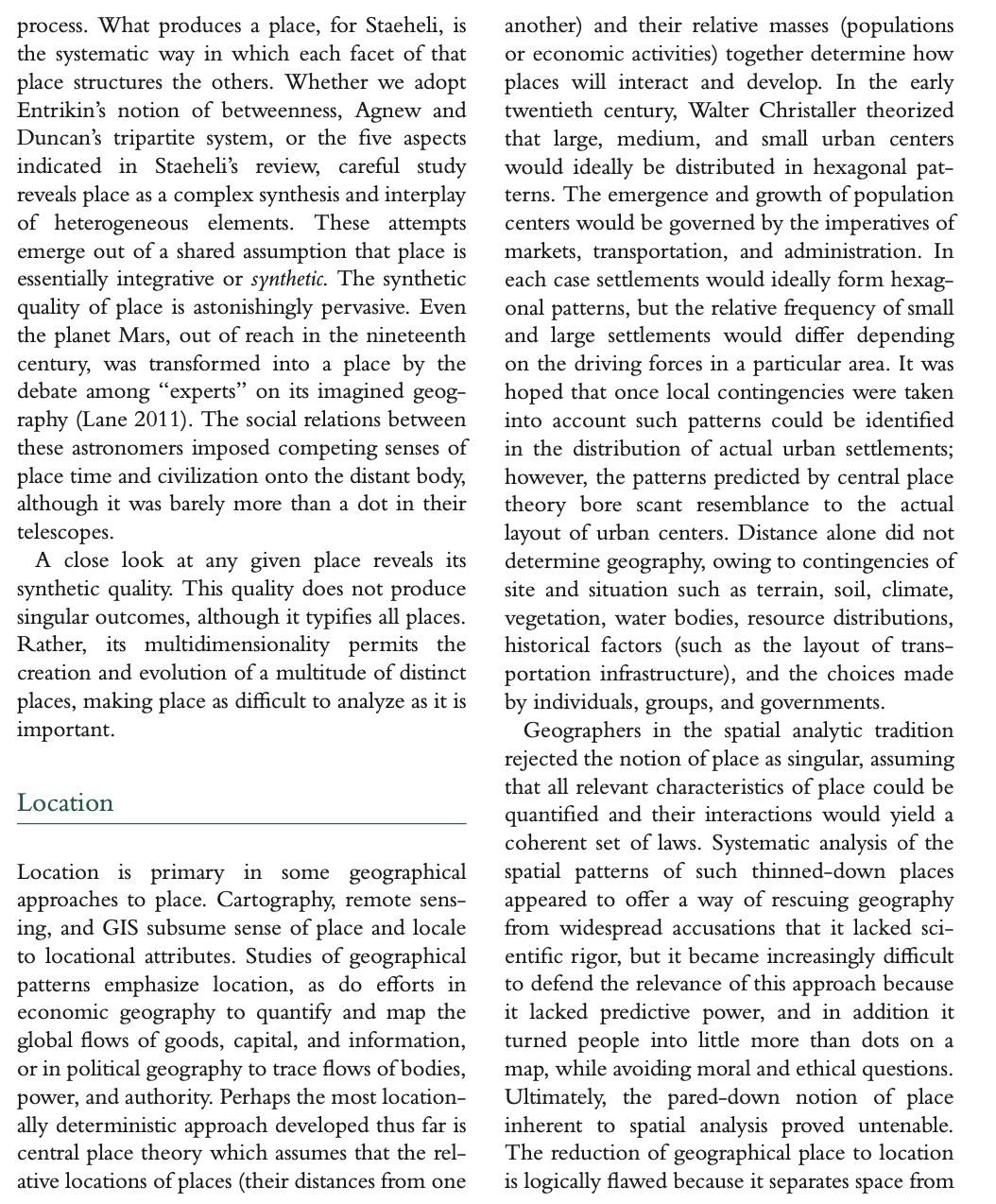
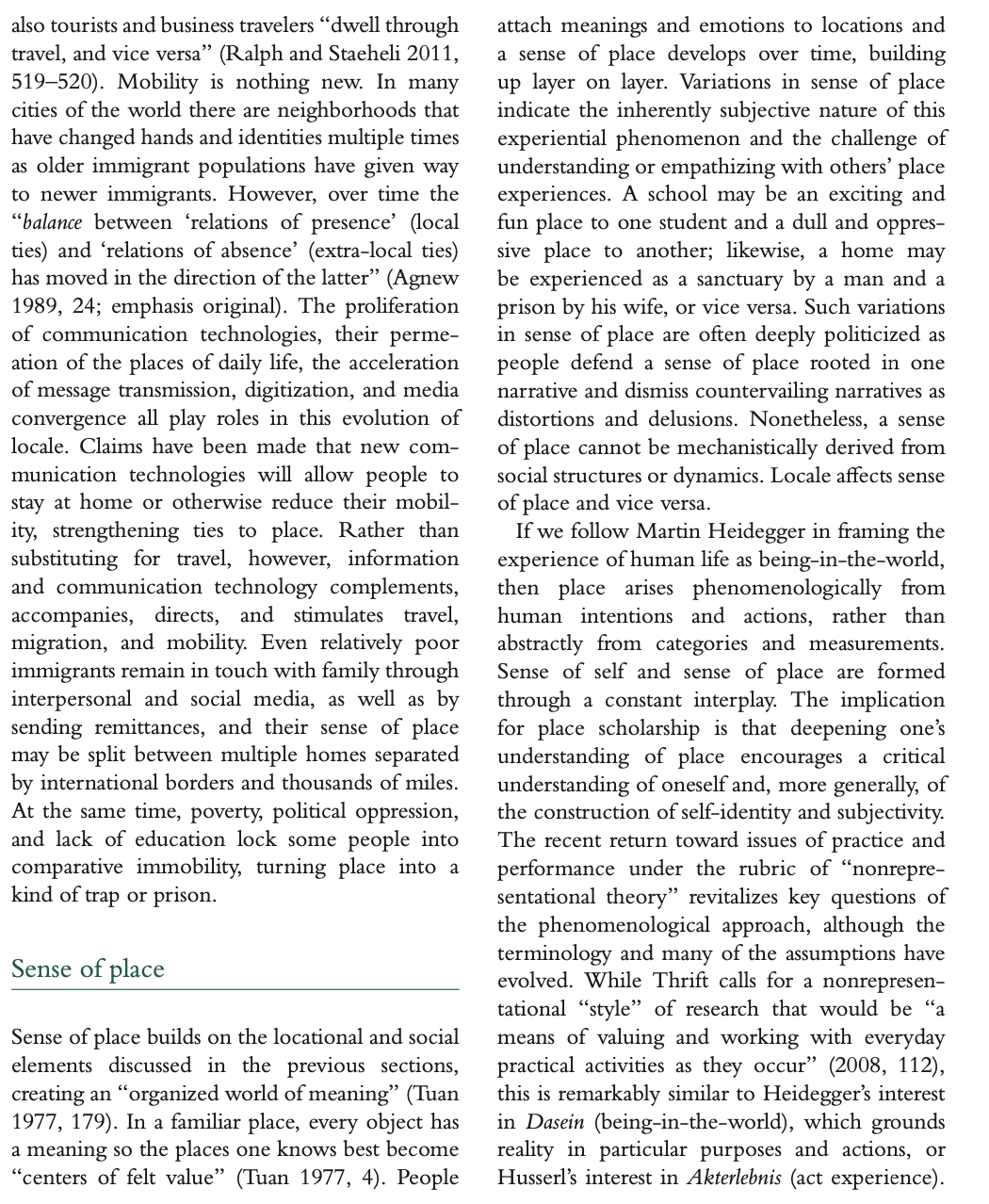
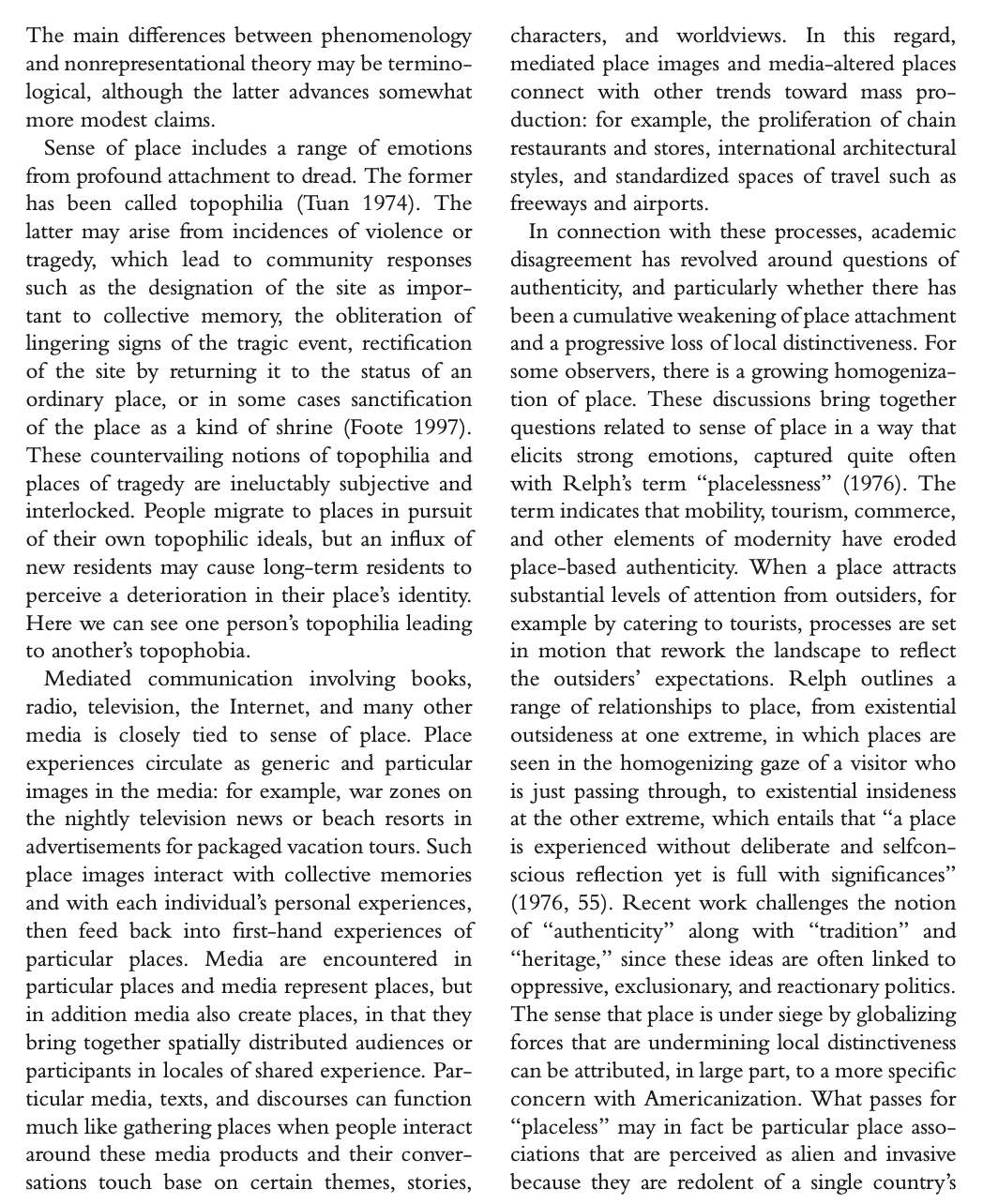
Place Paul C. Adams University qf Texas at Austin, USA Place is arguably one of the two or three most important concepts in the discipline of geog raphy. The ways in which geographers address questions of place are inevitably tailored to their particular subdisciplinary interests, but there is a prevalent understanding of place as the coming together of heterogeneous processes. This interest in dynamism and heterogeneity indicates a reisal by geographers to reduce place to location, where things merely happen to come together, or to a container that tidily isolates certain phenomena from the rest of the world. Understanding place as essentially a pro cess of synthesis allows room for the real world's complexity, with its interplays of space, tune, and matter, rather than resorting to an idealized \"view from nowhere\" in which phenomena are theoretically separated from place. What happens in a place is part and parcel of the place, both materially and conceptually, so the motivation for studying geography can be seen as a full appreciation of \"the inter-relationships among the physical environment, the built environment, and the people\" (Johnston 1991, 101). In regard to the various causal chains that operate in the world, place is more than just the end of the line where we can observe the playingout of effects. Place is also a constant source of causal chains that radiate out into the world. Many places are known for their roles in affecting the world, and some place names serve as coded references to ripples of effects that are still radiating outwards: Seneca Falls (women's rights in the United States), Maastricht (the European Union), Hiroshima (the era of nuclear weaponry), and so on. Place meaning is a collective production and as such it gives coherence to collective actions such as protecting women's rights, respecting EU policies, or avoiding a nuclear holocaust. Place identity also contributes to the constitution of personal identity, even as it serves to reect identity, as in the meaning of being a woman or man, a European or nonEuropean, a supporter or opponent of nuclear armament. Despite shared, intersubjective strands, place means something different to every person. Pulling the strands together in a coherent fashion poses a major theoretical challenge. Geograph ical understandings of place are distinct from everyday, vernacular understandings of place, but they engage critically with these vernacular meanings, as well as with the narrowly focused place meanings from other areas of scholar ship and creativity. \"Place\" in the geographer's lexicon cannot lose touch with place as it is understood in daily life or other branches of scholarship. Daily life is intensely bound up in place so place itself escapes conscious awareness much of the time. Place references pervade everyday communication but the meaning and role of place remain paradoxically indenite. Academic thought, in contrast, constructs very precise ways of dening place, but only by grossly simplifying place, either to location (in the natural sciences), to social categories and hierarchies (in the social sciences), or to a type of experience (in the humanities). The first of these, scientic knowledge, is often produced in laboratories but it is limited by its dependence on such places since they lack the messiness of the realworld places where most things happen. In short, ordinary people live place more than they can articulate it, while scien tists achieve ontological coherence by walling themselves off in very peculiar places. Either approach obscures place, creating a need for an approach that analyzes the phenomenon of place in general, along with the processes, patterns, and phenomena that are evident in particular places. Geography works in this direction, most explicitly through social science and humanities approaches, but also implicitly, through a shared commitment to maintaining the cohesion of geography itself, since the discipline addresses place in epistemologically diverse ways. Geographical interest in place stems from an assumption that processes of all sorts (political, economic, cultural, biological, geological, and so forth) happen with places rather than merely in places. This distinction is subtle, but important: for geographers, processes are shaped, aected, reworked, modulated, organized, coordinated, and inected by places. Place thereby plays an integral role in the world, making things possible and allowing them to emerge and develop in particular ways. Places of geographical interest come in all sizes, from a room to the cosmos, but it is now generally accepted that scale itself is a construct, so that, rather than simply being larger or smaller, places are actively scaled larger or smaller. A room is a place, but a country can also be understood as a place, and even the Earth as a whole is a place, at least when we capture it in images like \"spaceship earth,\" a blue marble oating against a field of stars (Cosgrove 2003). The betweenness of place A formative moment in the evolution of geography's understanding of place was the AngloAmerican geographical debate of the midtwentieth century between advocates of chorographic versus nomothetic approaches. The chorographic (or chorological) approach built on foundations established by the Greek philosopher and geographer, Strabo, and the seventeenthcentury writings of Varenius, but it found its clearest theoretical justication in Immanuel Kant's eighteenthcentury concept of geography as a synthetic discipline. Accord ing to him, the geographer's task is to explore how phenomena come together in space just as historians explore how phenomena come together in time; both strive for disciplined and rigorous descriptions, whether of a particular time or place. Richard Hartshorne developed this idea in the midtwentieth century, drawing on the German geographers Alexander von Humboldt, Ferdinand von Richthofen, and Carl Ritter to characterize geography as the study of areal differentiation. According to him, places are \"element complexes,\" combinations of phenom ena revealed by the systematic sciences ranging from geology and biology to anthropology and economics. 1What makes a place signicant is the unique coming together of phenomena, so the geographer's task is ideographic: writing about the particular. This approach was critiqued as \"exceptional ism\" by proponents of a nomothetic approach. Under the banner of spatial analysis it was argued that geographers, like other scientists, must search for generalizable relationships and ultimately discover laws governing interactions between and within places. Distance and popula tion would serve as explanatory variables, much like distance and mass do in physics. While the idiographic versus nomothetic debate focused mainly on whether geographers should synthe size the findings of other sciences or develop their own body of theories and laws, it also involved a fundamental disagreement about the process. What produces a place, for Staeheli, is the systematic way in which each facet of that place structures the others. 1Whether we adopt Entrikin's notion of betweenness, Agnew and Duncan's tripartite system, or the ve aspects indicated in Staeheli's review, careful study reveals place as a complex synthesis and interplay of heterogeneous elements. These attempts emerge out of a shared assumption that place is essentially integrative or synthetic. The synthetic quality of place is astonishingly pervasive. Even the planet Mars, out of reach in the nineteenth century, was transformed into a place by the debate among \"experts\" on its imagined geog raphy {Lane 2011). The social relations between these astronomers imposed competing senses of place time and civilization onto the distant body, although it was barely more than a dot in their telescopes. A close look at any given place reveals its synthetic quality. This quality does not produce singular outcomes, although it typies all places. Rather, its multidinlensionality permits the creation and evolution of a multitude of distinct places, making place as difcult to analyze as it is important. Location Location is primary in some geographical approaches to place. Cartography, remote sens ing, and GIS subsume sense of place and locale to locational attributes. Studies of geographical patterns emphasize location, as do efforts in economic geography to quantify and map the global ows of goods, capital, and information, or in political geography to trace ows ofbodies, power, and authority. Perhaps the most location ally deterministic approach developed thus far is central place theory which assumes that the rel ative locations of places (their distances from one another) and their relative masses (populations or economic activities) together determine how places will interact and develop. In the early twentieth century, Walter Christaller theorized that large, medium, and small urban centers would ideally be distributed in hexagonal pat terns. The emergence and growth of population centers would be governed by the imperatives of markets, transportation, and administration. In each case settlements would ideally form hexag onal patterns, but the relative frequency of small and large settlements would differ depending on the driving forces in a particular area. It was hoped that once local contingencies were taken into account such patterns could be identied in the distribution of actual urban settlements; however, the patterns predicted by central place theory bore scant resemblance to the actual layout of urban centers. Distance alone did not determine geography, owing to contingencies of site and situation such as terrain, soil, clinlate, vegetation, water bodies, resource distributions, historical factors (such as the layout of trans portation infrastructure), and the choices made by individuals, groups, and governments. Geographers in the spatial analytic tradition rejected the notion of place as singular, assuming that all relevant characteristics of place could be quantied and their interactions would yield a coherent set of laws. Systematic analysis of the spatial patterns of such thinned-down places appeared to offer a way of rescuing geography from widespread accusations that it lacked sci entic rigor, but it became increasingly difcult to defend the relevance of this approach because it lacked predictive power, and in addition it turned people into little more than dots on a map, while avoiding moral and ethical questions. Ultimately, the pareddown notion of place inherent to spatial analysis proved untenable. The reduction of geographical place to location is logically awed because it separates space from also tourists and business travelers \"dwell through travel, and vice versa\" (Ralph and Staeheli 2011, 519520). Mobility is nothing new. In many cities of the world there are neighborhoods that have changed hands and identities multiple times as older immigrant populations have given way to newer immigrants. However, over time the \"balance between 'relations of presence' (local ties) and 'relations of absence' (extralocal ties) has moved in the direction of the latter\" (Agnew 1989, 24; emphasis original). The proliferation of communication technologies, their perme ation of the places of daily life, the acceleration of message transmission, digitization, and media convergence all play roles in this evolution of locale. Claims have been made that new com munication technologies will allow people to stay at home or otherwise reduce their mobil ity, strengthening ties to place. Rather than substituting for travel, however, information and communication technology complements, stimulates migration, and mobility. Even relatively poor immigrants remain in touch with family through accompanies, directs, and travel, interpersonal and social media, as well as by sending remittances, and their sense of place may be split between multiple homes separated by international borders and thousands of miles. At the same time, poverty, political oppression, and lack of education lock some people into comparative immobility, turning place into a kind of trap or prison. Sense of place Sense of place builds on the locational and social elements discussed in the previous sections, creating an \"organized world of meaning\" (Tuan 1977, 179). In a familiar place, every object has a meaning so the places one knows best become \"centers of felt value\" (Tuan 1977, 4). People attach meanings and emotions to locations and a sense of place develops over time, building up layer on layer. Variations in sense of place indicate the inherently subjective nature of this experiential phenomenon and the challenge of understanding or empathizing with others' place experiences. A school may be an exciting and fun place to one student and a dull and oppres sive place to another; likewise, a home may be experienced as a sanctuary by a man and a prison by his wife, or vice versa. Such variations in sense of place are often deeply politicized as people defend a sense of place rooted in one narrative and dismiss countervailing narratives as distortions and delusions. Nonetheless, a sense of place cannot be mechanistically derived from social structures or dynamics. Locale aecm sense of place and vice versa. If we follow Martin Heidegger in framing the experience of human life as beingintheworld, then place arises phenomenologically from rather than abstractly from categories and measurements. human intentions and actions, Sense of self and sense of place are formed through a constant interplay. The implication for place scholarship is that deepening one's understanding of place encourages a critical understanding of oneself and, more generally, of the construction of selfidentity and subjectivity. The recent return toward issues of practice and performance under the rubric of \"nonrepre sentational theory\" revitalizes key questions of the phenomenological approach, although the terminology and many of the assumptions have evolved. While Thrift calls for a nonrepresen tational \"style\" of research that would be \"a means of valuing and working with everyday practical activities as they occur\" (2008, 112), this is remarkably similar to Heidegger's interest in Dasein (beingintheworld), which grounds reality in particular purposes and actions, or Husserl's interest in Aleterlebnis (act experience). The main differences between phenomenology and nonrepresentational theory may be termino logical, although the latter advances somewhat more modest claims. Sense of place includes a range of emotions from profound attachment to dread. The former has been called topophilia (Tuan 1974). The latter may arise from incidences of violence or tragedy, which lead to community responses such as the designation of the site as iinpor tant to collective memory, the obliteration of lingering signs of the tragic event, rectication of the site by returning it to the status of an ordinary place, or in some cases sanctication of the place as a kind of shrine (Foote 1997). These countervailing notions of topophilia and places of tragedy are ineluctably subjective and interlocked. People migrate to places in pursuit of their own topophilic ideals, but an inux of new residents may cause longterm residents to perceive a deterioration in their place's identity. Here we can see one person's topophilia leading to another's topophobia. Mediated communication involving books, radio, television, the Internet, and many other media is closely tied to sense of place. Place experiences circulate as generic and particular images in the media: for example, war zones on the nightly television news or beach resorts in advertisements for packaged vacation tours. Such place images interact with collective memories and with each individual's personal experiences, then feed back into firsthand experiences of particular places. Media are encountered in particular places and media represent places, but in addition media also create places, in that they bring together spatially distributed audiences or participants in locales of shared experience. Par ticular media, texts, and discourses can function much like gathering places when people interact around these media products and their conver sations touch base on certain themes, stories, characters, and worldviews. In this regard, mediated place images and mediaaltered places connect with other trends toward mass pro duction: for example, the proliferation of chain restaurants and stores, international architectural styles, and standardized spaces of travel such as freeways and airports. In connection with these processes, academic disagreement has revolved around questions of authenticity, and particularly whether there has been a cumulative weakening of place attachment and a progressive loss of local distinctiveness. For some observers, there is a growing homogeniza tion of place. These discussions bring together questions related to sense of place in a way that elicits strong emotions, captured quite often with Relph's term \"placelessness\" (1976). The term indicates that mobility, tourism, commerce, and other elements of modernity have eroded placebased authenticity. When a place attracts substantial levels of attention from outsiders, for example by catering to tourists, processes are set in motion that rework the landscape to reect the outsiders' expectations. Relph outlines a range of relationships to place, 'om existential outsideness at one extreme, in which places are seen in the homogenizing gaze of a visitor who is just passing through, to existential insideness at the other extreme, which entails that \"a place is experienced without deliberate and selfcon scious reection yet is full with signicances\" (1976, 55). Recent work challenges the notion of \"authenticity\" along with \"tradition\" and \"heritage,\" since these ideas are often linked to oppressive, exclusionary, and reactionary politics. The sense that place is under siege by globalizing forces that are undermining local distinctiveness can be attributed, in large part, to a more specic concern with Americanization. What passes for \"placeless\" may in fact be particular place asso ciations that are perceived as alien and invasive because they are redolent of a single country's
Step by Step Solution
There are 3 Steps involved in it

Get step-by-step solutions from verified subject matter experts