





Question: The LinearListADT interface: /Your namee Your cssc account number package data_structures; import java .util.Iterator import java.util.NoSuchElementException; public interface LinearListADTKE> extends Iterable // Adds the Object
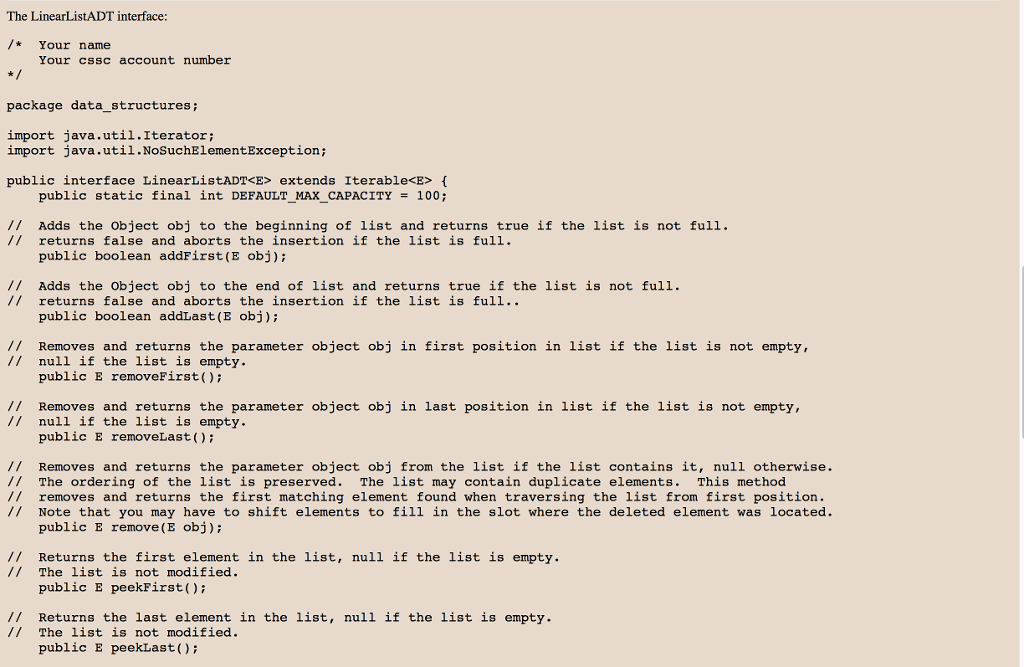
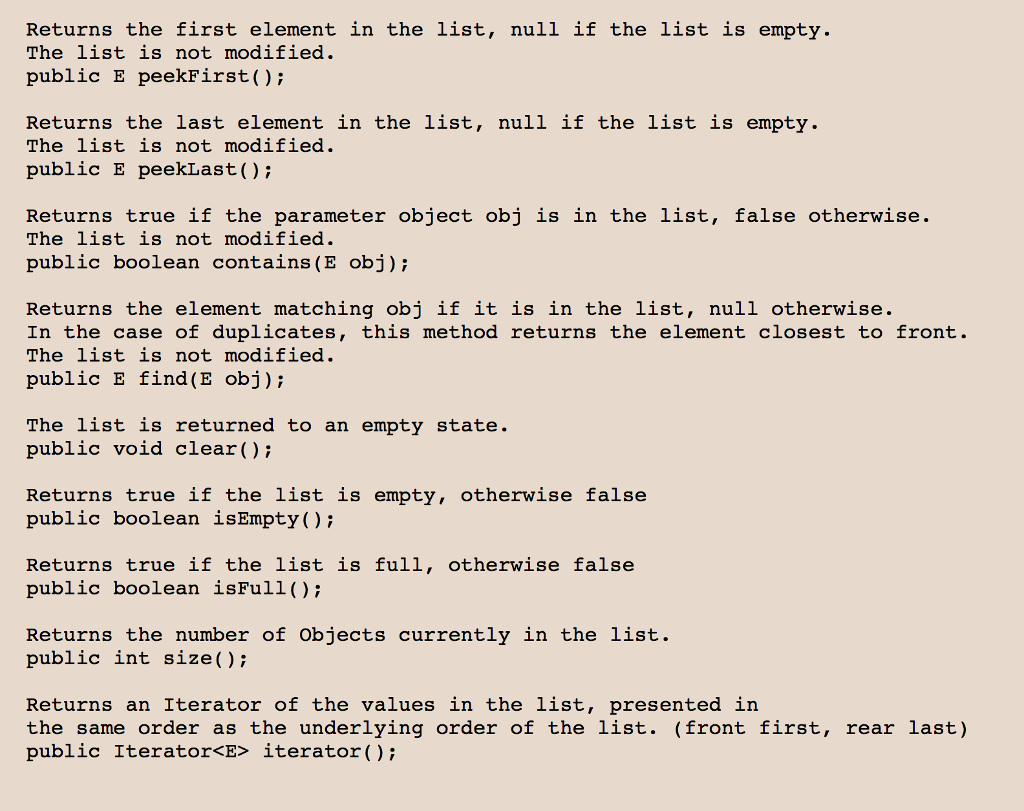
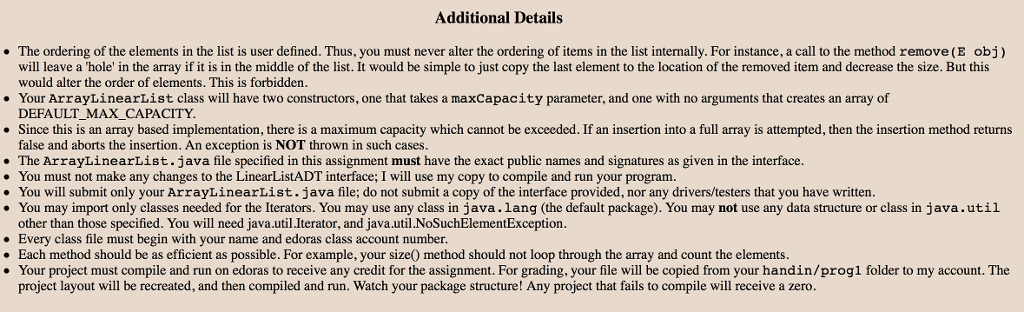
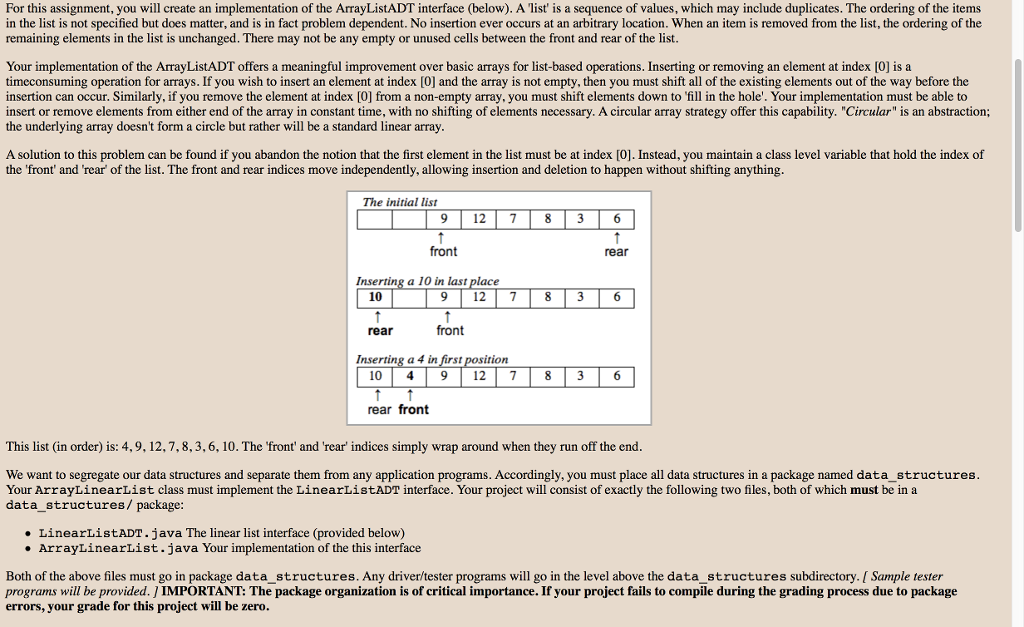
 The LinearListADT interface: /Your namee Your cssc account number package data_structures;import java .util.Iterator import java.util.NoSuchElementException; public interface LinearListADTKE> extends Iterable // Addsthe Object obj to the beginning of list and returns true ifthe list is not full. public static final int DEFAULT MAX CAPACITY

The LinearListADT interface: /Your namee Your cssc account number package data_structures; import java .util.Iterator import java.util.NoSuchElementException; public interface LinearListADTKE> extends Iterable // Adds the Object obj to the beginning of list and returns true if the list is not full. public static final int DEFAULT MAX CAPACITY = 100; // returns false and aborts the insertion if the list is full. public boolean addFirst (E obj); // Adds the Object obj to the end of list and returns true if the list is not full. // returns false and aborts the insertion if the list is full.. public boolean addLast (E obj); // Removes and returns the parameter object obj in first position in list if the list is not empty, // null if the list is empty. public E removeFirst // Removes and returns the parameter object obj in last position in list if the list is not empty, /7 null if the list is empty. public E removeLast( // Removes and returns the parameter object obj from the list if the list contains it, null otherwise. // The ordering of the list is preserved. The list may contain duplicate elements. This method // removes and returns the first matching element found when traversing the list from first position. // Note that you may have to shift elements to fill in the slot where the deleted element was located public E remove(E obj); // Returns the first element in the list, null if the list is empty. // The list is not modified. public E peekFirst) // Returns the last element in the list, null if the list is empty. // The list is not modified. public E peekLast); The LinearListADT interface: /Your namee Your cssc account number package data_structures; import java .util.Iterator import java.util.NoSuchElementException; public interface LinearListADTKE> extends Iterable // Adds the Object obj to the beginning of list and returns true if the list is not full. public static final int DEFAULT MAX CAPACITY = 100; // returns false and aborts the insertion if the list is full. public boolean addFirst (E obj); // Adds the Object obj to the end of list and returns true if the list is not full. // returns false and aborts the insertion if the list is full.. public boolean addLast (E obj); // Removes and returns the parameter object obj in first position in list if the list is not empty, // null if the list is empty. public E removeFirst // Removes and returns the parameter object obj in last position in list if the list is not empty, /7 null if the list is empty. public E removeLast( // Removes and returns the parameter object obj from the list if the list contains it, null otherwise. // The ordering of the list is preserved. The list may contain duplicate elements. This method // removes and returns the first matching element found when traversing the list from first position. // Note that you may have to shift elements to fill in the slot where the deleted element was located public E remove(E obj); // Returns the first element in the list, null if the list is empty. // The list is not modified. public E peekFirst) // Returns the last element in the list, null if the list is empty. // The list is not modified. public E peekLast)
Step by Step Solution

There are 3 Steps involved in it

1 Expert Approved Answer
Step: 1 Unlock blur-text-image
Question Has Been Solved by an Expert!

Get step-by-step solutions from verified subject matter experts

Step: 2 Unlock
Step: 3 Unlock

Students Have Also Explored These Related Databases Questions!