







Question: : ). The management is considering two different tax settings A world with no taxes. A world with corporate taxes only 6. Determine the present
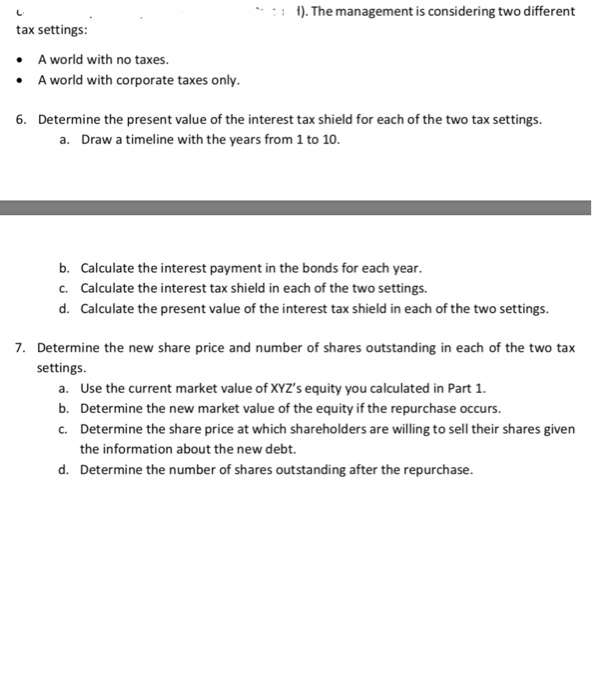
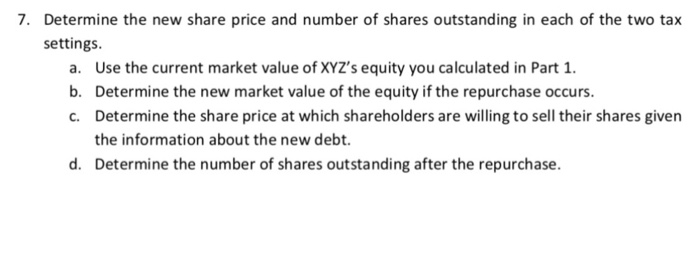
: ). The management is considering two different tax settings A world with no taxes. A world with corporate taxes only 6. Determine the present value of the interest tax shield for each of the two tax settings. a. Draw a timeline with the years from 1 to 10 b. c. d. Calculate the interest payment in the bonds for each year. Calculate the interest tax shield in each of the two settings. Calculate the present value of the interest tax shield in each of the two settings. 7. Determine the new share price and number of shares outstanding in each of the two tax settings. a. b. c. Use the current market value of XYZ's equity you calculated in Part 1. Determine the new market value of the equity if the repurchase occurs. Determine the share price at which shareholders are willing to sell their shares given the information about the new debt. Determine the number of shares outstanding after the repurchase. d. 7. Determine the new share price and number of shares outstanding in each of the two tax settings a. b. c. Use the current market value of XYZ's equity you calculated in Part 1 Determine the new market value of the equity if the repurchase occurs. Determine the share price at which shareholders are willing to sell their shares given the information about the new debt. Determine the number of shares outstanding after the repurchase. d. : ). The management is considering two different tax settings A world with no taxes. A world with corporate taxes only 6. Determine the present value of the interest tax shield for each of the two tax settings. a. Draw a timeline with the years from 1 to 10 b. c. d. Calculate the interest payment in the bonds for each year. Calculate the interest tax shield in each of the two settings. Calculate the present value of the interest tax shield in each of the two settings. 7. Determine the new share price and number of shares outstanding in each of the two tax settings. a. b. c. Use the current market value of XYZ's equity you calculated in Part 1. Determine the new market value of the equity if the repurchase occurs. Determine the share price at which shareholders are willing to sell their shares given the information about the new debt. Determine the number of shares outstanding after the repurchase. d. 7. Determine the new share price and number of shares outstanding in each of the two tax settings a. b. c. Use the current market value of XYZ's equity you calculated in Part 1 Determine the new market value of the equity if the repurchase occurs. Determine the share price at which shareholders are willing to sell their shares given the information about the new debt. Determine the number of shares outstanding after the repurchase. d
Step by Step Solution
There are 3 Steps involved in it

Get step-by-step solutions from verified subject matter experts
 Study Help