







Question: The materiality principle is justification for using the direct-write-off method. A) True B) False Question 22 (2 points) The practice of placing dishonoured notes receivable
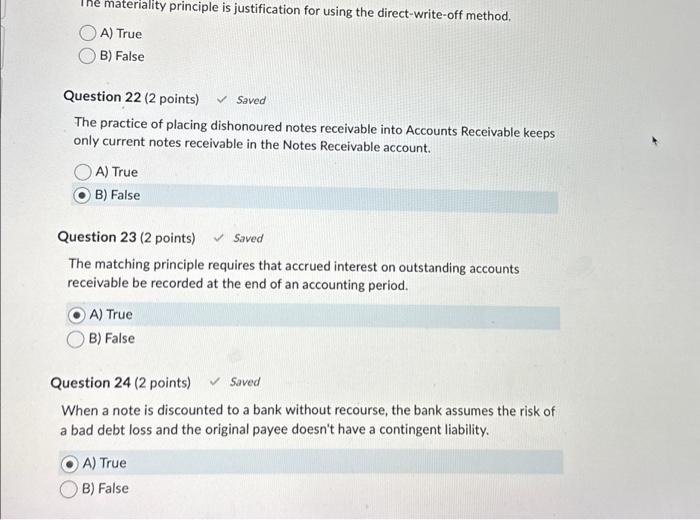
The materiality principle is justification for using the direct-write-off method. A) True B) False Question 22 (2 points) \\( \\checkmark \\) Saved The practice of placing dishonoured notes receivable into Accounts Receivable keeps only current notes receivable in the Notes Receivable account. A) True B) False Question 23 ( 2 points) \\( \\checkmark \\) Saved The matching principle requires that accrued interest on outstanding accounts receivable be recorded at the end of an accounting period. A) True B) False Question 24 (2 points) \\( \\checkmark \\) Saved When a note is discounted to a bank without recourse, the bank assumes the risk of a bad debt loss and the original payee doesn't have a contingent liability. A) True B) False
Step by Step Solution
There are 3 Steps involved in it

Get step-by-step solutions from verified subject matter experts
 Study Help