







Question: The minimum k-cardinality tree problem is based on finding a G subtree with full k edges with minimum sum of weights for a given G
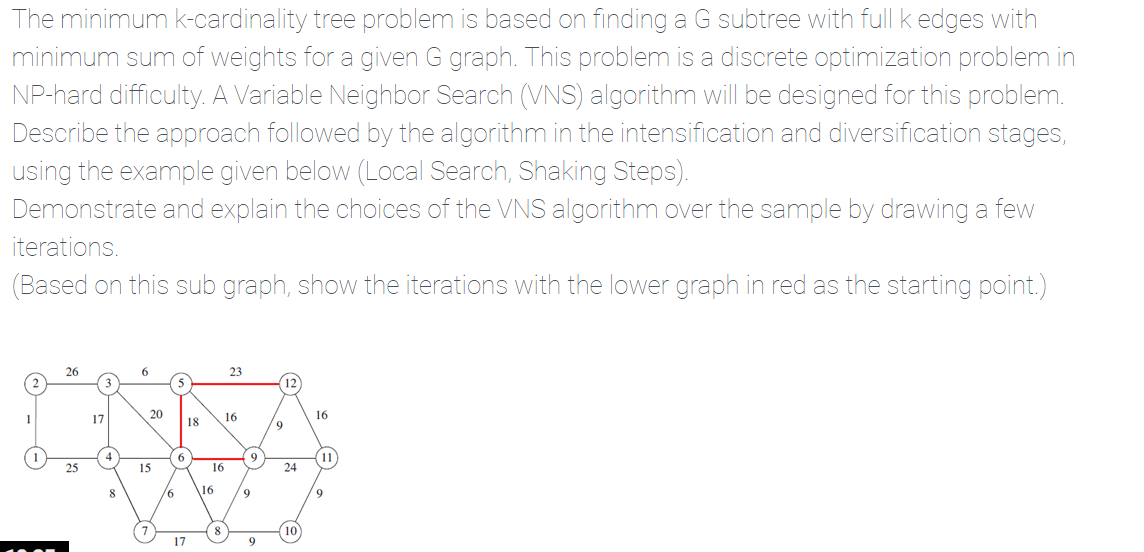
The minimum k-cardinality tree problem is based on finding a G subtree with full k edges with minimum sum of weights for a given G graph. This problem is a discrete optimization problem in NP-hard difficulty. A Variable Neighbor Search (VNS) algorithm will be designed for this problem. Describe the approach followed by the algorithm in the intensification and diversification stages, using the example given below (Local Search, Shaking Steps). Demonstrate and explain the choices of the VNS algorithm over the sample by drawing a few iterations. (Based on this sub graph, show the iterations with the lower graph in red as the starting point.) 26 6 23 3 5 1 17 20 18 16 16 9 4 6 9 11 25 15 16 24 8 16 16 9 10 17 9 The minimum k-cardinality tree problem is based on finding a G subtree with full k edges with minimum sum of weights for a given G graph. This problem is a discrete optimization problem in NP-hard difficulty. A Variable Neighbor Search (VNS) algorithm will be designed for this problem. Describe the approach followed by the algorithm in the intensification and diversification stages, using the example given below (Local Search, Shaking Steps). Demonstrate and explain the choices of the VNS algorithm over the sample by drawing a few iterations. (Based on this sub graph, show the iterations with the lower graph in red as the starting point.) 26 6 23 3 5 1 17 20 18 16 16 9 4 6 9 11 25 15 16 24 8 16 16 9 10 17 9
Step by Step Solution
There are 3 Steps involved in it

Get step-by-step solutions from verified subject matter experts
 Study Help