







Question: The Multi-Level Perspective on Sustainability Transitions describing how systems develop and change over time: energy (electricity and heat), mobility, buildings, water provision, agri-food Landscape factors:
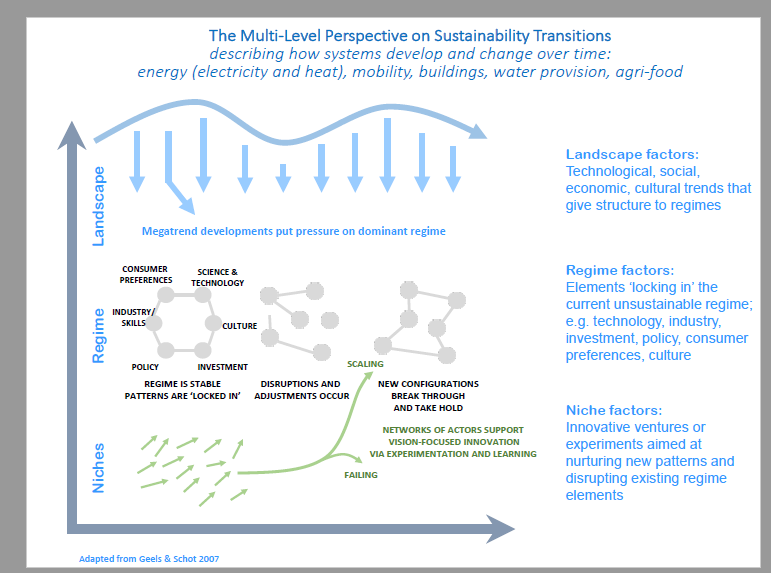
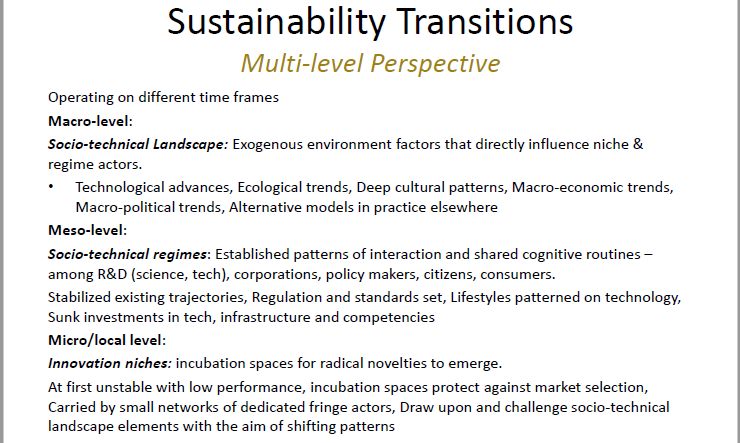
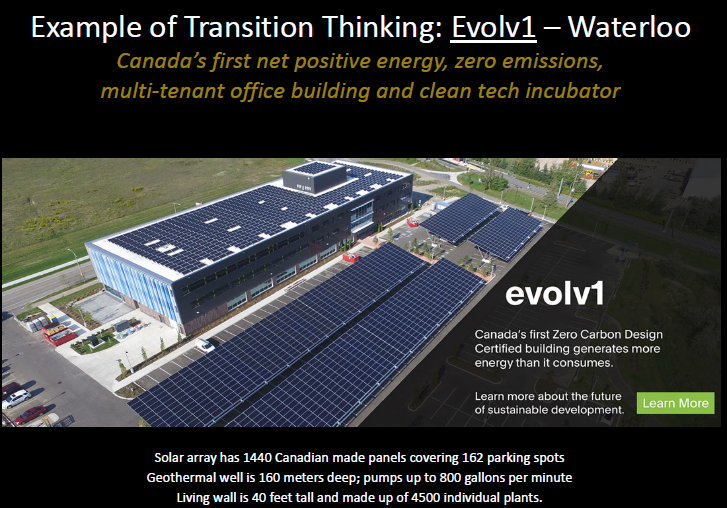
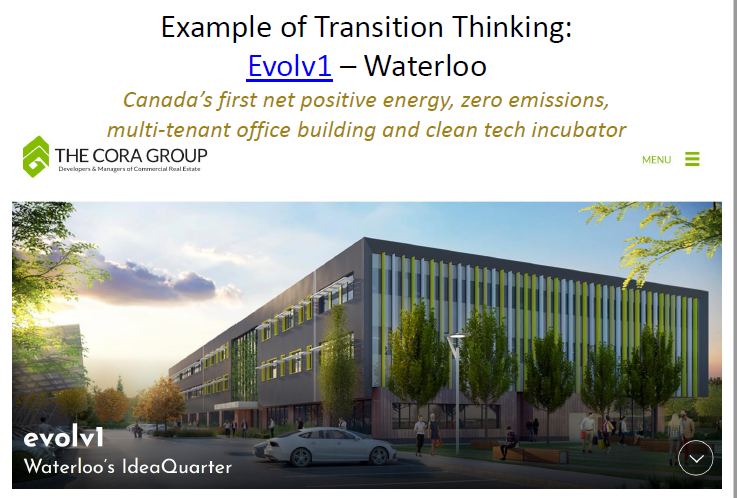
The Multi-Level Perspective on Sustainability Transitions describing how systems develop and change over time: energy (electricity and heat), mobility, buildings, water provision, agri-food Landscape factors: Technological, social, economic, cultural trends that Landscape give structure to regimes Megatrend developments put pressure on dominant regime CONSUMER SCIENCE & Regime factors: PREFERENCES TECHNOLOGY Elements 'locking in' the INDUSTRY/ current unsustainable regime; SKILLS CULTURE e.g. technology, industry, Regime investment, policy, consumer preferences, culture POLICY INVESTMENT SCALING REGIME IS STABLE DISRUPTIONS AND NEW CONFIGURATIONS PATTERNS ARE "LOCKED IN' JUSTMENTS OCCUR BREAK THROUGH AND TAKE H Niche factors: NETWORKS OF ACTORS SUPPORT Innovative ventures or VISION-FOCUSED INNOVATION experiments aimed at VIA EXPERIMENTATION AND LEARNING nurturing new patterns and Niches FAILING disrupting existing regime elements Adapted from Geels & Schot 2007Sustainability Transitions Muiti-ievei Perspective Operating on different time frames M a ere-level: Social-technical Landscape: Exogenous environment factors that directlv influence niche 31 regime actors. ' Technological advances, Ecological trends, Deep cultural patterns, Macroeconomic trends, Macropolitical trends, Alternative models in practice elsewhere Mesa-level: Eerie-technical regimes: Established patterns of interaction and shared cognitive routines among HSlD' (science, tech], corporations, policv makers, citizens, consumers. Stabilized existing trajectories, Regulation and standards set, Lifestvles patterned on technology, Sunk investments in tech, infrastructure and competencies Microflocal level: innovation niches: incubation spaces for radical novelties to emerge. At first unstable with low performance, incubation spaces protect against market selection, Carried by small networks of dedicated fringe actors, Draw upon and challenge sociotechnical landscape elements with the aim of shifting patterns Example of Transition Thinking: Evolv1 - Waterloo Canada's first net positive energy, zero emissions, multi-tenant office building and clean tech incubator evolv1 Canada's first Zero Carbon Design Certified building generates more energy than it consumes. Learn more about the future of sustainable development. Learn More Solar array has 1440 Canadian made panels covering 162 parking spots Geothermal well is 160 meters deep; pumps up to 800 gallons per minute Living wall is 40 feet tall and made up of 4500 individual plants.Example of Transition Thinking: Evolv1 - Waterloo Canada's first net positive energy, zero emissions, multi-tenant office building and clean tech incubator THE CORA GROUP MENU Developers & Managers of Commercial Real Estate evolvl Waterloo's IdeaQuarter V
Step by Step Solution
There are 3 Steps involved in it

Get step-by-step solutions from verified subject matter experts
 Study Help