





Question: THE NPV CALCULATION Suppose that Joe is considering investing $100 in A plc with the intention of selling the shares at the end of the
THE NPV CALCULATION Suppose that Joe is
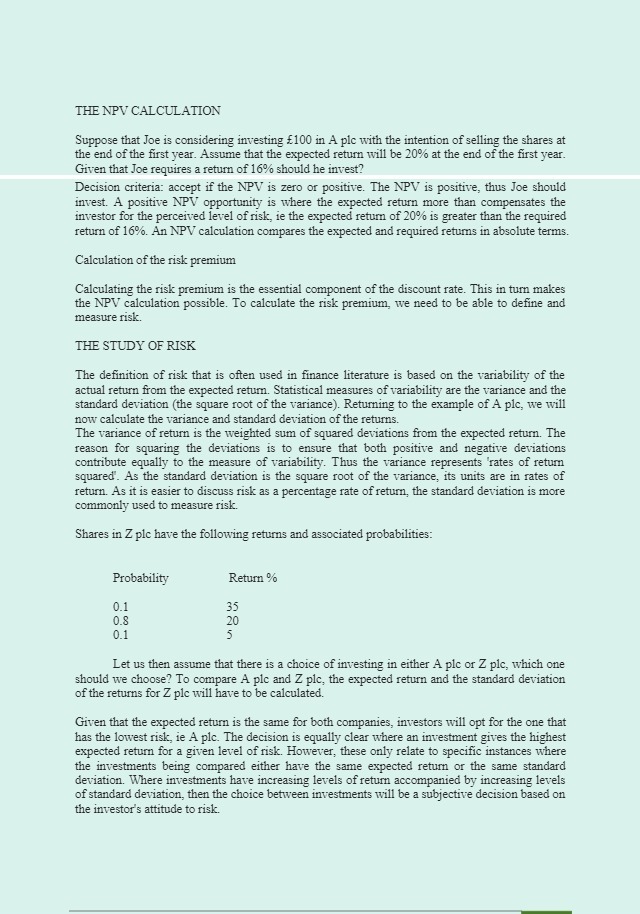
THE NPV CALCULATION Suppose that Joe is considering investing $100 in A plc with the intention of selling the shares at the end of the first year. Assume that the expected return will be 20% at the end of the first year. Given that Joe requires a return of 16% should he invest? Decision criteria: accept if the NPV is zero or positive. The NPV is positive, thus Joe should invest. A positive NPV opportunity is where the expected return more than compensates the investor for the perceived level of risk, ie the expected return of 20% is greater than the required return of 16%. An NPV calculation compares the expected and required returns in absolute terms. Calculation of the risk premium Calculating the risk premium is the essential component of the discount rate. This in turn makes the NPV calculation possible. To calculate the risk premium, we need to be able to define and measure risk. THE STUDY OF RISK The definition of risk that is often used in finance literature is based on the variability of the actual return from the expected return. Statistical measures of variability are the variance and the standard deviation (the square root of the variance). Returning to the example of A plc, we will now calculate the variance and standard deviation of the returns. The variance of return is the weighted sum of squared deviations from the expected return. The reason for squaring the deviations is to ensure that both positive and negative deviations contribute equally to the measure of variability. Thus the variance represents 'rates of return squared. As the standard deviation is the square root of the variance, its units are in rates of return. As it is easier to discuss risk as a percentage rate of return, the standard deviation is more commonly used to measure risk. Shares in Z plc have the following returns and associated probabilities: Probability Return % 0.1 35 0.8 20 0.1 Let us then assume that there is a choice of investing in either A plc or Z plc, which one should we choose? To compare A plc and Z plc, the expected return and the standard deviation of the returns for Z plc will have to be calculated. Given that the expected return is the same for both companies, investors will opt for the one that has the lowest risk, ie A plc. The decision is equally clear where an investment gives the highest expected return for a given level of risk. However, these only relate to specific instances where the investments being compared either have the same expected return or the same standard deviation. Where investments have increasing levels of return accompanied by increasing levels of standard deviation, then the choice between investments will be a subjective decision based on the investor's attitude to risk

Step by Step Solution

There are 3 Steps involved in it

1 Expert Approved Answer
Step: 1 Unlock blur-text-image

Question Has Been Solved by an Expert!

Get step-by-step solutions from verified subject matter experts

Step: 2 Unlock
Step: 3 Unlock

Students Have Also Explored These Related Accounting Questions!