







Question: The optimal solution requires full-time equivalent pharmacists and full-time equivalent technicians. The total cost is $ per hour. D. Given current staffing levels and expected
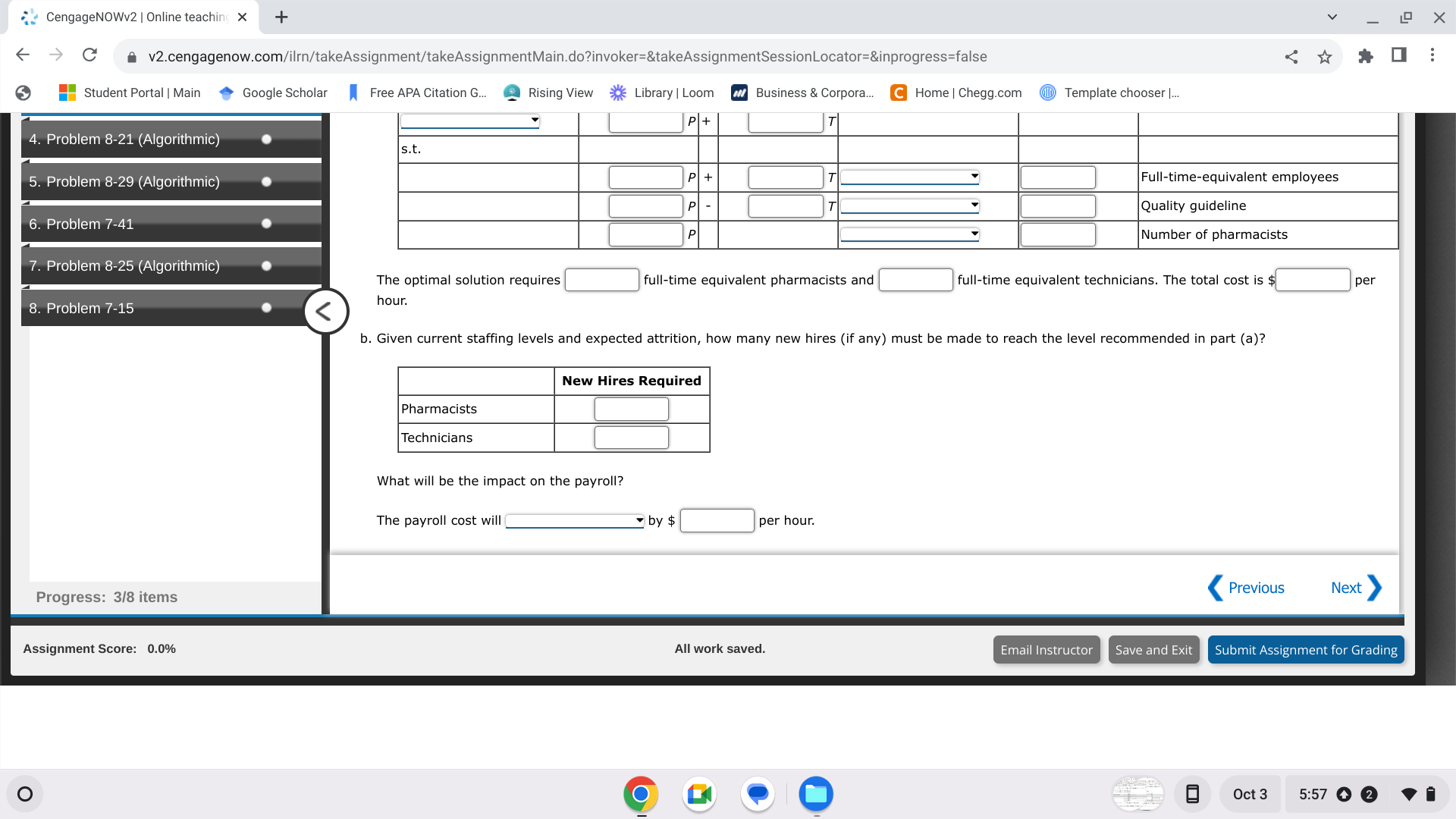
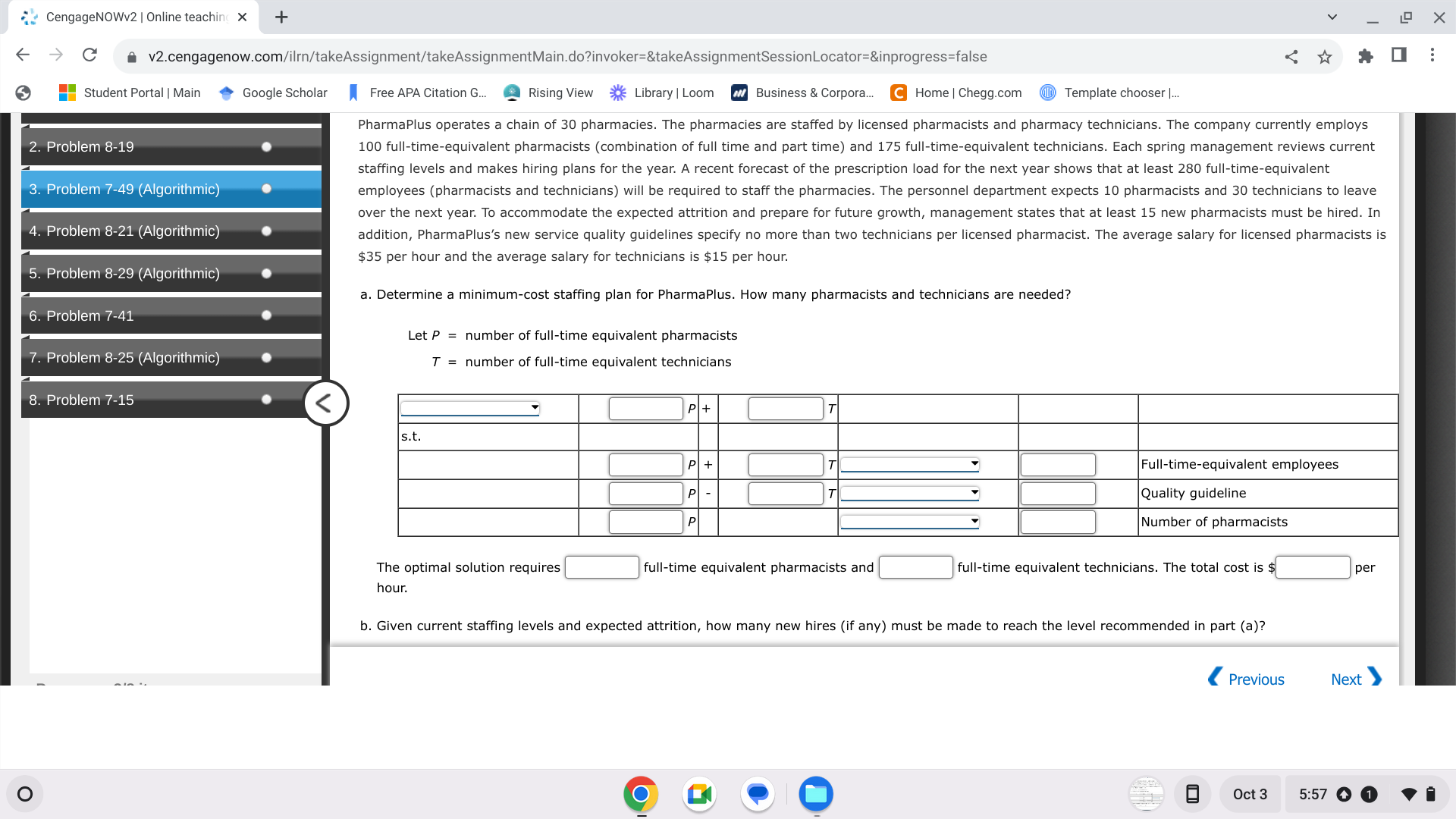
The optimal solution requires full-time equivalent pharmacists and full-time equivalent technicians. The total cost is $ per hour. D. Given current staffing levels and expected attrition, how many new hires (if any) must be made to reach the level recommended in part (a)? What will be the impact on the payroll? The payroll cost will by $ per hour. PharmaPlus operates a chain of 30 pharmacies. The pharmacies are staffed by licensed pharmacists and pharmacy technicians. The company currently employs 100 full-time-equivalent pharmacists (combination of full time and part time) and 175 full-time-equivalent technicians. Each spring management reviews current staffing levels and makes hiring plans for the year. A recent forecast of the prescription load for the next year shows that at least 280 full-time-equivalent employees (pharmacists and technicians) will be required to staff the pharmacies. The personnel department expects 10 pharmacists and 30 technicians to leave over the next year. To accommodate the expected attrition and prepare for future growth, management states that at least 15 new pharmacists must be hired. In addition, PharmaPlus's new service quality guidelines specify no more than two technicians per licensed pharmacist. The average salary for licensed pharmacists is $35 per hour and the average salary for technicians is $15 per hour. a. Determine a minimum-cost staffing plan for PharmaPlus. How many pharmacists and technicians are needed? LetPT=numberoffull-timeequivalentpharmacists=numberoffull-timeequivalenttechnicians The optimal solution requires full-time equivalent pharmacists and full-time equivalent technicians. The total cost is $ per hour. b. Given current staffing levels and expected attrition, how many new hires (if any) must be made to reach the level recommended in part (a)? The optimal solution requires full-time equivalent pharmacists and full-time equivalent technicians. The total cost is $ per hour. D. Given current staffing levels and expected attrition, how many new hires (if any) must be made to reach the level recommended in part (a)? What will be the impact on the payroll? The payroll cost will by $ per hour. PharmaPlus operates a chain of 30 pharmacies. The pharmacies are staffed by licensed pharmacists and pharmacy technicians. The company currently employs 100 full-time-equivalent pharmacists (combination of full time and part time) and 175 full-time-equivalent technicians. Each spring management reviews current staffing levels and makes hiring plans for the year. A recent forecast of the prescription load for the next year shows that at least 280 full-time-equivalent employees (pharmacists and technicians) will be required to staff the pharmacies. The personnel department expects 10 pharmacists and 30 technicians to leave over the next year. To accommodate the expected attrition and prepare for future growth, management states that at least 15 new pharmacists must be hired. In addition, PharmaPlus's new service quality guidelines specify no more than two technicians per licensed pharmacist. The average salary for licensed pharmacists is $35 per hour and the average salary for technicians is $15 per hour. a. Determine a minimum-cost staffing plan for PharmaPlus. How many pharmacists and technicians are needed? LetPT=numberoffull-timeequivalentpharmacists=numberoffull-timeequivalenttechnicians The optimal solution requires full-time equivalent pharmacists and full-time equivalent technicians. The total cost is $ per hour. b. Given current staffing levels and expected attrition, how many new hires (if any) must be made to reach the level recommended in part (a)
Step by Step Solution
There are 3 Steps involved in it

Get step-by-step solutions from verified subject matter experts
 Study Help