



Question: The OR (II) operator: a. Has higher precedence than the AND (&&) operator. b. Stops evaluation upon finding one condition to be true. c. Associates
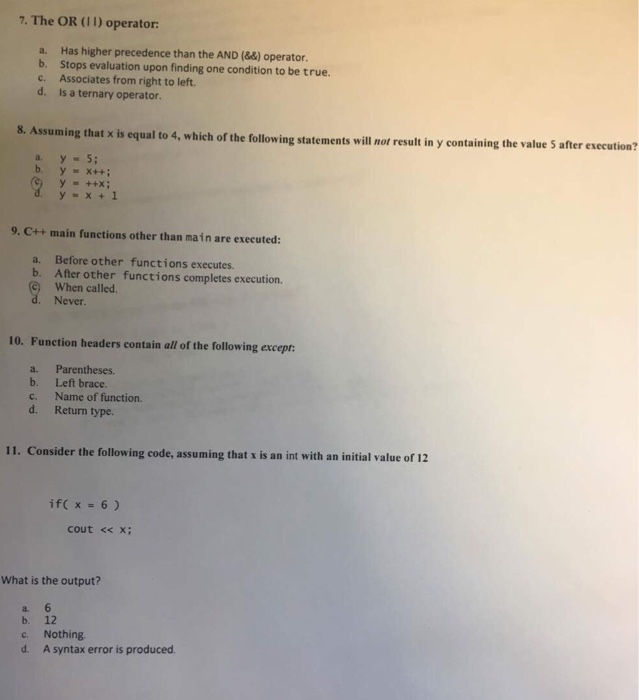
The OR (II) operator: a. Has higher precedence than the AND (&&) operator. b. Stops evaluation upon finding one condition to be true. c. Associates from right to left. d. Is a ternary operator. Assuming that x is equal to 4, which of the following statements will not result in y containing the value 5 after execution? a. y = 5; b. y = x++; c. y = ++x; d. y = x + 1 C++ main functions other than main are executed: a. Before other functions executes. b. After other functions completes execution. c) When called. d. Never. Function headers contain all of the following except: a. Parentheses. b. Left brace. c. Name of function. d. Return type. Consider the following code, assuming that x is an int with an initial value of 12 if(x = 6) cout
Step by Step Solution
There are 3 Steps involved in it

Get step-by-step solutions from verified subject matter experts