







Question: The payoff table below demonstrates a pricing decision game between two pizza providers in town. Each pizza provider is faced with a decision to price
- The payoff table below demonstrates a pricing decision game between two pizza providers in town. Each pizza provider is faced with a decision to price their product in a high, medium, or low price category.
| Dominoes | ||||
| Low | Medium | High | ||
| Pizza Hut | Low | $500,$500 | $425,$750 | $575, $700 |
| Medium | $600,$400 | $550,$600 | $580, $580 | |
| High | $450, $375 | $400, $550 | $550, $775 |
- Does Pizza Hut have a dominated strategy in the original payoff table? If so, what is it and why is it dominated? If not, why not?
- Does Dominoes have a dominated strategy in the original payoff table? If so, what is it and why is it dominated? If not, why not?
- What is the resulting dominant strategy equilibrium of this pricing decision problem? Please explain the decision making process of each firm.
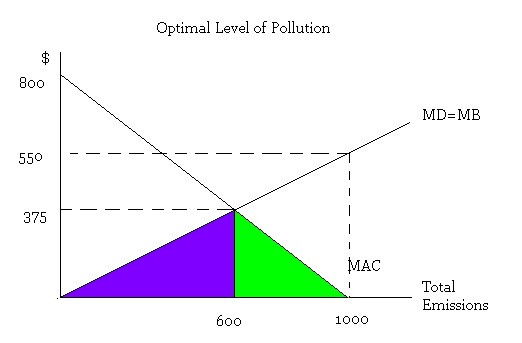
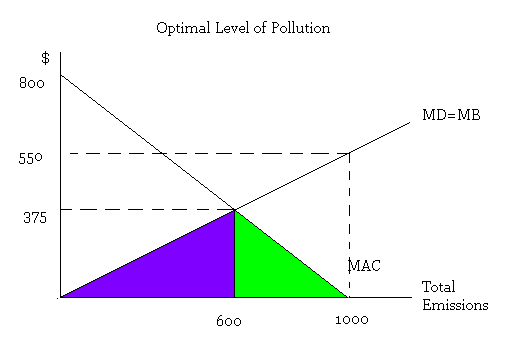
- What role do property rights play in creating common property resources? Why are common property resources subject to market failure due to non-excludability?
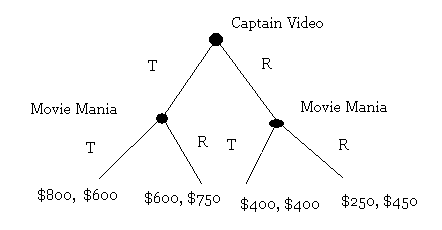
- Suppose there are two movie rental stores in town: Captain Video and Movie Mania. These movie rental firms face a choice between two advertising strategies: television (T) and radio (R). Captain Video will be the first firm to make a decision, and their decision will be based on the anticipated action of Movie Mania. A game tree is provided below:
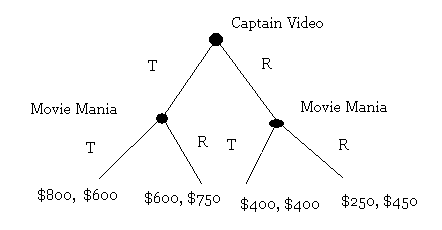
\fCaptain Video T R. Movie Mania Movie Mania T R T R. $Boo, $600 $600, $750 $400, $400 $250, $450
Step by Step Solution
There are 3 Steps involved in it
1 Expert Approved Answer
Step: 1 Unlock

Question Has Been Solved by an Expert!
Get step-by-step solutions from verified subject matter experts
Step: 2 Unlock
Step: 3 Unlock
 Study Help