Question: The PC Tech company assembles and then tests two models of computers, Basic and XP. For the coming month, the company wants to decide how

The PC Tech company assembles and then tests twoThe PC Tech company assembles and then tests twoThe PC Tech company assembles and then tests twoThe PC Tech company assembles and then tests twoThe PC Tech company assembles and then tests two

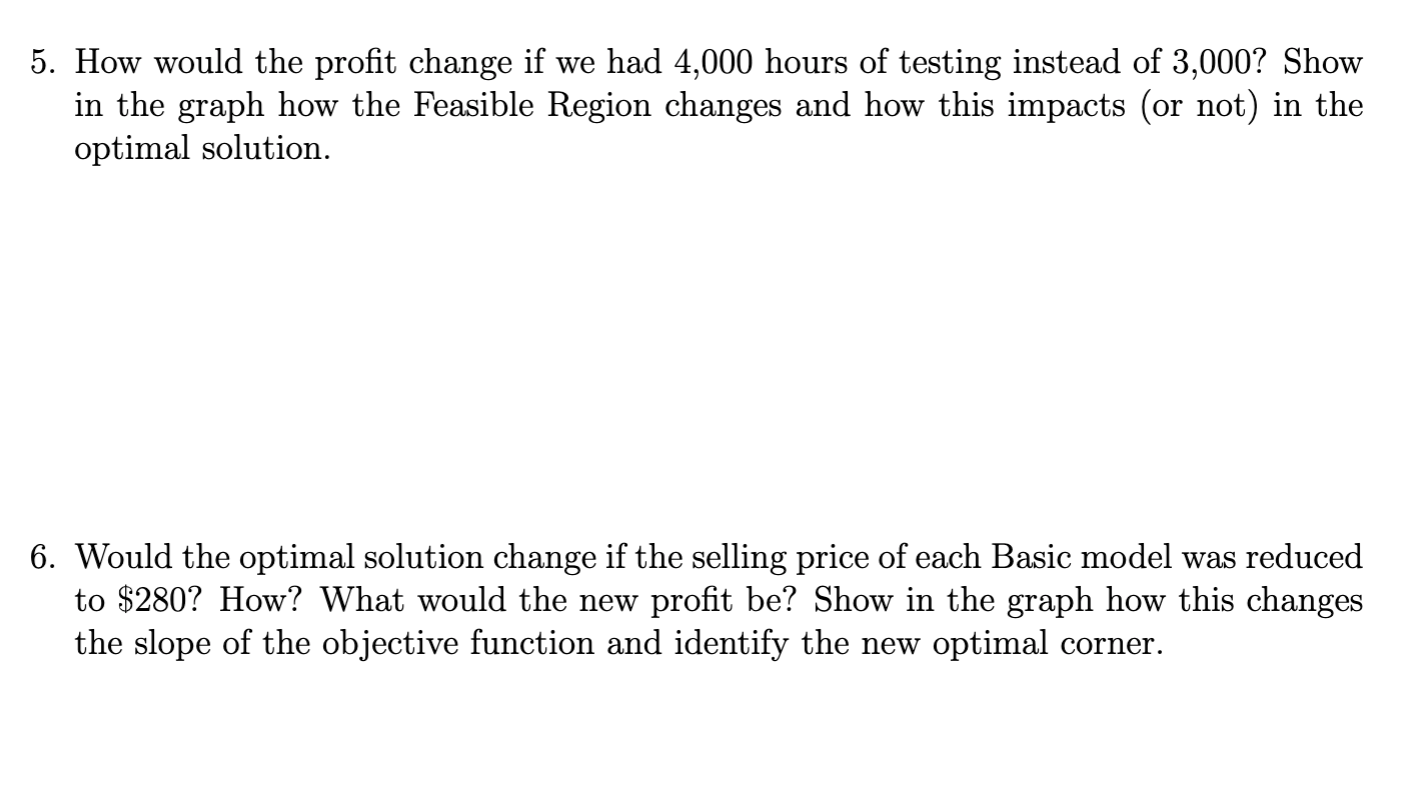
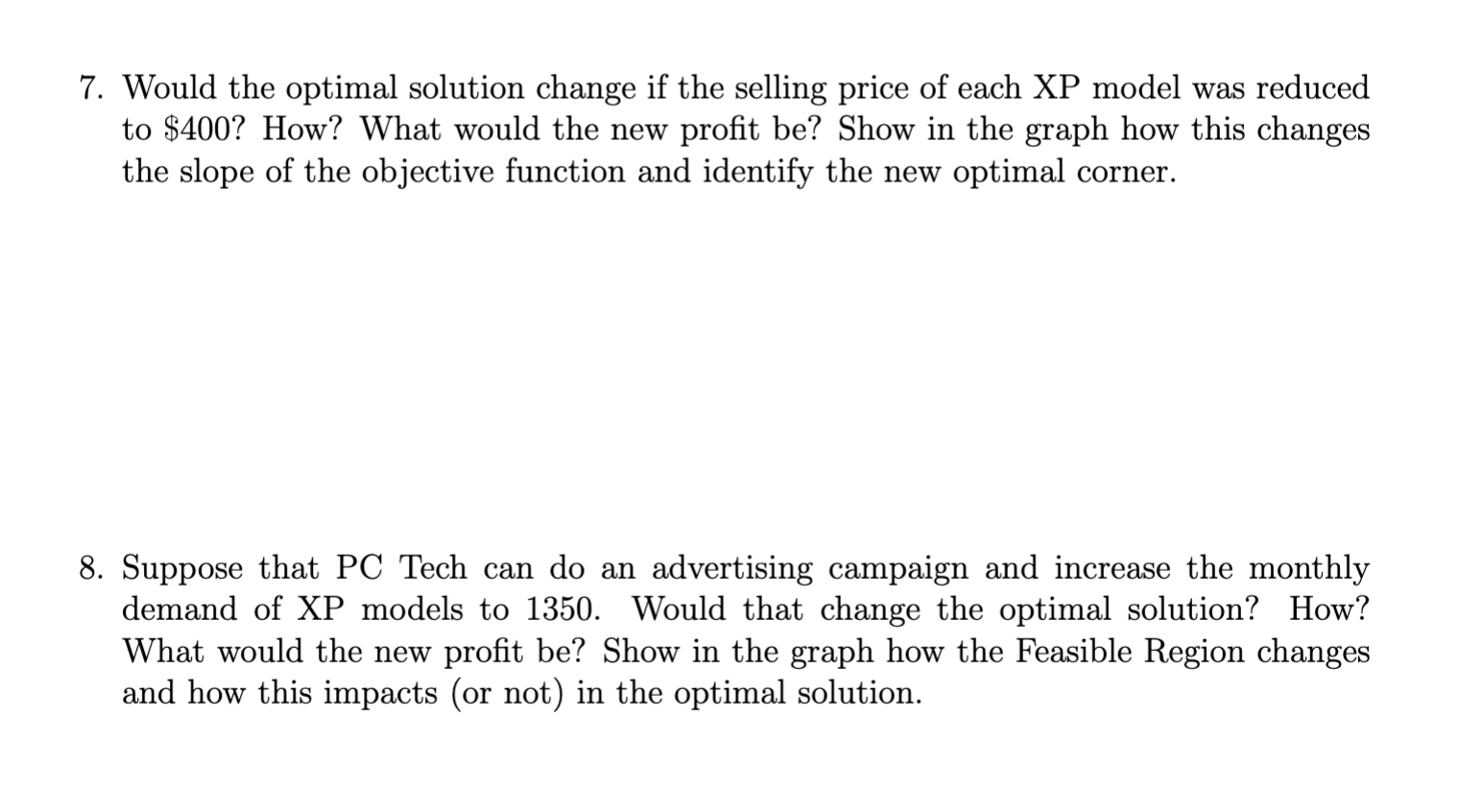
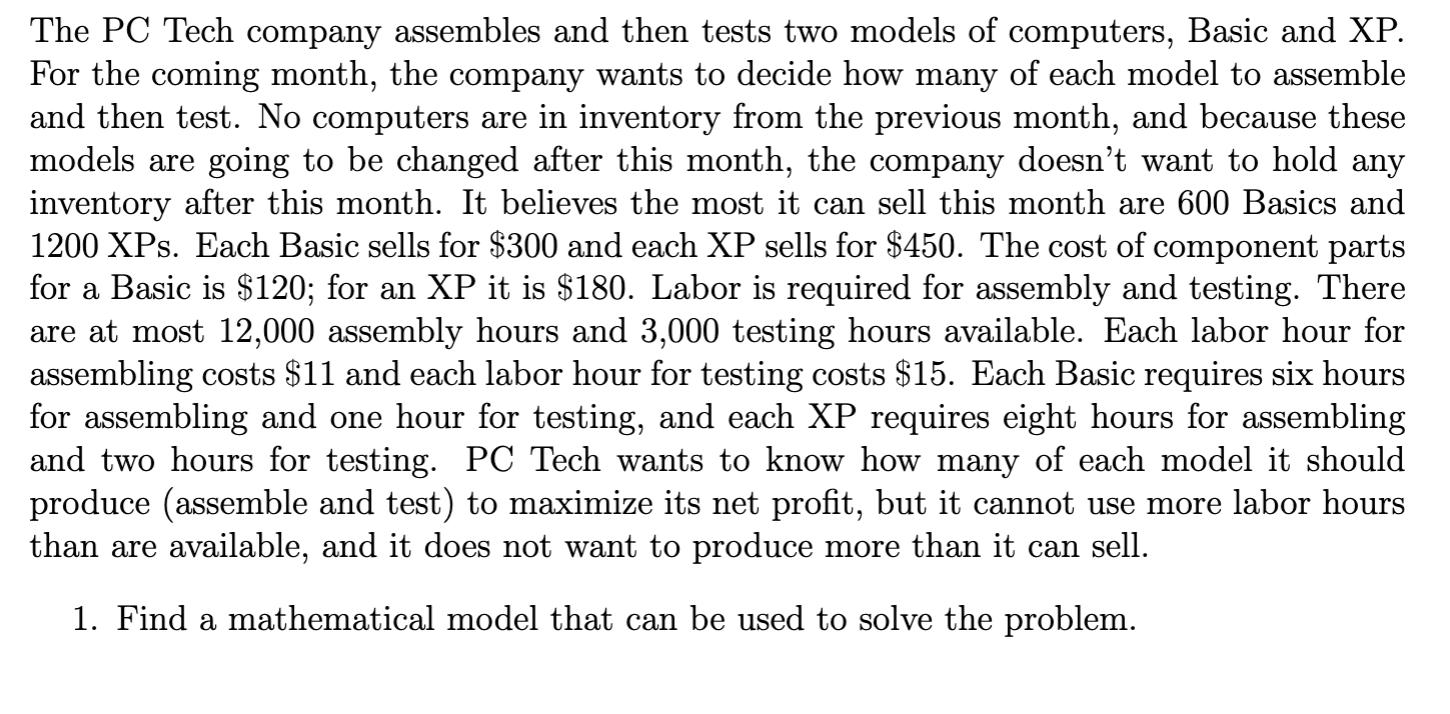
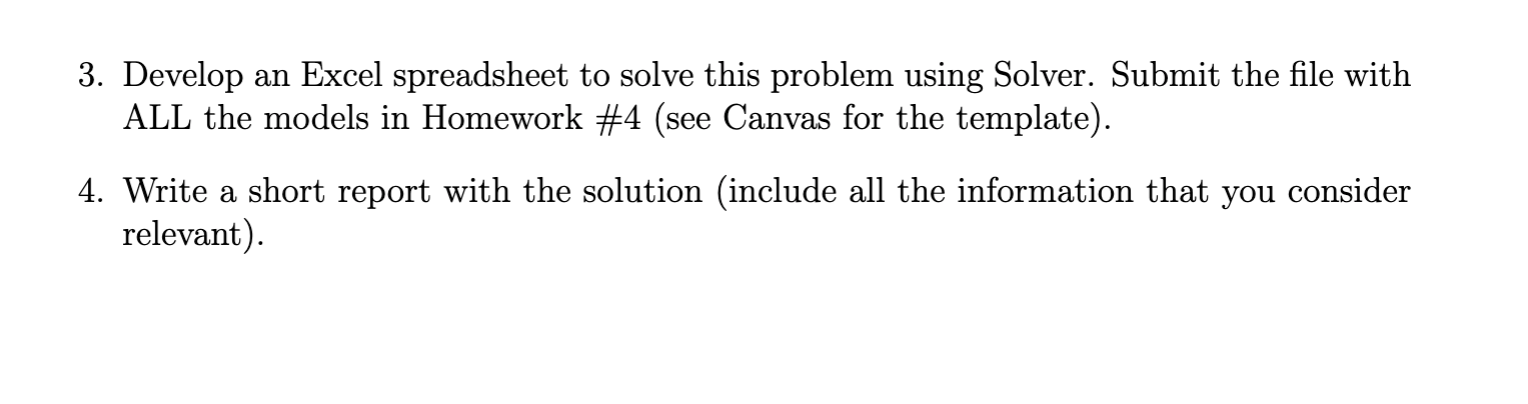
The PC Tech company assembles and then tests two models of computers, Basic and XP. For the coming month, the company wants to decide how many of each model to assemble and then test. No computers are in inventory from the previous month, and because these models are going to be changed after this month, the company doesn't want to hold any inventory after this month. It believes the most it can sell this month are 600 Basics and 1200 XPs. Each Basic sells for $300 and each XP sells for $450. The cost of component parts for a Basic is $120; for an XP it is $180. Labor is required for assembly and testing. There are at most 12,000 assembly hours and 3,000 testing hours available. Each labor hour for assembling costs $11 and each labor hour for testing costs $15. Each Basic requires six hours for assembling and one hour for testing, and each XP requires eight hours for assembling and two hours for testing. PC Tech wants to know how many of each model it should produce (assemble and test) to maximize its net profit, but it cannot use more labor hours than are available, and it does not want to produce more than it can sell. 1. Find a mathematical model that can be used to solve the problem. 2. Use the graphical procedure to determine the optimal daily production strategy for this company. You can do the graph here manually or print a graph done in Geogebra or Excel. 3. Develop an Excel spreadsheet to solve this problem using Solver. Submit the file with ALL the models in Homework #4 (see Canvas for the template). 4. Write a short report with the solution (include all the information that you consider relevant). 5. How would the profit change if we had 4,000 hours of testing instead of 3,000 ? Show in the graph how the Feasible Region changes and how this impacts (or not) in the optimal solution. 6. Would the optimal solution change if the selling price of each Basic model was reduced to $280 ? How? What would the new profit be? Show in the graph how this changes the slope of the objective function and identify the new optimal corner. 7. Would the optimal solution change if the selling price of each XP model was reduced to $400 ? How? What would the new profit be? Show in the graph how this changes the slope of the objective function and identify the new optimal corner. 8. Suppose that PC Tech can do an advertising campaign and increase the monthly demand of XP models to 1350 . Would that change the optimal solution? How? What would the new profit be? Show in the graph how the Feasible Region changes and how this impacts (or not) in the optimal solution
Step by Step Solution

There are 3 Steps involved in it

1 Expert Approved Answer
Step: 1 Unlock blur-text-image

Question Has Been Solved by an Expert!

Get step-by-step solutions from verified subject matter experts

Step: 2 Unlock
Step: 3 Unlock

Students Have Also Explored These Related General Management Questions!