







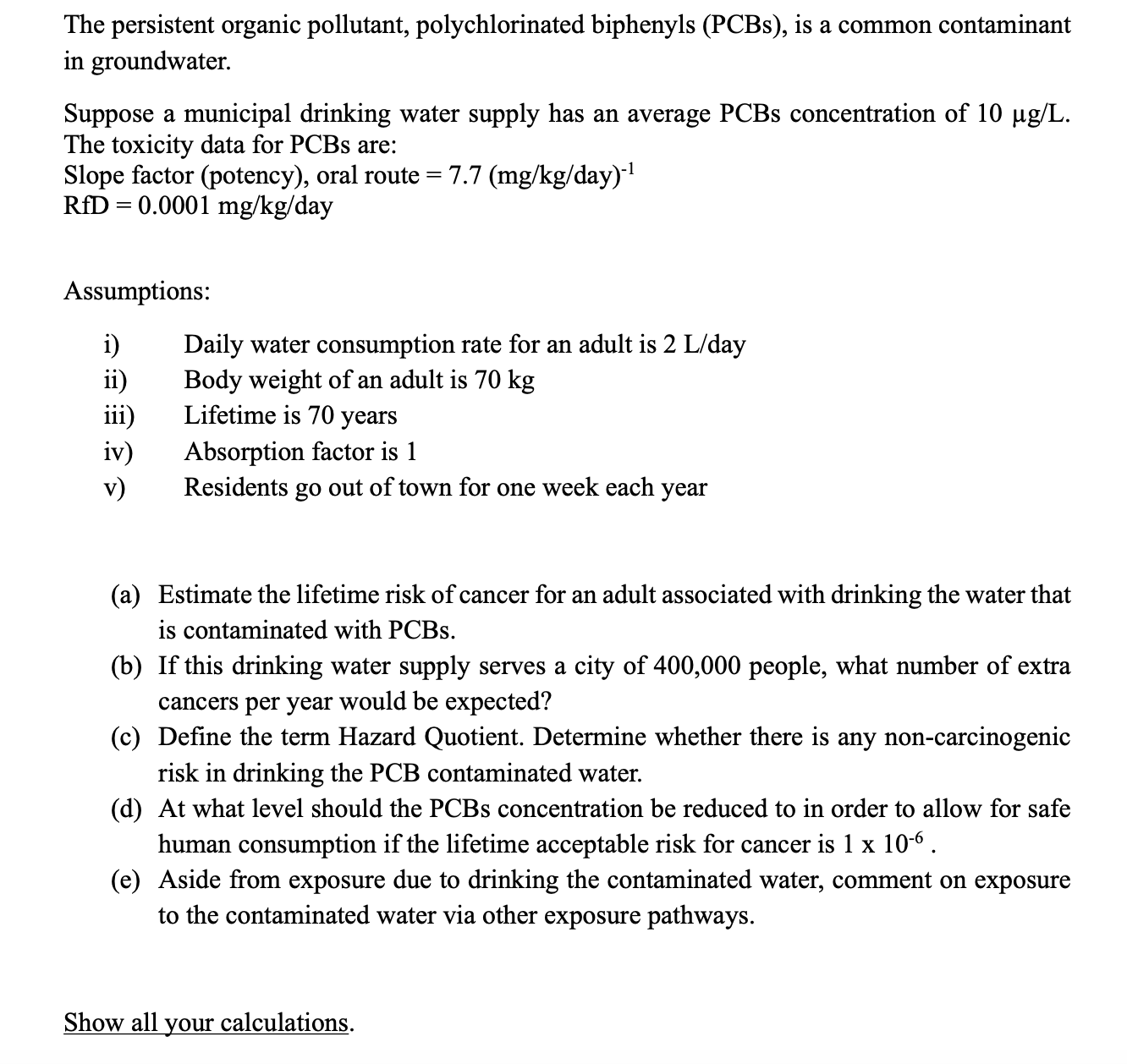
Question: The persistent organic pollutant, polychlorinated biphenyls ( PCBs ) , is a common contaminant in groundwater. Suppose a municipal drinking water supply has an average
The persistent organic pollutant, polychlorinated biphenyls PCBs is a common contaminant in groundwater.
Suppose a municipal drinking water supply has an average PCBs concentration of mu mathrm~gmathrmL The toxicity data for PCBs are:
Slope factor potency oral route mathrmmgmathrmkgtext day
mathrmRfDmathrmmgmathrmkg day
Assumptions:
i Daily water consumption rate for an adult is mathrm~L day
ii Body weight of an adult is kg
iii Lifetime is years
iv Absorption factor is
v Residents go out of town for one week each year
a Estimate the lifetime risk of cancer for an adult associated with drinking the water that is contaminated with PCBs
b If this drinking water supply serves a city of people, what number of extra cancers per year would be expected?
c Define the term Hazard Quotient. Determine whether there is any noncarcinogenic risk in drinking the PCB contaminated water.
d At what level should the PCBs concentration be reduced to in order to allow for safe human consumption if the lifetime acceptable risk for cancer is times
e Aside from exposure due to drinking the contaminated water, comment on exposure to the contaminated water via other exposure pathways.
Show all your calculations.
Step by Step Solution
There are 3 Steps involved in it
1 Expert Approved Answer
Step: 1 Unlock

Question Has Been Solved by an Expert!
Get step-by-step solutions from verified subject matter experts
Step: 2 Unlock
Step: 3 Unlock
 Study Help