







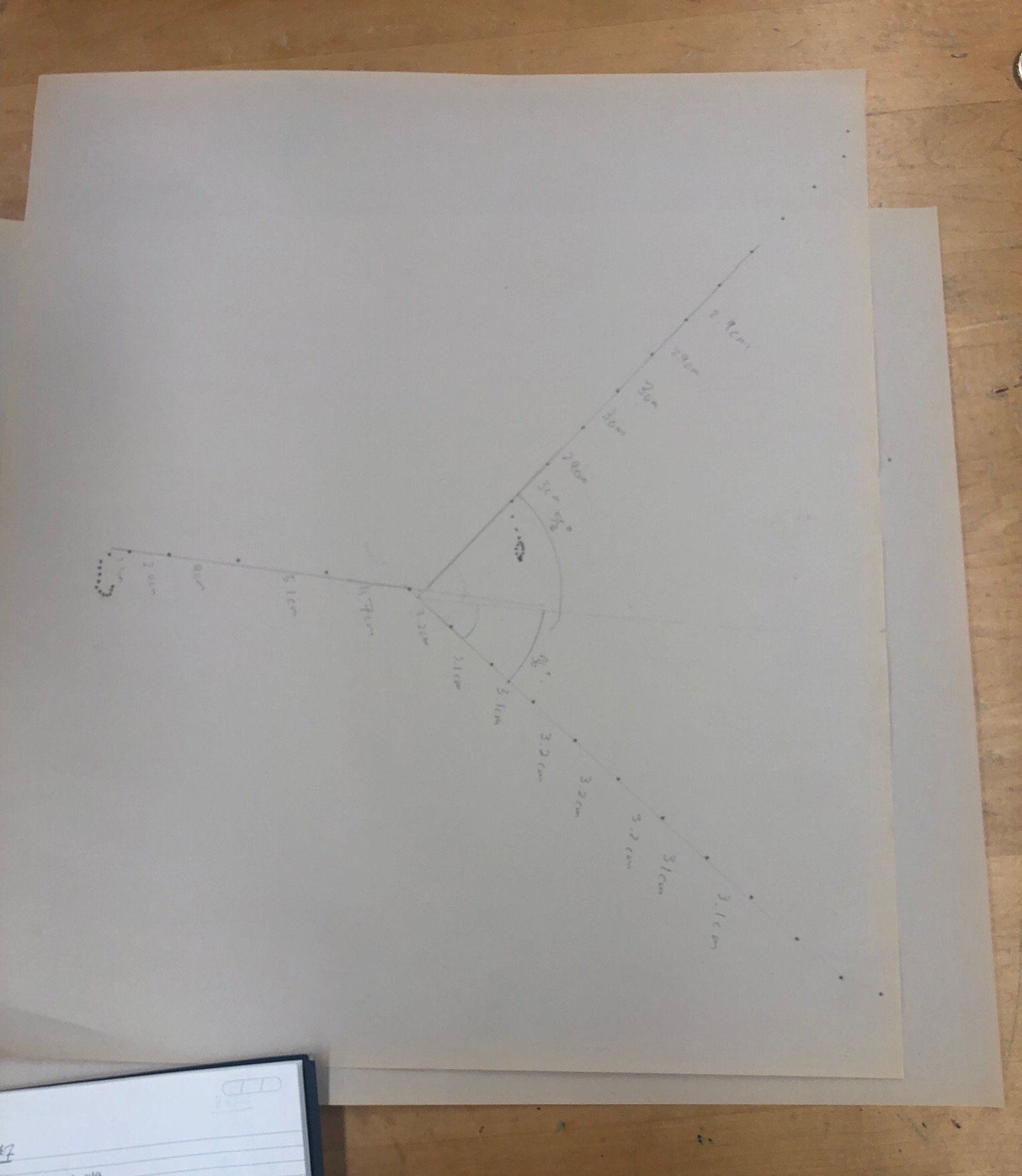
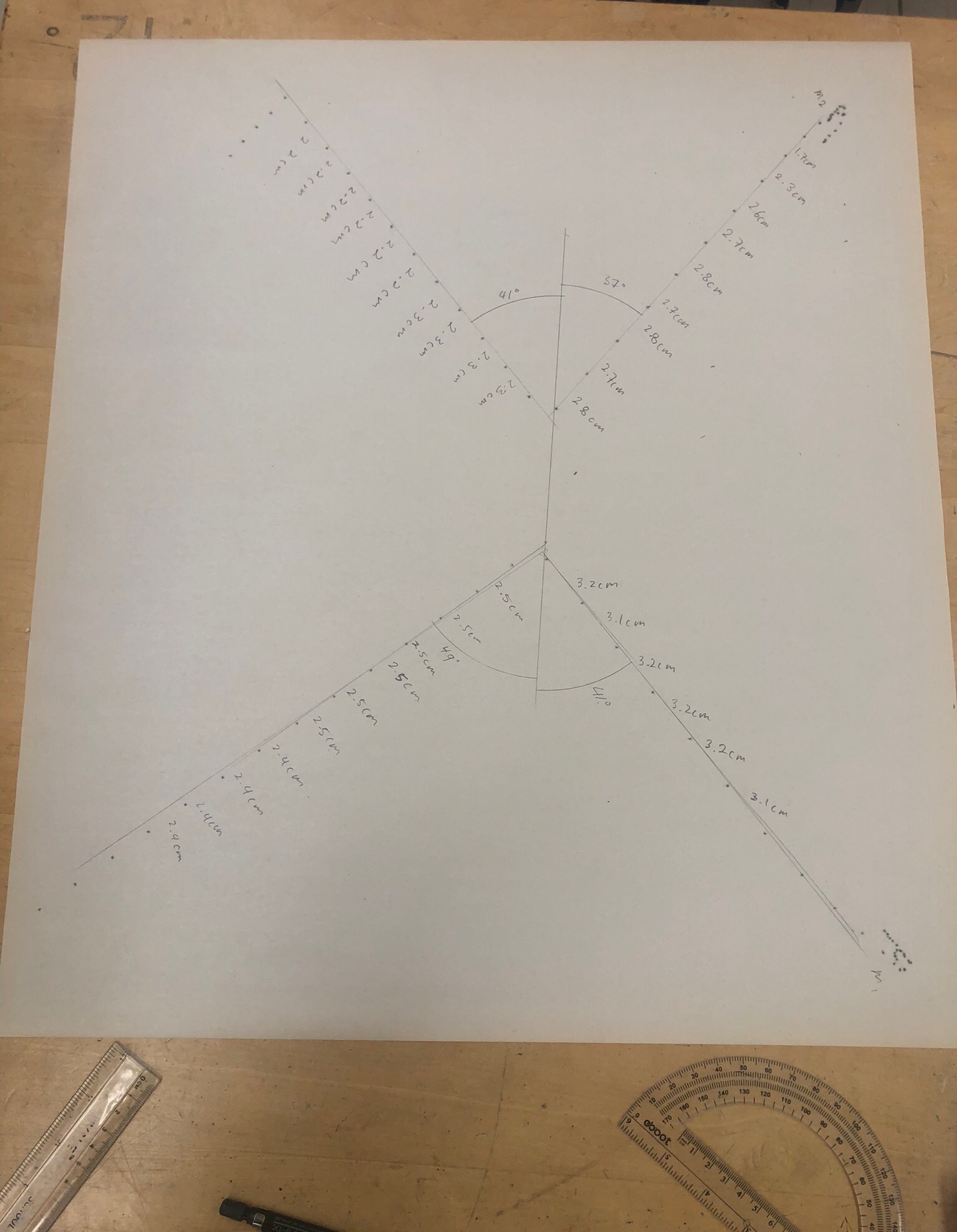
Question: the pictures are the data, you can use these data to solve the lab, the first two pictures are the data, and the two last
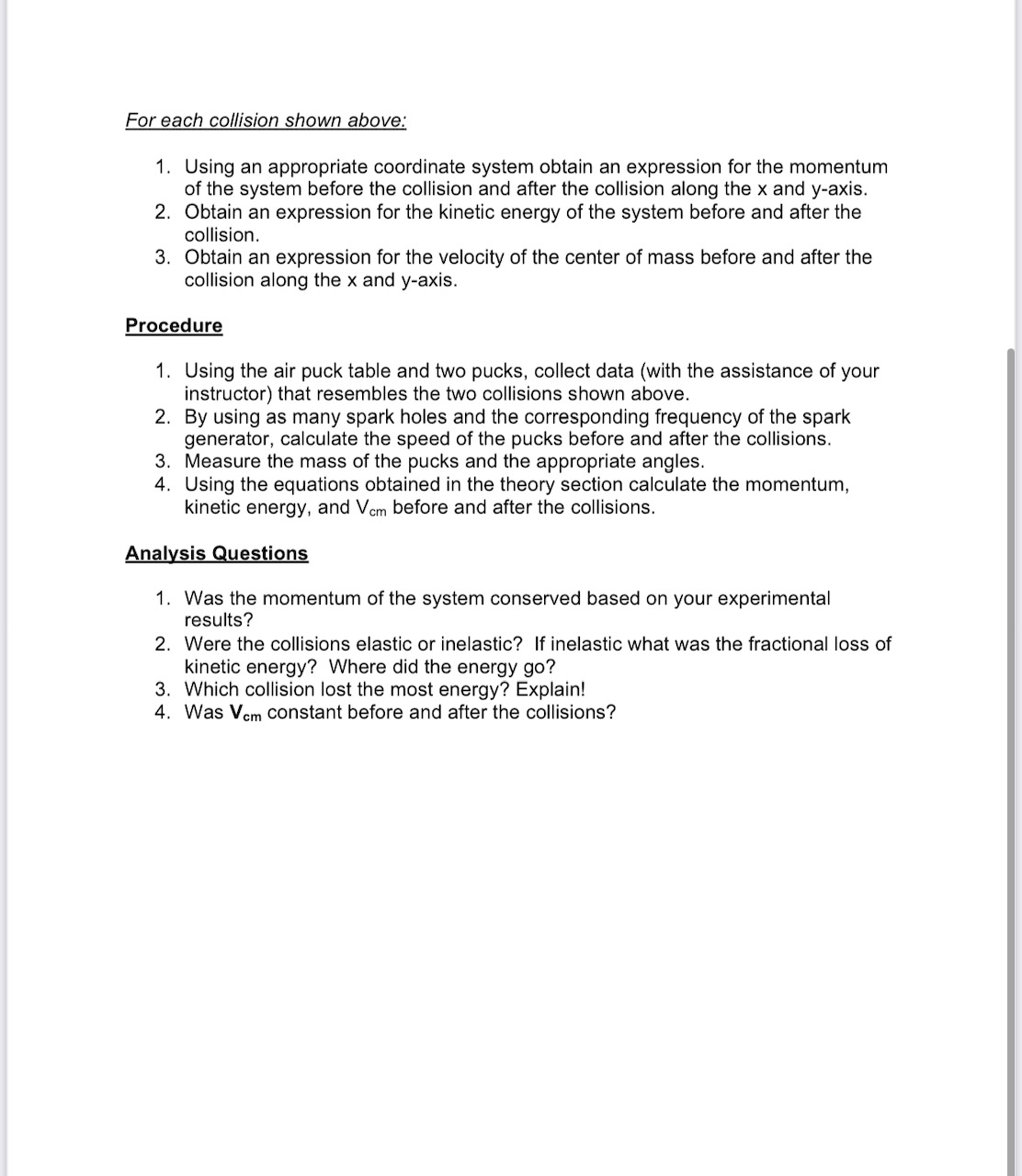
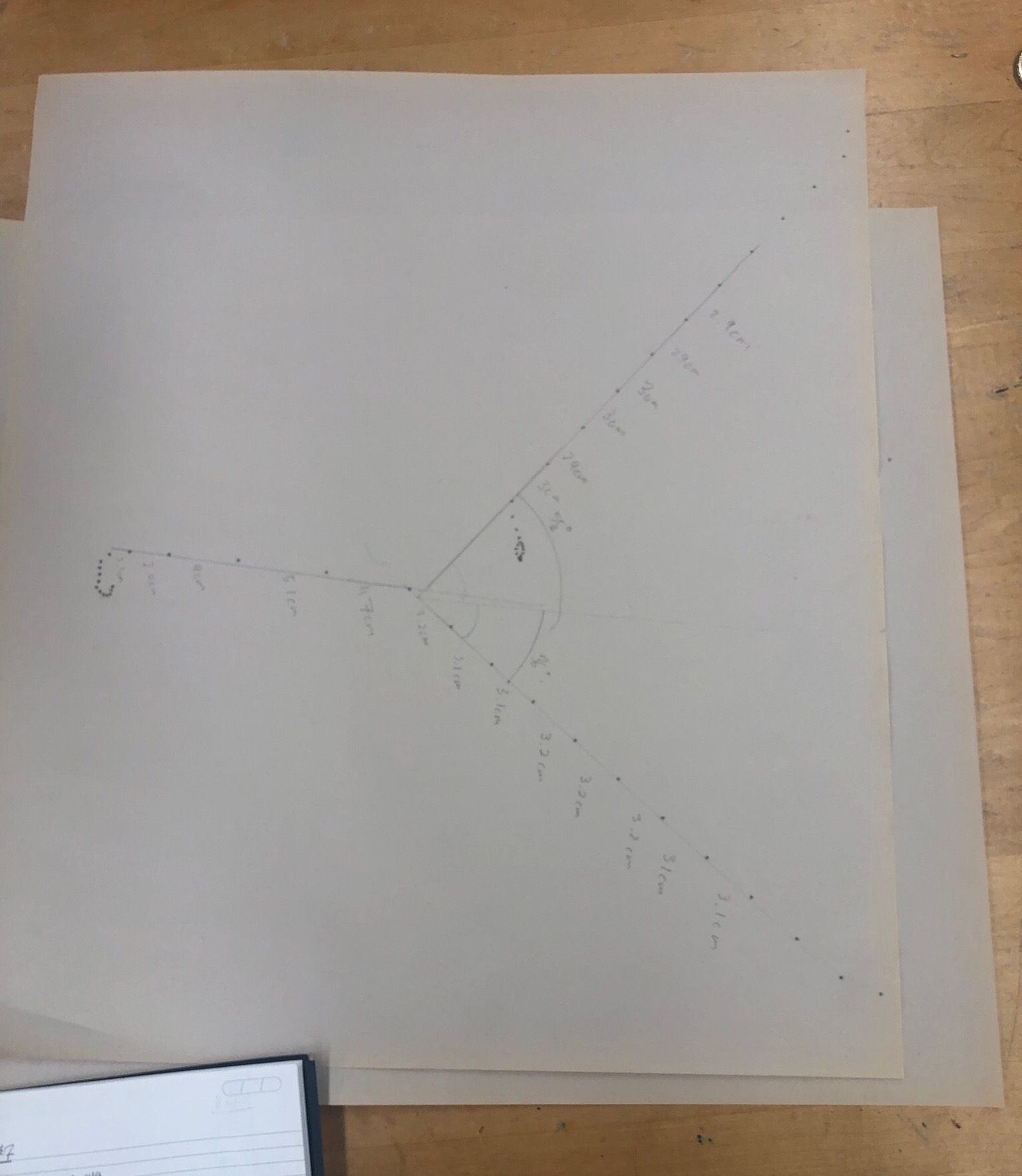
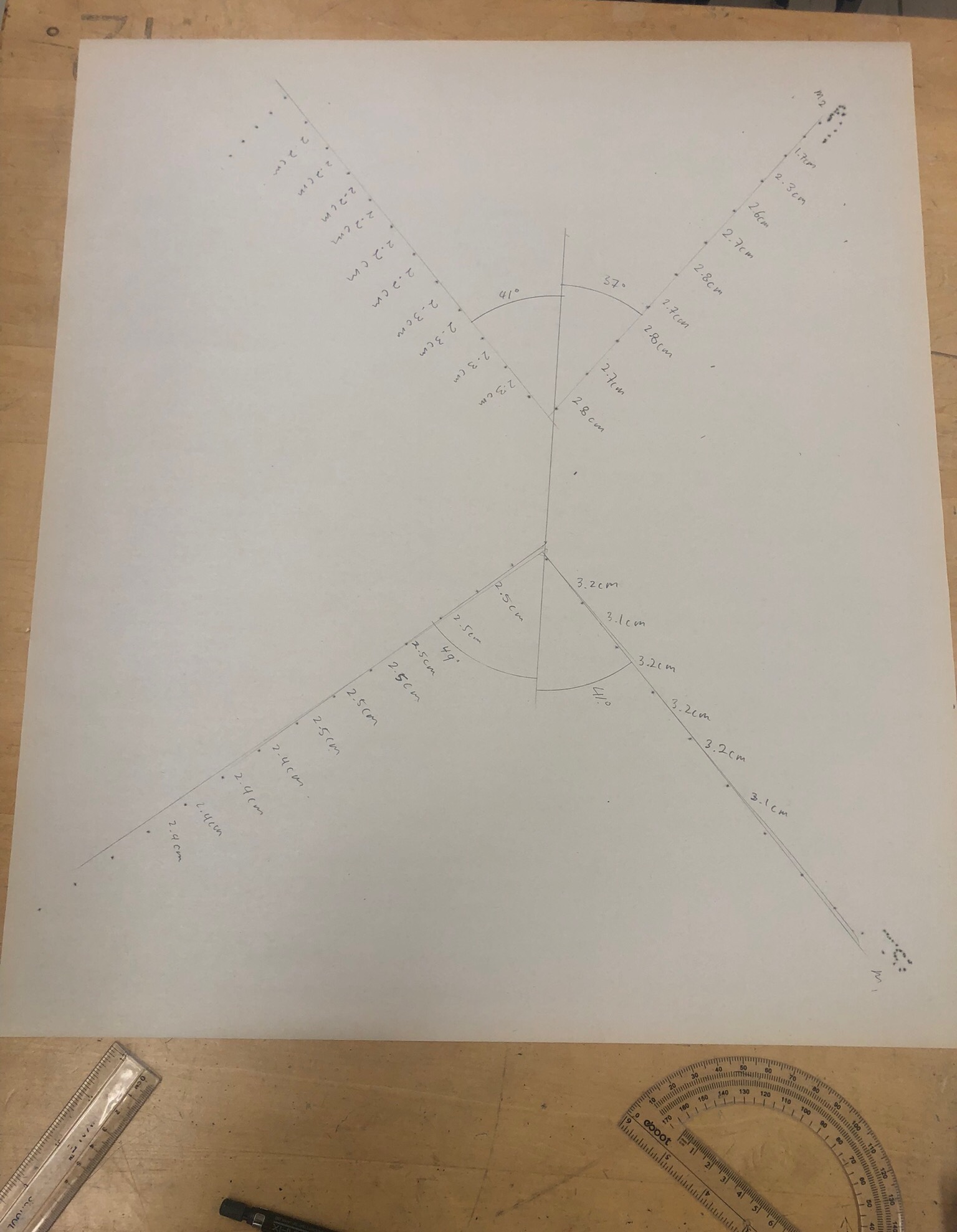
the pictures are the data, you can use these data to solve the lab, the first two pictures are the data, and the two last pictures are the lab report, how to solve it.
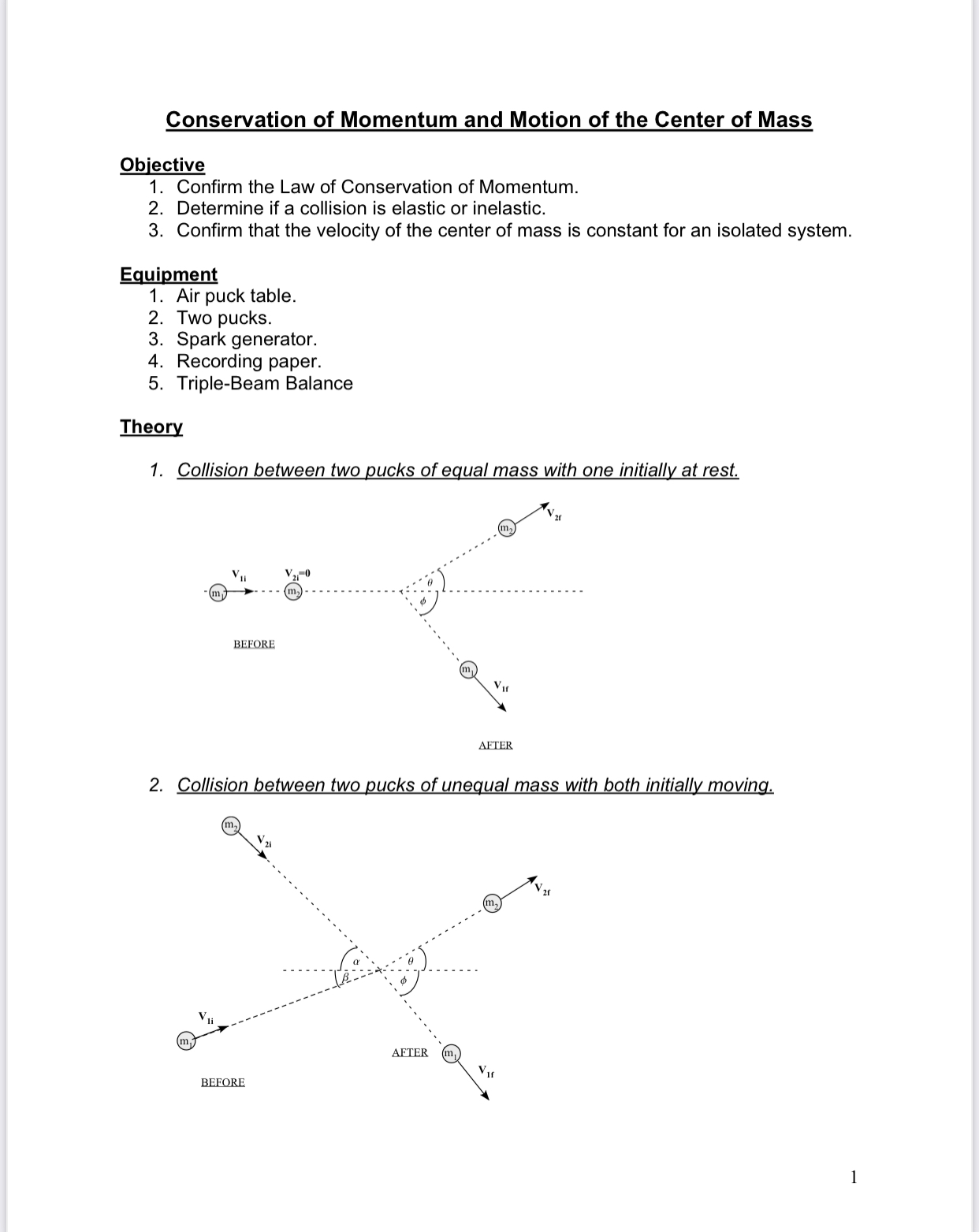
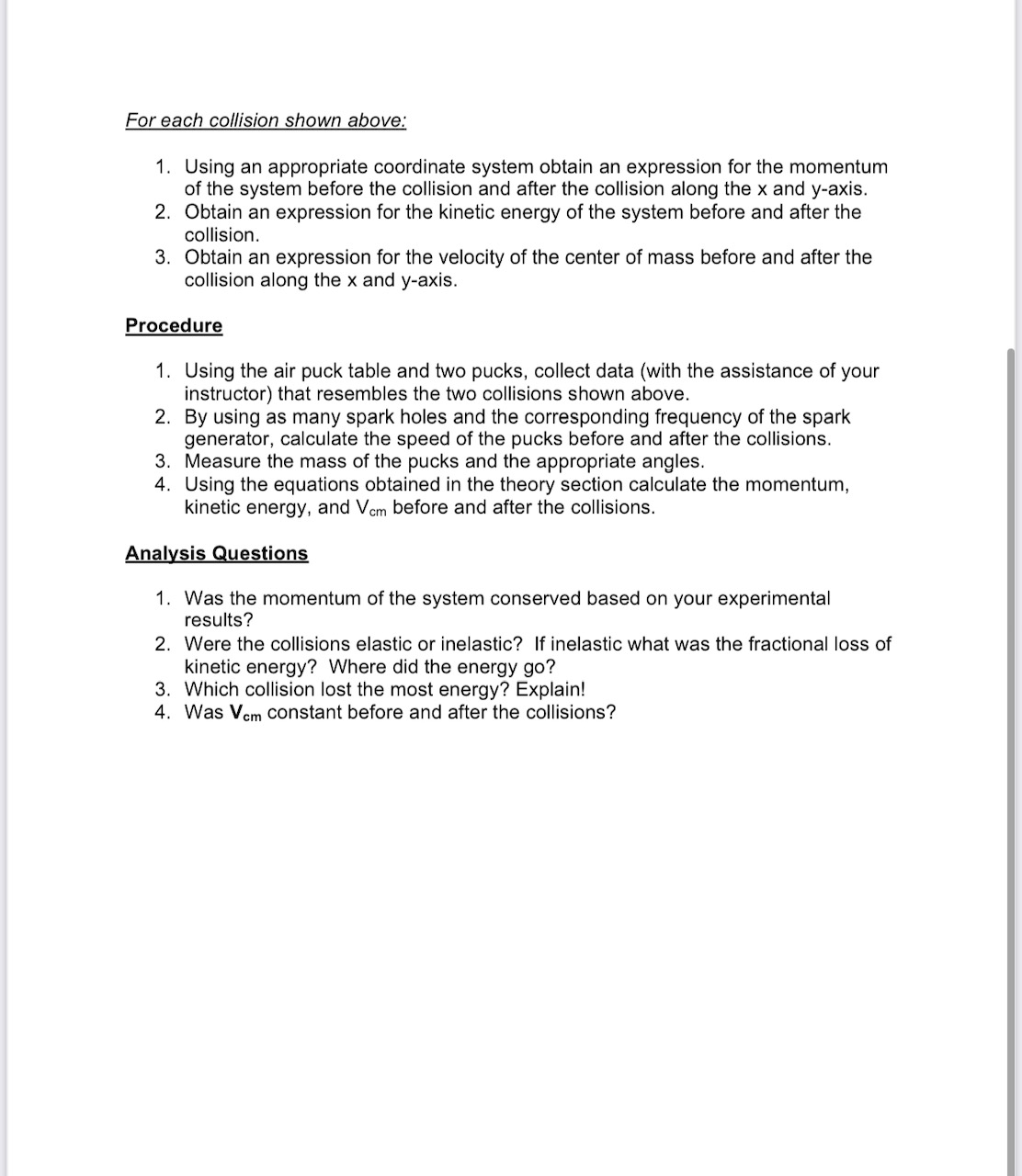
Conservation of Momentum and Motion of the Center of Mass Objective 1. Confirm the Law of Conservation of Momentum. 2. Determine if a collision is elastic or inelastic. 3. Confirm that the velocity of the center of mass is constant for an isolated system. Equipment 1. Air puck table. 2. Two pucks. 3. Spark generator. 4. Recording paper. 5. Triple-Beam Balance Theory 1. Collision between two pucks of equal mass with one initially at rest. BEFORE AFTER 2. Collision between two pucks of unequal mass with both initially moving. V 21 Vli AFTER BEFOREFor eachI collision shown above: . Using an appropriate coordinate system obtain an expression for the momentum of the system before the collision and after the collision along the x and y-axis. Obtain an expression for the kinetic energy of the system before and after the collision. Obtain an expression for the velocity of the center of mass before and after the collision along the x and y-axis. Procedure 'I i PP\" Ant \"9' Using the air puck table and two pucks, collect data (with the assistance of your instructor) that resembles the two collisions shown above. By using as many spark holes and the corresponding frequency of the spark generator. calculate the speed of the pucks before and after the collisions. Measure the mass of the pucks and the appropriate angles. Using the equations obtained in the theory section calculate the momentum, kinetic energy, and ch before and after the collisions. i i n . Was the momentum of the system conserved based on your experimental results? Were the collisions elastic or inelastic? If inelastic what was the fractional loss of kinetic energy? Where did the energy go? Which collision lost the most energy? Explain! . Was ch constant before and after the collisions?
Step by Step Solution
There are 3 Steps involved in it

Get step-by-step solutions from verified subject matter experts
 Study Help