







Question: The probability distribution of a random variable X , called the probability distribution of X , is a list of each possible outcome, x of
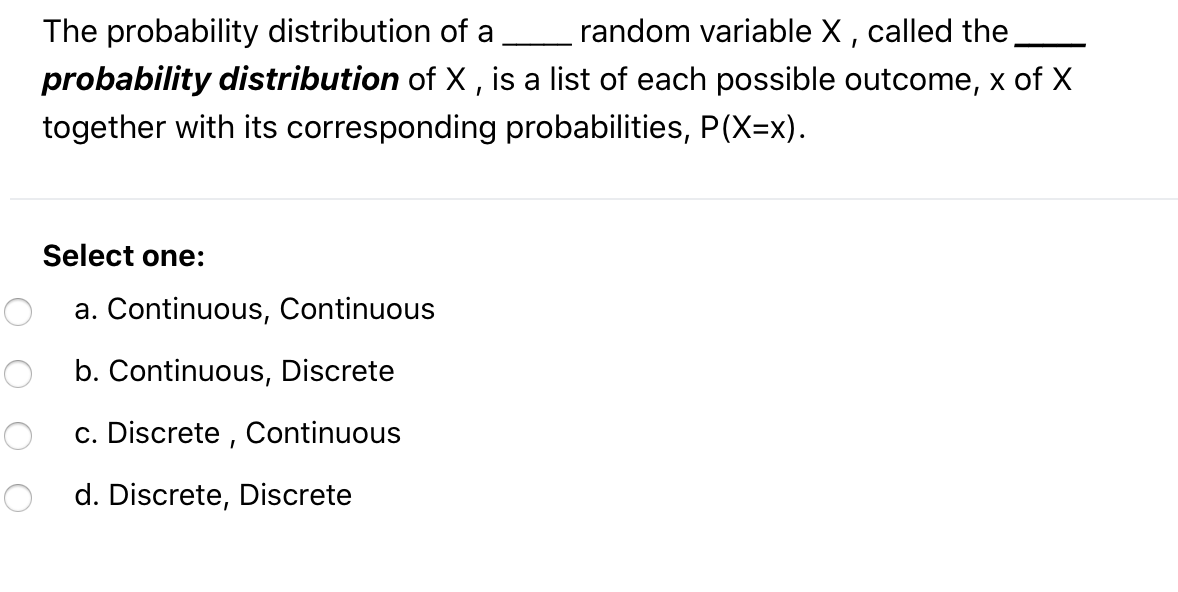
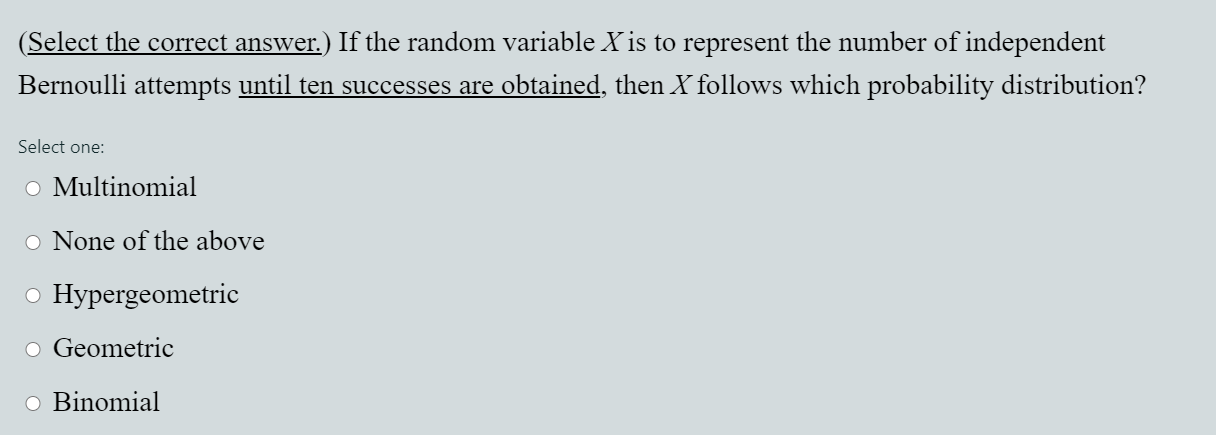
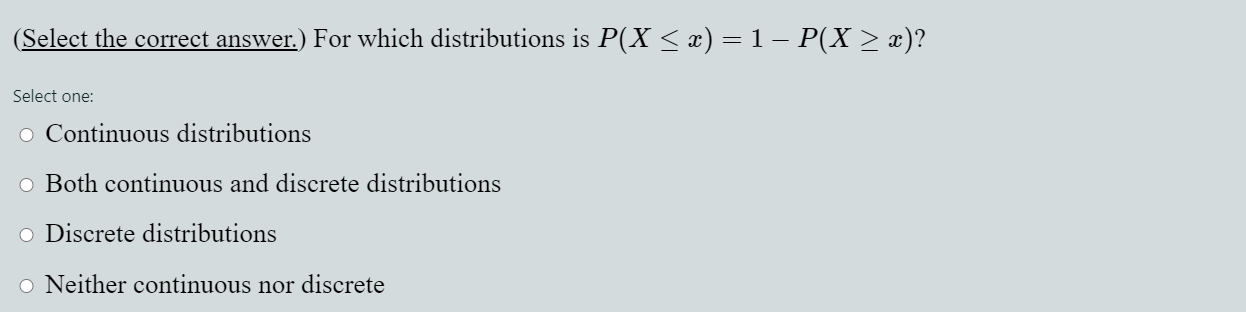
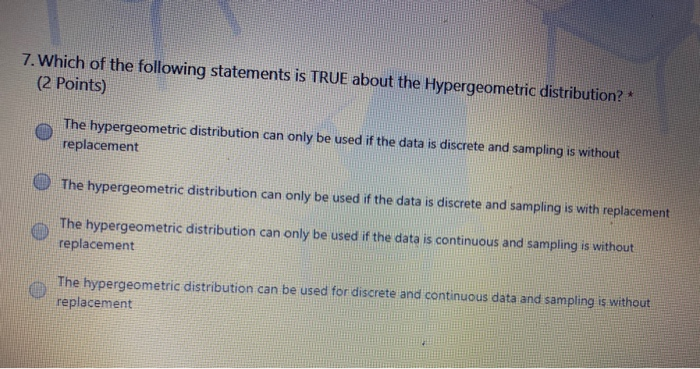
The probability distribution of a random variable X , called the probability distribution of X , is a list of each possible outcome, x of X together with its corresponding probabilities, P(X=x). Select one: a. Continuous, Continuous b. Continuous, Discrete c. Discrete , Continuous d. Discrete, Discrete (Select the correct answer.) If the random variable X is to represent the number of independent Bernoulli attempts until ten successes are obtained, then X follows which probability distribution? Select one: Multinomial . None of the above . Hypergeometric . Geometric . Binomial(Select the correct answer.) For which distributions is P(X x)? Select one: . Continuous distributions . Both continuous and discrete distributions . Discrete distributions . Neither continuous nor discrete7. Which of the following statements is TRUE about the Hypergeometric distribution? (2 Points) The hypergeometric distribution can only be used if the data is discrete and sampling is without replacement The hypergeometric distribution can only be used if the data is discrete and sampling is with replacement The hypergeometric distribution can only be used if the data is continuous and sampling is without replacement The hypergeometric distribution can be used for discrete and continuous data and sampling is without replacement
Step by Step Solution
There are 3 Steps involved in it

Get step-by-step solutions from verified subject matter experts
 Study Help