







Question: The process for converting present values into future values is called compounding This process requires knowledge of the values of three of four time-value-of-money variables.
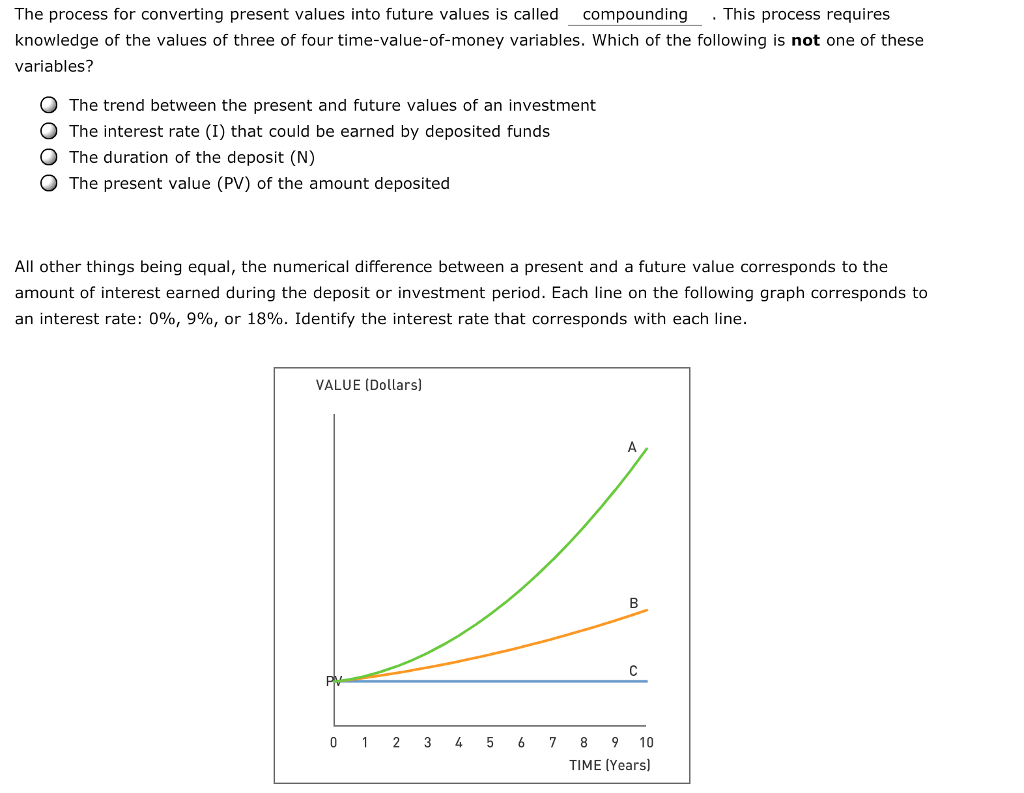
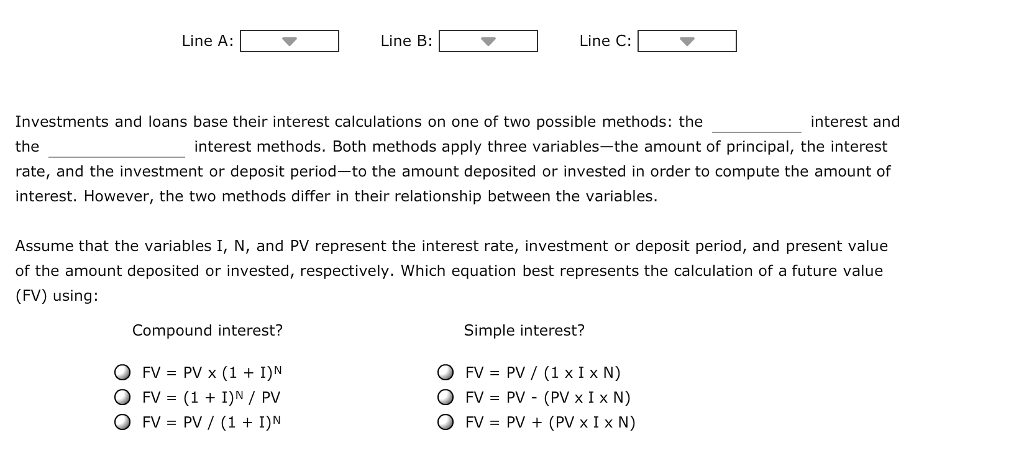
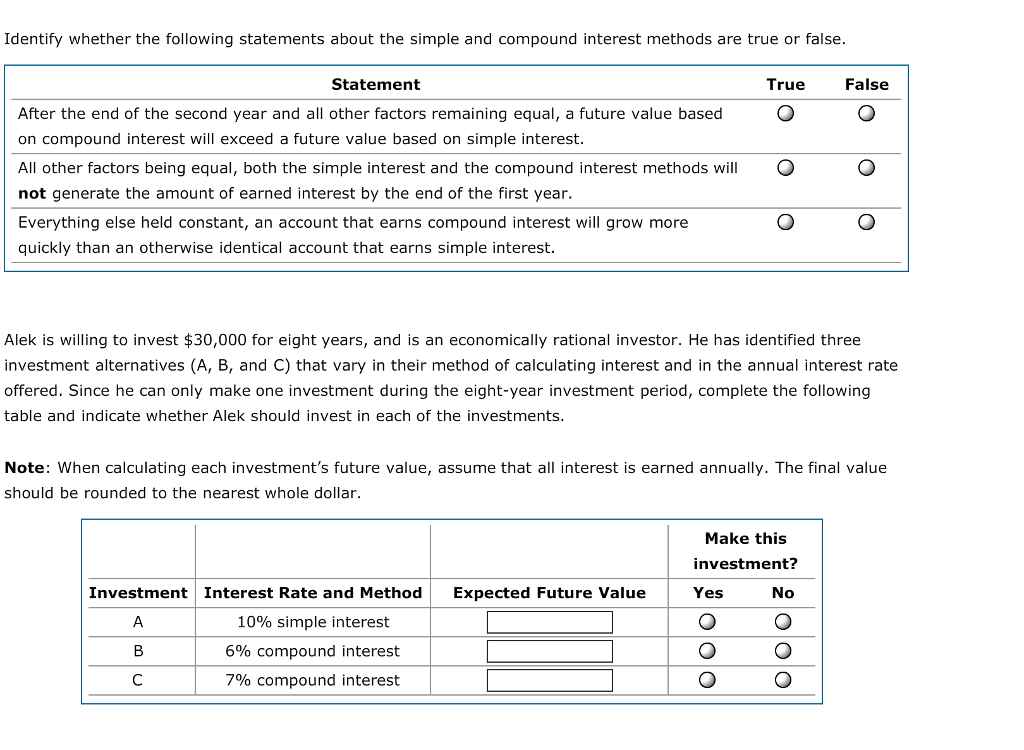
The process for converting present values into future values is called compounding This process requires knowledge of the values of three of four time-value-of-money variables. Which of the following is not one of these variables? O The trend between the present and future values of an investment O The interest rate(I) that could be earned by deposited funds O The duration of the deposit (N) O The present value (PV) of the amount deposited All other things being equal, the numerical difference between a present and a future value corresponds to the amount of interest earned during the deposit or investment period. Each line on the following graph corresponds to an interest rate: 0%, 9%, or 18%. Identify the interest rate that corresponds with each line. VALUE (Dollars] 0 23 4 5 67 89 10 TIME (Years
Step by Step Solution
There are 3 Steps involved in it

Get step-by-step solutions from verified subject matter experts
 Study Help