







Question: The processing applied to an aluminium alloy can dramatically affect the properties, allowing for alloys to be optimised for particular applications. (a) Thermomechanical processing involves
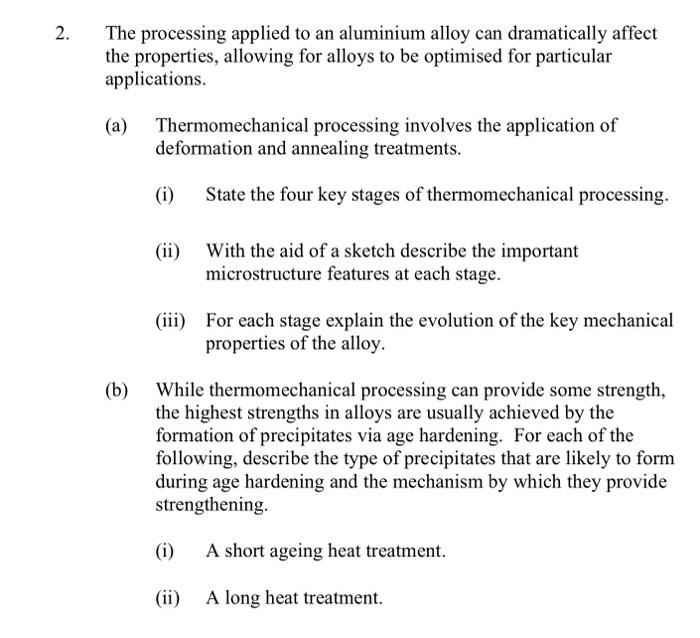
The processing applied to an aluminium alloy can dramatically affect the properties, allowing for alloys to be optimised for particular applications. (a) Thermomechanical processing involves the application of deformation and annealing treatments. (i) State the four key stages of thermomechanical processing. (ii) With the aid of a sketch describe the important microstructure features at each stage. (iii) For each stage explain the evolution of the key mechanical properties of the alloy. (b) While thermomechanical processing can provide some strength, the highest strengths in alloys are usually achieved by the formation of precipitates via age hardening. For each of the following, describe the type of precipitates that are likely to form during age hardening and the mechanism by which they provide strengthening. (i) A short ageing heat treatment. (ii) A long heat treatment
Step by Step Solution
There are 3 Steps involved in it

Get step-by-step solutions from verified subject matter experts
 Study Help