







Question: The question is the same in both pictures. Is it visible now? Birmingham Manufacturing makes paper towel dispensers. Their Work-In-Process Inventory account had a debit
The question is the same in both pictures. Is it visible now?
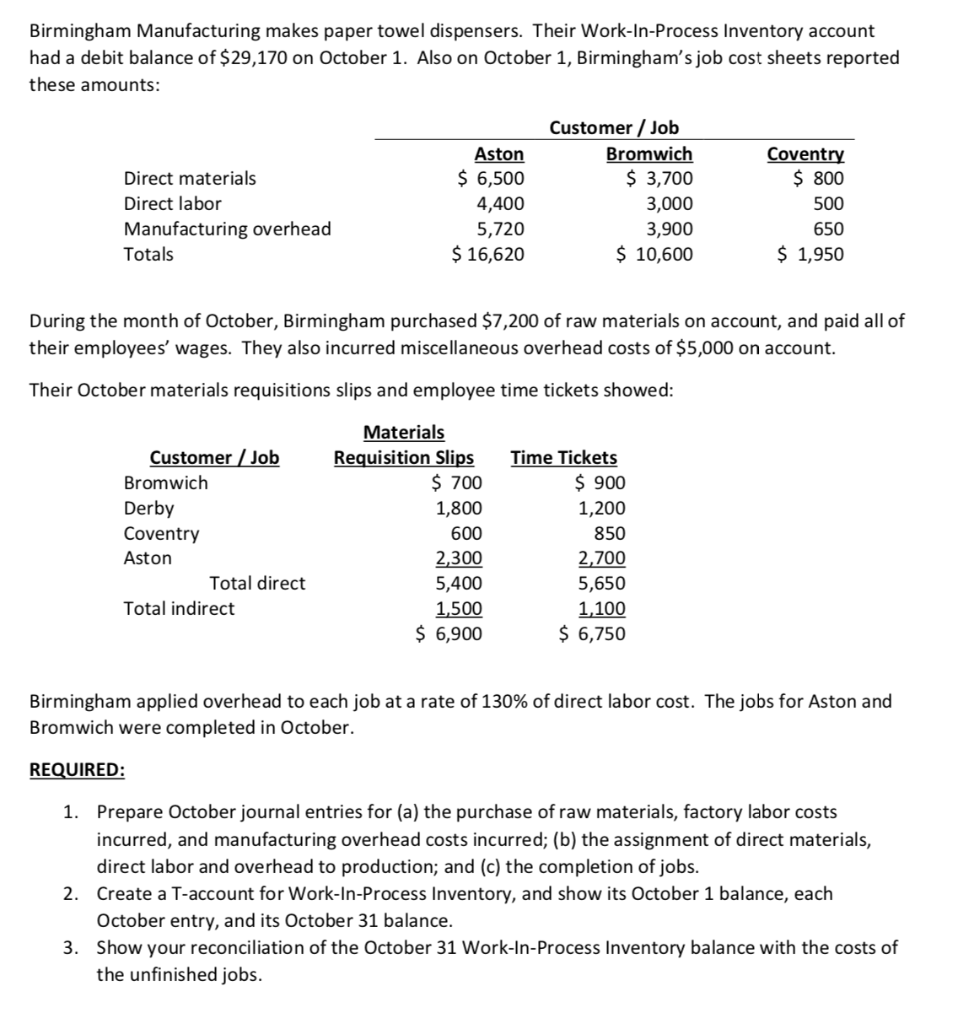
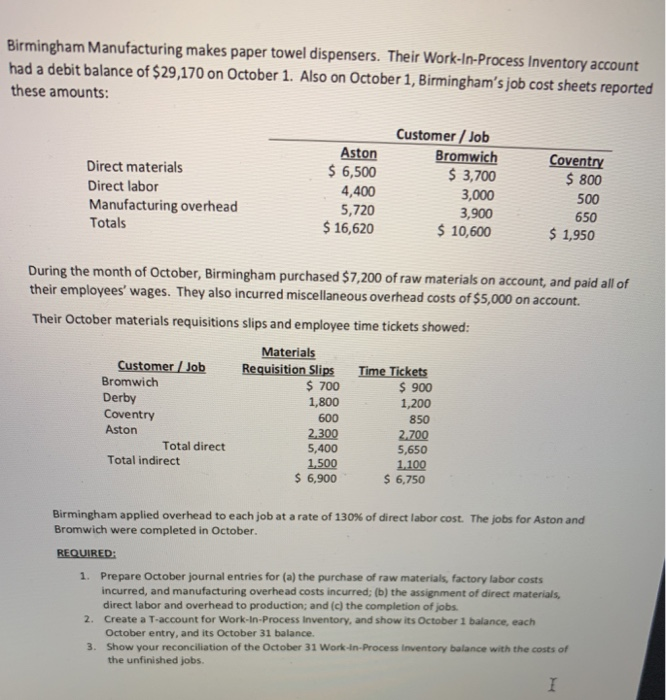
Birmingham Manufacturing makes paper towel dispensers. Their Work-In-Process Inventory account had a debit balance of $29,170 on October 1. Also on October 1, Birmingham's job cost sheets reported these amounts: Direct materials Direct labor Manufacturing overhead Totals Aston $ 6,500 4,400 5,720 $ 16,620 Customer Job Bromwich $ 3,700 3,000 3,900 $ 10,600 Coventry $ 800 500 650 $ 1,950 During the month of October, Birmingham purchased $7,200 of raw materials on account, and paid all of their employees' wages. They also incurred miscellaneous overhead costs of $5,000 on account. Their October materials requisitions slips and employee time tickets showed: Customer / Job Bromwich Derby Coventry Aston Total direct Total indirect Materials Requisition Slips $ 700 1,800 600 2,300 5,400 1,500 $ 6,900 Time Tickets $ 900 1,200 850 2,700 5,650 1,100 $ 6,750 Birmingham applied overhead to each job at a rate of 130% of direct labor cost. The jobs for Aston and Bromwich were completed in October. REQUIRED: 1. Prepare October journal entries for (a) the purchase of raw materials, factory labor costs incurred, and manufacturing overhead costs incurred; (b) the assignment of direct materials, direct labor and overhead to production; and (c) the completion of jobs. 2. Create a T-account for Work-In-Process Inventory, and show its October 1 balance, each October entry, and its October 31 balance. 3. Show your reconciliation of the October 31 Work-In-Process Inventory balance with the costs of the unfinished jobs. Birmingham Manufacturing makes paper towel dispensers. Their Work-In-Process Inventory account had a debit balance of $29,170 on October 1. Also on October 1, Birmingham's job cost sheets reported these amounts: Direct materials Direct labor Manufacturing overhead Totals Aston $ 6,500 4,400 5,720 $ 16,620 Customer / Job Bromwich $ 3,700 3,000 3,900 $ 10,600 Coventry $ 800 500 650 $ 1,950 During the month of October, Birmingham purchased $7,200 of raw materials on account, and paid all of their employees' wages. They also incurred miscellaneous overhead costs of $5,000 on account. Their October materials requisitions slips and employee time tickets showed: Customer Job Bromwich Derby Coventry Aston Total direct Total indirect Materials Requisition Slips $ 700 1,800 600 2.300 5,400 1,500 $ 6,900 Time Tickets $ 900 1,200 850 2.700 5,650 1.100 $ 6,750 Birmingham applied overhead to each job at a rate of 130% of direct labor cost. The jobs for Aston and Bromwich were completed in October. REQUIRED: 1. Prepare October journal entries for (a) the purchase of raw materials factory labor costs incurred, and manufacturing overhead costs incurred; (b) the assignment of direct materials direct labor and overhead to production; and (c) the completion of jobs. 2. Create a T-account for Work-In-Process Inventory, and show its October 1 balance, each October entry, and its October 31 balance. 3. Show your reconciliation of the October 31 Work In Process Inventory balance with the costs of the unfinished jobs
Step by Step Solution
There are 3 Steps involved in it

Get step-by-step solutions from verified subject matter experts
 Study Help