







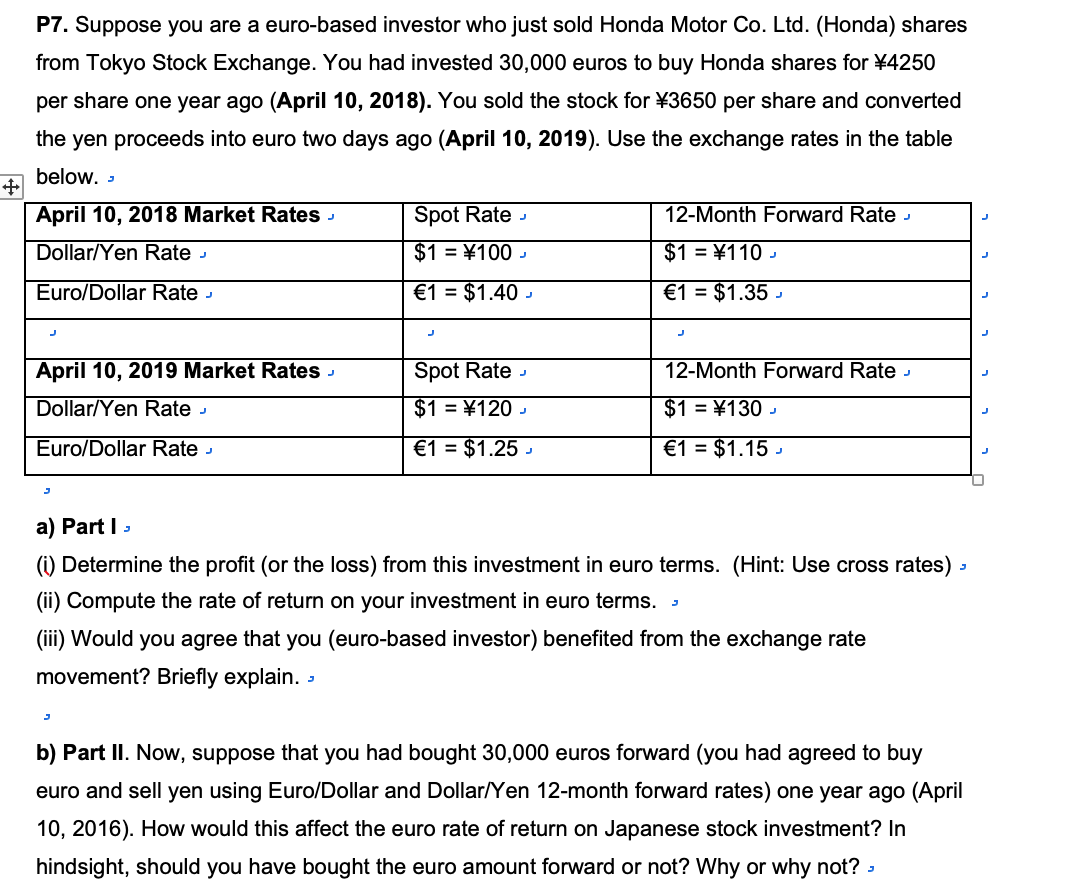
Question: The question P7. Please explain and show the work. P7. Suppose you are a euro-based investor who just sold Honda Motor Co. Ltd. (Honda) shares
- The question P7. Please explain and show the work.
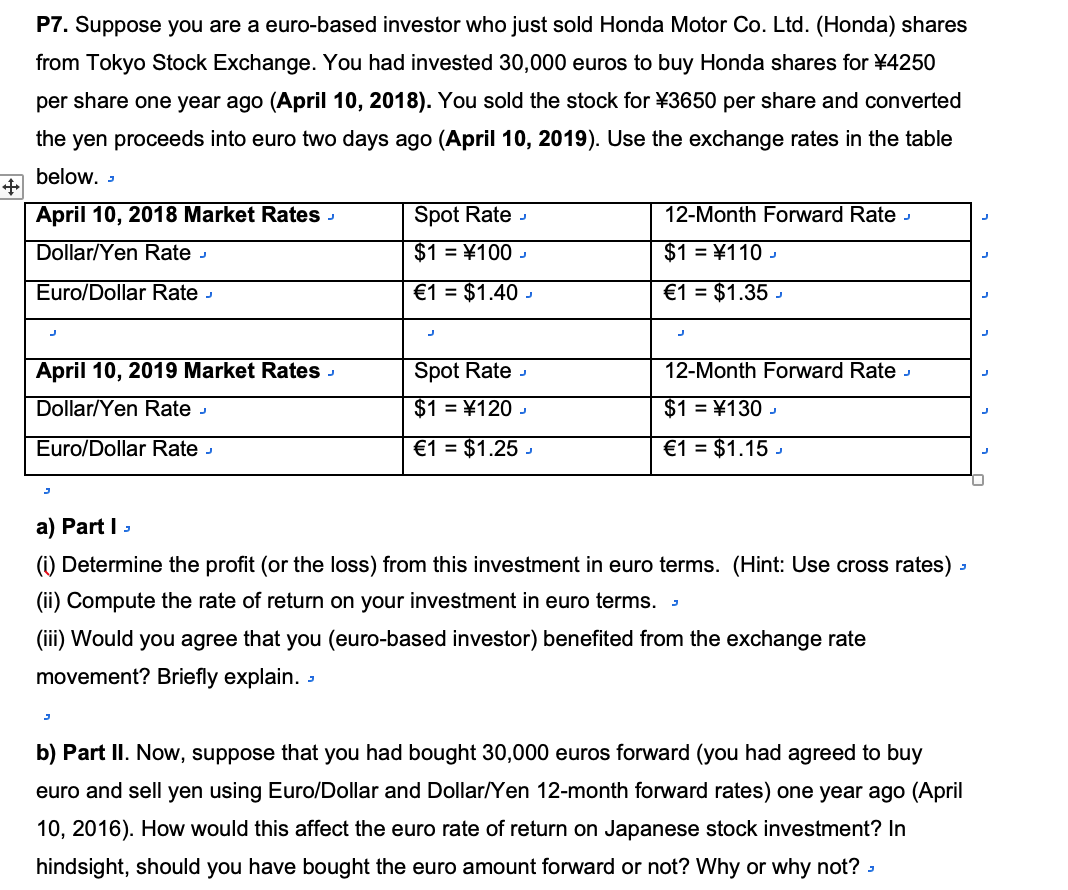
P7. Suppose you are a euro-based investor who just sold Honda Motor Co. Ltd. (Honda) shares from Tokyo Stock Exchange. You had invested 30,000 euros to buy Honda shares for 4250 per share one year ago (April 10, 2018). You sold the stock for 43650 per share and converted the yen proceeds into euro two days ago (April 10, 2019). Use the exchange rates in the table + below. April 10, 2018 Market Rates . Spot Rate 12-Month Forward Rate - Dollar/Yen Rate - $1 = Y100 - $1 = Y110 . Euro/Dollar Rate - E1 = $1.40 - E1 = $1.35 _ April 10, 2019 Market Rates Spot Rate - 12-Month Forward Rate - Dollar/Yen Rate - $1 = Y120 - $1 = Y130 Euro/Dollar Rate - E1 = $1.25 - E1 = $1.15 a) Part I (i) Determine the profit (or the loss) from this investment in euro terms. (Hint: Use cross rates) (ii) Compute the rate of return on your investment in euro terms. (iii) Would you agree that you (euro-based investor) benefited from the exchange rate movement? Briefly explain. b) Part II. Now, suppose that you had bought 30,000 euros forward (you had agreed to buy euro and sell yen using Euro/Dollar and Dollar/Yen 12-month forward rates) one year ago (April 10, 2016). How would this affect the euro rate of return on Japanese stock investment? In hindsight, should you have bought the euro amount forward or not? Why or why not
Step by Step Solution
There are 3 Steps involved in it

Get step-by-step solutions from verified subject matter experts
 Study Help