







Question: THE QUESTIONS ARE BASED ON THE CASE STUDY Ayanda is a small-scale farmer with a mix of produce that he supplies to local fruit vendors
THE QUESTIONS ARE BASED ON THE CASE STUDY
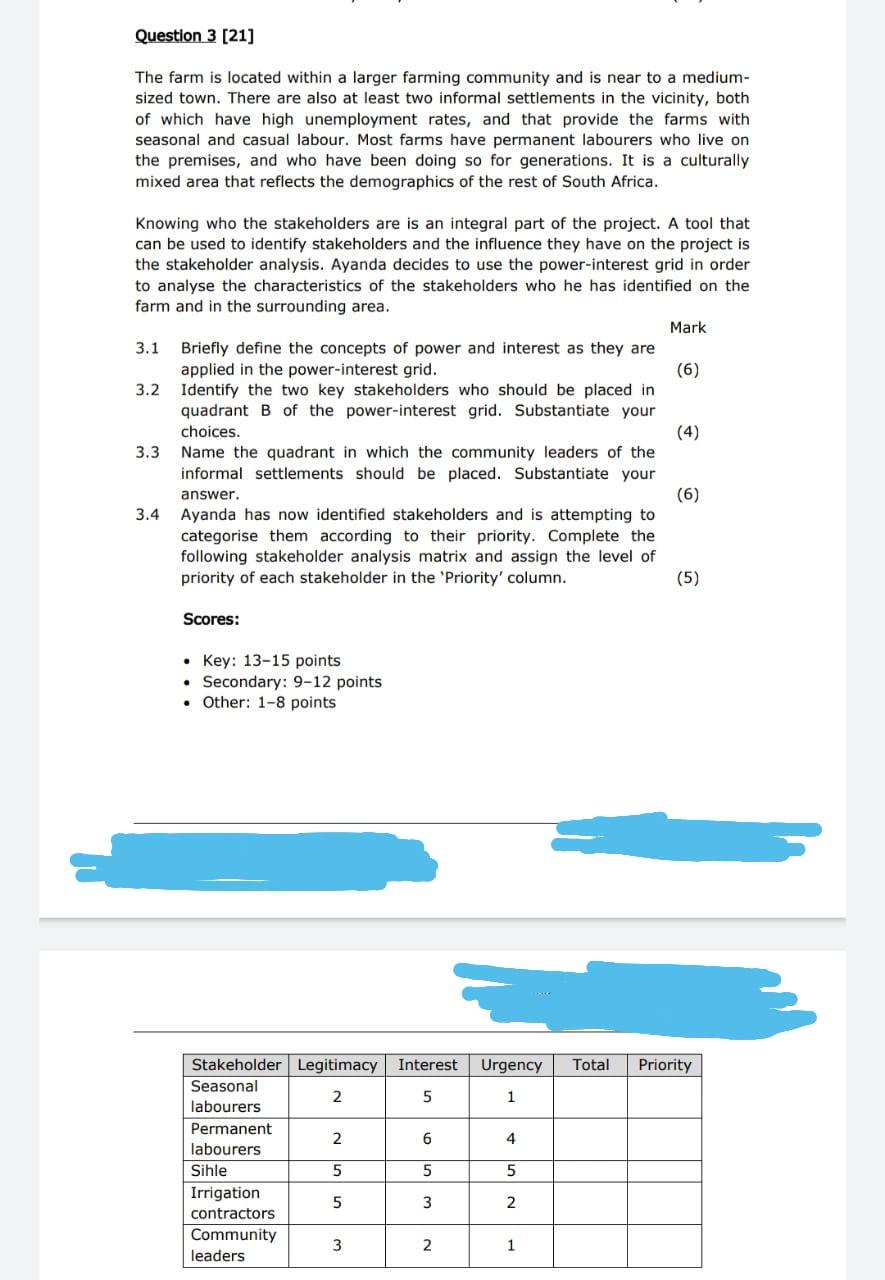
Ayanda is a small-scale farmer with a mix of produce that he supplies to local fruit vendors and smaller, privately owned supermarkets. Recently, agricultural land has been made available in Ayandas area as part of a black economic empowerment (BEE) initiative. Ayanda has been approached by a consortium, called Siyaphumelela Holdings, to act as a project manager on the farm, with the aim of establishing table grape vineyards. Siyaphumelela is also running other farms in the area. The goal is for 90 per cent of the grape yield to be used for export to overseas markets, and the remaining ten per cent to be sold within South Africa. The overseas markets are highly lucrative, due to the weak South African rand. However, overseas buyers have very stringent regulations and policies that must be adhered to, and that require a lot of administration in order to meet certifications, which also vary from country to country. Fruit is sold by agents to overseas clients such as supermarket chains; for example, Tesco in the United Kingdom (UK). Local clients include Spar and Food Lovers Market. Fruit is sold to clients on demand or on fixed contracts, where the producer commits to delivering a specific quantity at an agreed priced to the client during the season. Furthermore, the fruit must be of a very high quality, and growing the fruit will require very specific expertise, as fruit is a sensitive crop that is prone to diseases and pests. The venture is capital-intensive, with high input costs. It is also time-sensitive, as it takes at least two years before the vines will yield their first harvest. This means that there will be a long period of time during which the farm will receive no income, and where it will rely only on credit that has been made available to it (around R 2 million per annum). Ayanda accepts the position based on his agricultural and commercial experience, and he is named chief project manager. He will report to the head of the project committee, Sihle, who reports to the board of Siyaphumelela and the chief executive officer (CEO), chief financial officer (CFO) and chief operations officer (COO). Before the first spade penetrates the ground, Ayanda needs to put together a team to help him establish an operational structure that will be used to launch the first stages of the project.
Step by Step Solution
There are 3 Steps involved in it

Get step-by-step solutions from verified subject matter experts
 Study Help