







Question: The Questions: Write a summary on the different perspective the author speaks about management of ethics mentioned in the article with references. (500 words-5 Marks)
The Questions:
Write a summary on the different perspective the author speaks about management of ethics mentioned in the article with references. (500 words-5 Marks)
Discuss Kohlbergs moral motives of management as explained by the article with proper references. (500 words-5 Marks)
Elaborate how the author connects leadership and culture with management of ethics with proper references. (500 words-5 Marks)
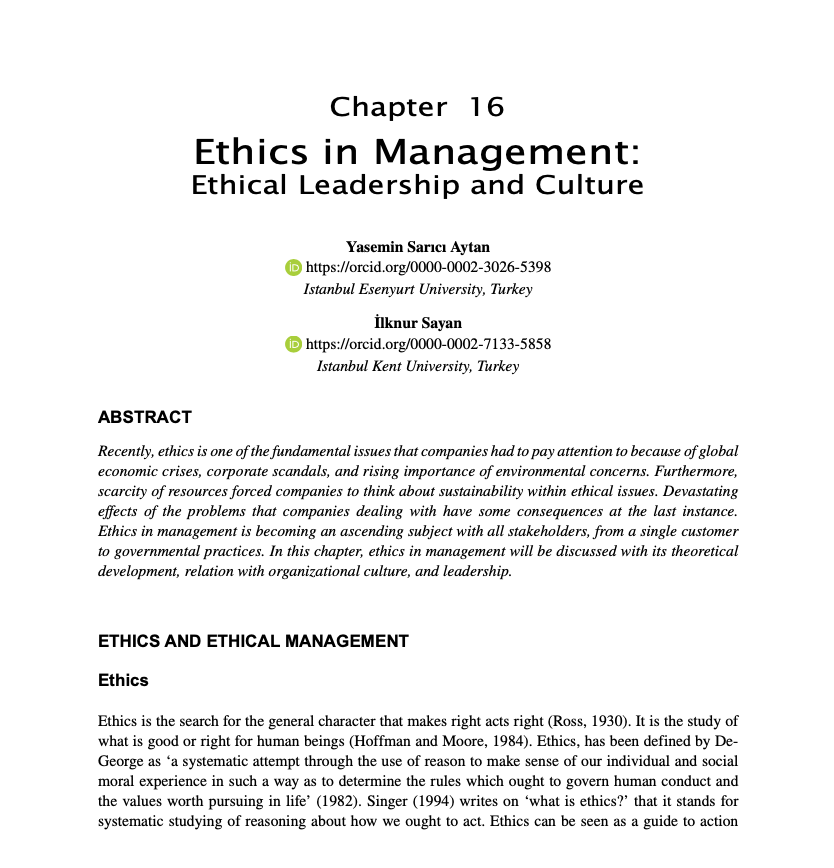
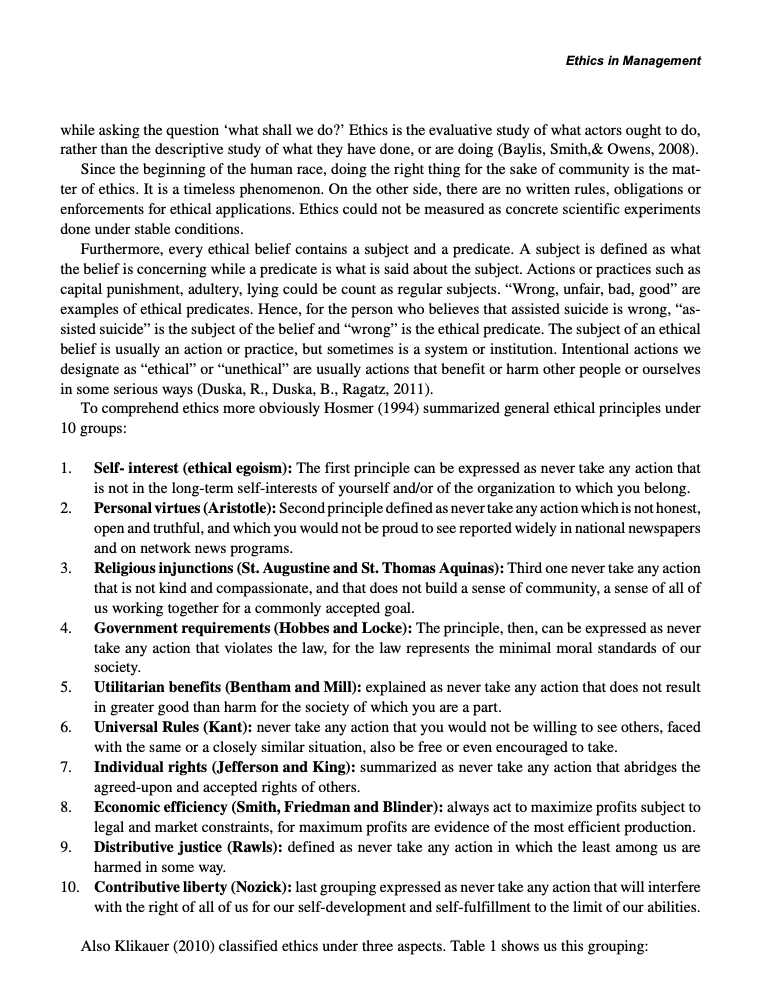
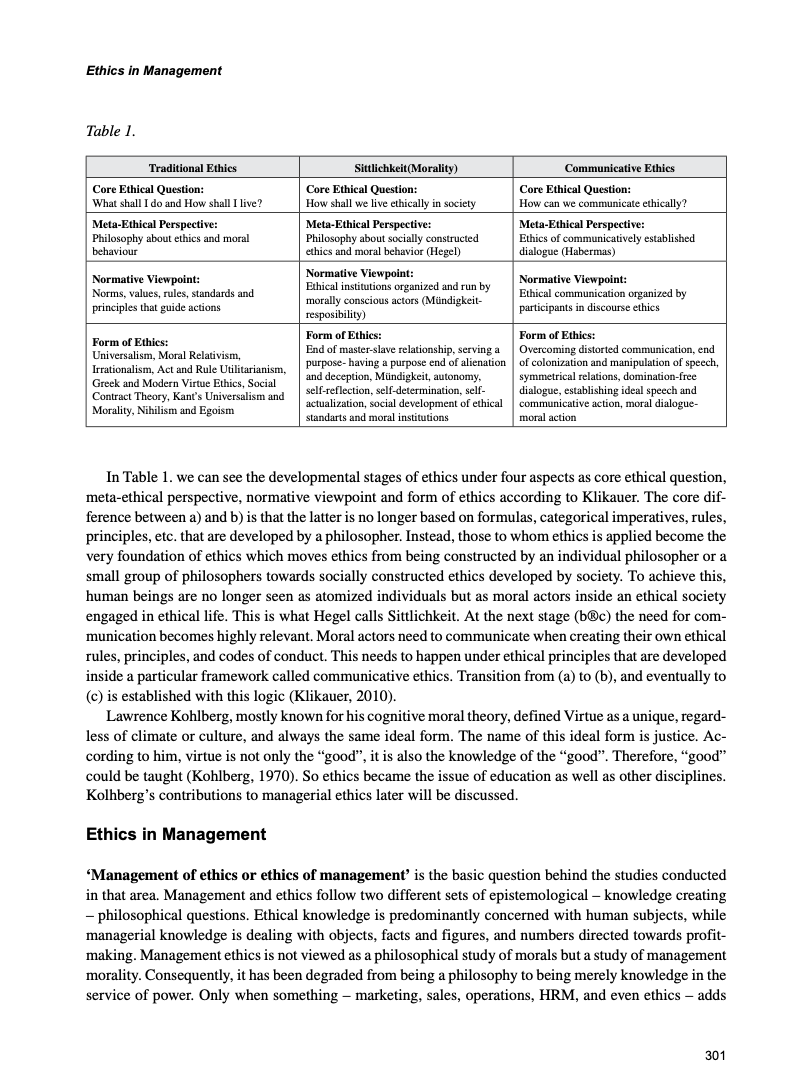
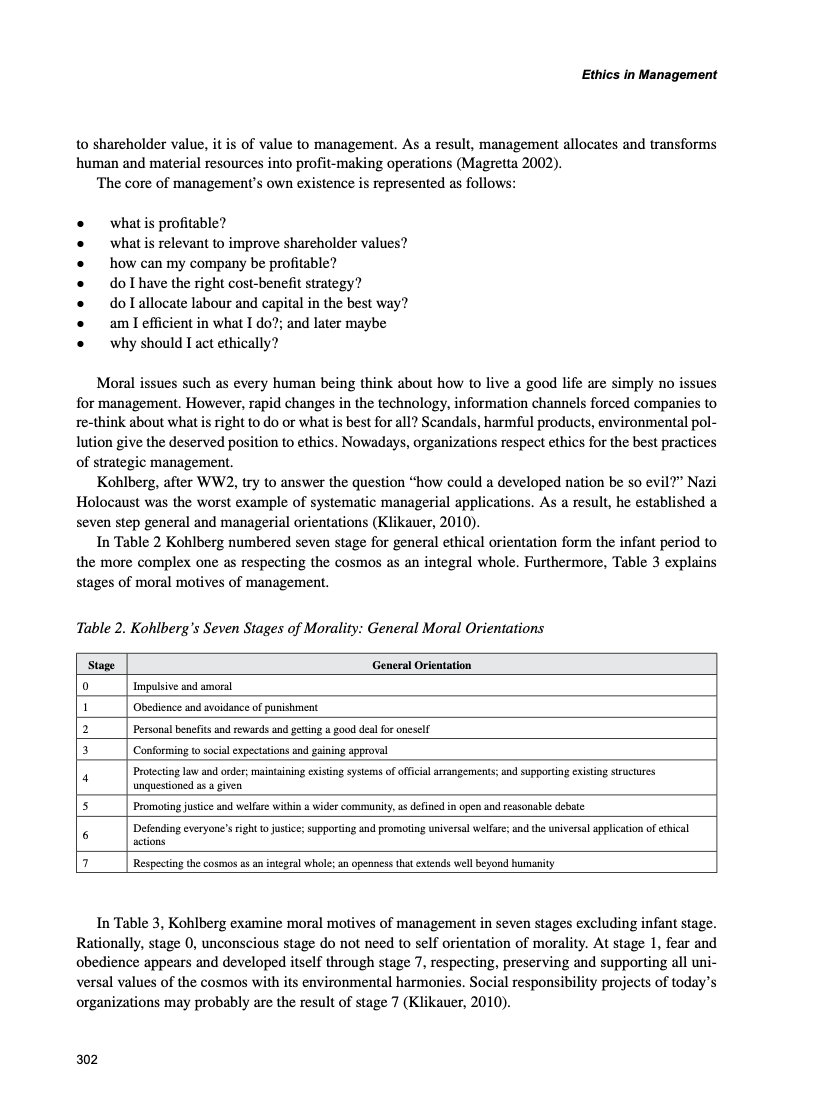
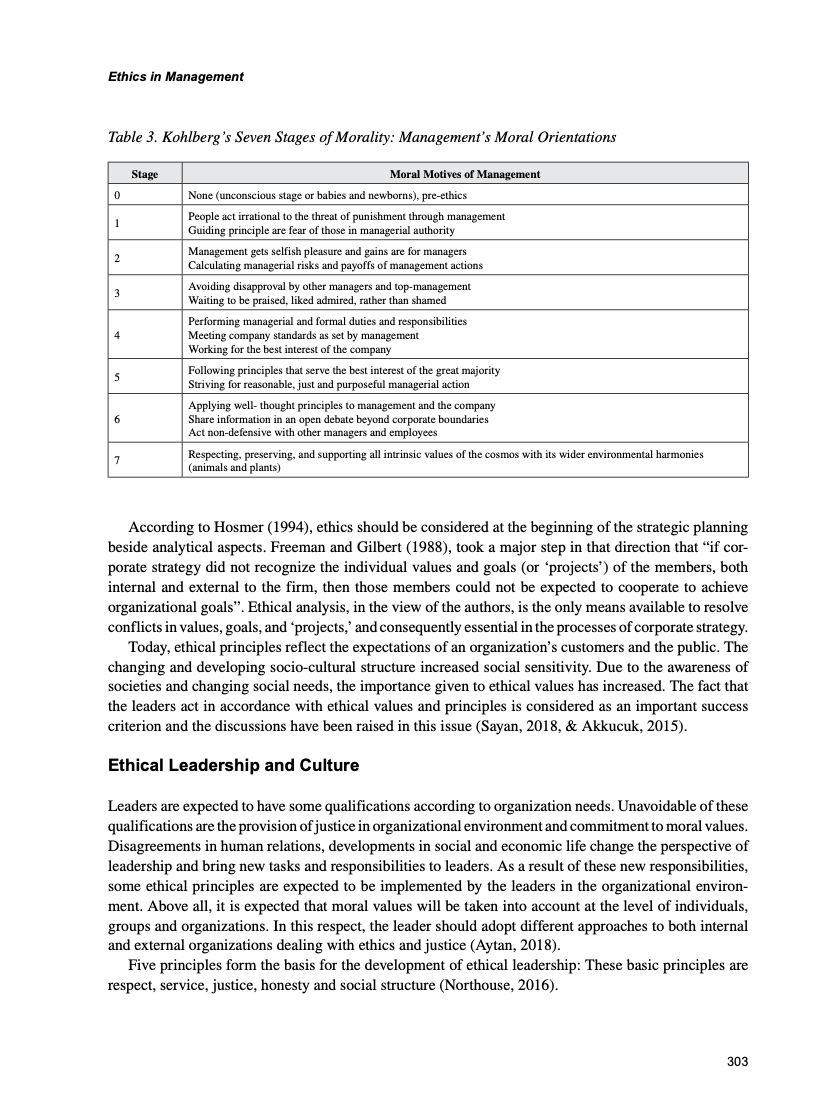
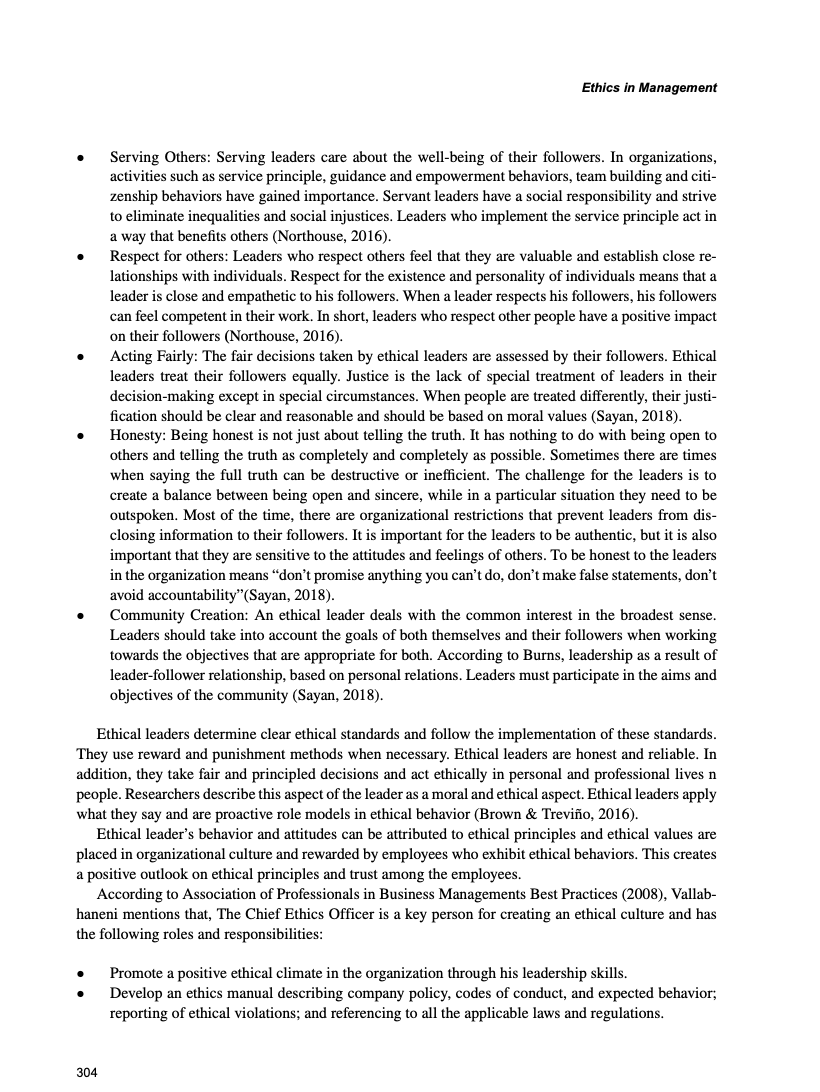
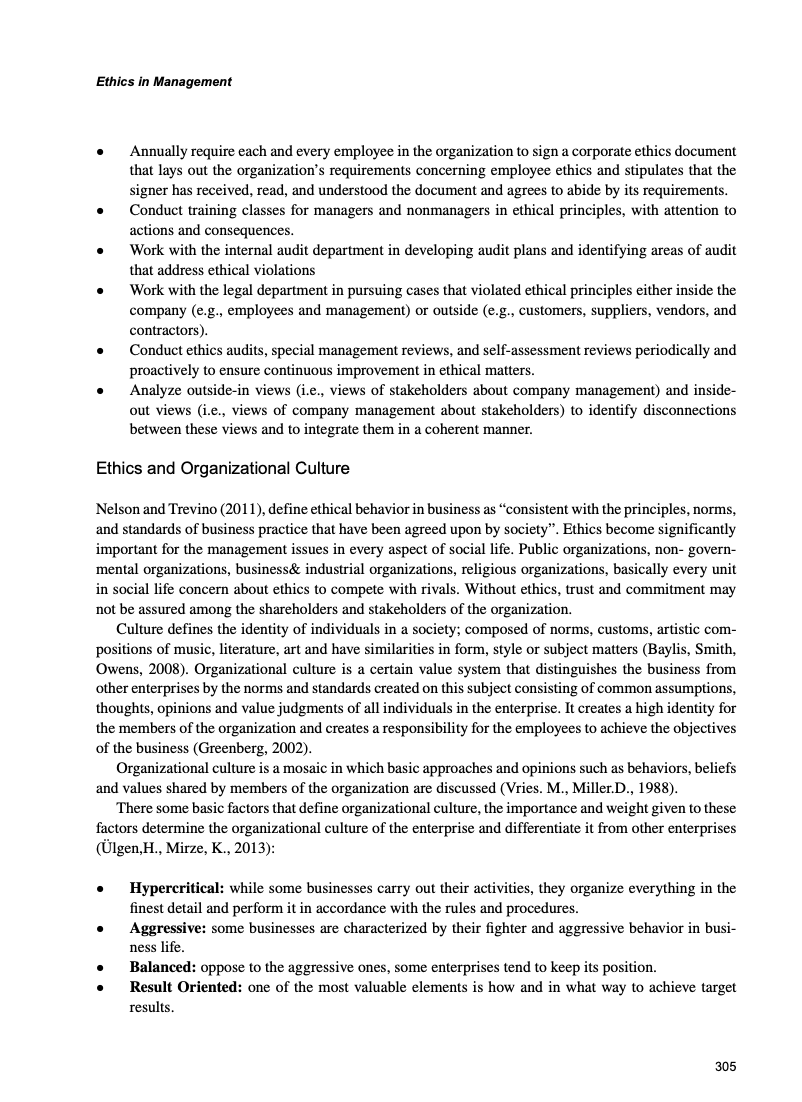
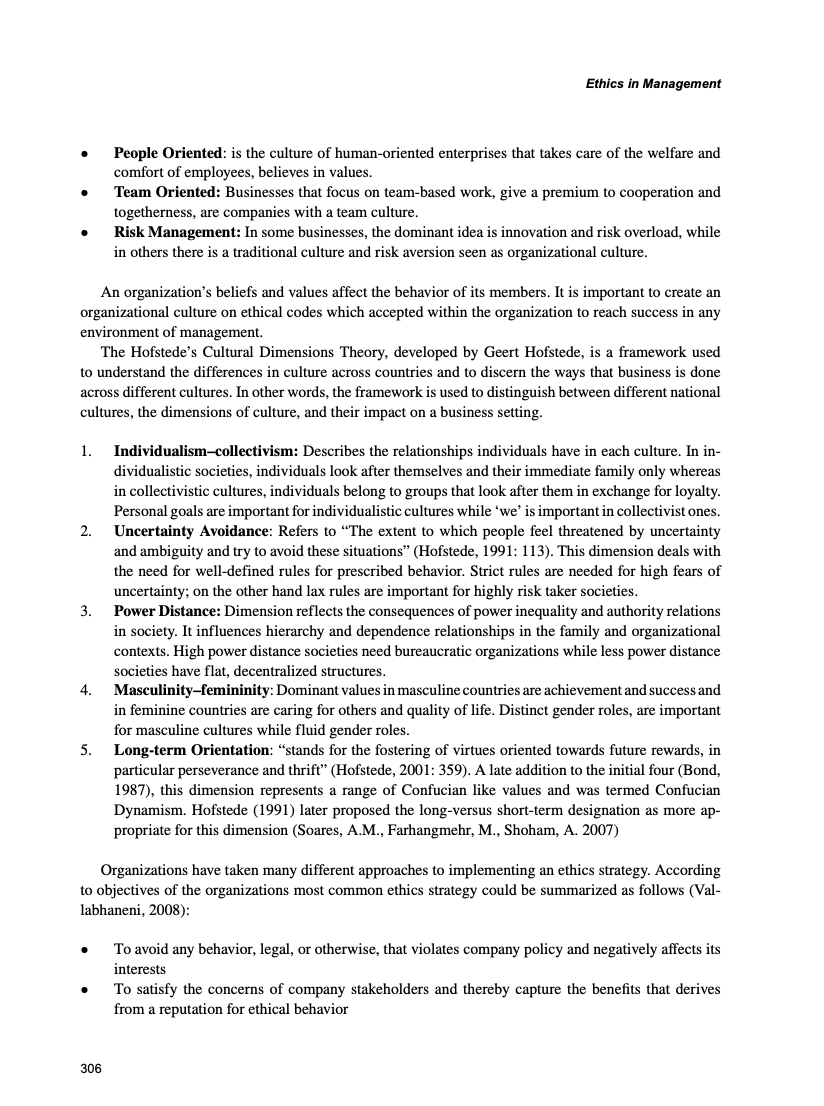
Chapter 16 Ethics in Management: Ethical Leadership and Culture Yasemin Saric Aytan https://orcid.org/0000-0002-3026-5398 Istanbul Esenyurt University, Turkey Ilknur Sayan https://orcid.org/0000-0002-7133-5858 Istanbul Kent University, Turkey ABSTRACT Recently, ethics is one of the fundamental issues that companies had to pay attention to because of global economic crises, corporate scandals, and rising importance of environmental concerns. Furthermore, scarcity of resources forced companies to think about sustainability within ethical issues. Devastating effects of the problems that companies dealing with have some consequences at the last instance. Ethics in management is becoming an ascending subject with all stakeholders, from a single customer to governmental practices. In this chapter, ethics in management will be discussed with its theoretical development, relation with organizational culture, and leadership. ETHICS AND ETHICAL MANAGEMENT Ethics Ethics is the search for the general character that makes right acts right (Ross, 1930). It is the study of what is good or right for human beings (Hoffman and Moore, 1984). Ethics, has been defined by DeGeorge as 'a systematic attempt through the use of reason to make sense of our individual and social moral experience in such a way as to determine the rules which ought to govern human conduct and the values worth pursuing in life' (1982). Singer (1994) writes on 'what is ethics?' that it stands for systematic studying of reasoning about how we ought to act. Ethics can be seen as a guide to action Ethics in Management while asking the question 'what shall we do?' Ethics is the evaluative study of what actors ought to do, rather than the descriptive study of what they have done, or are doing (Baylis, Smith,\& Owens, 2008). Since the beginning of the human race, doing the right thing for the sake of community is the matter of ethics. It is a timeless phenomenon. On the other side, there are no written rules, obligations or enforcements for ethical applications. Ethics could not be measured as concrete scientific experiments done under stable conditions. Furthermore, every ethical belief contains a subject and a predicate. A subject is defined as what the belief is concerning while a predicate is what is said about the subject. Actions or practices such as capital punishment, adultery, lying could be count as regular subjects. "Wrong, unfair, bad, good" are examples of ethical predicates. Hence, for the person who believes that assisted suicide is wrong, "assisted suicide" is the subject of the belief and "wrong" is the ethical predicate. The subject of an ethical belief is usually an action or practice, but sometimes is a system or institution. Intentional actions we designate as "ethical" or "unethical" are usually actions that benefit or harm other people or ourselves in some serious ways (Duska, R., Duska, B., Ragatz, 2011). To comprehend ethics more obviously Hosmer (1994) summarized general ethical principles under 10 groups: 1. Self- interest (ethical egoism): The first principle can be expressed as never take any action that is not in the long-term self-interests of yourself and/or of the organization to which you belong. 2. Personal virtues (Aristotle): Second principle defined as never take any action which is not honest, open and truthful, and which you would not be proud to see reported widely in national newspapers and on network news programs. 3. Religious injunctions (St. Augustine and St. Thomas Aquinas): Third one never take any action that is not kind and compassionate, and that does not build a sense of community, a sense of all of us working together for a commonly accepted goal. 4. Government requirements (Hobbes and Locke): The principle, then, can be expressed as never take any action that violates the law, for the law represents the minimal moral standards of our society. 5. Utilitarian benefits (Bentham and Mill): explained as never take any action that does not result in greater good than harm for the society of which you are a part. 6. Universal Rules (Kant): never take any action that you would not be willing to see others, faced with the same or a closely similar situation, also be free or even encouraged to take. 7. Individual rights (Jefferson and King): summarized as never take any action that abridges the agreed-upon and accepted rights of others. 8. Economic efficiency (Smith, Friedman and Blinder): always act to maximize profits subject to legal and market constraints, for maximum profits are evidence of the most efficient production. 9. Distributive justice (Rawls): defined as never take any action in which the least among us are harmed in some way. 10. Contributive liberty (Nozick): last grouping expressed as never take any action that will interfere with the right of all of us for our self-development and self-fulfillment to the limit of our abilities. Also Klikauer (2010) classified ethics under three aspects. Table 1 shows us this grouping: Ethics in Management Table 1. In Table 1. we can see the developmental stages of ethics under four aspects as core ethical question, meta-ethical perspective, normative viewpoint and form of ethics according to Klikauer. The core difference between a) and b) is that the latter is no longer based on formulas, categorical imperatives, rules, principles, etc. that are developed by a philosopher. Instead, those to whom ethics is applied become the very foundation of ethics which moves ethics from being constructed by an individual philosopher or a small group of philosophers towards socially constructed ethics developed by society. To achieve this, human beings are no longer seen as atomized individuals but as moral actors inside an ethical society engaged in ethical life. This is what Hegel calls Sittlichkeit. At the next stage (bc) the need for communication becomes highly relevant. Moral actors need to communicate when creating their own ethical rules, principles, and codes of conduct. This needs to happen under ethical principles that are developed inside a particular framework called communicative ethics. Transition from (a) to (b), and eventually to (c) is established with this logic (Klikauer, 2010). Lawrence Kohlberg, mostly known for his cognitive moral theory, defined Virtue as a unique, regardless of climate or culture, and always the same ideal form. The name of this ideal form is justice. According to him, virtue is not only the "good", it is also the knowledge of the "good". Therefore, "good" could be taught (Kohlberg, 1970). So ethics became the issue of education as well as other disciplines. Kolhberg's contributions to managerial ethics later will be discussed. Ethics in Management 'Management of ethics or ethics of management' is the basic question behind the studies conducted in that area. Management and ethics follow two different sets of epistemological - knowledge creating - philosophical questions. Ethical knowledge is predominantly concerned with human subjects, while managerial knowledge is dealing with objects, facts and figures, and numbers directed towards profitmaking. Management ethics is not viewed as a philosophical study of morals but a study of management morality. Consequently, it has been degraded from being a philosophy to being merely knowledge in the service of power. Only when something - marketing, sales, operations, HRM, and even ethics - adds to shareholder value, it is of value to management. As a result, management allocates and transforms human and material resources into profit-making operations (Magretta 2002). The core of management's own existence is represented as follows: - what is profitable? - what is relevant to improve shareholder values? - how can my company be profitable? - do I have the right cost-benefit strategy? - do I allocate labour and capital in the best way? - am I efficient in what I do?; and later maybe - why should I act ethically? Moral issues such as every human being think about how to live a good life are simply no issues for management. However, rapid changes in the technology, information channels forced companies to re-think about what is right to do or what is best for all? Scandals, harmful products, environmental pollution give the deserved position to ethics. Nowadays, organizations respect ethics for the best practices of strategic management. Kohlberg, after WW2, try to answer the question "how could a developed nation be so evil?" Nazi Holocaust was the worst example of systematic managerial applications. As a result, he established a seven step general and managerial orientations (Klikauer, 2010). In Table 2 Kohlberg numbered seven stage for general ethical orientation form the infant period to the more complex one as respecting the cosmos as an integral whole. Furthermore, Table 3 explains stages of moral motives of management. Table 2. Kohlberg's Seven Stages of Morality: General Moral Orientations In Table 3, Kohlberg examine moral motives of management in seven stages excluding infant stage. Rationally, stage 0 , unconscious stage do not need to self orientation of morality. At stage 1 , fear and obedience appears and developed itself through stage 7, respecting, preserving and supporting all universal values of the cosmos with its environmental harmonies. Social responsibility projects of today's organizations may probably are the result of stage 7 (Klikauer, 2010). Ethics in Management Table 3. Kohlberg's Seven Stages of Morality: Management's Moral Orientations According to Hosmer (1994), ethics should be considered at the beginning of the strategic planning beside analytical aspects. Freeman and Gilbert (1988), took a major step in that direction that "if corporate strategy did not recognize the individual values and goals (or 'projects') of the members, both internal and external to the firm, then those members could not be expected to cooperate to achieve organizational goals". Ethical analysis, in the view of the authors, is the only means available to resolve conflicts in values, goals, and 'projects,' and consequently essential in the processes of corporate strategy. Today, ethical principles reflect the expectations of an organization's customers and the public. The changing and developing socio-cultural structure increased social sensitivity. Due to the awareness of societies and changing social needs, the importance given to ethical values has increased. The fact that the leaders act in accordance with ethical values and principles is considered as an important success criterion and the discussions have been raised in this issue (Sayan, 2018, \& Akkucuk, 2015). Ethical Leadership and Culture Leaders are expected to have some qualifications according to organization needs. Unavoidable of these qualifications are the provision of justice in organizational environment and commitment to moral values. Disagreements in human relations, developments in social and economic life change the perspective of leadership and bring new tasks and responsibilities to leaders. As a result of these new responsibilities, some ethical principles are expected to be implemented by the leaders in the organizational environment. Above all, it is expected that moral values will be taken into account at the level of individuals, groups and organizations. In this respect, the leader should adopt different approaches to both internal and external organizations dealing with ethics and justice (Aytan, 2018). Five principles form the basis for the development of ethical leadership: These basic principles are respect, service, justice, honesty and social structure (Northouse, 2016). - Serving Others: Serving leaders care about the well-being of their followers. In organizations, activities such as service principle, guidance and empowerment behaviors, team building and citizenship behaviors have gained importance. Servant leaders have a social responsibility and strive to eliminate inequalities and social injustices. Leaders who implement the service principle act in a way that benefits others (Northouse, 2016). - Respect for others: Leaders who respect others feel that they are valuable and establish close relationships with individuals. Respect for the existence and personality of individuals means that a leader is close and empathetic to his followers. When a leader respects his followers, his followers can feel competent in their work. In short, leaders who respect other people have a positive impact on their followers (Northouse, 2016). - Acting Fairly: The fair decisions taken by ethical leaders are assessed by their followers. Ethical leaders treat their followers equally. Justice is the lack of special treatment of leaders in their decision-making except in special circumstances. When people are treated differently, their justification should be clear and reasonable and should be based on moral values (Sayan, 2018). - Honesty: Being honest is not just about telling the truth. It has nothing to do with being open to others and telling the truth as completely and completely as possible. Sometimes there are times when saying the full truth can be destructive or inefficient. The challenge for the leaders is to create a balance between being open and sincere, while in a particular situation they need to be outspoken. Most of the time, there are organizational restrictions that prevent leaders from disclosing information to their followers. It is important for the leaders to be authentic, but it is also important that they are sensitive to the attitudes and feelings of others. To be honest to the leaders in the organization means "don't promise anything you can't do, don't make false statements, don't avoid accountability'(Sayan, 2018). - Community Creation: An ethical leader deals with the common interest in the broadest sense. Leaders should take into account the goals of both themselves and their followers when working towards the objectives that are appropriate for both. According to Burns, leadership as a result of leader-follower relationship, based on personal relations. Leaders must participate in the aims and objectives of the community (Sayan, 2018). Ethical leaders determine clear ethical standards and follow the implementation of these standards. They use reward and punishment methods when necessary. Ethical leaders are honest and reliable. In addition, they take fair and principled decisions and act ethically in personal and professional lives n people. Researchers describe this aspect of the leader as a moral and ethical aspect. Ethical leaders apply what they say and are proactive role models in ethical behavior (Brown \& Trevio, 2016). Ethical leader's behavior and attitudes can be attributed to ethical principles and ethical values are placed in organizational culture and rewarded by employees who exhibit ethical behaviors. This creates a positive outlook on ethical principles and trust among the employees. According to Association of Professionals in Business Managements Best Practices (2008), Vallabhaneni mentions that, The Chief Ethics Officer is a key person for creating an ethical culture and has the following roles and responsibilities: - Promote a positive ethical climate in the organization through his leadership skills. - Develop an ethics manual describing company policy, codes of conduct, and expected behavior; reporting of ethical violations; and referencing to all the applicable laws and regulations. 304 Ethics in Management - Annually require each and every employee in the organization to sign a corporate ethics document that lays out the organization's requirements concerning employee ethics and stipulates that the signer has received, read, and understood the document and agrees to abide by its requirements. - Conduct training classes for managers and nonmanagers in ethical principles, with attention to actions and consequences. - Work with the internal audit department in developing audit plans and identifying areas of audit that address ethical violations - Work with the legal department in pursuing cases that violated ethical principles either inside the company (e.g., employees and management) or outside (e.g., customers, suppliers, vendors, and contractors). - Conduct ethics audits, special management reviews, and self-assessment reviews periodically and proactively to ensure continuous improvement in ethical matters. - Analyze outside-in views (i.e., views of stakeholders about company management) and insideout views (i.e., views of company management about stakeholders) to identify disconnections between these views and to integrate them in a coherent manner. Ethics and Organizational Culture Nelson and Trevino (2011), define ethical behavior in business as "consistent with the principles, norms, and standards of business practice that have been agreed upon by society". Ethics become significantly important for the management issues in every aspect of social life. Public organizations, non- governmental organizations, business\& industrial organizations, religious organizations, basically every unit in social life concern about ethics to compete with rivals. Without ethics, trust and commitment may not be assured among the shareholders and stakeholders of the organization. Culture defines the identity of individuals in a society; composed of norms, customs, artistic compositions of music, literature, art and have similarities in form, style or subject matters (Baylis, Smith, Owens, 2008). Organizational culture is a certain value system that distinguishes the business from other enterprises by the norms and standards created on this subject consisting of common assumptions, thoughts, opinions and value judgments of all individuals in the enterprise. It creates a high identity for the members of the organization and creates a responsibility for the employees to achieve the objectives of the business (Greenberg, 2002). Organizational culture is a mosaic in which basic approaches and opinions such as behaviors, beliefs and values shared by members of the organization are discussed (Vries. M., Miller.D., 1988). There some basic factors that define organizational culture, the importance and weight given to these factors determine the organizational culture of the enterprise and differentiate it from other enterprises (lgen, H., Mirze, K., 2013): - Hypercritical: while some businesses carry out their activities, they organize everything in the finest detail and perform it in accordance with the rules and procedures. - Aggressive: some businesses are characterized by their fighter and aggressive behavior in business life. - Balanced: oppose to the aggressive ones, some enterprises tend to keep its position. - Result Oriented: one of the most valuable elements is how and in what way to achieve target results. 305 Ethics in Management - People Oriented: is the culture of human-oriented enterprises that takes care of the welfare and comfort of employees, believes in values. - Team Oriented: Businesses that focus on team-based work, give a premium to cooperation and togetherness, are companies with a team culture. - Risk Management: In some businesses, the dominant idea is innovation and risk overload, while in others there is a traditional culture and risk aversion seen as organizational culture. An organization's beliefs and values affect the behavior of its members. It is important to create an organizational culture on ethical codes which accepted within the organization to reach success in any environment of management. The Hofstede's Cultural Dimensions Theory, developed by Geert Hofstede, is a framework used to understand the differences in culture across countries and to discern the ways that business is done across different cultures. In other words, the framework is used to distinguish between different national cultures, the dimensions of culture, and their impact on a business setting. 1. Individualism-collectivism: Describes the relationships individuals have in each culture. In individualistic societies, individuals look after themselves and their immediate family only whereas in collectivistic cultures, individuals belong to groups that look after them in exchange for loyalty. Personal goals are important for individualistic cultures while 'we' is important in collectivist ones. 2. Uncertainty Avoidance: Refers to "The extent to which people feel threatened by uncertainty and ambiguity and try to avoid these situations" (Hofstede, 1991: 113). This dimension deals with the need for well-defined rules for prescribed behavior. Strict rules are needed for high fears of uncertainty; on the other hand lax rules are important for highly risk taker societies. 3. Power Distance: Dimension reflects the consequences of power inequality and authority relations in society. It influences hierarchy and dependence relationships in the family and organizational contexts. High power distance societies need bureaucratic organizations while less power distance societies have flat, decentralized structures. 4. Masculinity-femininity: Dominant values in masculine countries are achievement and success and in feminine countries are caring for others and quality of life. Distinct gender roles, are important for masculine cultures while fluid gender roles. 5. Long-term Orientation: "stands for the fostering of virtues oriented towards future rewards, in particular perseverance and thrift" (Hofstede, 2001: 359). A late addition to the initial four (Bond, 1987), this dimension represents a range of Confucian like values and was termed Confucian Dynamism. Hofstede (1991) later proposed the long-versus short-term designation as more appropriate for this dimension (Soares, A.M., Farhangmehr, M., Shoham, A. 2007) Organizations have taken many different approaches to implementing an ethics strategy. According to objectives of the organizations most common ethics strategy could be summarized as follows (Vallabhaneni, 2008): - To avoid any behavior, legal, or otherwise, that violates company policy and negatively affects its interests - To satisfy the concerns of company stakeholders and thereby capture the benefits that derives from a reputation for ethical behavior 306 Ethics in Management - To create a culture in which each employee and manager pursues a set of ethical and social values to which the company is firmly committed. Successful corporate ethics could be developed in three stages (2008): Stage 1: Managing for Compliance. Organizations see the tremendous damage that can be done to corporate reputation and momentum by incidents of illegal or blatantly unethical behavior. To prevent such occurrences, the organization establishes a program to ensure compliance with both the law and ethical standards demanded by the public and stakeholders. Such programs include prohibitions against conflicts of interest, theft of company property, and disclosure of trade secrets. The primary objective is to prevent lawbreaking and scandals. Standards for judging behavior include laws, regulations, and the rights of the corporation. Strengths of the approach include clear standards and clear penalties for violations. Weaknesses of the approach include addressing too few issues, hampering empowerment, and possibly implying that the company expects only the minimum. Action steps include: - Adopt a code of ethics, practice, or conduct to address specific behaviors. - Ensure board-level and senior management support. - Assign responsibility for the ethics and compliance strategy to an appropriate function in the organization. - Identify and communicate compliance standards. - Train employees to use compliance standards. - Establish clear channels of communications. - Ensure supervision to compliance standards. - Make periodic reports to senior management and the board of directors. Stage 2: Managing Stakeholder Relations. Organizations become increasingly sophisticated and see the long-term value to be gained from maintaining good relations with key stakeholders. Self-interest drives the organization to monitor its reputation among these stakeholders and to initiate programs to address their ethical concerns. The primary objective is to create value by meeting stakeholder expectations. Standards for judging behavior include stakeholder demands and expectations. Strengths of the approach include clear payoffs for the organization; stakeholders can be surveyed for expectation and attitudes. Weaknesses of the approach include the changeability of stakeholder views' with time and location, the probability that some expectations cannot be met, an absence of guidance on many issues, and a lack of clear values behind behaviors. Action steps include: - Define corporate stakeholders. - Evaluate the attitudes and opinions of stakeholder groups. - Design programs to address stakeholder concerns. - Audit the effectiveness of stakeholder programs. Stage 3: Creating a Value-Based Organization. Many organizations have found it difficult to manage compliance or stakeholder relations without creating a genuine change in corporate culture. As a result, instinct rather than strategy dominates responses to the breadth of ethical issues held important by stakeholders. Such organizations define their values and invest considerable effort and expense in making those values permeate all aspects of their work. They find it productive to make decisions consistent with 307 these values even when short-term payoffs are not apparent. In reality, very few organizations reach this stage. The primary objective is to create an organization that has enduring value. Standards for judging behavior include the company's own values and beliefs. Strengths of the approach include bolstering corporate culture, with desired behavior becoming instinctive. Weaknesses of the approach include the need to wait for a long-term payoff, the high costs needed for implementation, and the possibility that empowered employees may interpret and misinterpret values in their own ways. Action steps include: - Define the organization's values. - Communicate the organization's values. - Create systems that support corporate values. - Ensure supervision of corporate values. - Establish an ethics or corporate values function. - Assign responsibility for interpreting values. - Recruit and promote employees of strong moral character. - Train employees in ethical decision making and application of the values. - Encourage employees to report behavior inconsistent with the values. - Reward managers and employee behavior consistent with the values. - Renew the values. - Conduct policy and practice review As a result, establishment of an ethical culture within an organization is essential, not only for the achievement of desired business goals, but also necessary for the proper management of key risks in its business environment. To avoid questionable practices, reaching the spirit of doing the right, fair and just on behalf of others would be the fringe benefits of ethical culture among the organizations. Beside the economic, legal and philanthropic responsibilities, ethical responsibility becomes also important for the business management. CONCLUSION Defending everyone's right to justice; supporting and promoting universal welfare; and the universal application of ethical actions are the basic motives behind the orientation of ethics in society also in business management. Nowadays, corporate scandals, economic crises, environmental issues and sensitivity of the public obligate organizations to think about ethics. Even strategic management tools also used hand in hand with ethical codes. Organizations, especially in business management, understand the importance of ethics to be successful among the rivals. Even consumers could give buying decisions according to ethical principles of the firm that produce the product or giving the service. Organizational culture is defined as the underlying assumptions, beliefs, values, attitudes, and expectations shared by an organization's members (i.e., managers and nonmanagers). An organization's beliefs and values affect the behavior of its members. It is important to create an organizational culture on ethical codes which accepted within the organization to reach success in any environment of management. Organizational culture based on ethical codes provides superiority over the competitors in business life
Step by Step Solution
There are 3 Steps involved in it
1 Expert Approved Answer
Step: 1 Unlock

Question Has Been Solved by an Expert!
Get step-by-step solutions from verified subject matter experts
Step: 2 Unlock
Step: 3 Unlock
 Study Help