







Question: The Quinceanera problem contains three cases and a section from Farnsworth on Contracts. Thinking about those four authorities, answer the following questions: What jurisdiction are
The Quinceanera problem contains three cases and a section from Farnsworth on Contracts. Thinking about those four authorities, answer the following questions:
- What jurisdiction are you in?
- In what court would you file your complaint?
- Which authorities are primary? Which are secondary? Which authorities are mandatory? Which are persuasive?
- How will you use the four authorities to formulate and draft your rule?
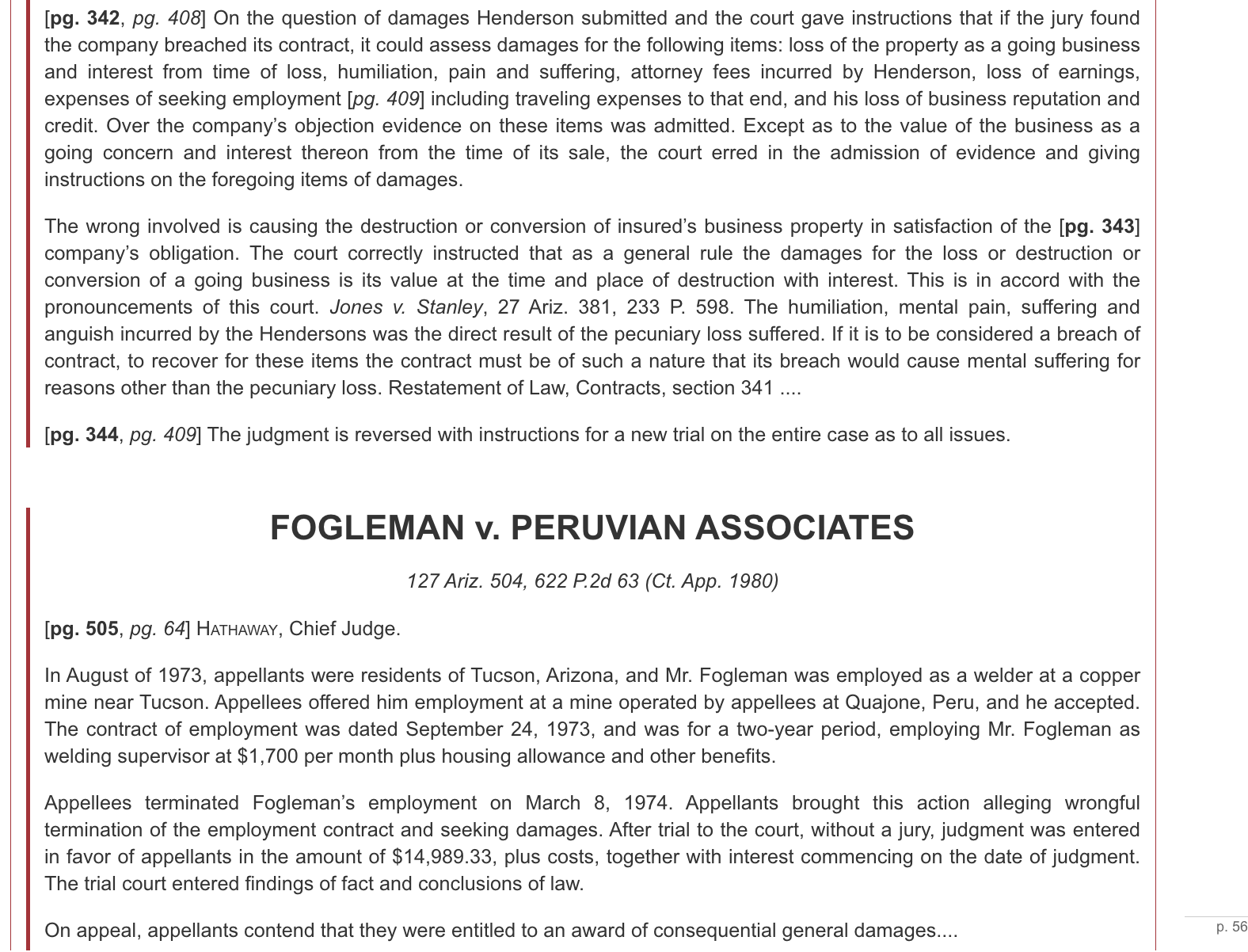
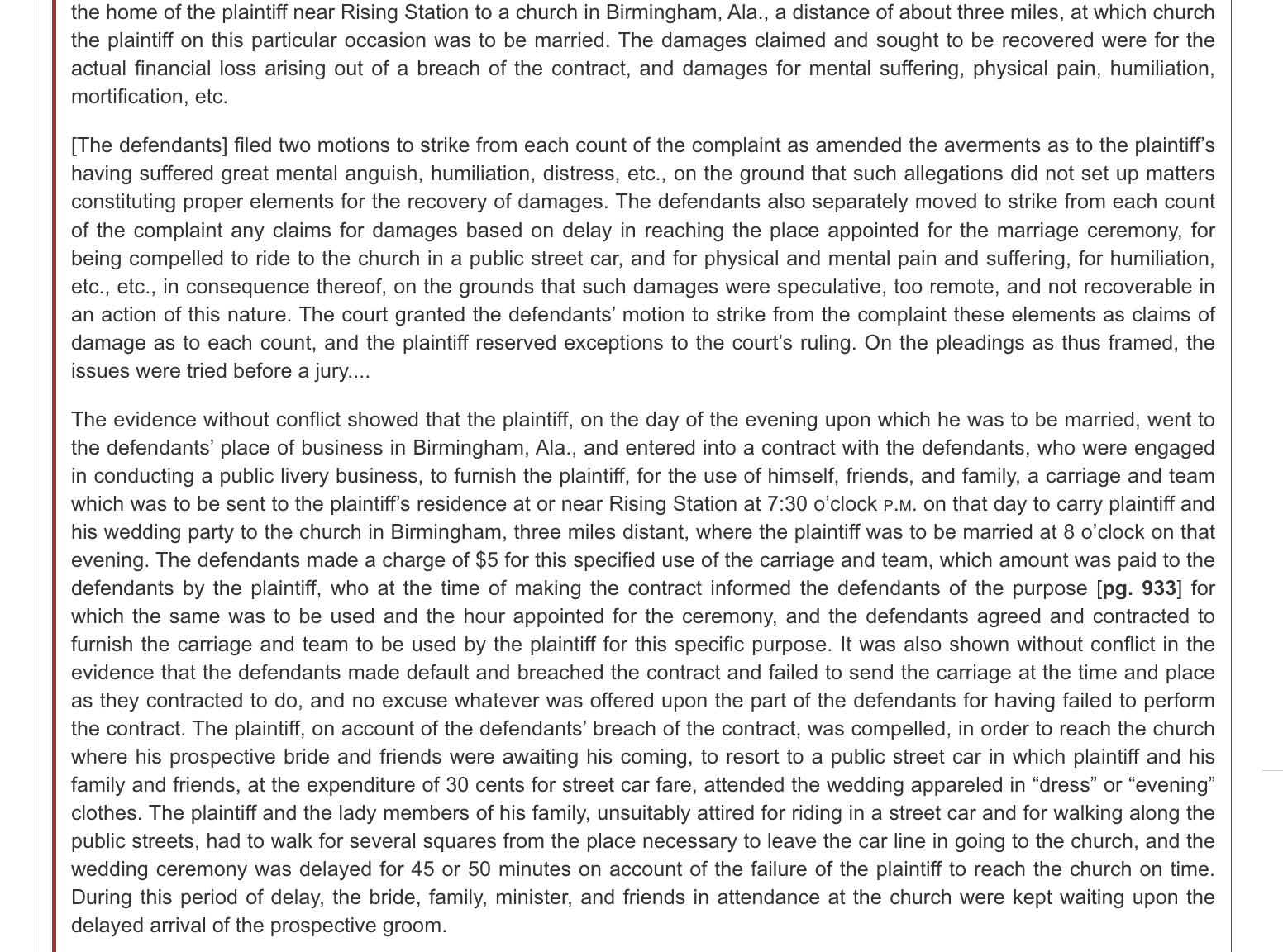
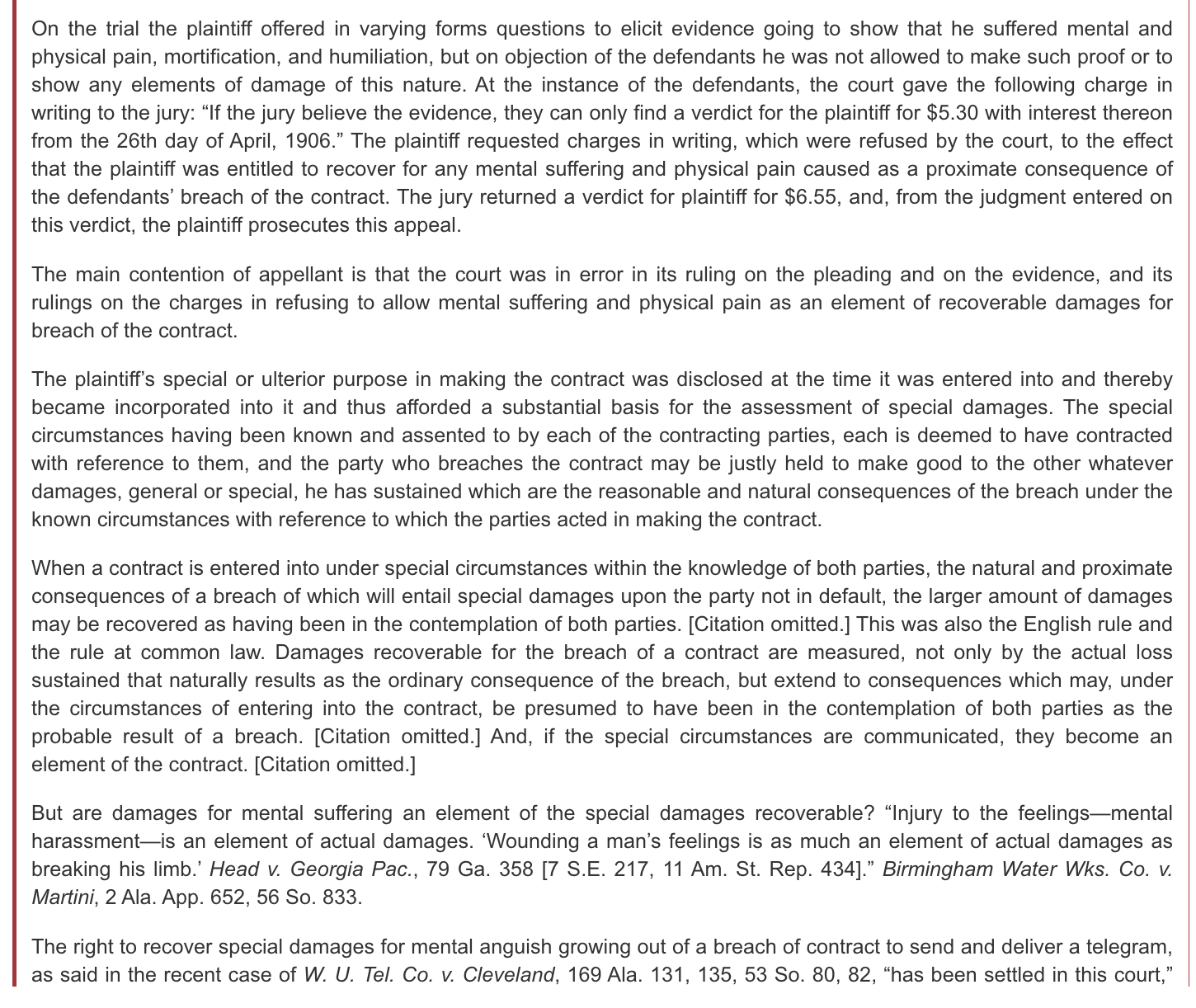
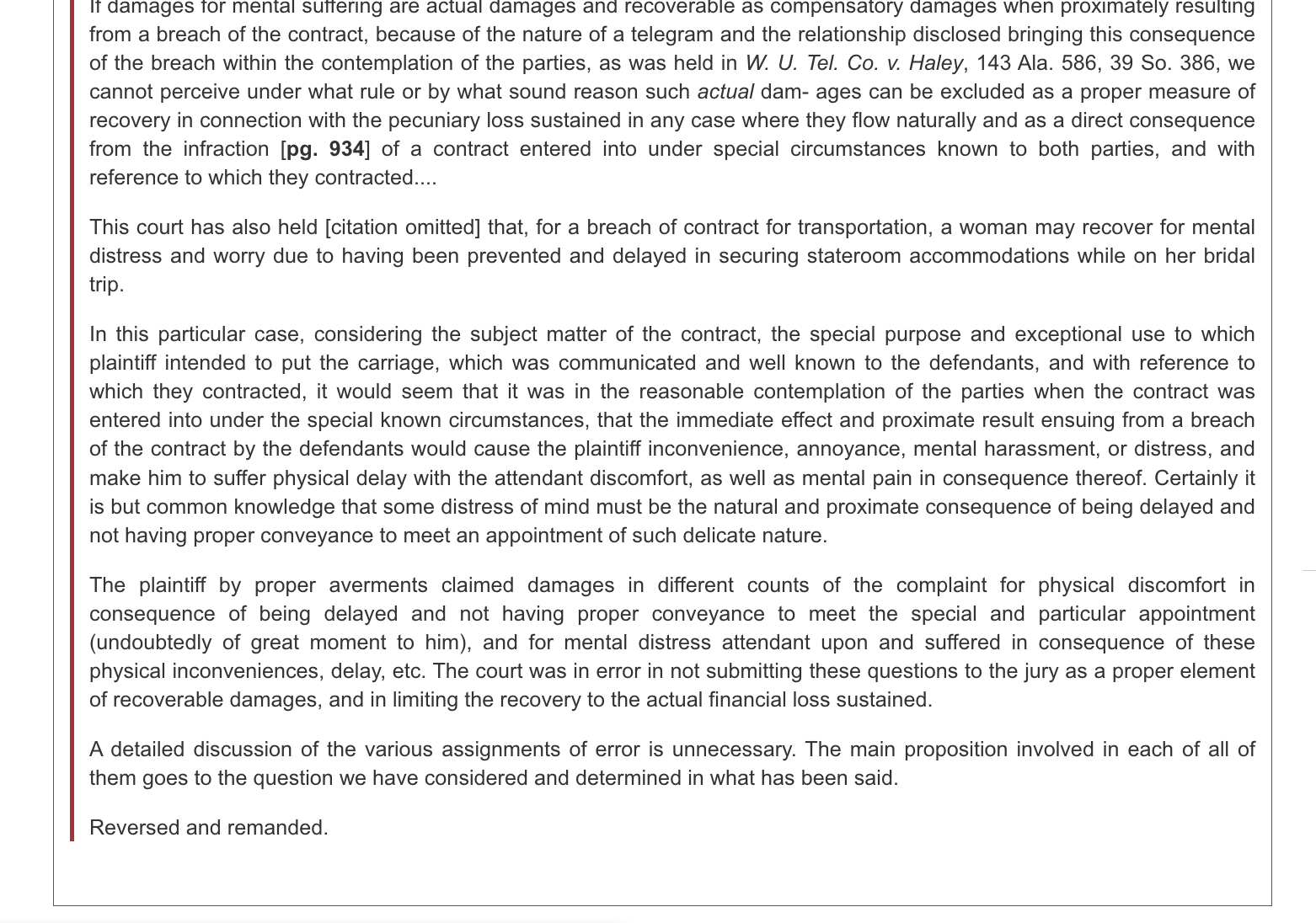
Appendix IV Office Memoranda: Assignments for Part IV The assignment below presents a single issue for analysis. It is a \"closed universe\" problem: All the necessary authority is provided at the end of the assignment. The dispute in the assignment is set in Arizona, so the Arizona case law provided to you is mandatory authority. Of course, your professor can modify the problem by asking you to conduct research to supplement the materials provided to you in the Assignment, perhaps after setting it in a differentjurisdiction. The page numbers within the opinions in the original reporters appear in brackets in the reproductions of the opinions at the end of the assignment. Some of the opinions cite to other authorities in a form other than standard citation form. When you cite to any authority, adopt the citation form recommended by your professor, rather than other forms reflected in some of the opinions. Office Memorandum Assignment Single Issue Jurisdiction: Arizona Closed Universe You are an associate in a firm that represents 15 young women and their mothers. They complain that a seamstress intentionally breached a con- tract to provide gowns for their use in a Quinceaera ceremony in Phoenix, Arizona. p. 555 p. 556 A Quinceanera ceremony is a traditional \"coming out\" party for a woman on her fifteenth birthday. It is celebrated in many Hispanic communities throughout the world. The celebration consists of a Catholic mass, followed by a formal reception that includes a dinner and dance. The celebrant, known as the \"Quinceaera,\" traditionally wears a gown that is nearly as formal and ornate as a wedding gown. She is attended by relatives, by godmothers and godfathers, and by 14 maids of honor. The maids of honor are typically peers and close friends of the Quinceaera. The maids traditionally wear fancy gowns that match each other either in color or pattern. Along with their male attendants, they participate in both the mass and the reception. Your primary client, Trina Araiza, turned 15 last July 10. She and her 14 chosen maids of honor hired Ramona Udave to sew gowns of a particular pattern for the Quinceaera celebration. Trina's mother, Cristina, negotiated the contract with Udave. Because the Quinceaera and her maids of honor were minors, their parents cosigned the contract to ensure enforceability. On March 15, the Quinceaera participants provided Udave with material for the gowns and met with Udave so that she could take measurements. On May 5, Udave met with each participant for final fittings. At that meeting, each gown was only partially sewn, was partially held together with pins, and was not wearable. Throughout May and June, Udave repeatedly assured all the participants that she was making normal progress on the gowns and that the gowns would be ready on time. In early July, Udave represented that she was putting the finishing touches on the gowns and that they would all be ready by the morning of the Quinceaera. Although some of the participants were anxious to see the gowns, Udave said that she never let her clients see her work until the last stitch was in place. On the morning of the Quinceanera celebration, the participants arrived at Udave's shop to pick up their gowns. Udave repeatedly assured each of them that her gown was minutes away from completion and that each one should wait for the gown in the front room of Udave's shop. Udave kept the participants waiting for varying periods of time, some beyond 1:00 P.M., the time for commencement of the mass. Araiza herself received her gown at 12:30 P.M. At that time, she was nearly ill with anxiety. She dressed quickly and arrived at the site of the mass by 1:10 PM. Her maids of honor, how- ever, were still waiting for their gowns and therefore could not yet participate in the formal procession that begins the mass. By 1:30 PM. five of the maids of honor had arrived with their gowns. Although the gowns were unfinished and looked terrible, Araiza and her five maids of honor with their gowns. Although the gowns were unfinished and looked terrible, Araiza and her five maids of honor walked in the procession and began the mass. Araiza was emotionally distraught during the mass, partly because of the absence of two maids of honor who were designated to recite prayers with her; those maids of honor were still waiting at Udave's tailoring shop on Udave's representations that their gowns were nearly complete. In fact, the remaining gowns were in the same condition as they had been during the March fitting, and Udave never completed them. Although Udave continued to represent that the gowns were nearly completed, the remaining Quinceaera participants left her shop shortly after the mass and attended the reception in casual or semi-formal clothes. Although they participated in the traditional reception procession and waltz, they felt humiliated because of their inappropriate attire. Araiza and the maids of honor suffered embarrassment and other forms of emotional distress as a result of Udave's actions. Based on information they acquired after the Quinceaera ceremony, they are convinced that Udave intentionally ruined the Quinceanera because of her friendship with a bitter rival of the Araiza family. Your supervising attorney, Daniel Adams, intends to explore various potential claims, including breach of contract, fraud, and negligence. He wants you to assume that he can establish only the contract claim, and he wants you to analyze the question whether the Quinceaera and her maids of honor can recover damages for emotional distress on their claims for breach of their collective contract with Udave. He knows that they can recover damages for other kinds of losses stemming from the breach, but he thinks that the damages for emotional distress may be problematic. Using only the following research materials, prepare an office memorandum, five to seven pages in length, discussing this question. In reciting the facts of this dispute, summarize only the facts material to your analysis. You may assume that the Quinceaera and her maids of honor are parties to an enforceable contract and that any dispute regarding the contract will be governed by Arizona law. Because Mr. Adams intends to use your memorandum to help him prepare a brief that he will submit to an Arizona tribunal, he wants you to use parallel citations when citing to either of the two Arizona decisions. To help you find your way through those decisions, internal page numbers for the official Arizona Reports are noted in bold in brackets, and internal page numbers for the Pacific Reporter are noted in italics in brackets. When citing to the Alabama decision, you may cite only to the reqional reporter. Research Materials CONTRACTS E. Allan Farnsworth (4th ed. 2004) 12.17 Other Limitations, Including Emotional Disturbance... [pg. 810] A limitation more firmly rooted in tradition generally denies recovery for emotional disturbance (or "mental distress") resulting from breach of contract, even if the limitations of unforeseeability and uncertainty can be overcome... Whatever the basis of the limitation, courts have not applied it inflexibly. Some courts have looked to the nature of the contract and made exceptions, as under the Restatement Second rule, when serious emotional disturbance was a particularly likely result of the breach. FARMERS INSURANCE EXCHANGE v. HENDERSON 82 Ariz. 335, 313 P.2d 404 (1957) (Arizona Supreme Court) [pg. 337, pg. 40% WINDES, Justice. The appellant, Farmers Insurance Exchange, issued to appellee, George Henderson, a public liability insurance policy insuring him against claims for death or bodily injury and property damage resulting from the operation of Henderson's car. The limit of the policy for death or bodily injury was $5,000 for one person and $10,000 for one accident and $5,000 for property damage. There was a collision between the Henderson car when operated by his employee, one Whitehead, and an automobile operated by Charles Breesman. Three actions were led for damages resulting from the accident. One action was by Breesman against Henderson and White- head. This action was tried in the superior court. The present case is a suit by Henderson against the company for damages claimed to have resulted from the failure to settle the Breesman claim for an amount within its policy limits when opportunity was presented for such settlement. This failure caused Henderson and his wife to lose their business, because they were forced to sell the business to pay for liability in excess of their liability insurance limits. Ajury trial resulted in a verdict and judgment against the company in the sum of $45,000. The company appeals. The appellant will be referred to as the company and individuals by name. The principal questions presented for solution are the extent of the obligations of the insurer to the insured to settle within the policy limits a claim against the insured and, if liability is established, the correct measure of the insured's damages. [pg. 342, pg. 408] On the question of damages Henderson submitted and the court gave instructions that if the jury found the company breached its contract, it could assess damages for the following items: loss of the property as a going business and interest from time of loss, humiliation, pain and suffering, attorney fees incurred by Henderson, loss of earnings, expenses of seeking employment [pg. 409] including traveling expenses to that end, and his loss of business reputation and credit. Over the company's objection evidence on these items was admitted. Except as to the value of the business as a going concern and interest thereon from the time of its sale, the court erred in the admission of evidence and giving instructions on the foregoing items of damages. The wrong involved is causing the destruction or conversion of insured's business property in satisfaction of the [pg. 343] company's obligation. The court correctly instructed that as a general rule the damages for the loss or destruction or conversion of a going business is its value at the time and place of destruction with interest. This is in accord with the pronouncements of this court. Jones v. Stanley, 27 Ariz. 381, 233 P. 598. The humiliation, mental pain, suffering and anguish incurred by the Hendersons was the direct result of the pecuniary loss suffered. If it is to be considered a breach of contract, to recover for these items the contract must be of such a nature that its breach would cause mental suffering for reasons other than the pecuniary loss. Restatement of Law, Contracts, section 341 [pg. 344, pg. 409] The judgment is reversed with instructions for a new trial on the entire case as to all issues. FOGLEMAN v. PERUVIAN ASSOCIATES 127Ariz. 504, 622 P.2d 63 (Ct. App. 1980) [pg. 505, pg. 64] HATHAWAY, Chief Judge. In August of 1973, appellants were residents of Tucson, Arizona, and Mr. Fogleman was employed as a welder at a copper mine near Tucson. Appellees offered him employment at a mine operated by appellees at Quajone, Peru, and he accepted. The contract of employment was dated September 24, 1973, and was for a two-year period, employing Mr. Fogleman as welding supervisor at $1,700 per month plus housing allowance and other benefits. Appellees terminated Fogleman's employment on March 8, 1974. Appellants brought this action alleging wrongful termination of the employment contract and seeking damages. After trial to the court, without a jury, judgment was entered in favor of appellants in the amount of $14,989.33, plus costs, together with interest commencing on the date ofjudgment. The trial court entered findings of fact and conclusions of law. On appeal, appellants contend that they were entitled to an award of consequential general damages... the home of the plaintiff near Rising Station to a church in Birmingham, Ala., a distance of about three miles, at which church the plaintiff on this particular occasion was to be married. The damages claimed and sought to be recovered were for the actual financial loss arising out of a breach of the contract, and damages for mental suffering, physical pain, humiliation, modification, etc. [The defendants] filed two motions to strike from each count of the complaint as amended the averments as to the plaintiff's having suffered great mental anguish, humiliation, distress, etc., on the ground that such allegations did not set up matters constituting proper elements for the recovery of damages. The defendants also separately moved to strike from each count of the complaint any claims for damages based on delay in reaching the place appointed for the marriage ceremony, for being compelled to ride to the church in a public street car, and for physical and mental pain and suffering, for humiliation, etc., etc., in consequence thereof, on the grounds that such damages were speculative, too remote, and not recoverable in an action of this nature. The court granted the defendants' motion to strike from the complaint these elements as claims of damage as to each count, and the plaintiff reserved exceptions to the court's ruling. On the pleadings as thus framed, the issues were tried before a jury.... The evidence without conflict showed that the plaintiff, on the day of the evening upon which he was to be married, went to the defendants' place of business in Birmingham, Ala., and entered into a contract with the defendants, who were engaged in conducting a public livery business, to furnish the plaintiff, for the use of himself, friends, and family, a carriage and team which was to be sent to the plaintiff's residence at or near Rising Station at 7:30 o'clock P.M. on that day to carry plaintiff and his wedding party to the church in Birmingham, three miles distant, where the plaintiff was to be married at 8 o'clock on that evening. The defendants made a charge of $5 for this specified use of the carriage and team, which amount was paid to the defendants by the plaintiff, who at the time of making the contract informed the defendants of the purpose [pg. 933] for which the same was to be used and the hour appointed for the ceremony, and the defendants agreed and contracted to furnish the carriage and team to be used by the plaintiff for this specific purpose. It was also shown without conict in the evidence that the defendants made default and breached the contract and failed to send the carriage at the time and place as they contracted to do, and no excuse whatever was offered upon the part of the defendants for having failed to perform the contract. The plaintiff, on account of the defendants' breach of the contract, was compelled, in order to reach the church where his prospective bride and friends were awaiting his coming, to resort to a public street car in which plaintiff and his family and friends, at the expenditure of 30 cents for street car fare, attended the wedding appareled in \"dress" or \"evening" clothes. The plaintiff and the lady members of his family, unsuitably attired for riding in a street car and for walking along the public streets, had to walk for several squares from the place necessary to leave the car line in going to the church, and the wedding ceremony was delayed for 45 or 50 minutes on account of the failure of the plaintiff to reach the church on time. During this period of delay, the bride, family, minister, and friends in attendance at the church were kept waiting upon the delayed arrival of the prospective groom. On the trial the plaintiff offered in varying forms questions to elicit evidence going to show that he suffered mental and physical pain, mortication, and humiliation, but on objection of the defendants he was not allowed to make such proof or to show any elements of damage of this nature. At the instance of the defendants, the court gave the following charge in writing to the jury: \"If the jury believe the evidence, they can only find a verdict for the plaintiff for $5.30 with interest thereon from the 26th day of April, 1906." The plaintiff requested charges in writing, which were refused by the court, to the effect that the plaintiff was entitled to recover for any mental suffering and physical pain caused as a proximate consequence of the defendants' breach of the contract. The jury returned a verdict for plaintiff for $6.55, and, from the judgment entered on this verdict, the plaintiff prosecutes this appeal. The main contention of appellant is that the court was in error in its ruling on the pleading and on the evidence, and its rulings on the charges in refusing to allow mental suffering and physical pain as an element of recoverable damages for breach of the contract. The plaintiff's special or ulterior purpose in making the contract was disclosed at the time it was entered into and thereby became incorporated into it and thus afforded a substantial basis for the assessment of special damages. The special circumstances having been known and assented to by each of the contracting parties, each is deemed to have contracted with reference to them, and the party who breaches the contract may be justly held to make good to the other whatever damages, general or special, he has sustained which are the reasonable and natural consequences of the breach under the known circumstances with reference to which the parties acted in making the contract. When a contract is entered into under special circumstances within the knowledge of both parties, the natural and proximate consequences of a breach of which will entail special damages upon the party not in default, the larger amount of damages may be recovered as having been in the contemplation of both parties. [Citation omitted] This was also the English rule and the rule at common law. Damages recoverable for the breach of a contract are measured, not only by the actual loss sustained that naturally results as the ordinary consequence of the breach, but extend to consequences which may, under the circumstances of entering into the contract, be presumed to have been in the contemplation of both parties as the probable result of a breach. [Citation omitted] And, if the special circumstances are communicated, they become an element of the contract. [Citation omitted] But are damages for mental suffering an element of the special damages recoverable? \"Injury to the feelingsimental harassmentiis an element of actual damages. 'Wounding a man's feelings is as much an element of actual damages as breaking his limb.' Head v. Georgia Pac., 79 Ga. 358 [7 SE. 217, 11 Am. St. Rep. 434]." Birmingham Water Wks. Co. v. Martini, 2 Ala. App. 652, 56 So. 833. The right to recover special damages for mental anguish growing out of a breach of contract to send and deliver a telegram, as said in the recent case of W U. Tel. Co. 1/. Cleveland, 169 Ala. 131, 135, 53 So. 80, 82, \"has been settled in this court," IT damages for mental suffering are actual damages and recoverable as compensatory damages when proXImately resulting from a breach of the contract, because of the nature of a telegram and the relationship disclosed bringing this consequence of the breach within the contemplation of the parties, as was held in W U. Tel. Co. v. Haley, 143 Ala. 586, 39 So. 386, we cannot perceive under what rule or by what sound reason such actual dam- ages can be excluded as a proper measure of recovery in connection with the pecuniary loss sustained in any case where they flow naturally and as a direct consequence from the infraction [pg. 934] of a contract entered into under special circumstances known to both parties, and with reference to which they contracted... This court has also held [citation omitted] that, for a breach of contract for transportation, a woman may recover for mental distress and worry due to having been prevented and delayed in securing stateroom accommodations while on her bridal trip. In this particular case, considering the subject matter of the contract, the special purpose and exceptional use to which plaintiff intended to put the carriage, which was communicated and well known to the defendants, and with reference to which they contracted, it would seem that it was in the reasonable contemplation of the parties when the contract was entered into under the special known circumstances, that the immediate effect and proximate result ensuing from a breach of the contract by the defendants would cause the plaintiff inconvenience, annoyance, mental harassment, or distress, and make him to suffer physical delay with the attendant discomfort, as well as mental pain in consequence thereof. Certainly it is but common knowledge that some distress of mind must be the natural and proximate consequence of being delayed and not having proper conveyance to meet an appointment of such delicate nature. The plaintiff by proper averments claimed damages in different counts of the complaint for physical discomfort in consequence of being delayed and not having proper conveyance to meet the special and particular appointment (undoubtedly of great moment to him), and for mental distress attendant upon and suffered in consequence of these physical inconveniences, delay, etc. The court was in error in not submitting these questions to the jury as a proper element of recoverable damages, and in limiting the recovery to the actual financial loss sustained. A detailed discussion of the various assignments of error is unnecessary. The main proposition involved in each of all of them goes to the question we have considered and determined in what has been said. Reversed and remanded
Step by Step Solution
There are 3 Steps involved in it

Get step-by-step solutions from verified subject matter experts
 Study Help