







Question: There are two Python variables called numbers1 and numbers2, which are non-empty lists of integers, such that both lists are of the same length. Now
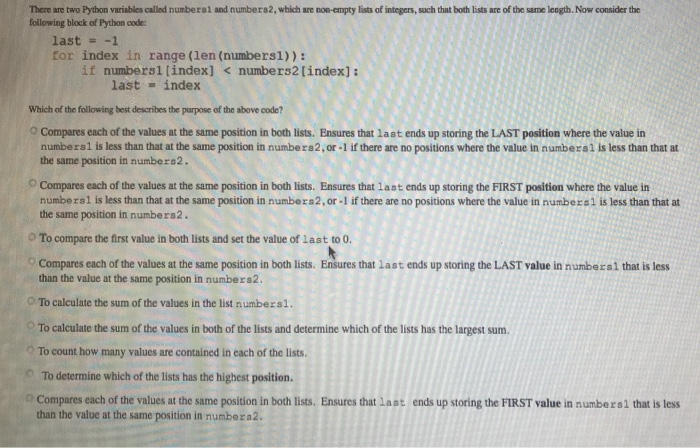
There are two Python variables called numbers1 and numbers2, which are non-empty lists of integers, such that both lists are of the same length. Now consider the following block of Python code for index in range (len (numbers1)): if numbersl[index] numbers2 [index]: last index Which of the following best describes the purpose of the above code? Compares each of the values at the same position in both lists. Ensures that last ends up storing the LAST position where the value in numbers1 is less than that at the same position in numbera2,or -1 if there are no positions where the value in numbers1 is less than that at the same position in numbera2. Compares each of the values at the same position in both lists. Ensures that last ends up storing the FIRST position where the value in numbe ral is less than that at the same position in numbers2, or-1 if there are no positions where the value in numbers1 is less than that at the same position in numbers2. O To compare the first value in both lists and set the value of last to 0. Compares each of the values at the same position in both lists. Ensures that last ends up storing the LAST value in numberal that is less than the value at the same position in numbers2 O To calculate the sum of the values in the list numbersl. To calculate the sum of the values in both of the lists and determine which of the lists has the largest sum. To count how many values are contained in each of the lists. To determine which of the lists has the highest position. Compares each of the values at the same position in both lists. Ensures that last ends up storing the FIRST value in numbers1 that is less than the value at the same position in numbera2
Step by Step Solution
There are 3 Steps involved in it

Get step-by-step solutions from verified subject matter experts
 Study Help