







Question: there is nothing missing everything has been provided Practice Problems Unit 7: Introduction to Functions Extension 16. Sort the following terms into the two groups
there is nothing missing everything has been provided
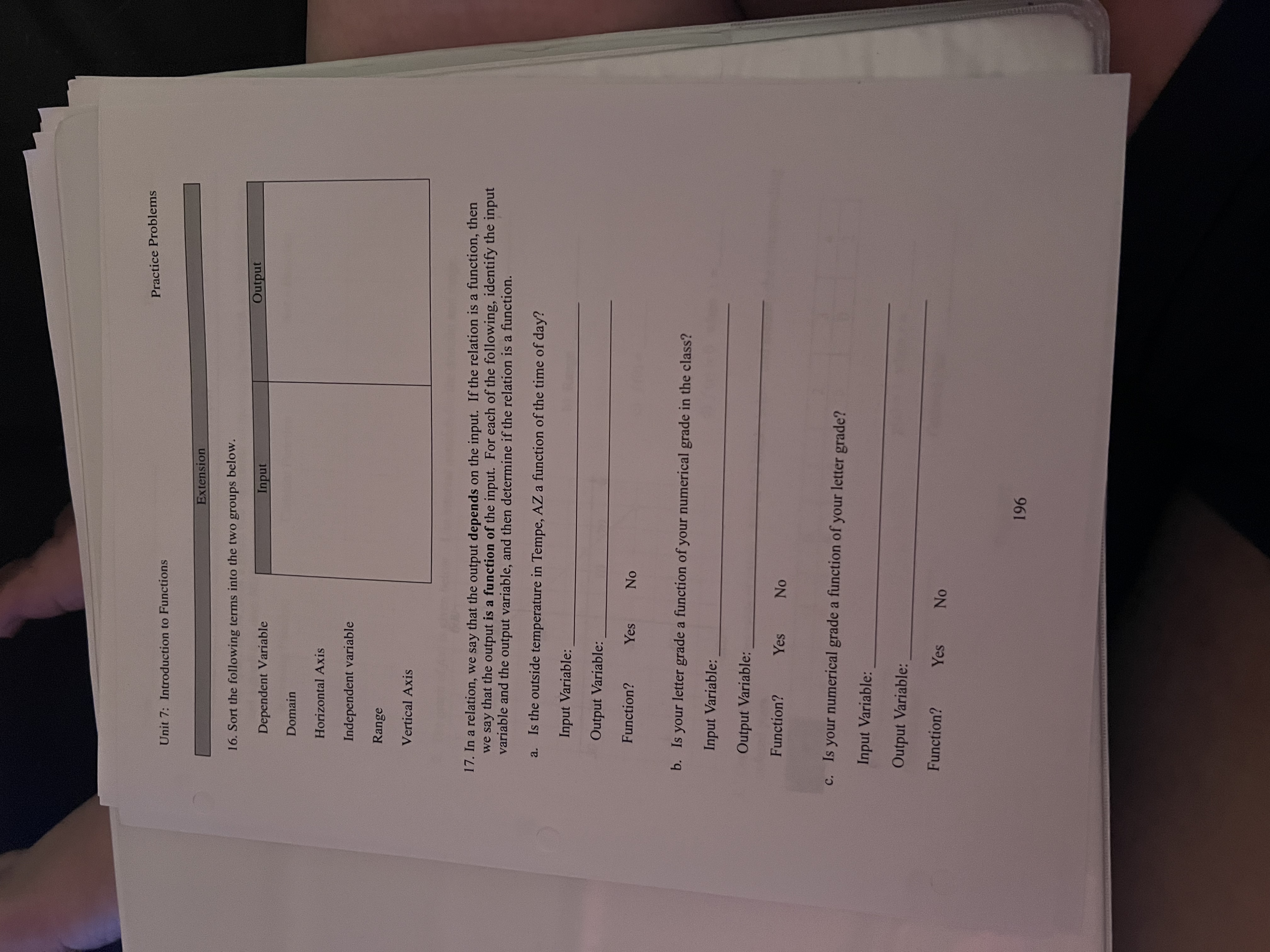
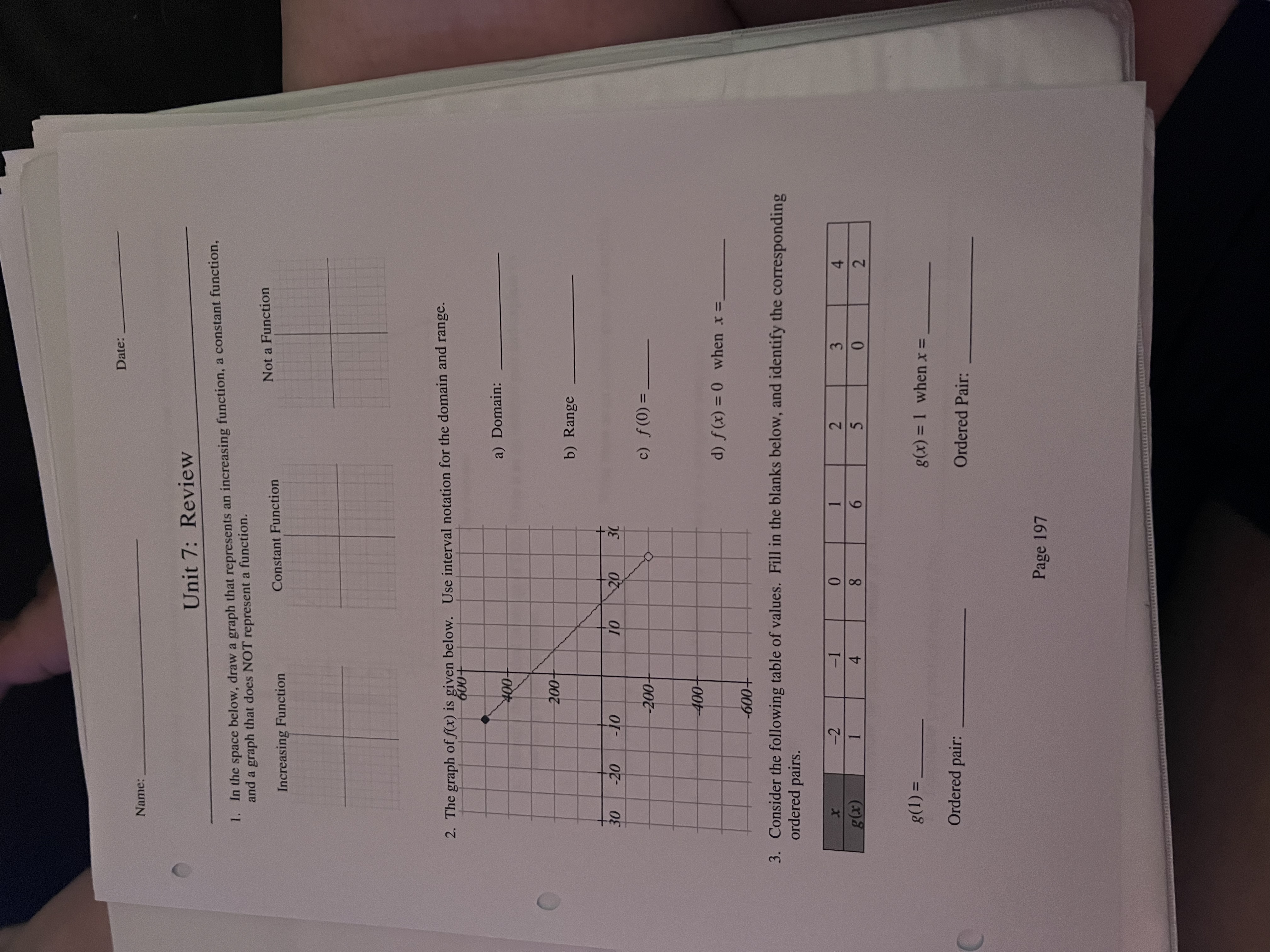
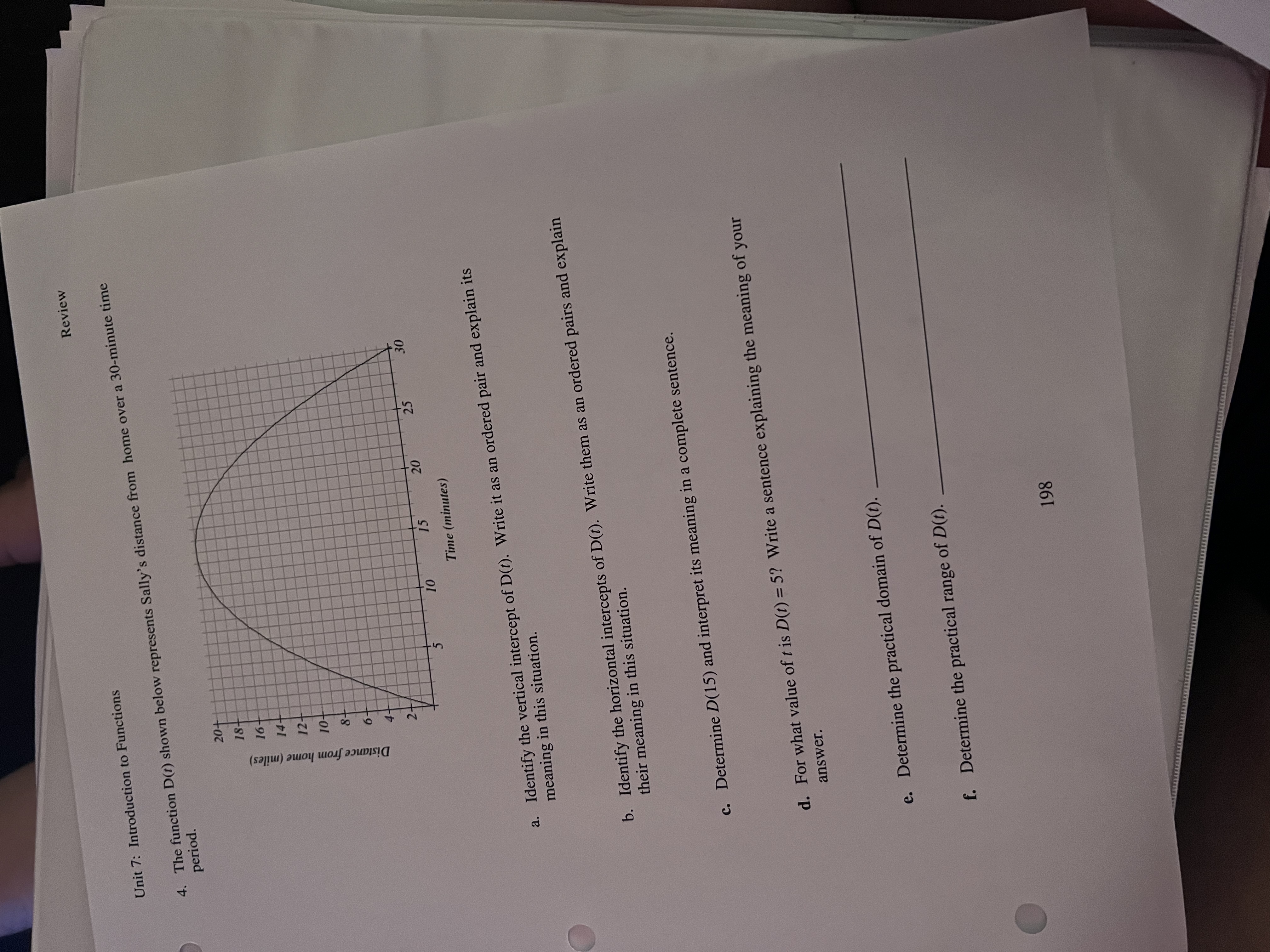
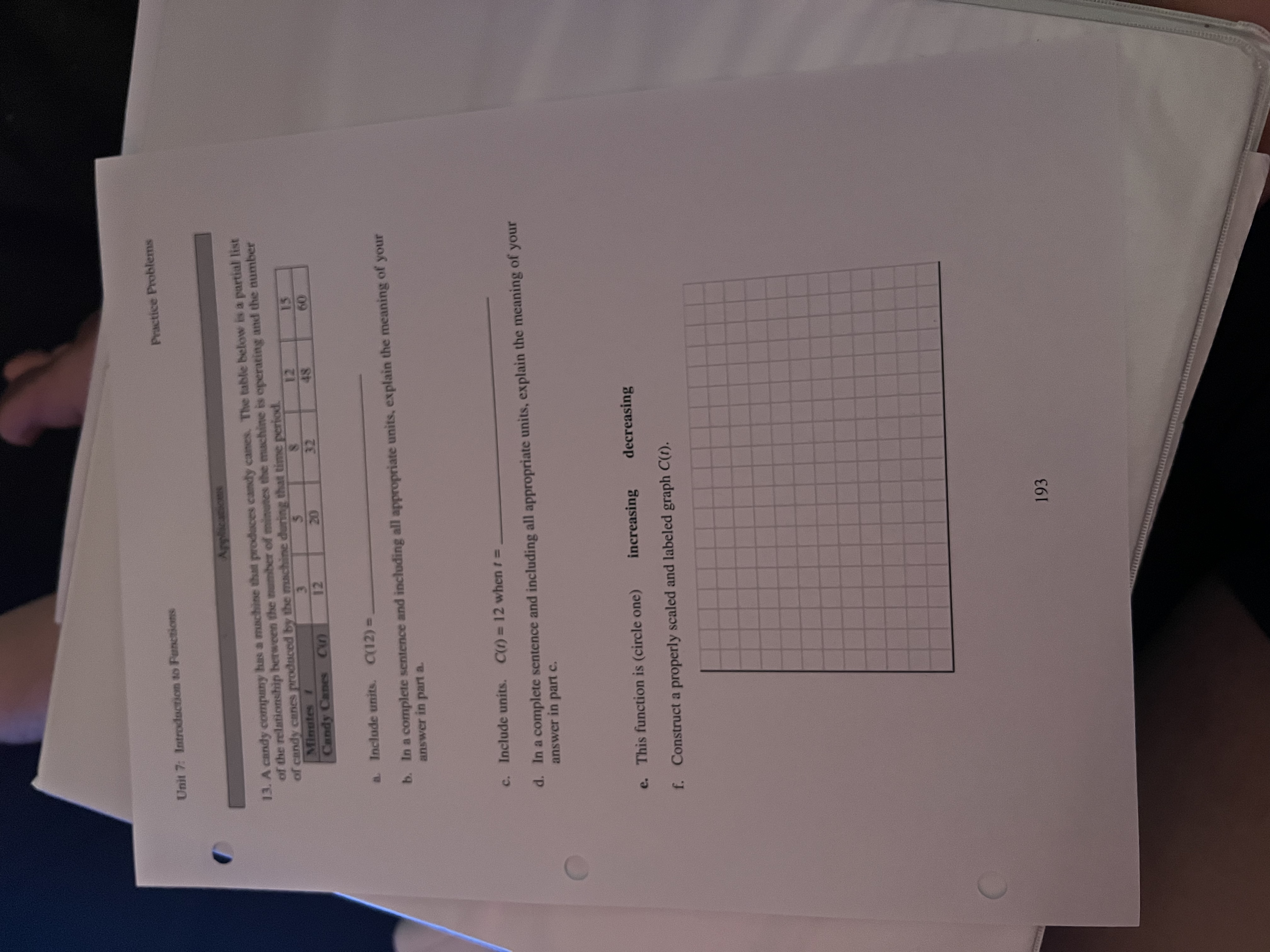
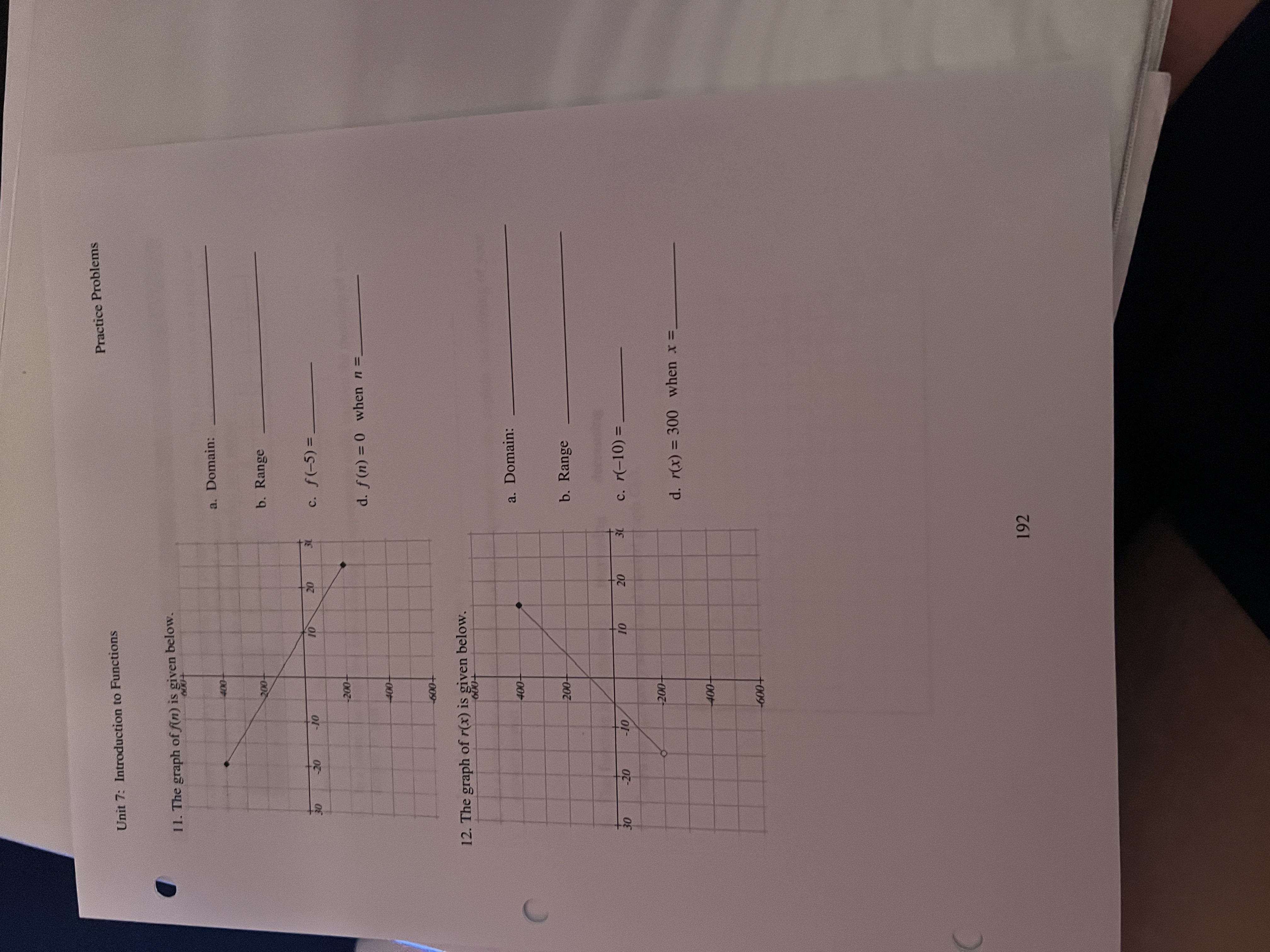
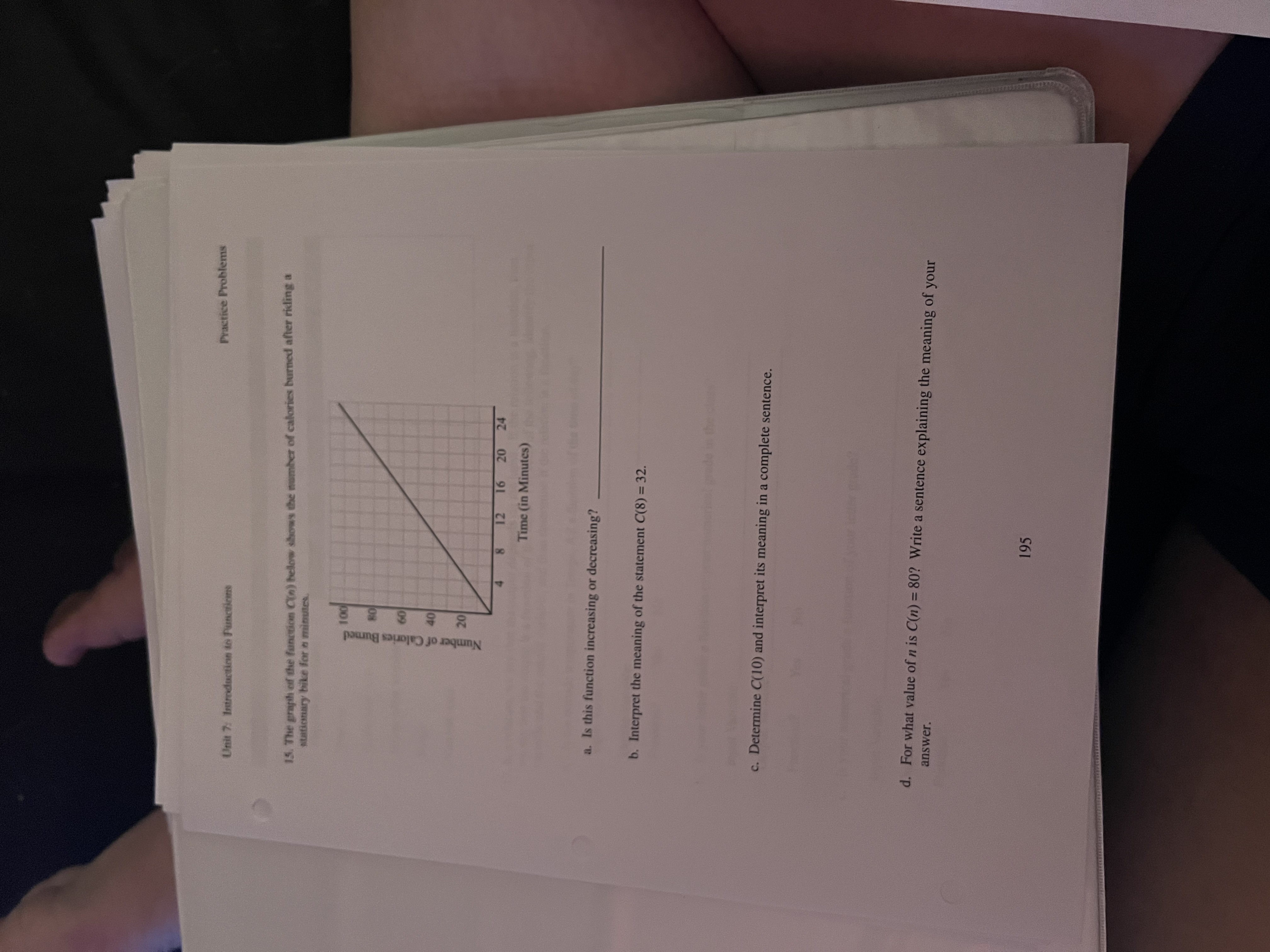
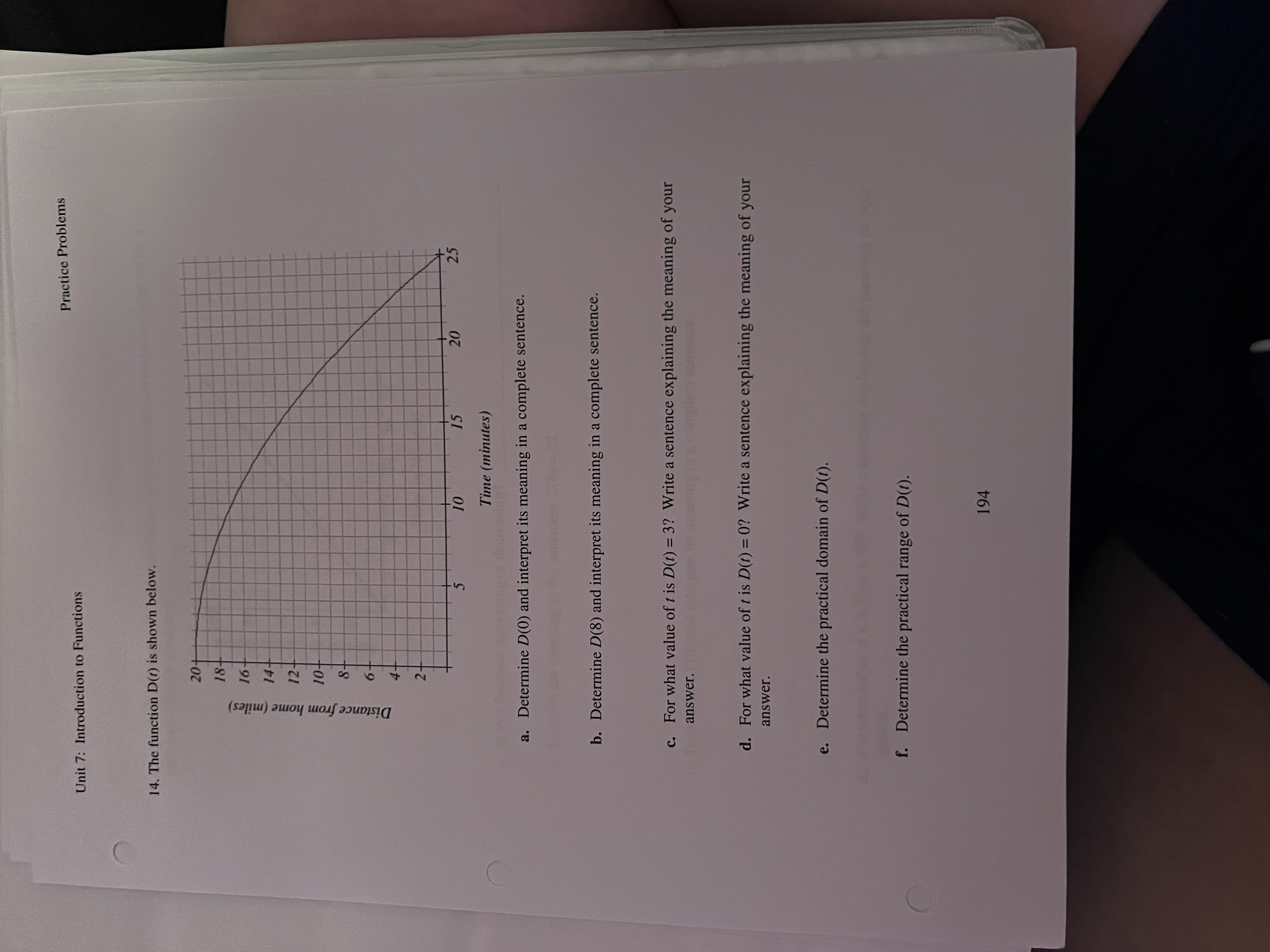
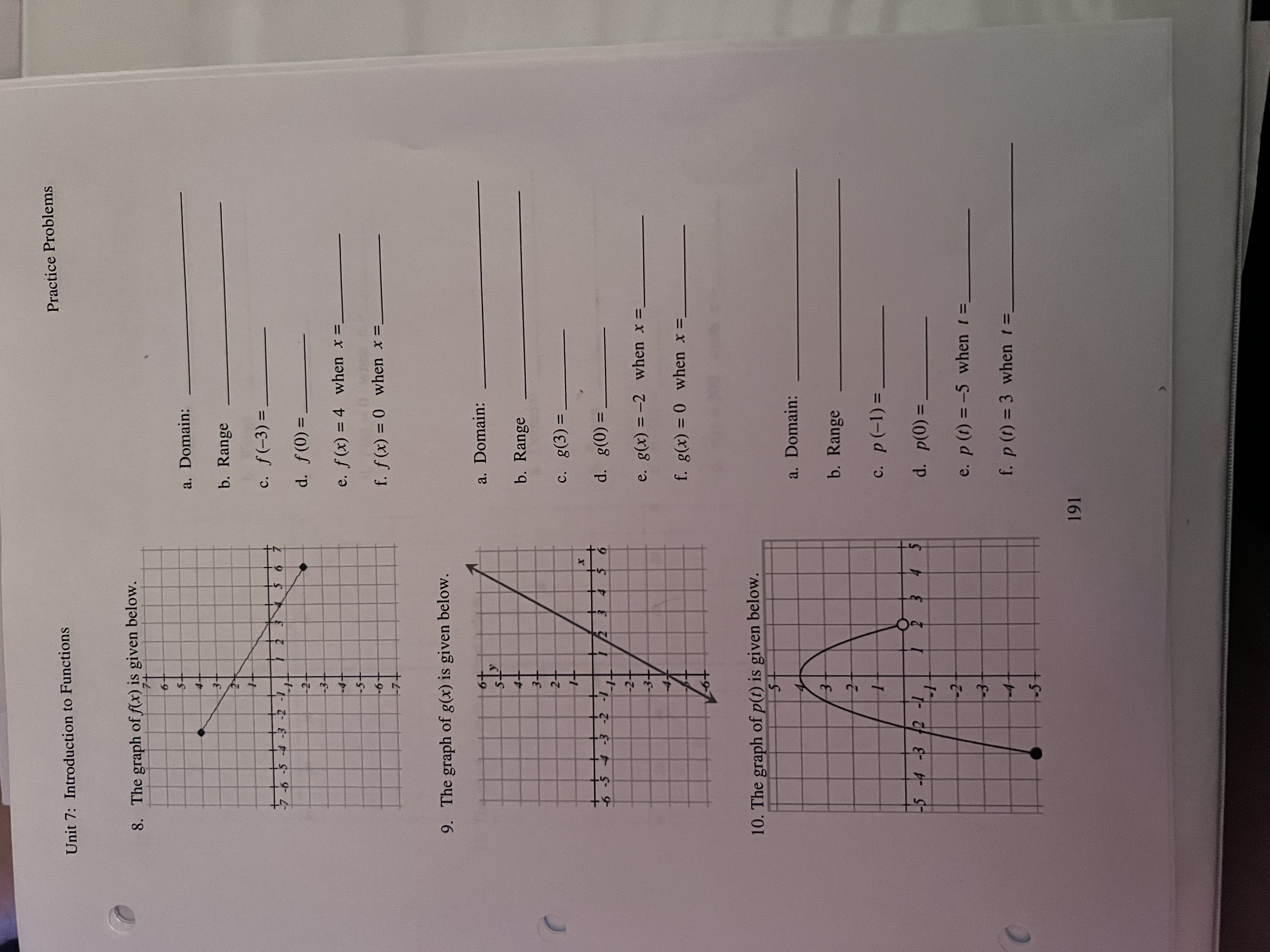 Practice Problems Unit 7: Introduction to Functions Extension 16. Sort the following terms into the two groups below. Output Dependent Variable Input Domain Horizontal Axis Independent variable Range Vertical Axis 17. In a relation, we say that the output depends on the input. If the relation is a function, then we say that the output is a function of the input. For each of the following, identify the input variable and the output variable, and then determine if the relation is a function. a. Is the outside temperature in Tempe, AZ a function of the time of day? Input Variable: Output Variable: Function? Yes No b. Is your letter grade a function of your numerical grade in the class? Input Variable: Output Variable: Function? Yes No c. Is your numerical grade a function of your letter grade? Input Variable: Output Variable: Function? Yes No 196Date: Name: Unit 7: Review 1. In the space below, draw a graph that represents an increasing function, a constant function, and a graph that does NOT represent a function. Increasing Function Constant Function Not a Function 2. The graph of f(x) is given below. Use interval notation for the domain and range. 600+ 400 a) Domain: 200 b) Range 30 -20 -10 10 20 200- c) f (0 ) = 400- d) f (x) =0 when x =_ -600- 3. Consider the following table of values. Fill in the blanks below, and identify the corresponding ordered pairs. - 2 g(x) 4 8 6 3 0 2 8 (1) = g(x) = 1 when x = Ordered pair: Ordered Pair: Page 197Unit 7: Introduction to Functions Review 4. The function D(t) shown below represents Sally's distance from home over a 30-minute time period. 20+ 18 - 16- 14 12 + Distance from home (miles) N 10 15 20 25 30 Time (minutes) . Identify the vertical intercept of D(t). Write it as an ordered pair and explain its meaning in this situation. b. Identify the horizontal intercepts of D(t). Write them as an ordered pairs and explain their meaning in this situation. c. Determine D(15) and interpret its meaning in a complete sentence. d. For what value of t is D(t) = 5? Write a sentence explaining the meaning of your answer . e. Determine the practical domain of D(t). f. Determine the practical range of D(t). 198Unit 7: Introduction to Functions Practice Problems 13. A candy company has a machine that produces candy canes. The table below is a partial list of the relationship between the number of minutes the machine is operating and the number of candy canes produced by the machine during that time period. Minutes S 8 12 15 Candy Canes Cut) 12 20 32 60 a. Include units. C(12) = b. In a complete sentence and including all appropriate units, explain the meaning of your answer in part a. c. Include units. C(1) = 12 when t = d. In a complete sentence and including all appropriate units, explain the meaning of your answer in part c. e. This function is (circle one) increasing decreasing f. Construct a properly scaled and labeled graph C(t). 193Unit 7: Introduction to Functions Practice Problems 1 1. The graph of f(n) is given below. 400- a. Domain: 200- b. Range 30 -20 -10 10 20 c. f (- 5) = -200- d. f (n) =0 when n =_ -400 12. The graph of r(x) is given below. 400- a. Domain: 200 b. Range 30 -20 -10 10 20 c. r(-10) = -200- d. r(x) = 300 when x =_ 400- 600- 192Practice Problems Unit 7: Introduction to Punctions 15. The graph of the function Con) below shows the number of calories burned after riding a stationary bike for a minuses. 100 Number of Calories Burned 20 12 16 20 24 Time (in Minutes) a. Is this function increasing or decreasing? b. Interpret the meaning of the statement C(8) = 32. c. Determine C(10) and interpret its meaning in a complete sentence. d. For what value of n is C(n) = 80? Write a sentence explaining the meaning of your answer. 195Practice Problems Unit 7: Introduction to Functions 14. The function D(t) is shown below. 20- 18 - 16- 14- Distance from home (miles) a co N A 10 20 25 Time (minutes) a. Determine D(0) and interpret its meaning in a complete sentence. b. Determine D(8) and interpret its meaning in a complete sentence. c. For what value of t is D(t) = 3? Write a sentence explaining the meaning of your answer . d. For what value of t is D(t) = 0? Write a sentence explaining the meaning of your answer. e. Determine the practical domain of D(1). f. Determine the practical range of D(t). 194Unit 7: Introduction to Functions Practice Problems 8. The graph of f(x) is given below. a. Domain: b. Range c. f (-3 ) = -7 -6 - 5 -4 -3 - 2 -1 d. f (0) = e. f(x) = 4 when x =_ f. f (x) =0 when x = 9. The graph of g(x) is given below. a. Domain: b. Range C. 8(3) = 1 -3 d. 8(0) = e. g(x) = -2 when x = f. g(x) =0 when x = 10. The graph of p(t) is given below. a. Domain: b. Range c. P (-1) = -5 - 4 - 3 2 -1 d. p(0) = e. p (t) = -5 when 1 = f. p (t) = 3 when 1 = 191
 Step by Step Solution
There are 3 Steps involved in it
1 Expert Approved Answer
Step: 1 Unlock

Question Has Been Solved by an Expert!
Get step-by-step solutions from verified subject matter experts
Step: 2 Unlock
Step: 3 Unlock
 Study Help