







Question: These are my Math/Stat questions A popular theory is that presidential candidates have an advantage if they are taller than their main opponents. Listed are
These are my Math/Stat questions
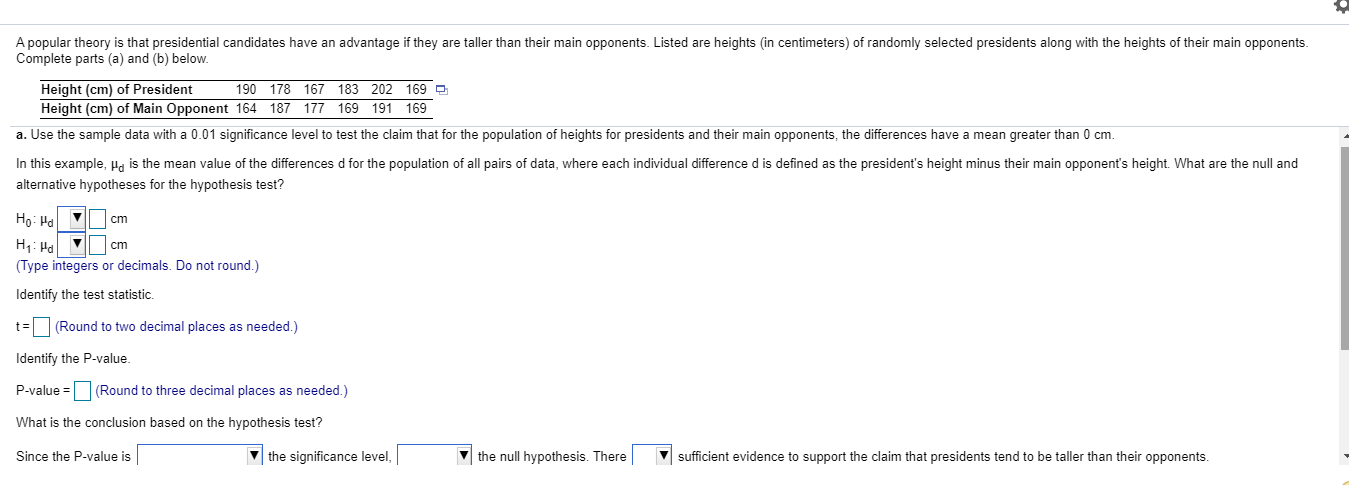
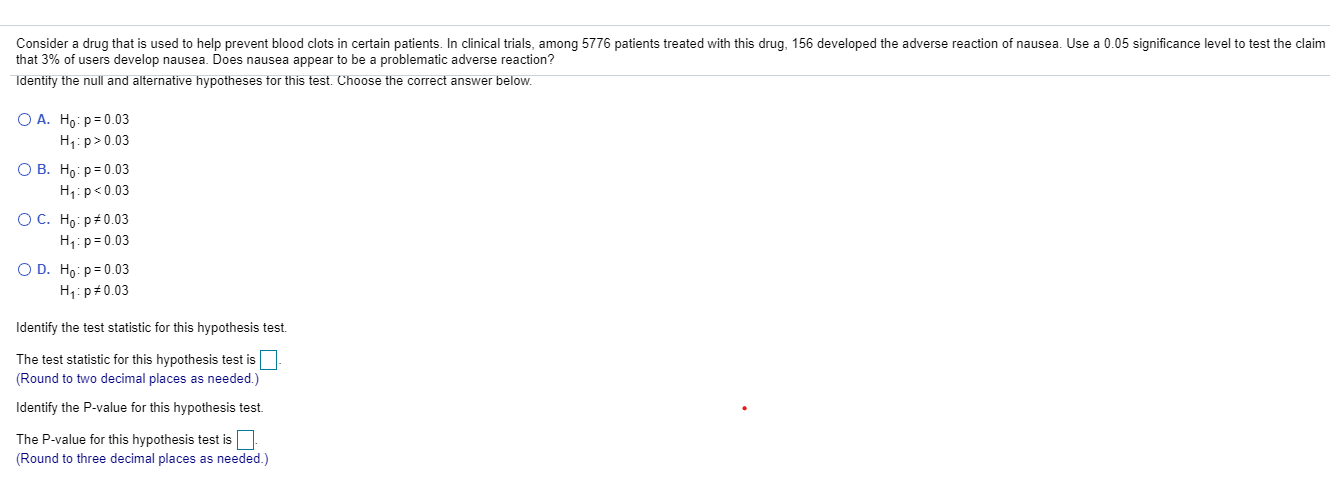
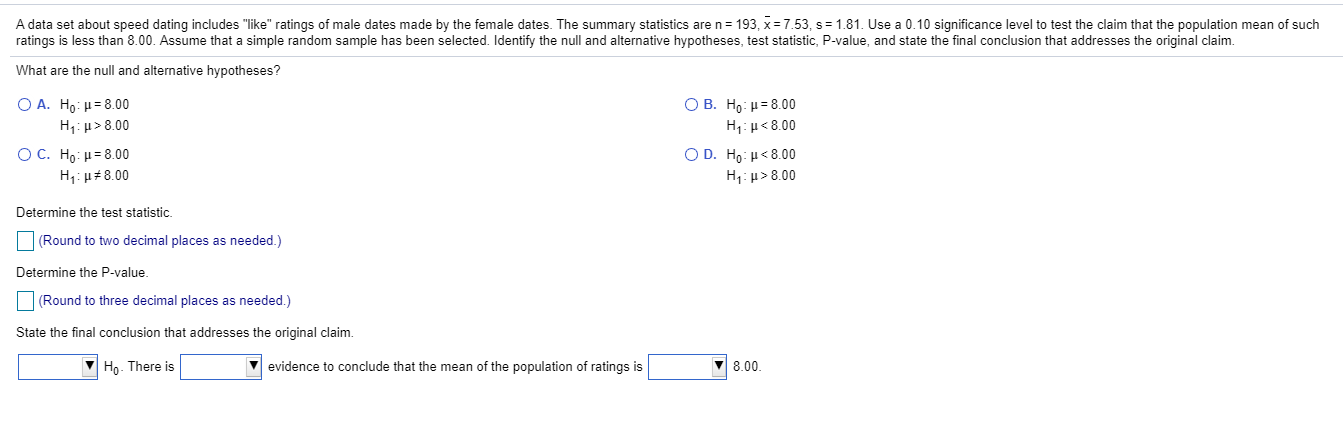
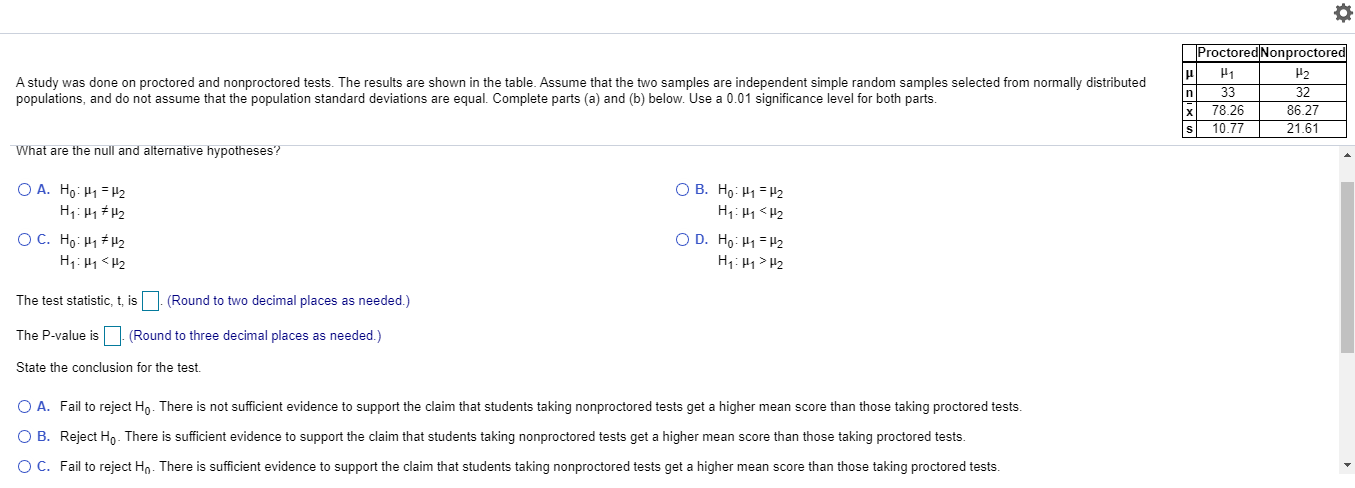
A popular theory is that presidential candidates have an advantage if they are taller than their main opponents. Listed are heights (in centimeters) of randomly selected presidents along with the heights of their main opponents. Complete parts (a) and (b) below. Height (cm) of President 190 178 167 183 202 169 Height (cm) of Main Opponent 164 187 177 169 191 169 a. Use the sample data with a 0.01 significance level to test the claim that for the population of heights for presidents and their main opponents, the differences have a mean greater than 0 cm. In this example, He is the mean value of the differences d for the population of all pairs of data, where each individual difference d is defined as the president's height minus their main opponent's height. What are the null and alternative hypotheses for the hypothesis test? Ho: Hd cm H1 : Hd cm (Type integers or decimals. Do not round.) Identify the test statistic. t=(Round to two decimal places as needed.) Identify the P-value. P-value = (Round to three decimal places as needed.) What is the conclusion based on the hypothesis test? Since the P-value is the significance level, the null hypothesis. There | | sufficient evidence to support the claim that presidents tend to be taller than their opponents.Consider a drug that is used to help prevent blood clots in certain patients. In clinical trials, among 5776 patients treated with this drug, 156 developed the adverse reaction of nausea. Use a 0.05 significance level to test the claim that 3% of users develop nausea. Does nausea appear to be a problematic adverse reaction? Identity the null and alternative hypotheses for this test. Choose the correct answer below. O A. Ho: p = 0.03 H, : p > 0.03 O B. Ho: p = 0.03 H1: p 8.00 H1: H 8.00 Determine the test statistic. (Round to two decimal places as needed.) Determine the P-value. (Round to three decimal places as needed.) State the final conclusion that addresses the original claim. Ho- There is evidence to conclude that the mean of the population of ratings is 8.00Proctored Nonproctored A study was done on proctored and nonproctored tests. The results are shown in the table. Assume that the two samples are independent simple random samples selected from normally distributed H1 P2 populations, and do not assume that the population standard deviations are equal. Complete parts (a) and (b) below. Use a 0.01 significance level for both parts. 33 32 78.26 86.27 10.77 21.61 What are the null and alternative hypotheses? O A. Ho: H1 = H2 O B. Ho: H1 = H2 H1: 141 7 H2 Hy: Hy = H2 OC. Ho: H1 # H2 OD. HO: H1 = H2 H1: H1 = H2 Hy : My > H2 The test statistic, t, is . (Round to two decimal places as needed.) The P-value is . (Round to three decimal places as needed.) State the conclusion for the test. O A. Fail to reject Ho. There is not sufficient evidence to support the claim that students taking nonproctored tests get a higher mean score than those taking proctored tests. O B. Reject Ho- There is sufficient evidence to support the claim that students taking nonproctored tests get a higher mean score than those taking proctored tests. O C. Fail to reject Ho. There is sufficient evidence to support the claim that students taking nonproctored tests get a higher mean score than those taking proctored tests
Step by Step Solution
There are 3 Steps involved in it

Get step-by-step solutions from verified subject matter experts
 Study Help