







Question: These are the answers to a. b. c. d. Developing a Master Budget for a Merchandising Organization Peyton Department Store prepares budgets quarterly. The following
These are the answers to a. b. c. d.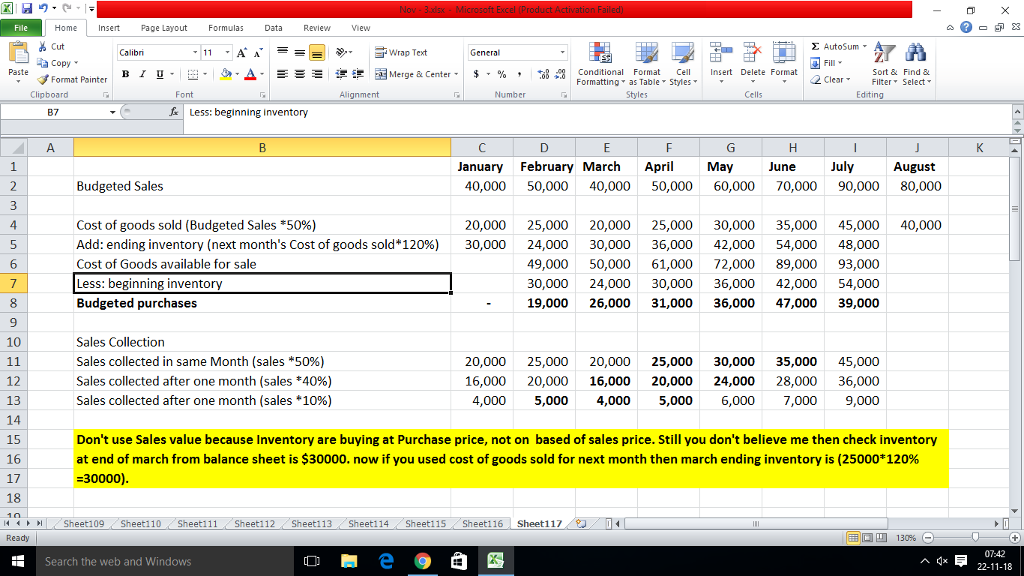
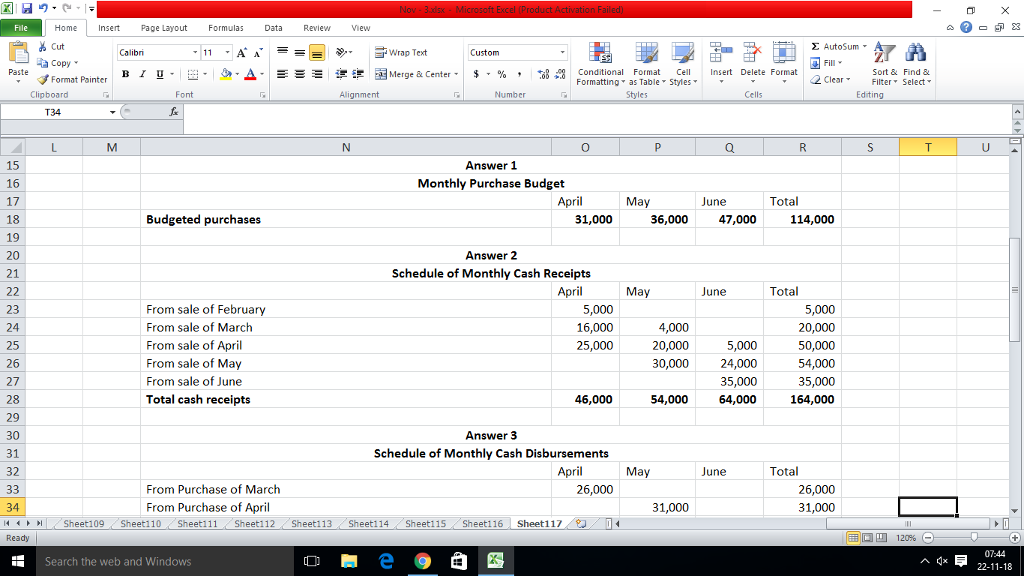
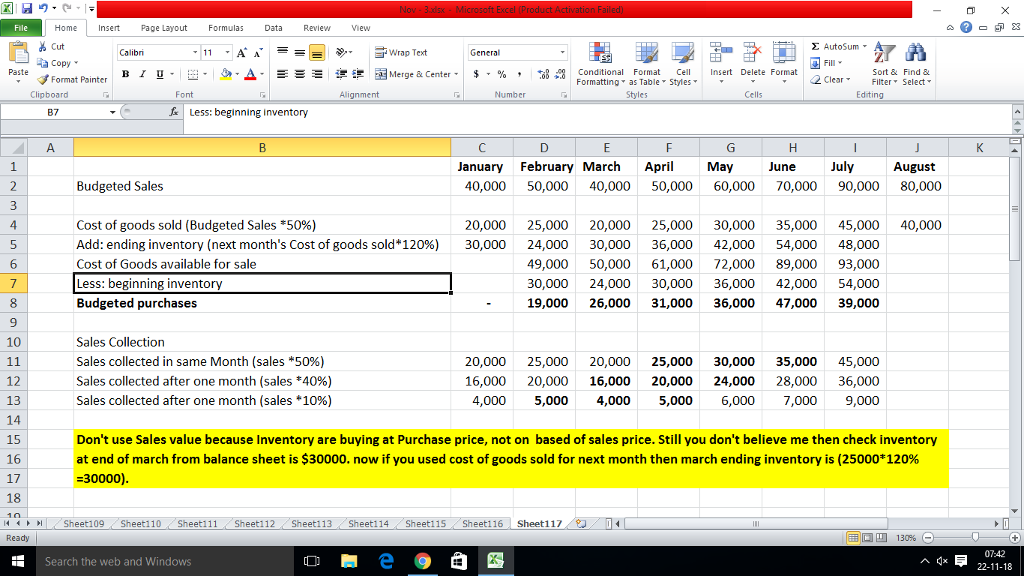
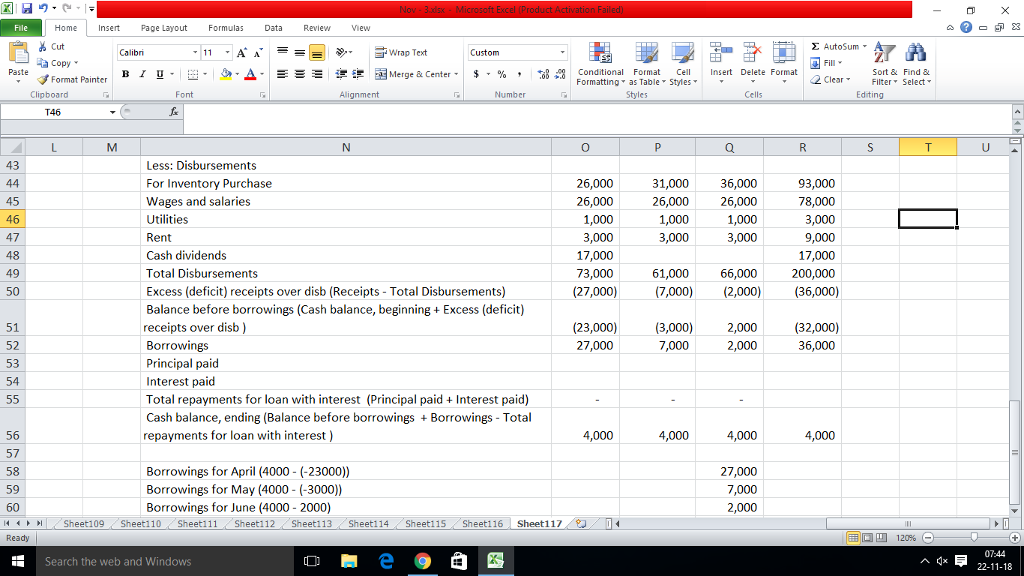 Developing a Master Budget for a Merchandising Organization Peyton Department Store prepares budgets quarterly. The following information is available for use in planning the second quarter budgets for 2010.
| PEYTON DEPARTMENT STORE Balance Sheet March 31, 2010 | |||
|---|---|---|---|
| Assets | Liabilities and Stockholders' Equity | ||
| Cash | $4,000 | Accounts payable | $26,000 |
| Accounts receivable | 25,000 | Dividends payable | 17,000 |
| Inventory | 30,000 | Rent payable | 3,000 |
| Prepaid Insurance | 2,000 | Stockholders' equity | 40,000 |
| Fixtures | 25,000 | ||
| Total assets | $86,000 | Total liabilities and equity | $86,000 |
Actual and forecasted sales for selected months in 2010 are as follows:
| Month | Sales Revenue |
|---|---|
| January | $40,000 |
| February | 50,000 |
| March | 40,000 |
| April | 50,000 |
| May | 60,000 |
| June | 70,000 |
| July | 90,000 |
| August | 80,000 |
Monthly operating expenses are as follows:
| Wages and salaries | $26,000 |
| Depreciation | 100 |
| Utilities | 1,000 |
| Rent | 3,000 |
Cash dividends of $17,000 are declared during the third month of each quarter and are paid during the first month of the following quarter. Operating expenses, except insurance, rent, and depreciation are paid as incurred. Rent is paid during the following month. The prepaid insurance is for five more months. Cost of goods sold is equal to 50 percent of sales. Ending inventories are sufficient for 120 percent of the next month's sales. Purchases during any given month are paid in full during the following month. All sales are on account, with 50 percent collected during the month of sale, 40 percent during the next month, and 10 percent during the month thereafter. Money can be borrowed and repaid in multiples of $1,000 at an interest rate of 12 percent per year. The company desires a minimum cash balance of $4,000 on the first of each month. At the time the principal is repaid, interest is paid on the portion of principal that is repaid. All borrowing is at the beginning of the month, and all repayment is at the end of the month. Money is never repaid at the end of the month it is borrowed.
(e) Prepare an income statement for each month of the second quarter ending June 30, 2010.
Only use negative signs to show net losses in income.
| Peyton Department Store Budgeted Monthly Income Statements Quarter Ending June 30, 2010 | ||||
|---|---|---|---|---|
| April | May | June | Total | |
| Sales | $Answer | $Answer | $Answer | $Answer |
| Cost of sales | Answer | Answer | Answer | Answer |
| Gross profit | Answer | Answer | Answer | Answer |
| Operating expenses: | ||||
| Wages and salaries | Answer | Answer | Answer | Answer |
| Depreciation | Answer | Answer | Answer | Answer |
| Utilities | Answer | Answer | Answer | Answer |
| Rent | Answer | Answer | Answer | Answer |
| Insurance | Answer | Answer | Answer | Answer |
| Interest | Answer | Answer | Answer | Answer |
| Total expenses | Answer | Answer | Answer | Answer |
| Net income | $Answer | $Answer | $Answer | $Answer |
(f) Prepare a budgeted balance sheet as of June 30, 2010.
| Peyton Department Store Budgeted Balance Sheet June 30, 2010 | ||||
|---|---|---|---|---|
| Assets | Liabilities and Equity | |||
| Cash | $Answer | Merchandise payable | $Answer | |
| Accounts receivable | Answer | Dividend payable | Answer | |
| Inventory | Answer | Rent payable | Answer | |
| Prepaid insurance | Answer | Loans payable | Answer | |
| Fixtures | Answer | Interest payable | Answer | |
| Total assets | $Answer | Stockholders' equity | Answer | |
| Total liab. & equity | $Answer | |||
Homeert Page Layout FormulasData Review View Cut AutoSum AA E " Text Wrap TesxtGeneral Copy ey Format Painter Blu. =.. -=- i s Merge & Center. $,%, , ned Conditional Format Cell Insert Delete Format Sort &Find & 2 ClearFe Select Edting Formatting as Table-styles Clipboard Alignment Number Cells B7 Less: beginning inventory January February March ApriMayJuneJulyAugust 40,000 50,00040,000 50,000 60,000 70,000 90,000 80,000 Budgeted Sales 4 Cost of goods sold (Budgeted Sales *50%) 20,000 25,000 20,000 25,000 30,000 35,000 45,000 40,000 Add: ending inventory (next month's Cost of goods sold" 120%) 30,000 24,000 30,000 36,000 42,000 54,000 48,000 49,000 50,000 61,000 72,000 89,000 93,000 30,000 24,000 30,000 36,000 42,000 54,000 19,000 26,000 31,000 36,000 47,000 39,000 6 Cost of Goods available for sale Less: beginning inventory Budgeted purchases 9 10 Sales Collection Sales collected in same Month (sales *50%) Sales collected after one month (sales *40%) Sales collected after one month (sales *10%) 20,000 25,000 20,000 25,000 30,000 35,000 45,000 16,000 20,000 16,000 20,00024,000 28,000 36,000 4,000 5,000 4,000 5,000 6,000 7,0009,000 12 13 1.4 15 16 17 113 Don't use Sales value because Inventory are buying at Purchase price, not on based of sales price. Still you don't believe me then check inventory at end of march from balance sheet is $30000, now if you used cost of goods sold for next month then march ending inventory is (25000*120% 30000) 1 Sheet109 Sheet1 10 Sheet111 Sheet112 Sheet113 Sheet1 14 Sheet1 15 . Sheet116 Sheet117A 4 Ready 13096 Search the web and Windows 22-11-18
Step by Step Solution
There are 3 Steps involved in it

Get step-by-step solutions from verified subject matter experts
 Study Help