







Question: This activity is important because as organizations divide work into different units, we can detect patterns in the way departments are clustered and arranged. The
This activity is important because as organizations divide work into different units, we can detect patterns in the way departments are clustered and arranged. The three basic approaches to departmentalization are functional, divisional, and matrix. The goal of this activity is to consider these three types of structures, and identify each structure's strengths, weaknesses, and the environment to which it is most suited.
There are strengths and weaknesses that characterize each of the three types of structures, and each structure is particularly suited for a different type of environment. In a functional organization, jobs are specialized and grouped according to business functions. A divisional organization groups all functions into divisions. Each division may operate as a separate entity and work autonomously to accomplish organization goals. A matrix organization operates with an overlap of the functional and divisional forms.
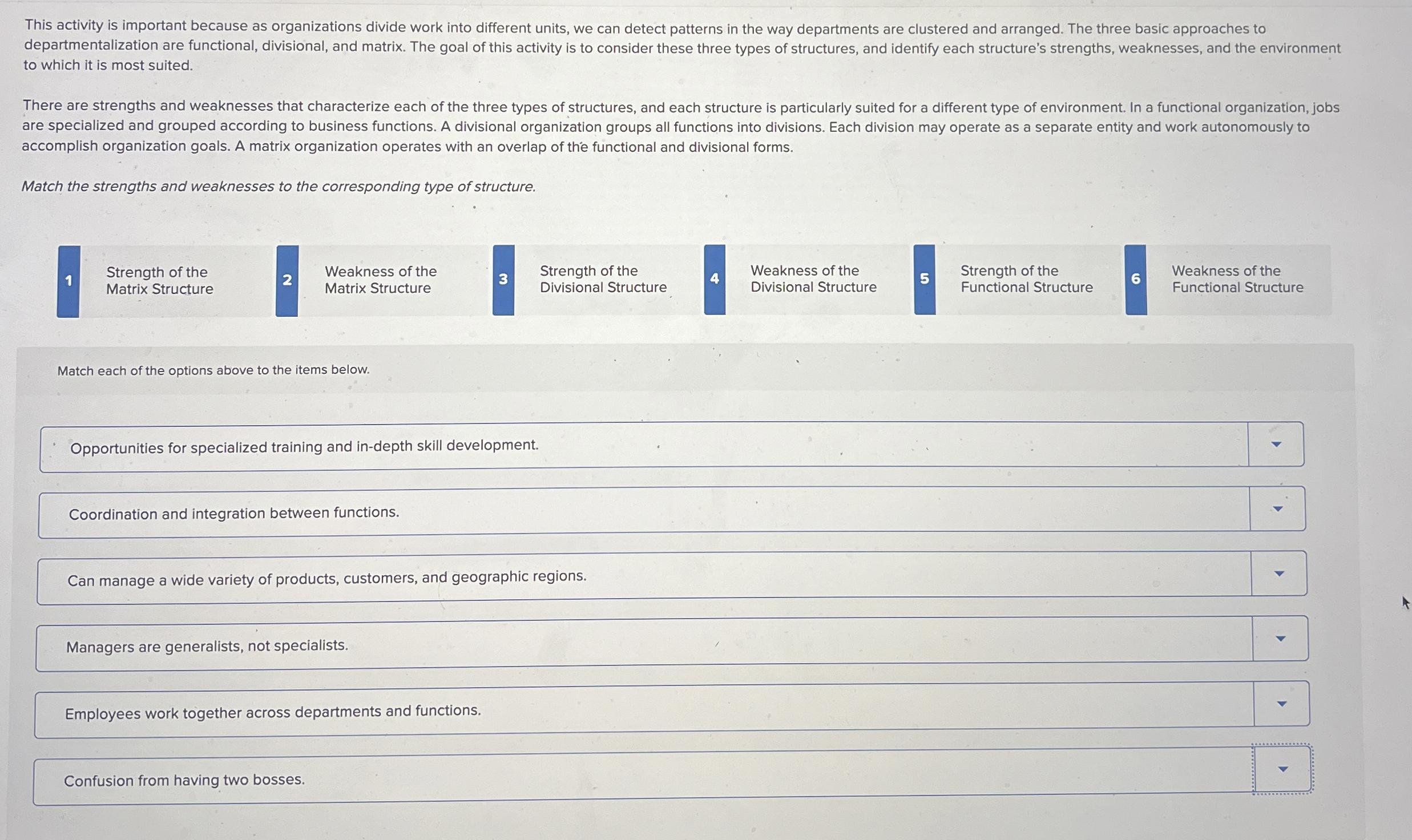
Match the strengths and weaknesses to the corresponding type of structure.
Strength of the
Weakness of the
Strength of the
Weakness of the
Strength of the
Matrix Structure
Matrix Structure
Divisional Structure
Weakness of the
Divisional Structure
Functional Structure
Weakness of the
Functional Structure
Match each of the options above to the items below.
Opportunities for specialized training and indepth skill development.
Coordination and integration between functions.
Can manage a wide variety of products, customers, and geographic regions.
Managers are generalists, not specialists.
Employees work together across departments and functions.
Confusion from having two bosses.
Step by Step Solution
There are 3 Steps involved in it
1 Expert Approved Answer
Step: 1 Unlock

Question Has Been Solved by an Expert!
Get step-by-step solutions from verified subject matter experts
Step: 2 Unlock
Step: 3 Unlock
 Study Help