


Question: this article is for the Yes on researcher reporting child abuse can you break it down not simple, because that which protects the victim may

this article is for the Yes on researcher reporting child abuse can you break it down
this article is for the Yes on researcher
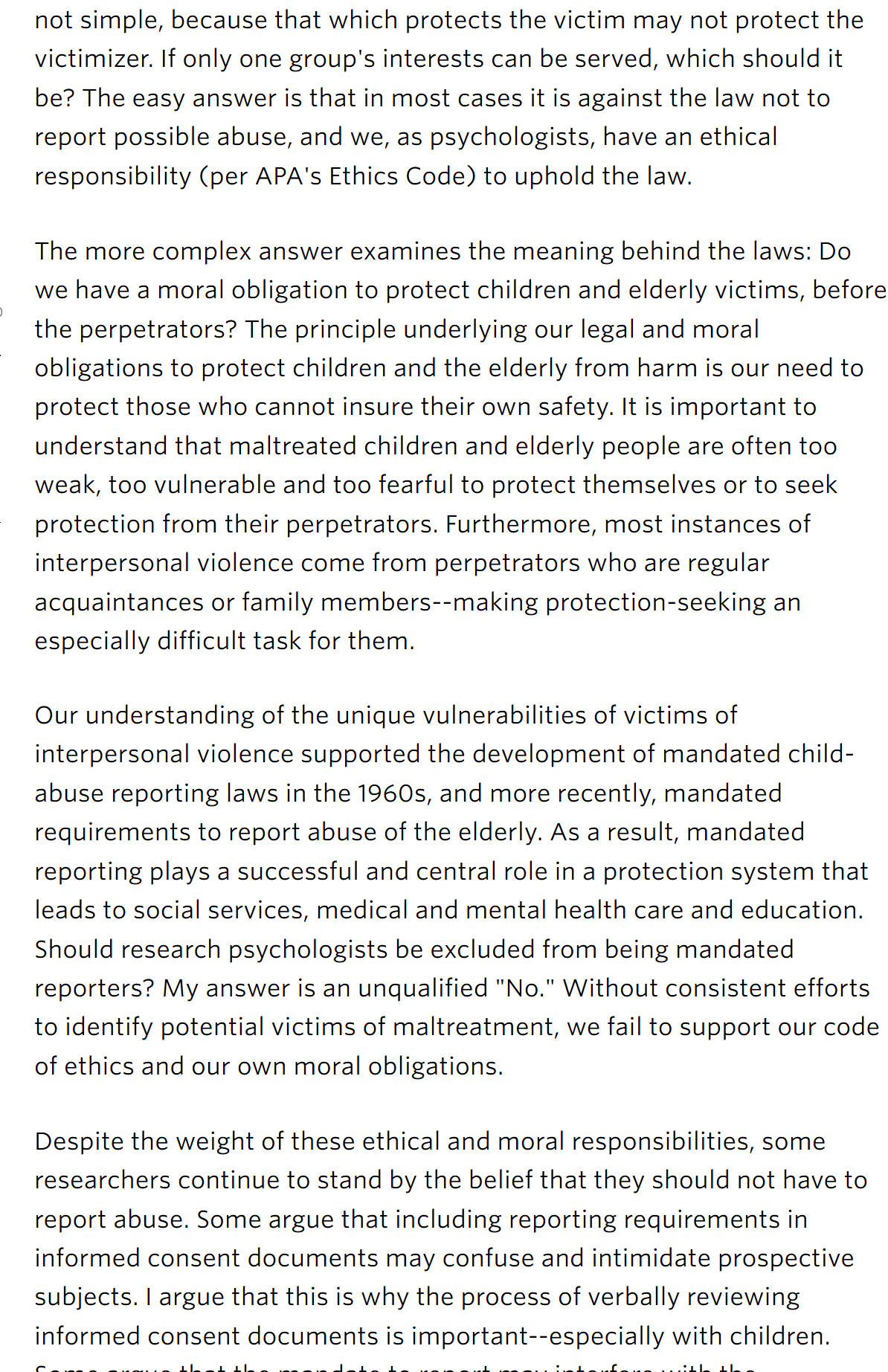
not simple, because that which protects the victim may not protect the victimizer. If only one group's interests can be served, which should it be? The easy answer is that in most cases it is against the law not to report possible abuse, and we, as psychologists, have an ethical responsibility (per APA's Ethics Code) to uphold the law. The more complex answer examines the meaning behind the laws: Do we have a moral obligation to protect children and elderly victims, before the perpetrators? The principle underlying our legal and moral obligations to protect children and the elderly from harm is our need to protect those who cannot insure their own safety. It is important to understand that maltreated children and elderly people are often too weak, too vulnerable and too fearful to protect themselves or to seek protection from their perpetrators. Furthermore, most instances of interpersonal violence come from perpetrators who are regular acquaintances or family members--making protection-seeking an especially difficult task for them. Our understanding of the unique vulnerabilities of victims of interpersonal violence supported the development of mandated child- abuse reporting laws in the 1960s, and more recently, mandated requirements to report abuse of the elderly. As a result, mandated reporting plays a successful and central role in a protection system that leads to social services, medical and mental health care and education. Should research psychologists be excluded from being mandated reporters? My answer is an unqualified "No." Without consistent efforts to identify potential victims of maltreatment, we fail to support our code of ethics and our own moral obligations. Despite the weight of these ethical and moral responsibilities, some researchers continue to stand by the belief that they should not have to report abuse. Some argue that including reporting requirements in informed consent documents may confuse and intimidate prospective subjects. I argue that this is why the process of verbally reviewing informed consent documents is important--especially with children

Step by Step Solution

There are 3 Steps involved in it

1 Expert Approved Answer
Step: 1 Unlock blur-text-image

Question Has Been Solved by an Expert!

Get step-by-step solutions from verified subject matter experts

Step: 2 Unlock
Step: 3 Unlock

Students Have Also Explored These Related Accounting Questions!