Question: this assignment is to write an implementation analysis that applies appropriate leadership theory and concepts in responsing to specific problems and challenges faced by leaders
this assignment is to write an implementation analysis that applies appropriate leadership theory and concepts in responsing to specific problems and challenges faced by leaders while demonstrating both practigal and theoretical considerations ,knowledge , and understanding.
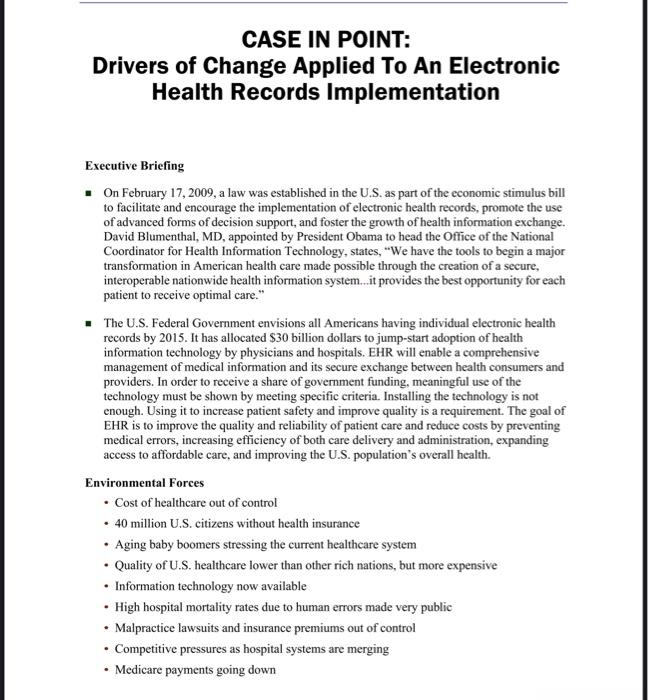
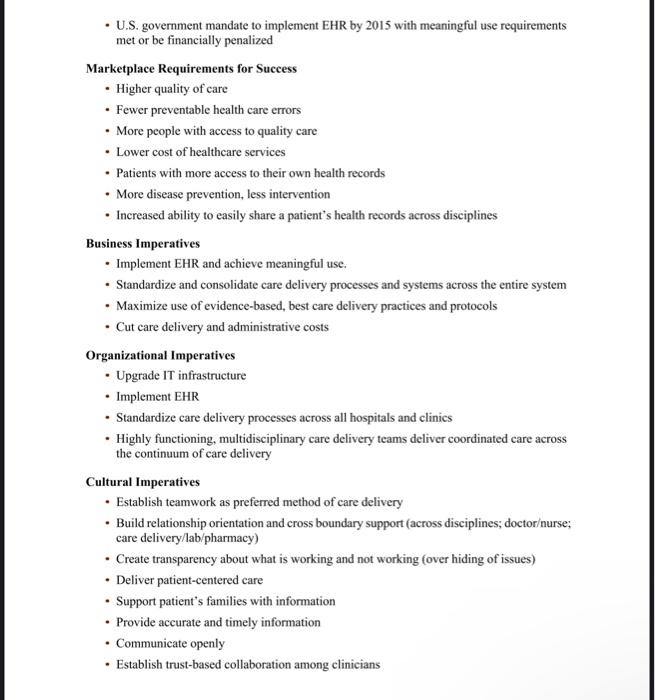
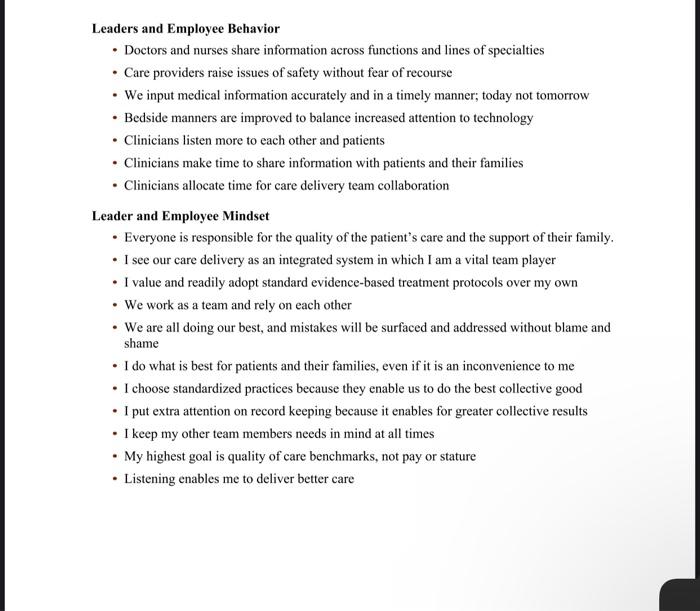
CASE IN POINT: Drivers of Change Applied To An Electronic Health Records Implementation Executive Briefing On February 17, 2009, a law was established in the U.S. as part of the economic stimulus bill to facilitate and encourage the implementation of electronic health records, promote the use of advanced forms of decision support, and foster the growth of health information exchange. David Blumenthal, MD, appointed by President Obama to head the Office of the National Coordinator for Health Information Technology, states, We have the tools to begin a major transformation in American health care made possible through the creation of a secure, interoperable nationwide health information system.it provides the best opportunity for each patient to receive optimal care." The U.S. Federal Government envisions all Americans having individual electronic health records by 2015. It has allocated $30 billion dollars to jump-start adoption of health information technology by physicians and hospitals. EHR will enable a comprehensive management of medical information and its secure exchange between health consumers and providers. In order to receive a share of government funding, meaningful use of the technology must be shown by meeting specific criteria. Installing the technology is not enough. Using it to increase patient safety and improve quality is a requirement. The goal of EHR is to improve the quality and reliability of patient care and reduce costs by preventing medical errors, increasing efficiency of both care delivery and administration, expanding access to affordable care, and improving the U.S. population's overall health. Environmental Forces . Cost of healthcare out of control 40 million U.S. citizens without health insurance Aging baby boomers stressing the current healthcare system . Quality of U.S. healthcare lower than other rich nations, but more expensive Information technology now available High hospital mortality rates due to human errors made very public . Malpractice lawsuits and insurance premiums out of control Competitive pressures as hospital systems are merging Medicare payments going down U.S. government mandate to implement EHR by 2015 with meaningful use requirements met or be financially penalized Marketplace Requirements for Success Higher quality of care . Fewer preventable health care errors . More people with access to quality care Lower cost of healthcare services Patients with more access to their own health records More disease prevention, less intervention Increased ability to easily share a patient's health records across disciplines Business Imperatives Implement EHR and achieve meaningful use. Standardize and consolidate care delivery processes and systems across the entire system Maximize use of evidence-based, best care delivery practices and protocols Cut care delivery and administrative costs Organizational Imperatives Upgrade IT infrastructure Implement EHR . Standardize care delivery processes across all hospitals and clinics Highly functioning, multidisciplinary care delivery teams deliver coordinated care across the continuum of care delivery Cultural Imperatives Establish teamwork as preferred method of care delivery Build relationship orientation and cross boundary support across disciplines; doctorurse; care delivery/lab/pharmacy) Create transparency about what is working and not working fover hiding of issues) Deliver patient-centered care Support patient's families with information Provide accurate and timely information Communicate openly Establish trust-based collaboration among clinicians Leaders and Employee Behavior Doctors and nurses share information across functions and lines of specialties Care providers raise issues of safety without fear of recourse We input medical information accurately and in a timely manner; today not tomorrow Bedside manners are improved to balance increased attention to technology Clinicians listen more to each other and patients . Clinicians make time to share information with patients and their families Clinicians allocate time for care delivery team collaboration Leader and Employee Mindset Everyone is responsible for the quality of the patient's care and the support of their family. I see our care delivery as an integrated system in which I am a vital team player I value and readily adopt standard evidence-based treatment protocols over my own We work as a team and rely on each other We are all doing our best, and mistakes will be surfaced and addressed without blame and shame I do what is best for patients and their families, even if it is an inconvenience to me I choose standardized practices because they enable us to do the best collective good I put extra attention on record keeping because it enables for greater collective results I keep my other team members needs in mind at all times My highest goal is quality of care benchmarks, not pay or stature Listening enables me to deliver better care CASE IN POINT: Drivers of Change Applied To An Electronic Health Records Implementation Executive Briefing On February 17, 2009, a law was established in the U.S. as part of the economic stimulus bill to facilitate and encourage the implementation of electronic health records, promote the use of advanced forms of decision support, and foster the growth of health information exchange. David Blumenthal, MD, appointed by President Obama to head the Office of the National Coordinator for Health Information Technology, states, We have the tools to begin a major transformation in American health care made possible through the creation of a secure, interoperable nationwide health information system.it provides the best opportunity for each patient to receive optimal care." The U.S. Federal Government envisions all Americans having individual electronic health records by 2015. It has allocated $30 billion dollars to jump-start adoption of health information technology by physicians and hospitals. EHR will enable a comprehensive management of medical information and its secure exchange between health consumers and providers. In order to receive a share of government funding, meaningful use of the technology must be shown by meeting specific criteria. Installing the technology is not enough. Using it to increase patient safety and improve quality is a requirement. The goal of EHR is to improve the quality and reliability of patient care and reduce costs by preventing medical errors, increasing efficiency of both care delivery and administration, expanding access to affordable care, and improving the U.S. population's overall health. Environmental Forces . Cost of healthcare out of control 40 million U.S. citizens without health insurance Aging baby boomers stressing the current healthcare system . Quality of U.S. healthcare lower than other rich nations, but more expensive Information technology now available High hospital mortality rates due to human errors made very public . Malpractice lawsuits and insurance premiums out of control Competitive pressures as hospital systems are merging Medicare payments going down U.S. government mandate to implement EHR by 2015 with meaningful use requirements met or be financially penalized Marketplace Requirements for Success Higher quality of care . Fewer preventable health care errors . More people with access to quality care Lower cost of healthcare services Patients with more access to their own health records More disease prevention, less intervention Increased ability to easily share a patient's health records across disciplines Business Imperatives Implement EHR and achieve meaningful use. Standardize and consolidate care delivery processes and systems across the entire system Maximize use of evidence-based, best care delivery practices and protocols Cut care delivery and administrative costs Organizational Imperatives Upgrade IT infrastructure Implement EHR . Standardize care delivery processes across all hospitals and clinics Highly functioning, multidisciplinary care delivery teams deliver coordinated care across the continuum of care delivery Cultural Imperatives Establish teamwork as preferred method of care delivery Build relationship orientation and cross boundary support across disciplines; doctorurse; care delivery/lab/pharmacy) Create transparency about what is working and not working fover hiding of issues) Deliver patient-centered care Support patient's families with information Provide accurate and timely information Communicate openly Establish trust-based collaboration among clinicians Leaders and Employee Behavior Doctors and nurses share information across functions and lines of specialties Care providers raise issues of safety without fear of recourse We input medical information accurately and in a timely manner; today not tomorrow Bedside manners are improved to balance increased attention to technology Clinicians listen more to each other and patients . Clinicians make time to share information with patients and their families Clinicians allocate time for care delivery team collaboration Leader and Employee Mindset Everyone is responsible for the quality of the patient's care and the support of their family. I see our care delivery as an integrated system in which I am a vital team player I value and readily adopt standard evidence-based treatment protocols over my own We work as a team and rely on each other We are all doing our best, and mistakes will be surfaced and addressed without blame and shame I do what is best for patients and their families, even if it is an inconvenience to me I choose standardized practices because they enable us to do the best collective good I put extra attention on record keeping because it enables for greater collective results I keep my other team members needs in mind at all times My highest goal is quality of care benchmarks, not pay or stature Listening enables me to deliver better care









 Study Help