







Question: This case study allows students to summarize considerations when designing incentive pay programs by applying analytical thinking and application of knowledge. It also allows students
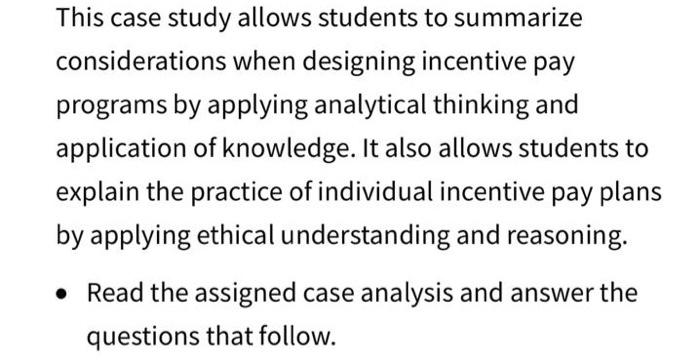
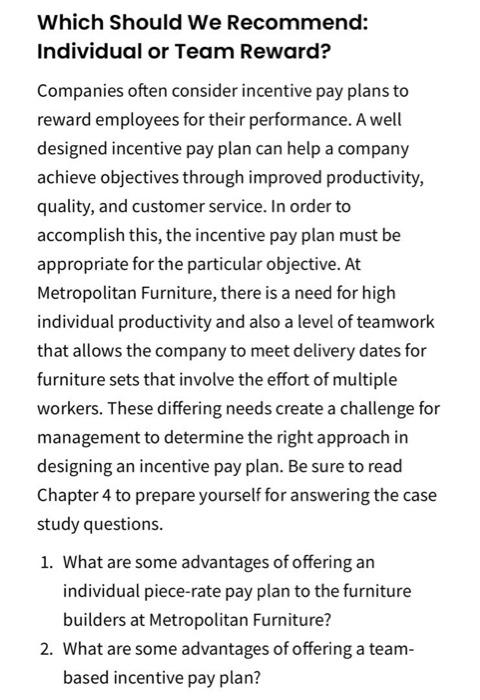
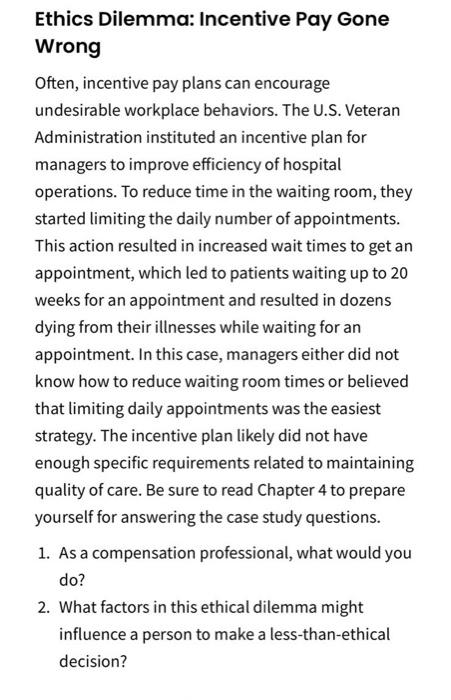
This case study allows students to summarize considerations when designing incentive pay programs by applying analytical thinking and application of knowledge. It also allows students to explain the practice of individual incentive pay plans by applying ethical understanding and reasoning. - Read the assigned case analysis and answer the questions that follow. Individual or Team Reward? Companies often consider incentive pay plans to reward employees for their performance. A well designed incentive pay plan can help a company achieve objectives through improved productivity, quality, and customer service. In order to accomplish this, the incentive pay plan must be appropriate for the particular objective. At Metropolitan Furniture, there is a need for high individual productivity and also a level of teamwork that allows the company to meet delivery dates for furniture sets that involve the effort of multiple workers. These differing needs create a challenge for management to determine the right approach in designing an incentive pay plan. Be sure to read Chapter 4 to prepare yourself for answering the case study questions. 1. What are some advantages of offering an individual piece-rate pay plan to the furniture builders at Metropolitan Furniture? 2. What are some advantages of offering a teambased incentive pay plan? Ethics Dilemma: Incentive Pay Gone Wrong Often, incentive pay plans can encourage undesirable workplace behaviors. The U.S. Veteran Administration instituted an incentive plan for managers to improve efficiency of hospital operations. To reduce time in the waiting room, they started limiting the daily number of appointments. This action resulted in increased wait times to get an appointment, which led to patients waiting up to 20 weeks for an appointment and resulted in dozens dying from their illnesses while waiting for an appointment. In this case, managers either did not know how to reduce waiting room times or believed that limiting daily appointments was the easiest strategy. The incentive plan likely did not have enough specific requirements related to maintaining quality of care. Be sure to read Chapter 4 to prepare yourself for answering the case study questions. 1. As a compensation professional, what would you do? 2. What factors in this ethical dilemma might influence a person to make a less-than-ethical decision
Step by Step Solution
There are 3 Steps involved in it

Get step-by-step solutions from verified subject matter experts
 Study Help