







Question: This exercise covers pointers, arrays and 2D arrays. Try to solve the following exercise without using any compiler. Pointers 1. What would be the output
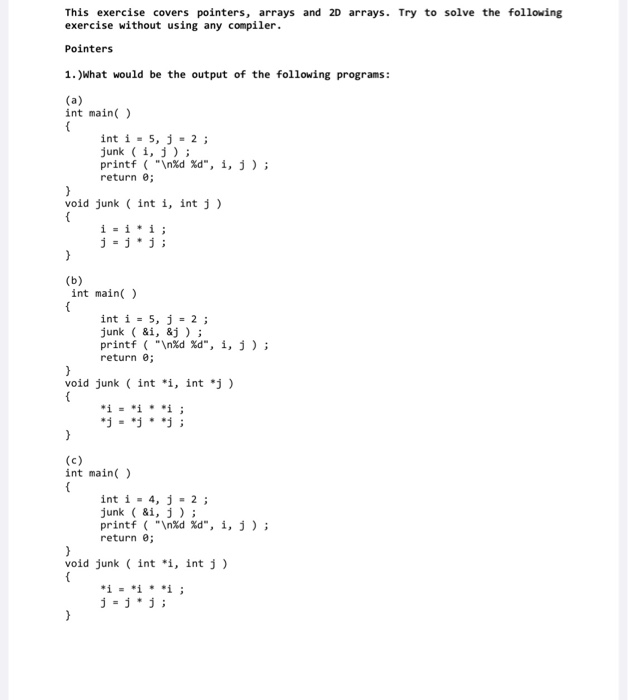
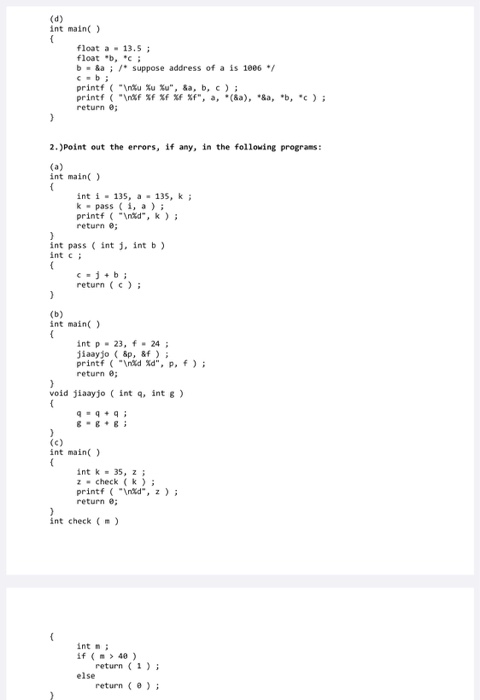
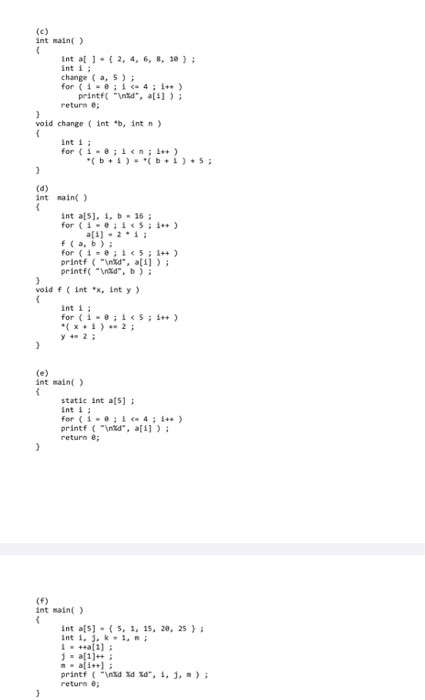
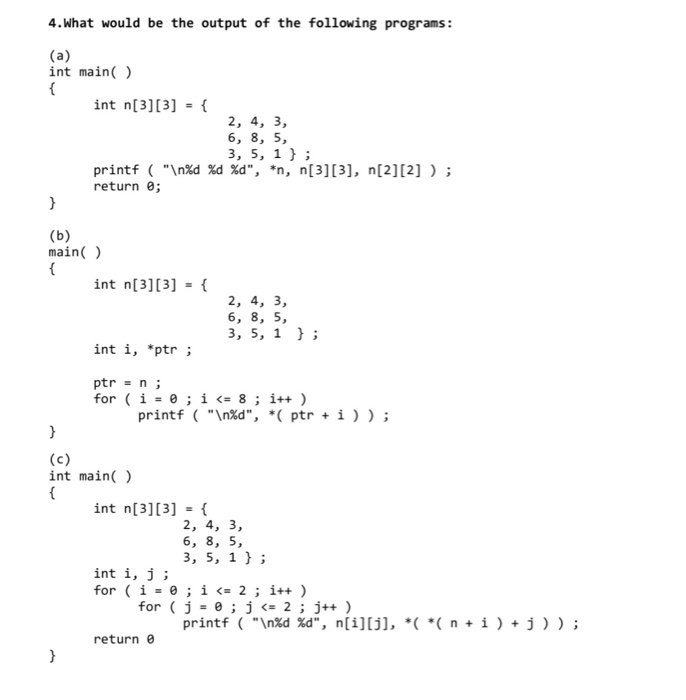
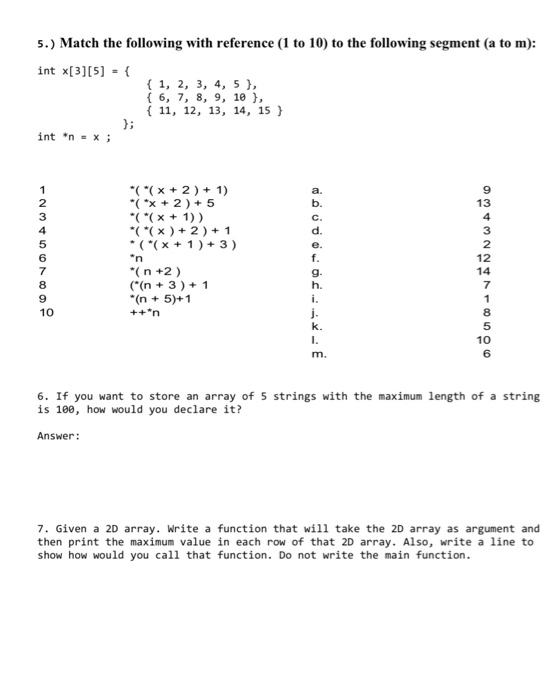
This exercise covers pointers, arrays and 2D arrays. Try to solve the following exercise without using any compiler. Pointers 1. What would be the output of the following programs: (a) int main() int i = 5, j = 2; junk (i, j); printf (" %d %d", i, j); return ; void junk ( int i, int j) i = i* i; j - j*j; (6) int main() int i = 5, j = 2; junk (&i, &j) ; printf (" %d %d", i, j); return ; void junk (int *i, int *j) *i = "i * = *j 'i; j; int main() int i = 4, j = 2; junk (&i, j); printf (" %d %d", i, return ; j) ; void junk (int *i, int ;) jj*j; (d) int main() float a - 13.5; float "b, "C: b &a ; /* suppose address of a is 1006 / printf (" Xu Xu", &a, b, c printf (" &F XF XF XF XF", a, return 0; ) ; (a), *8a, b, c ); 2.)Point out the errors, if any, in the following programs: (a) int main() int i - 135, a. 135, k ; k -pass (i, a ) printf (" ad", k); return e: int pass (int j, int b) int cu return (C): int main() int p - 23, f. 24; jiaayo (&p, 8 ) printf (" %d %d", P. f); return : void jiaayjo ( inta, int ) 999: (c) int main() int K-35, 2; 2. check (K); printf (" ad", 2); return ; int check (m) int : if ( > 40 ) return ( 1); else return(0); int main() int at ] { 2, 4, 6, 8, 10); int i; change (a, 5); for (i ; i
Step by Step Solution
There are 3 Steps involved in it

Get step-by-step solutions from verified subject matter experts
 Study Help