







Question: this is 3.2 this is one case study from Inventory planning and control I divided some parts so the image is clear thanks DY 3.2
this is 3.2 this is one case study from Inventory planning and control I divided some parts so the image is clear thanks
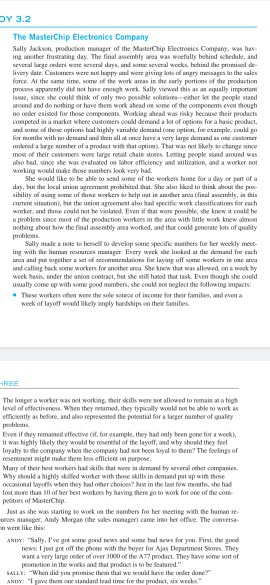
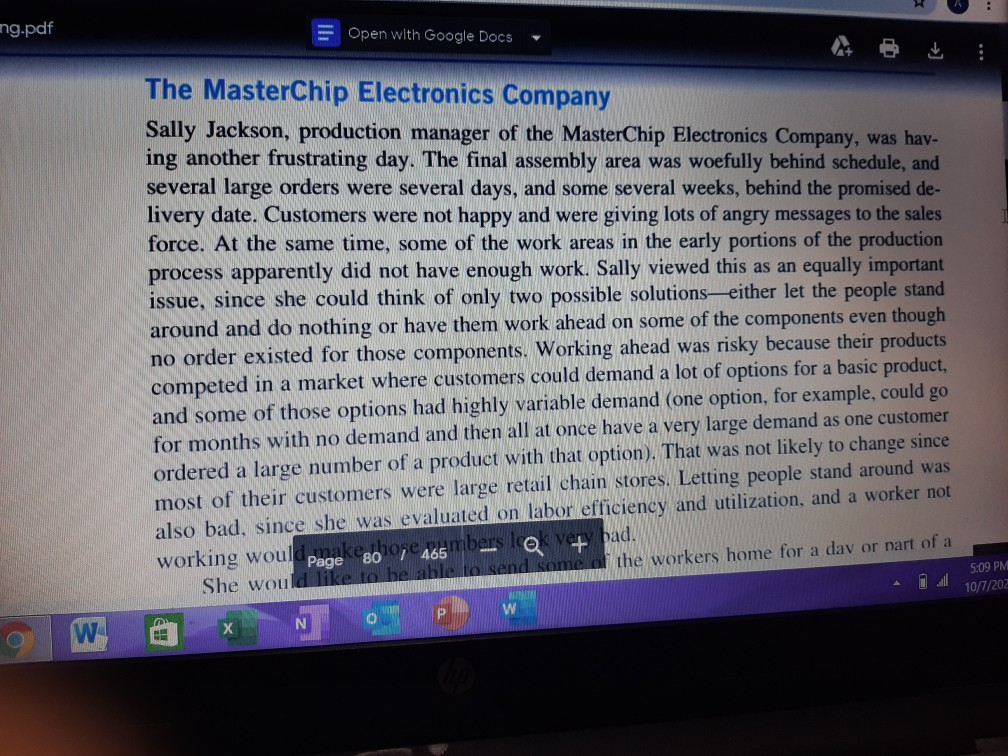
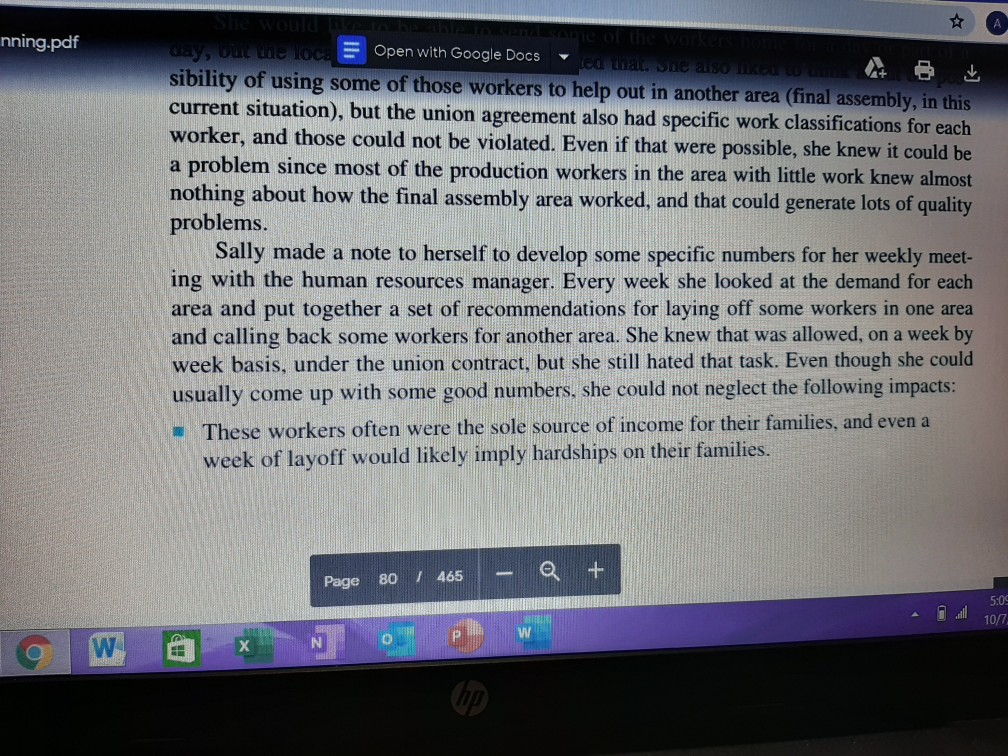
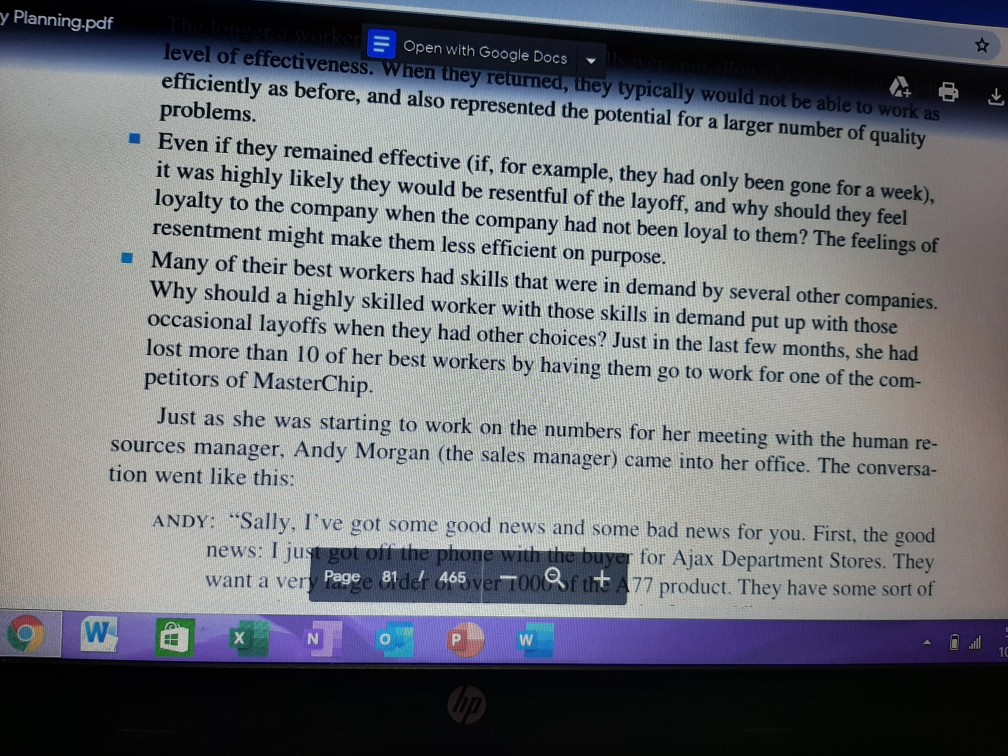
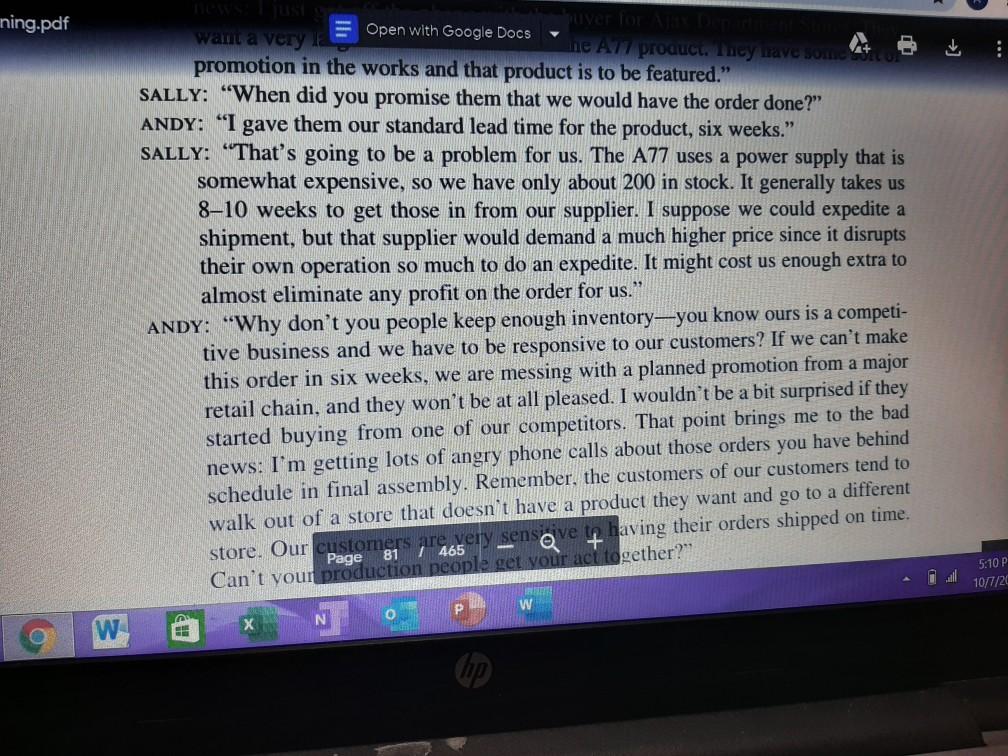
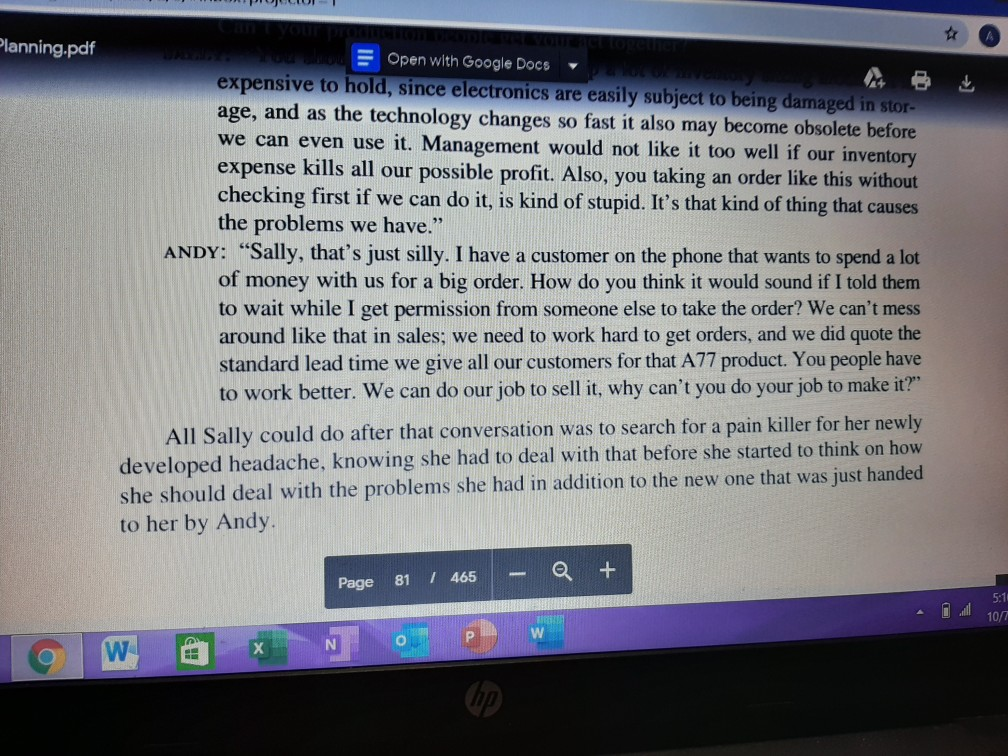
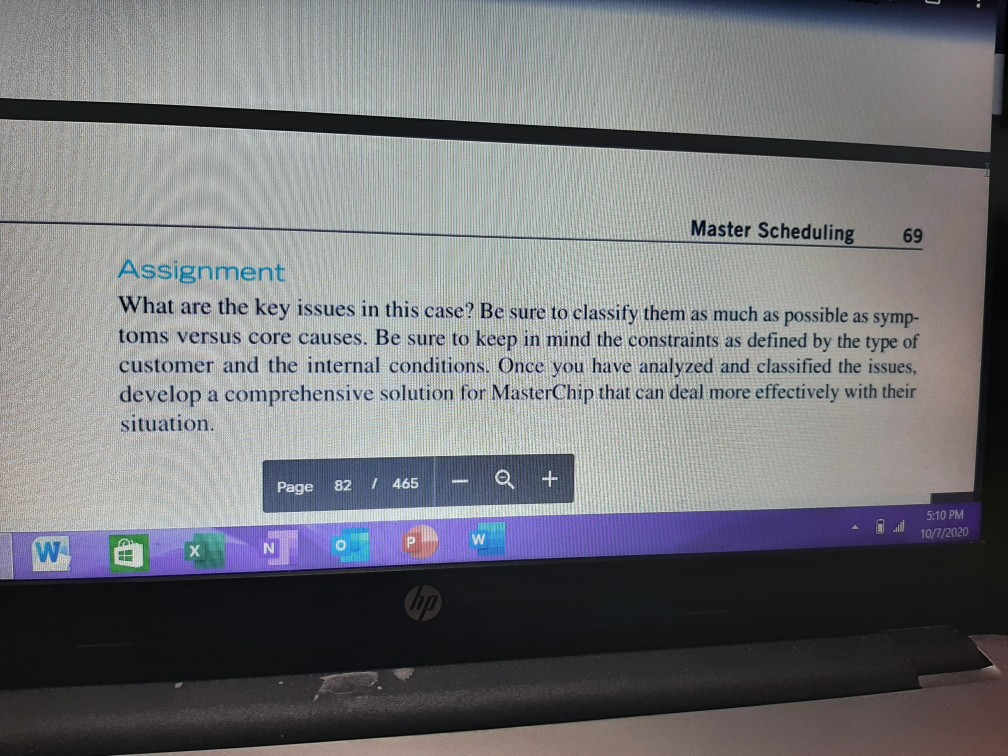
DY 3.2 The MasterChip Electronics Company Sally Jackson, production manager of the MasterChip Electronics Company, was hay ing the frustrating day. The final assembly sea was woefully behind schedule, and several large weders were several days, and some several week behind the promiso de livery date. Culorilepy and were giving angry message to the sales force. At the one time of the work areas in the early pontics of the production as an equally important issue, since she could ink of only two possible solutions where the around and do nothing or how the work ahead on some of the components even though noeder existed for these components. Working ahead was risky because their prodacts Corpeted a market where customers and demand a lot of options for a basic product, and some of the upleted highly variable demand fore uption for example, could go form with a demanded then all incluse a very large mannen dered a bege number of a product with that toption) That was not likely to change in most of their customers were large retail chain stores Letting people stand around was also bed, since she was evaluated on the efficiency and utilization, and a wokerto working would make these numbers look very bad. She would like be able to send some of the workers home for a day or part of a lity of day, but the local agreement prohibited that She abu liked to think about the per cursione in real had specific wek classifications for each wurker and the could not be violated. Exen if that were possible, sew it could be a problem since most of the production workers in the area with line work knew almost nothing about how the inal assembly are worked, and that could generate lots of quality problems Sally made another develop some specifice unters for her weekly meet ing with the creare mager Every week she looked at the demand for each area and put together act of recentments for laying offer workers in cerca and calling back some workers for another. She know that was allowed. on a week by weekbasis, under the union contract, but she still hated that task. Even though she could usually come up with some good numbers, she could neglect the following impacts: . These workers we the sole sue of income for their families, and even a week of layoff would likely imply hardships on their families tele The longer a worker was not working their skills were not allowed to remain at a high level of effectiveness. When they retumed, they typically would not be able to work as efficiently as before and also represented the potential for a larger number of quality Even if they remained effective if, for example, they had caly been gone for a week it was highly likely they would be resent of the layoff and why should they feel loyalty to the company when the company has been loyal to them? The feelings of restent methenesele on purpose Many of their best workers had skills that we in demand by several other companies Why should a highly skilled worker with those skills in demand put up with those occasionally when they had other choices Bust in the last few months she had lot more than 10 of her best workers by having them po to work for one of the com petitors of MasterChip Just as she was starting to work on the members for her meeting with the humane woes manager, Andy Morgan (the sales manager) came into her office. The converse I went like this: AND: Sally, I've got some good news and metod news for you. First, the good news I just go off the phone with the buyer for Ajas Department Stores. They want a very large code of over 1000 the AT7 product. They have some sort of promotion in the works and the product is to be featured SALLY: "When did you promise that we would have the wederone "prve them andard lead time for the product, six week ANINY ng.pdf Open with Google Docs The MasterChip Electronics Company Sally Jackson, production manager of the MasterChip Electronics Company, was hav- ing another frustrating day. The final assembly area was woefully behind schedule, and several large orders were several days, and some several weeks, behind the promised de- livery date. Customers were not happy and were giving lots of angry messages to the sales force. At the same time, some of the work areas in the early portions of the production process apparently did not have enough work. Sally viewed this as an equally important issue, since she could think of only two possible solutionseither let the people stand around and do nothing or have them work ahead on some of the components even though no order existed for those components. Working ahead was risky because their products competed in a market where customers could demand a lot of options for a basic product, and some of those options had highly variable demand (one option, for example, could go for months with no demand and then all at once have a very large demand as one customer ordered a large number of a oduct with that option). That was not likely to change since most of their customers were large retail chain stores. Letting people stand around was also bad, since she was evaluated on labor efficiency and utilization, and a worker not working would prel e all the workers home for a dav or part of a She wou like to be able to send + bad. Page 80 7465 mbers 5:09 PM 10/7/202 P W N w nning.pdf Qay, but the loca Open with Google Docs Led that she also in sibility of using some of those workers to help out in another area (final assembly, in this current situation), but the union agreement also had specific work classifications for each worker, and those could not be violated. Even if that were possible, she knew it could be a problem since most of the production workers in the area with little work knew almost nothing about how the final assembly area worked, and that could generate lots of quality problems. Sally made a note to herself to develop some specific numbers for her weekly meet- ing with the human resources manager. Every week she looked at the demand for each area and put together a set of recommendations for laying off some workers in one area and calling back some workers for another area. She knew that was allowed, on a week by week basis, under the union contract, but she still hated that task. Even though she could usually come up with some good numbers, she could not neglect the following impacts: - These workers often were the sole source of income for their families, and even a week of layoff would likely imply hardships on their families. - a + Page 80 7465 5:09 10/7 W N O a w y Planning.pdf = Open with Google Docs level of effectiveness. When they returned, they typically would not be able to work as efficiently as before, and also represented the potential for a larger number of quality problems. Even if they remained effective (if, for example, they had only been gone for a week), it was highly likely they would be resentful of the layoff, and why should they feel loyalty to the company when the company had not been loyal to them? The feelings of resentment might make them less efficient on purpose. - Many of their best workers had skills that were in demand by several other companies. Why should a highly skilled worker with those skills in demand put up with those occasional layoffs when they had other choices? Just in the last few months, she had lost more than 10 of her best workers by having them go to work for one of the com- petitors of MasterChip. Just as she was starting to work on the numbers for her meeting with the human re- her office. The conversa- sources manager, Andy Morgan (the sales manager) came tion went like this: ANDY: Sally, I've got some good news and some bad news for you. First, the good news: I just got off the phone with the buyer for Ajax Department Stores. They want a very Page 81 det 465 ver Too Qf tht A77 product. They have some sort of lo W FH ning.pdf huver for Alax Departe want a very la = Open with Google Docs die All product. They have some promotion in the works and that product is to be featured." SALLY: When did you promise them that we would have the order done?" ANDY: I gave them our standard lead time for the product, six weeks." SALLY: That's going to be a problem for us. The A77 uses a power supply that is somewhat expensive, so we have only about 200 in stock. It generally takes us 8-10 weeks to get those in from our supplier. I suppose we could expedite a shipment, but that supplier would demand a much higher price since it disrupts their own operation so much to do an expedite. It might cost us enough extra to almost eliminate any profit on the order for us." ANDY: Why don't you people keep enough inventory-you know ours is a competi- tive business and we have to be responsive to our customers? If we can't make this order in six weeks, we are messing with a planned promotion from a major retail chain, and they won't be at all pleased. I wouldn't be a bit surprised if they started buying from one of our competitors. That point brings me to the bad news: I'm getting lots of angry phone calls about those orders you have behind schedule in final assembly. Remember, the customers of our customers tend to walk out of a store that doesn't have a product they want and go to a different store. Our customers are very sensove to having their orders shipped on time. Can't your production people get your act together?" 5:10 P 10/7/20 P W W Planning.pdf = Open with Google Docs expensive to hold, since electronics are easily subject to being damaged in stor- age, and as the technology changes so fast it also may become obsolete before we can even use it. Management would not like it too well if our inventory expense kills all our possible profit. Also, you taking an order like this without checking first if we can do it, is kind of stupid. It's that kind of thing that causes the problems we have." ANDY: Sally, that's just silly. I have a customer on the phone that wants to spend a lot of money with us for a big order. How do you think it would sound if I told them to wait while I get permission from someone else to take the order? We can't mess around like that in sales; we need to work hard to get orders, and we did quote the standard lead time we give all our customers for that A77 product. You people have to work better. We can do our job to sell it, why can't you do your job to make it?" All Sally could do after that conversation was to search for a pain killer for her newly developed headache, knowing she had to deal with that before she started to think on how she should deal with the problems she had in addition to the new one that was just handed to her by Andy. o + Page 81 1 465 5:11 10/7 W w Master Scheduling 69 Assignment What are the key issues in this case? Be sure to classify them as much as possible as symp- toms versus core causes. Be sure to keep in mind the constraints as defined by the type of customer and the internal conditions. Once you have analyzed and classified the issues, develop a comprehensive solution for MasterChip that can deal more effectively with their situation. Page 82 / 465 + 5:10 PM 10/7/2020 w 3 NStep by Step Solution
There are 3 Steps involved in it
1 Expert Approved Answer
Step: 1 Unlock

Question Has Been Solved by an Expert!
Get step-by-step solutions from verified subject matter experts
Step: 2 Unlock
Step: 3 Unlock
 Study Help