







Question: This is a graded discussion: 100 points possible due Oct 11 Chapter 14 Discussion 1 1 Review the following videos, read the Management in Action
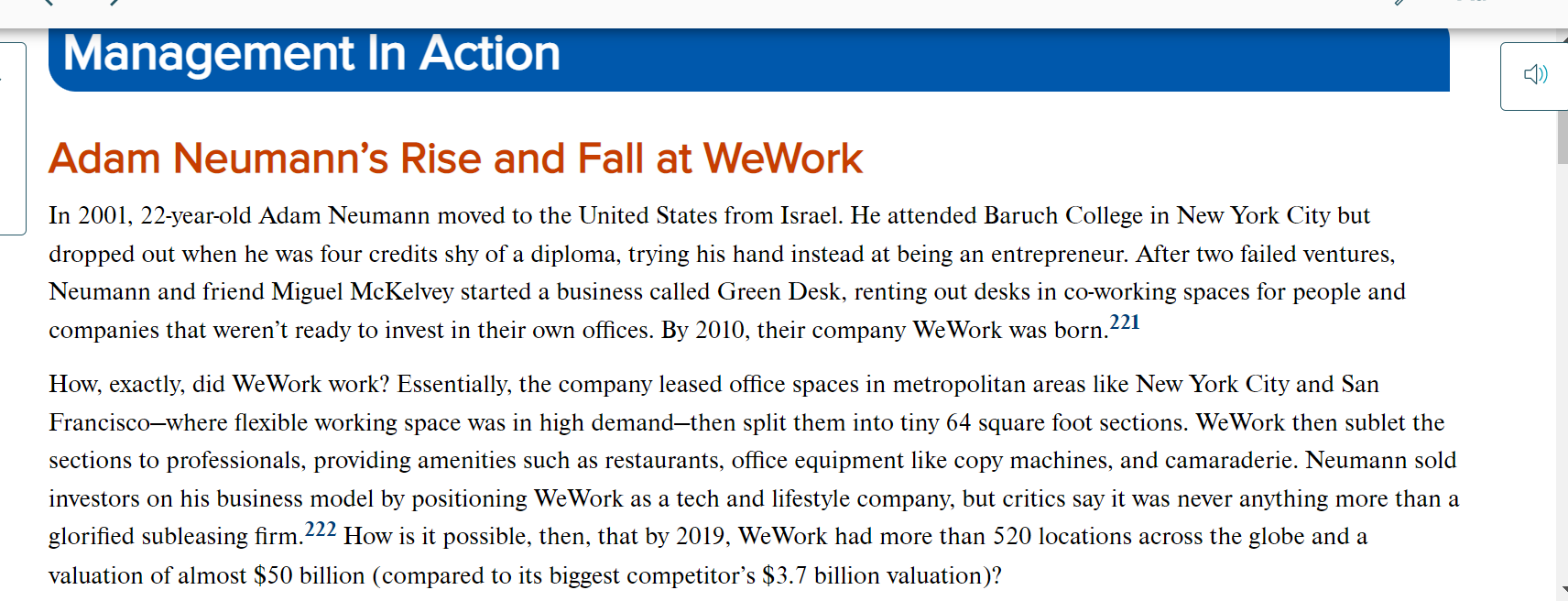
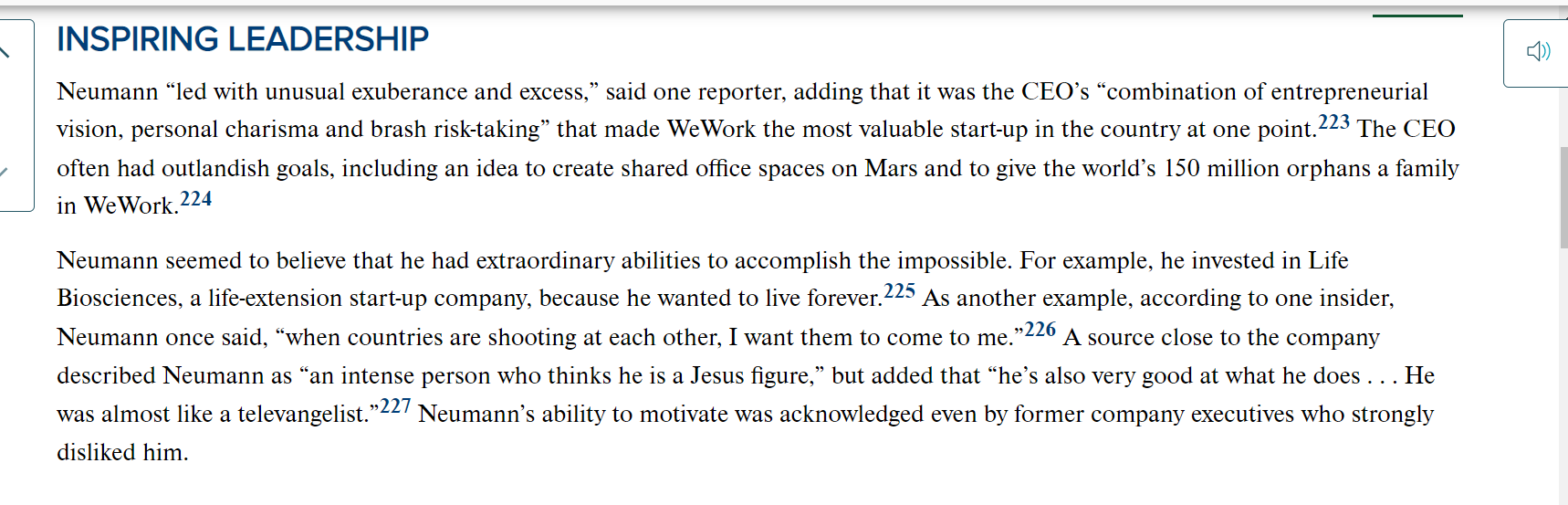
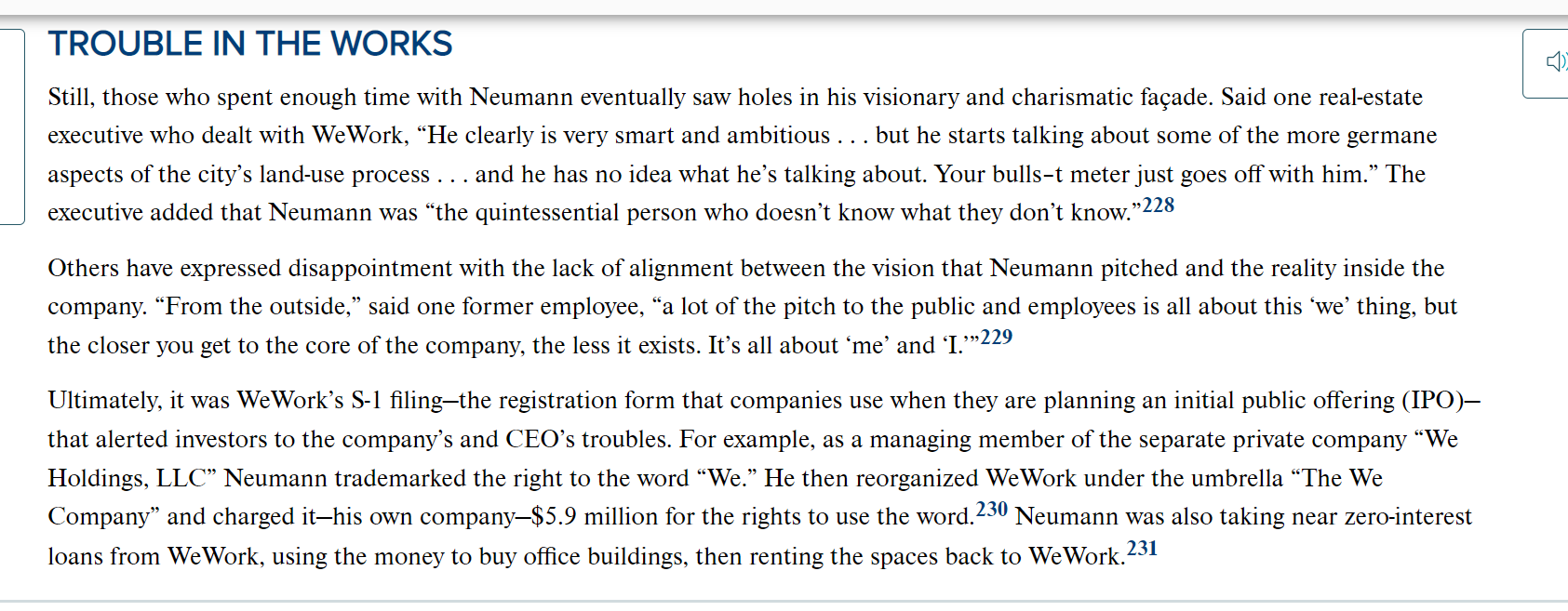
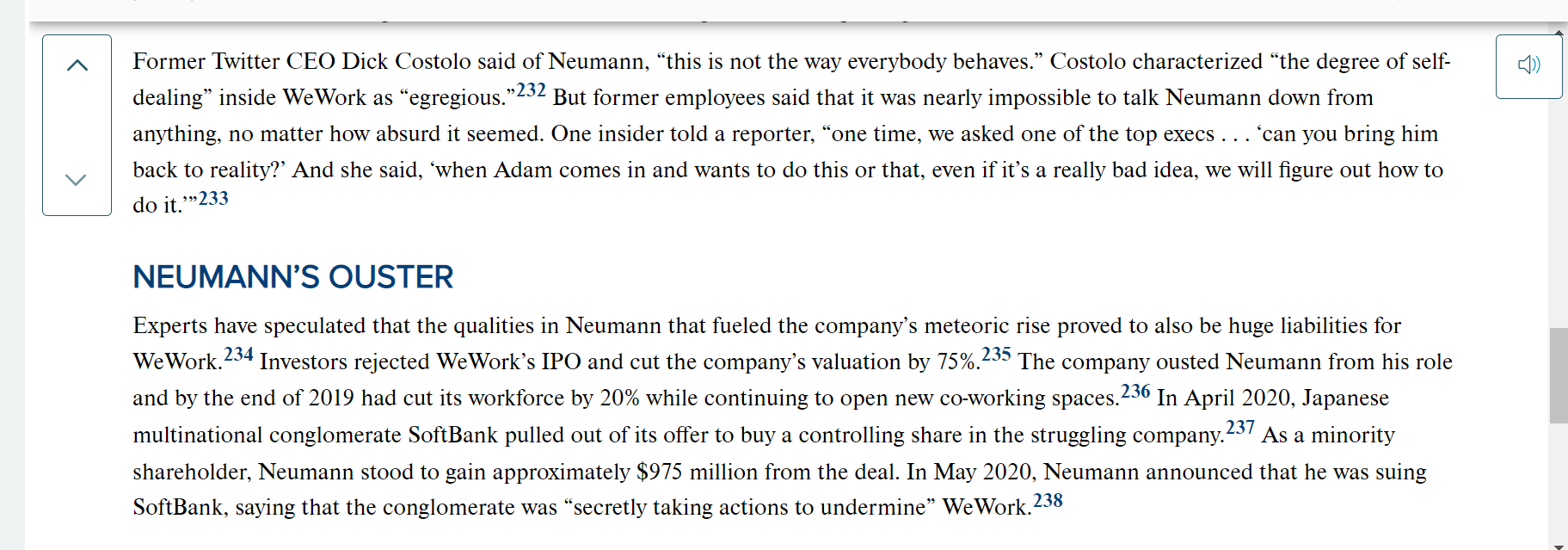
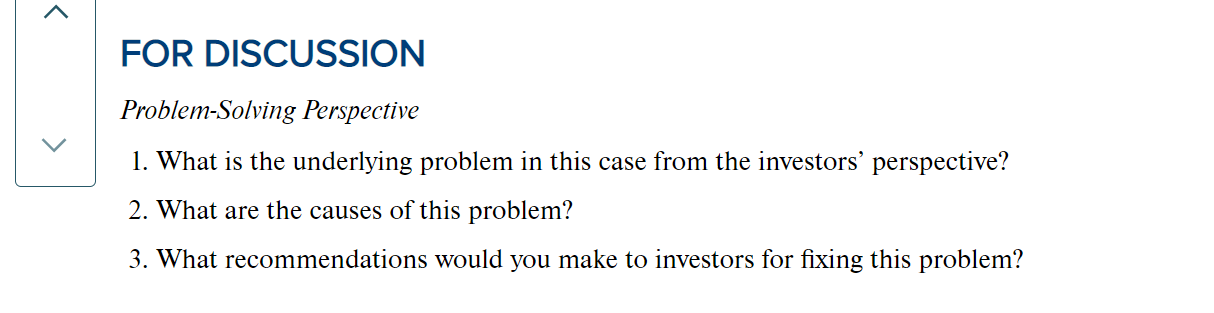
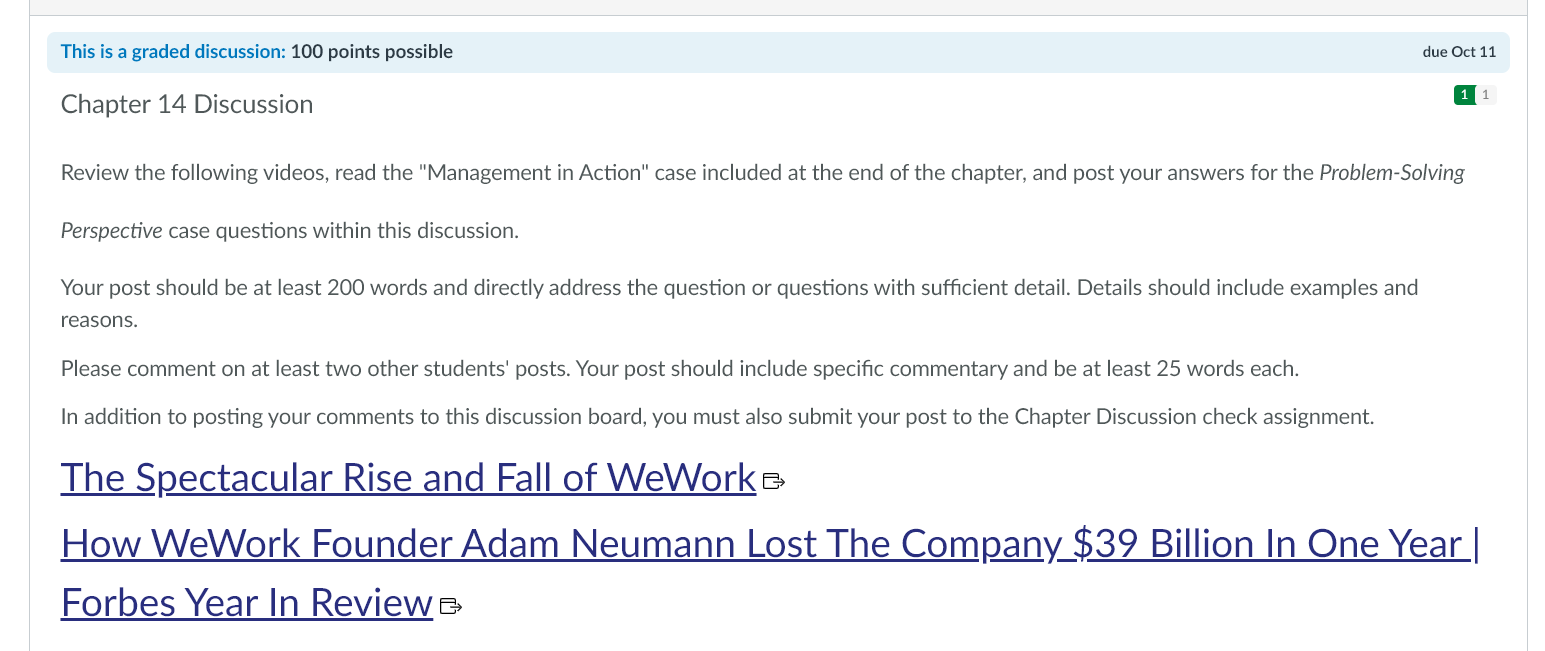
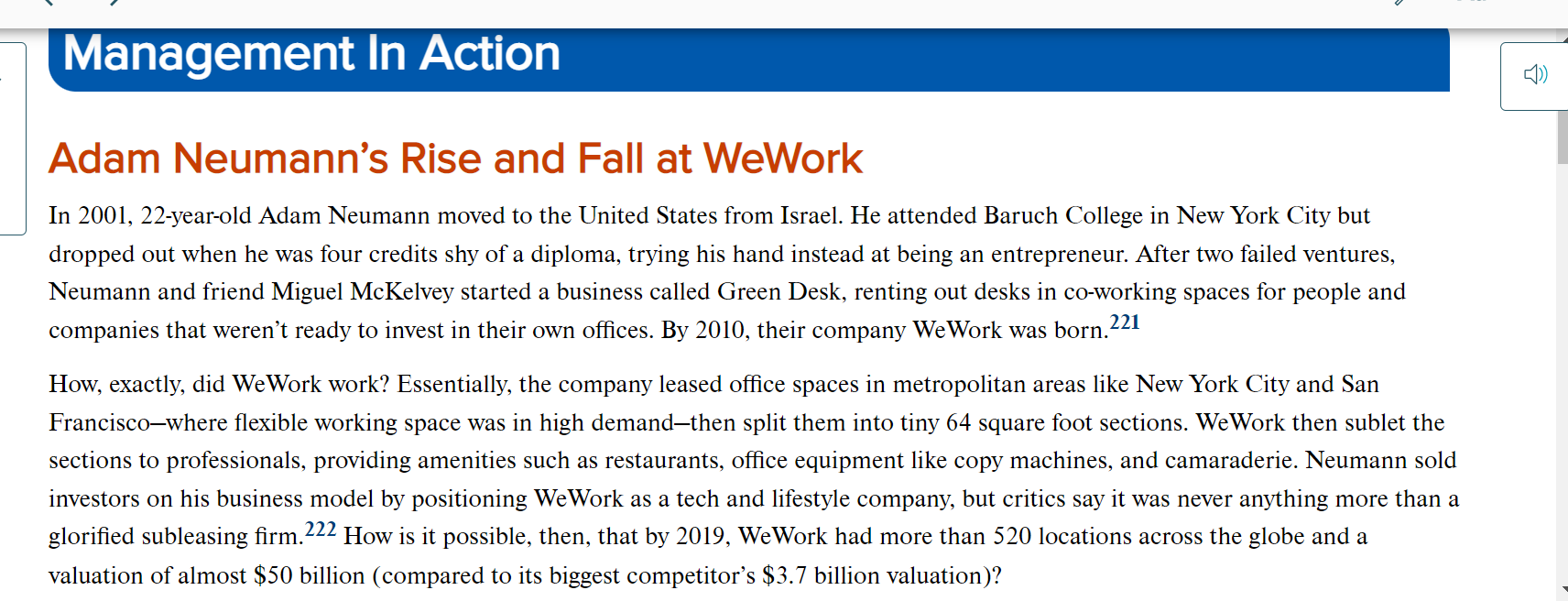
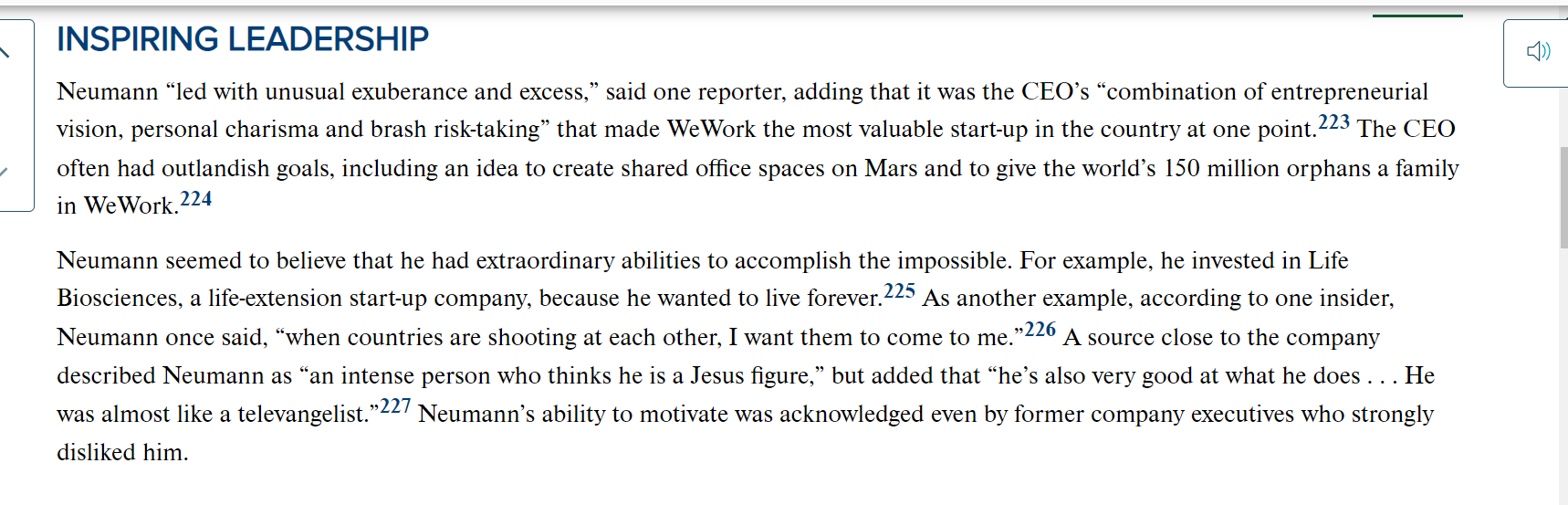
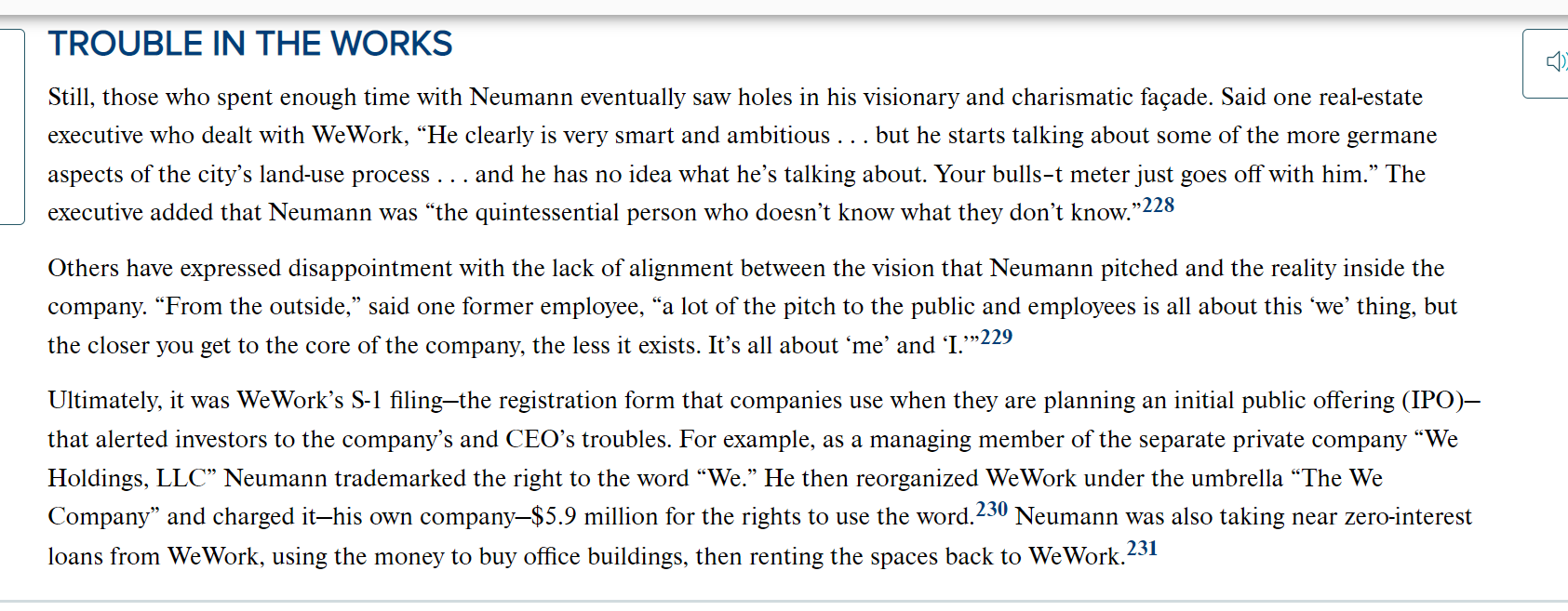
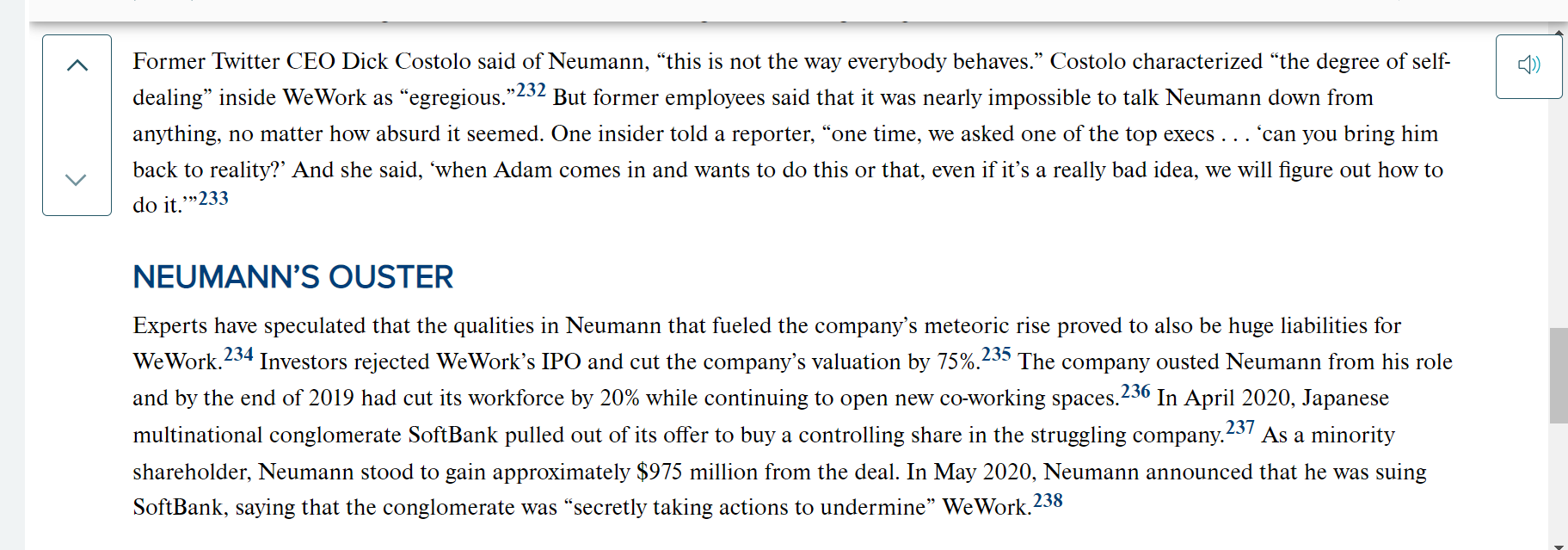
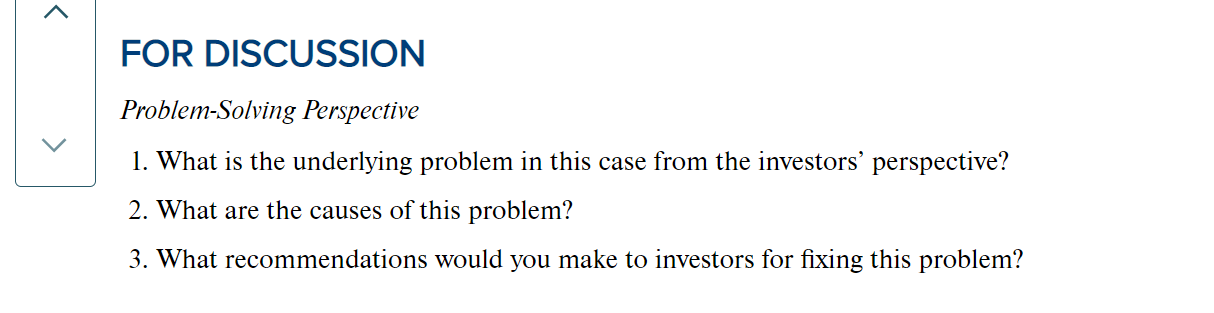
This is a graded discussion: 100 points possible due Oct 11 Chapter 14 Discussion 1 1 Review the following videos, read the "Management in Action" case included at the end of the chapter, and post your answers for the Problem-Solving Perspective case questions within this discussion. Your post should be at least 200 words and directly address the question or questions with sufficient detail. Details should include examples and reasons. Please comment on at least two other students' posts. Your post should include specific commentary and be at least 25 words each. In addition to posting your comments to this discussion board, you must also submit your post to the Chapter Discussion check assignment. The Spectacular Rise and Fall of WeWork How WeWork Founder Adam Neumann Lost The Company $39 Billion In One Year| Forbes Year In Review EManagement In Action () ) Adam Neumann's Rise and Fall at WeWork In 2001, 22-year-old Adam Neumann moved to the United States from Israel. He attended Baruch College in New York City but dropped out when he was four credits shy of a diploma, trying his hand instead at being an entrepreneur. After two failed ventures, Neumann and friend Miguel Mckelvey started a business called Green Desk, renting out desks in co-working spaces for people and companies that weren't ready to invest in their own offices. By 2010, their company We Work was born.221 How, exactly, did WeWork work? Essentially, the company leased office spaces in metropolitan areas like New York City and San Francisco-where flexible working space was in high demand-then split them into tiny 64 square foot sections. We Work then sublet the sections to professionals, providing amenities such as restaurants, office equipment like copy machines, and camaraderie. Neumann sold investors on his business model by positioning We Work as a tech and lifestyle company, but critics say it was never anything more than a glorified subleasing firm. How is it possible, then, that by 2019, We Work had more than 520 locations across the globe and a valuation of almost $50 billion (compared to its biggest competitor's $3.7 billion valuation)?INSPIRING LEADERSHIP Neumann "led with unusual exuberance and excess,\" said one reporter, adding that it was the CEO's "combination of entrepreneurial vision, personal charisma and brash risk-taking\" that made WeWork the most valuable startup in the country at one point.223 The CEO often had outlandish goals, including an idea to create shared ofce spaces on Mars and to give the world's 150 million orphans a family in WeWork.224 Neumann seemed to believe that he had extraordinary abilities to accomplish the impossible. For example, he invested in Life Biosciences, a life-extension start-up company, because he wanted to live forever.225 As another example, according to one insider, Neumann once said, "when countries are shooting at each other, I want them to come to me."226 A source close to the company described Neumann as \"an intense person who thinks he is a Jesus gure,\" but added that \"he's also very good at What he does . . . He was almost like a televangelist.\"227 Neumann's ability to motivate was acknowledged even by former company executives who strongly disliked him. TROUBLE IN THE WORKS Still, those who spent enough time with Neumann eventually saw holes in his visionary and charismatic facade. Said one real-estate executive who dealt with WeWork, \"He clearly is very smart and ambitious . . . but he starts talking about some of the more germane aspects ofthe city's land-use process . . . and he has no idea What he's talking about. Your bullst meterjust goes offwith him.\" The executive added that Neumann was \"the quintessential person who doesn't know what they don't know.\"228 Others have expressed disappointment with the lack of alignment between the vision that Neumann pitched and the reality inside the company. "From the outside,\" said one former employee, "a lot of the pitch to the public and employees is all about this \"we\" thing, but the closer you get to the core ofthe company, the less it exists. It's all about 'me' and 'If\"229 Ultimately, it was WeWork's Sl lingthe registration form that companies use when they are planning an initial public offering (1P0) that alerted investors to the company's and CEO's troubles. For example, as a managing member of the separate private company \"We Holdings, LLC\" Neumann trademarked the right to the word "We.\" He then reorganized WeWork under the umbrella \"The We Company\" and charged ithis own company$5.9 million for the rights to use the word.230 Neumann was also taking near zero-interest loans from WeWork, using the money to buy ofce buildings, then renting the spaces back to WeWork.231 Former Twitter CEO Dick Costolo said of Neumann, "this is not the way everybody behaves.\" Costolo characterized "the degree of self dealing\" inside WeWork as "egregious.\"232 But former employees said that it was nearly impossible to talk Neumann down from anything, no matter how absurd it seemed. One insider told a reporter. "one time, we asked one of the top execs ' . . 'can you bring him back to reality'?' And she said, 'when Adam comes in and wants to do this or that, even if it's a really bad idea, we will gure out how to do uni-'3 NEUMANN'S OUSTER Experts have speculated that the qualities in Neumann that fueled the company's meteoric rise proved to also be huge liabilities for WeWork.234 Investors rejected WeWork's IPO and cut the company's valuation by 75%.235 The company ousted Neumann from his role and by the end of 2019 had cut its workforce by 20% while continuing to open new coworking spaces.236 In April 2020, Japanese multinational conglomerate SoftBank pulled out of its offer to buy a controlling share in the struggling company.237 As a minority shareholder, Neumann stood to gain approximately $975 million from the deal. In May 2020, Neumann announced that he was suing SoftBank, saying that the conglomerate was "secretly taking actions to undermine\" WeW'ork238 FOR DISCUSSION Problem-Solving Perspective 1. What is the underlying problem in this case from the investors' perspective? 2. What are the causes of this problem? 3. What recommendations would you make to investors for xing this
Step by Step Solution
There are 3 Steps involved in it

Get step-by-step solutions from verified subject matter experts
 Study Help