







Question: this is a multi part question 1. In the figure below, S, is the long-run domestic supply curve of oil without considering the climate change
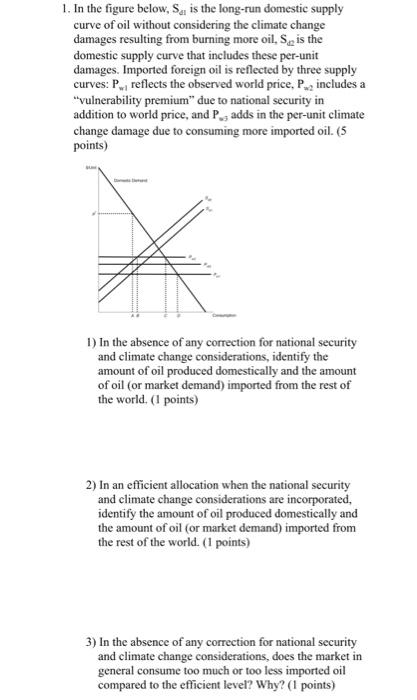
1. In the figure below, S, is the long-run domestic supply curve of oil without considering the climate change damages resulting from burning more oil. Se is the domestic supply curve that includes these per-unit damages. Imported foreign oil is reflected by three supply curves: P, reflects the observed world price, P., includes a "vulnerability premium" due to national security in addition to world price, and P, adds in the per-unit climate change damage due to consuming more imported oil. (5 points) 1) In the absence of any correction for national security and climate change considerations, identify the amount of oil produced domestically and the amount of oil (or market demand) imported from the rest of the world. (1 points) 2) In an efficient allocation when the national security and climate change considerations are incorporated, identify the amount of oil produced domestically and the amount of oil (or market demand) imported from the rest of the world. (1 points) 3) In the absence of any correction for national security and climate change considerations, does the market in general consume too much or too less imported oil compared to the efficient level? Why? (1 points) 1) In the absence of any correction for national security and climate change considerations, identify the amount of oil produced domestically and the amount of oil (or market demand) imported from the rest of the world. (1 points) 2) In an efficient allocation when the national security and climate change considerations are incorporated, identify the amount of oil produced domestically and the amount of oil (or market demand) imported from the rest of the world. (1 points) 3) In the absence of any correction for national security and climate change considerations, does the market in general consume too much or too less imported oil compared to the efficient level? Why? (1 points) 4) Economist Abba Lerner proposed a tariff on oil imports. The tariff is designed to reduce dependence on foreign sources as well as to discourage OPEC from raising prices (since, due to the tariff, the delivered price would rise twice as much as the OPEC increase, causing a large subsequent reduction in consumption). Should this proposal become public policy? Why or why not? (2 points) 1. In the figure below, S, is the long-run domestic supply curve of oil without considering the climate change damages resulting from burning more oil. Se is the domestic supply curve that includes these per-unit damages. Imported foreign oil is reflected by three supply curves: P, reflects the observed world price, P., includes a "vulnerability premium" due to national security in addition to world price, and P, adds in the per-unit climate change damage due to consuming more imported oil. (5 points) 1) In the absence of any correction for national security and climate change considerations, identify the amount of oil produced domestically and the amount of oil (or market demand) imported from the rest of the world. (1 points) 2) In an efficient allocation when the national security and climate change considerations are incorporated, identify the amount of oil produced domestically and the amount of oil (or market demand) imported from the rest of the world. (1 points) 3) In the absence of any correction for national security and climate change considerations, does the market in general consume too much or too less imported oil compared to the efficient level? Why? (1 points) 1) In the absence of any correction for national security and climate change considerations, identify the amount of oil produced domestically and the amount of oil (or market demand) imported from the rest of the world. (1 points) 2) In an efficient allocation when the national security and climate change considerations are incorporated, identify the amount of oil produced domestically and the amount of oil (or market demand) imported from the rest of the world. (1 points) 3) In the absence of any correction for national security and climate change considerations, does the market in general consume too much or too less imported oil compared to the efficient level? Why? (1 points) 4) Economist Abba Lerner proposed a tariff on oil imports. The tariff is designed to reduce dependence on foreign sources as well as to discourage OPEC from raising prices (since, due to the tariff, the delivered price would rise twice as much as the OPEC increase, causing a large subsequent reduction in consumption). Should this proposal become public policy? Why or why not? (2 points)
Step by Step Solution
There are 3 Steps involved in it

Get step-by-step solutions from verified subject matter experts
 Study Help