







Question: This is a problem from a Transportation Planning, Engineering, and Infrastructure class. 6. (15 Points) As a result of the energy exploration boom in North
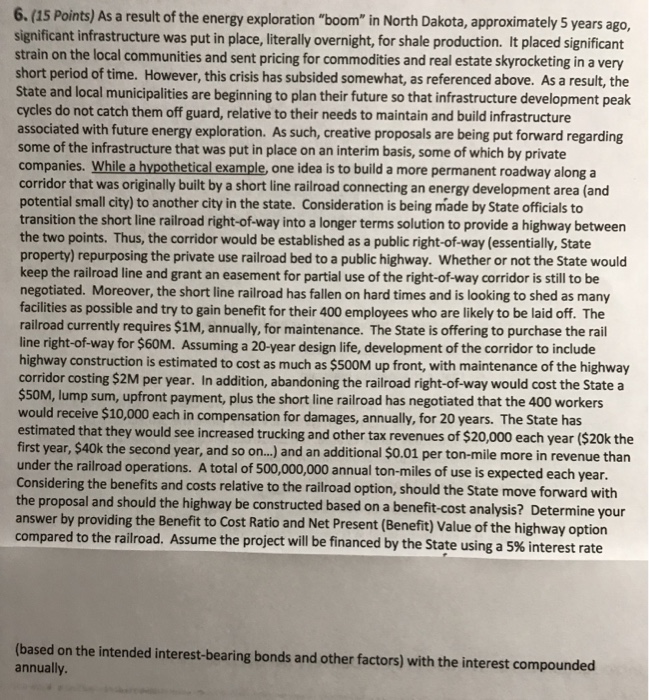
6. (15 Points) As a result of the energy exploration "boom" in North Dakota, approximately 5 years ago significant infrastructure was put in place, literally overnight, for shale production. It placed significant strain on the local communities and sent pricing for commodities and real estate skyrocketing in a very short period of time. However, this crisis has subsided somewhat, as referenced above. As a result, the State and local municipalities are beginning to plan their future so that infrastructure development peak cycles do not catch them off guard, relative to their needs to maintain and build infrastructure associated with future energy exploration. As such, creative proposals are being put forward regarding some of the infrastructure that was put in place on an interim basis, some of which by private companies. While a hvpothetical example, one idea is to build a more permanent roadway along a corridor that was originally built by a short line railroad connecting an energy development area (and potential small city) to another city in the state. Consideration is being made by State officials to transition the short line railroad right-of-way into a longer terms solution to provide a highway between the two points. Thus, the corridor would be established as a public right-of-way (essentially, State property) repurposing the private use railroad bed to a public highway. Whether or not the State would keep the railroad line and grant an easement for partial use of the right-of-way corridor is still to be negotiated. Moreover, the short line railroad has fallen on hard times and is looking to shed as many facilities as possible and try to gain benefit for their 400 employees who are likely to be laid off. The railroad currently requires $1M, annually, for maintenance. The State is offering to purchase the rail e right-of-way for $60M. Assuming a 20-year design life, development of the corridor to include highway construction is estimated to cost as much as $500M up front, with maintenance of the highway corridor costing $2M per year. In addition, abandoning the railroad right-of-way would cost the State a $50M, lump sum, upfront payment, plus the short line railroad has negotiated that the 400 workers would receive $10,000 each in compensation for damages, annually, for 20 years. The State has estimated that they would see increased trucking and other tax revenues of $20,000 each year ($20k the first year, $40k the second year, and so o...)jand an additional $0.01 per ton-mile more in revenue than under the railroad operations. A total of 500,000,000 annual ton-miles of use is expected each year. Considering the benefits and costs relative to the railroad option, should the State move forward with the proposal and should the highway be constructed answer by providing the Benefit to Cost Ratio and Net P compar based on a benefit-cost analysis? Determine your resent (Benefit) Value of the highway option ed to the railroad. Assume the project will be financed by the State using a 5% interest rate (based on the intended interest-bearing bonds and other factors) with the interest compounded annually
Step by Step Solution
There are 3 Steps involved in it

Get step-by-step solutions from verified subject matter experts
 Study Help