







Question: This is a required assignment worth 15 points (15-points/1000-points). Assignment must be submitted by the due date. No late assignments are allowed. Please discuss the
This is a required assignment worth 15 points (15-points/1000-points). Assignment must be submitted by the due date. No late assignments are allowed. Please discuss the following topics and provide substantive comments to at least two other posts.
Select from the following list four (4) topics and discuss.
The discussion questions this week are from Chapter 2 (Jamsa, 2013).
Chapter 2 topics:
Define and describe PaaS
List the benefits of PaaS
Describe the potential disadvantages of PaaS
Describe how a cloud-based database management system differs from an on-site database.
List the computing resources normally provided with PaaS.
Assume your company must deploy a .NET solution to the cloud. Discuss the options available to developers. Research on the web and estimate the costs associated with deploying a PaaS solution.
Assume your company must deploy a PHP or Java solution to the cloud. Discuss the options available to developers. Research on the web and estimate the costs associated with deploying a PaaS solution.
Note: You are required to use at least two-peer reviewed sources (besides your textbook) to answer the above questions. The initial post is due by Wednesday at 11:59pm ET. You must engage on at least three separate days (by Wednesday for the first post and two additional days of peer engagement). Do not wait until Sunday to engage with peers, this should be an active conversation with your peers. When replying to peers be sure to engage with substantial posts that add to the conversation.
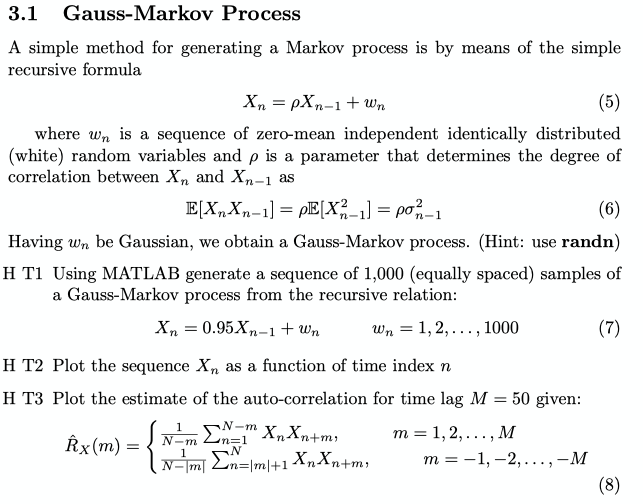
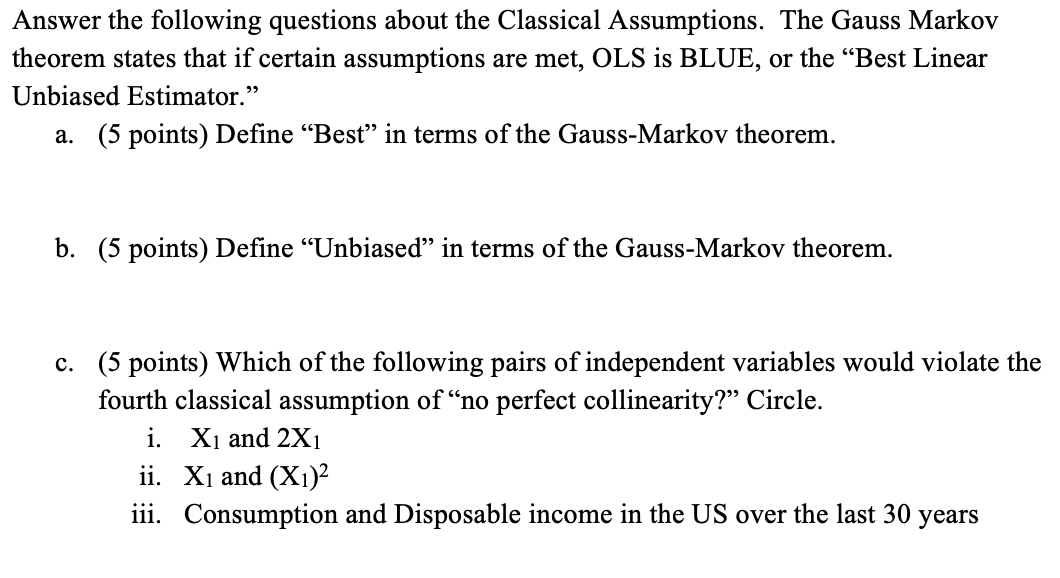
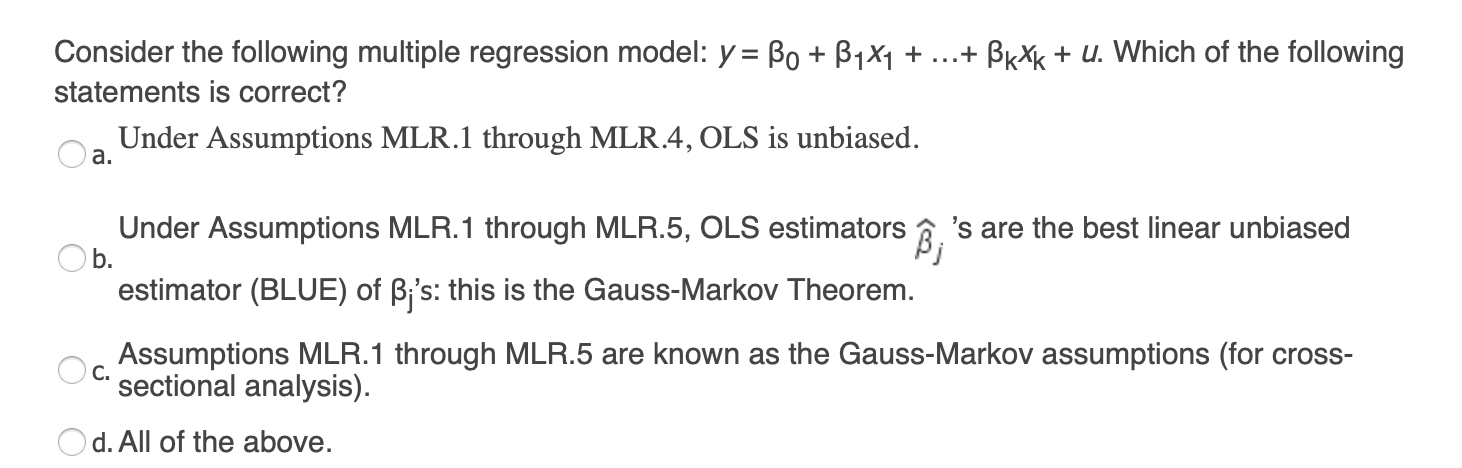
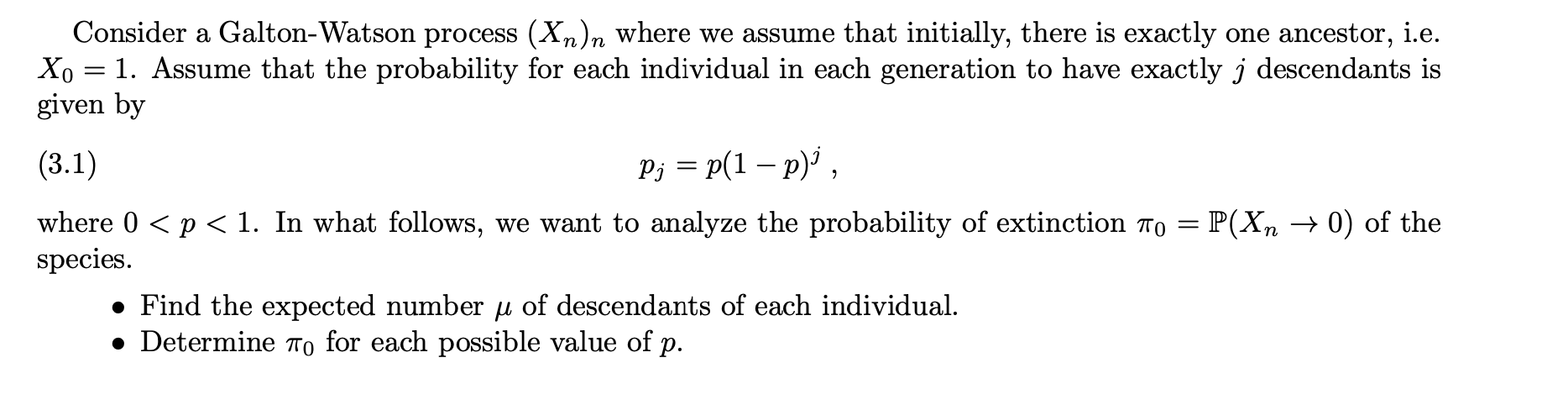
3.1 Gauss-Markov Process A simple method for generating a Markov process is by means of the simple recursive formula Xn = pXn-1+ Wn (5) where w, is a sequence of zero-mean independent identically distributed (white) random variables and p is a parameter that determines the degree of correlation between X, and Xn-1 as E[XXn-1] = PE[X?_1] = pon-1 (6) Having wn be Gaussian, we obtain a Gauss-Markov process. (Hint: use randn) H T1 Using MATLAB generate a sequence of 1,000 (equally spaced) samples of a Gauss-Markov process from the recursive relation: Xn = 0.95X -1 + Wn Wn = 1, 2, ..., 1000 (7) H T2 Plot the sequence X, as a function of time index n H T3 Plot the estimate of the auto-correlation for time lag M = 50 given: Rx(m) = N-m Enz" XXatm, m = 1, 2, ..., M N- ml En=/ml+1 XnXn+m, m = -1, -2, ..., -M (8)Answer the following questions about the Classical Assumptions. The Gauss Markov theorem states that if certain assumptions are met, OLS is BLUE, or the "Best Linear Unbiased Estimator." a. (5 points) Define "Best" in terms of the Gauss-Markov theorem. b. (5 points) Define "Unbiased" in terms of the Gauss-Markov theorem. c. (5 points) Which of the following pairs of independent variables would violate the fourth classical assumption of "no perfect collinearity?" Circle. i. X1 and 2X1 ii. X1 and (X1)2 iii. Consumption and Disposable income in the US over the last 30 yearsConsider the following multiple regression model: y = Bo + B1X, + ...+ PKXk + U. Which of the following statements is correct? a Under Assumptions MLR.1 through MLR.4, OLS is unbiased. Under Assumptions MLR.1 through MLR.5, OLS estimators 's are the best linear unbiased Ob. estimator (BLUE) of Bj's: this is the Gauss-Markov Theorem. Oc. Assumptions MLR.1 through MLR.5 are known as the Gauss-Markov assumptions (for cross- sectional analysis). Od. All of the above.Consider a GaltonWatson process (Xn)n where we assume that initially, there is exactly one ancestor, i.e. X0 = 1. Assume that the probability for each individual in each generation to have exactly 3' descendants is given by (3-1) pi = p(1 p)j, where 0 0) of the species. 0 Find the expected number n of descendants of each individual. 0 Determine 7m for each possible value of p
Step by Step Solution
There are 3 Steps involved in it

Get step-by-step solutions from verified subject matter experts
 Study Help