







Question: This is a study guide for chapters (4.1 - 4.3) I answered 15/25 questions and need help with these final 10 I'm having a hard
This is a study guide for chapters (4.1 - 4.3) I answered 15/25 questions and need help with these final 10 I'm having a hard time grasping them! I've attached all the questions in picture form so you can help me understand what they're asking for better as it is an online attachment! TIA
1.)Determine whether the given function is linear or nonlinear. If it is?linear, determine the slope. (see attachment 1)
(a) Is it linear yeso
(b) If it is what is the slope
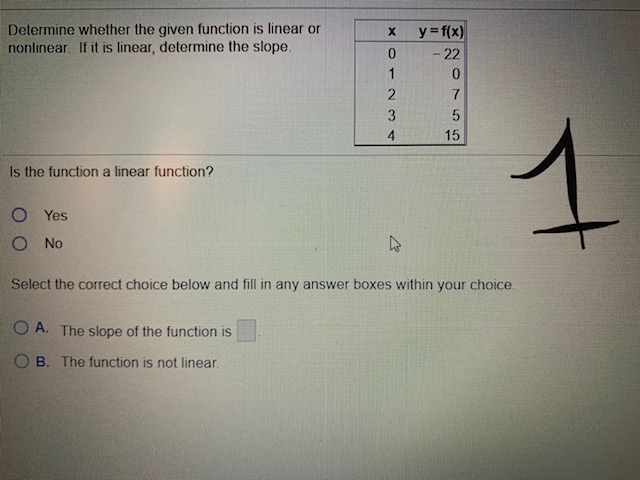
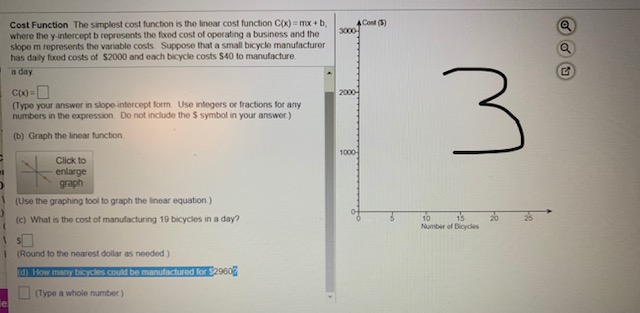
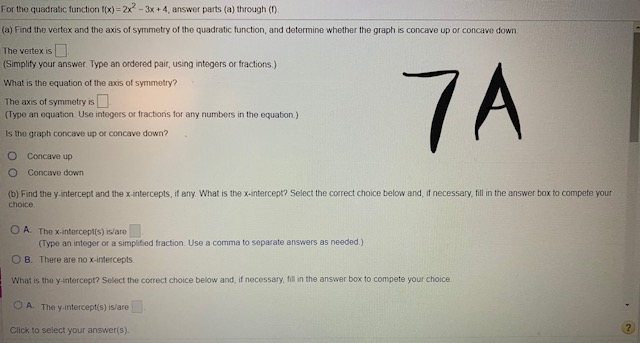
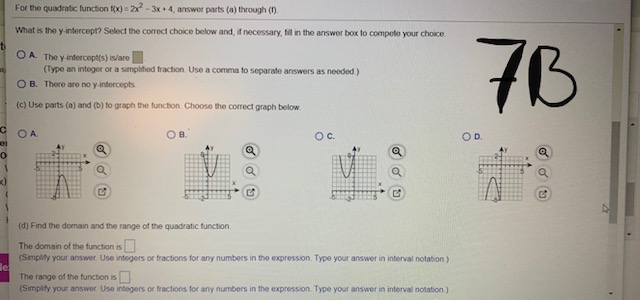
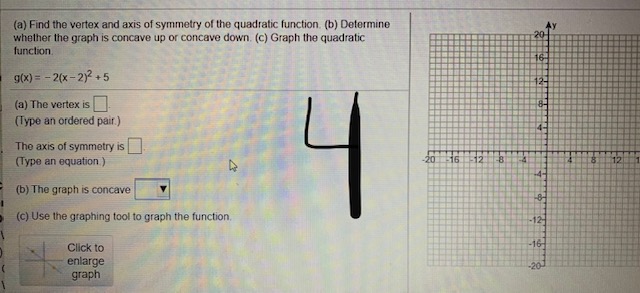
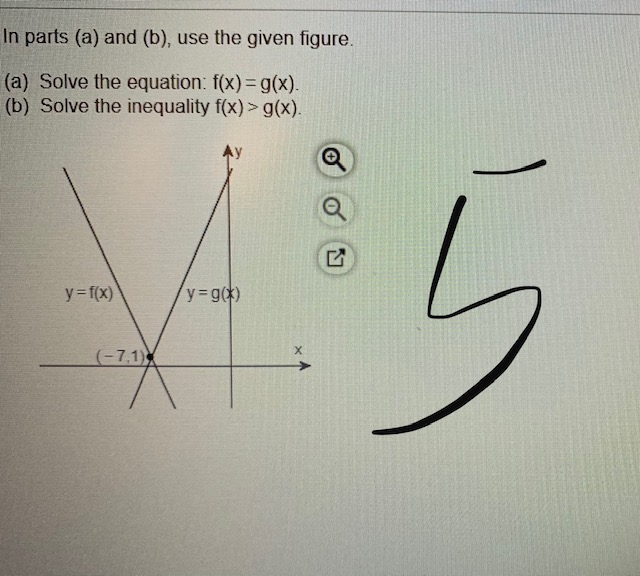
Determine whether the given function is linear or x y=f(x) nonlinear. If it is linear, determine the slope. 22 AUN-O 15 Is the function a linear function? O Yes O No Select the correct choice below and fill in any answer boxes within your choice O A. The slope of the function is O B. The function is not linear.Cost Function The simplest cost function is the linear cost function C(x) = mx + b. where the y intercept b represents the food cost of operating a business and the slope m represents the variable costs, Suppose that a small bicycle manufacturer has daily food costs of $2000 and each bicycle costs $40 to manufacture. a day C(x)=0 2000- (Typo your answer in slope intercept form. Use integers of fractions for any numbers in the expression, Do not include the $ symbol in your answer.) (b) Graph the linear function 1000 3 Click to enlarge graph [Use the graphing tool to graph the linear equation. ) (c) What is the cost of manufacturing 19 bicycles in a day? 10 15 Number of Bicycles (Round to the nearest dollar as needed ) d) How many bicycles could be manufactured for $29805 (Type a whole number.)For the quadratic function !(x) =2x* - 3% + 4, answer parts (a) through (1) (a) Find the vertex and the axis of symmetry of the quadratic function, and determine whether the graph is concave up of concave down. The vertex is (Simplify your answer, Type an ordered pair, using integers or fractions.) What is the equation of the axis of symmetry? The axis of symmetry is] (Typo an equation. Use integers or fractions for any numbers in the equation.) Is the graph concave up or concave down? 7A O Concave up O Concave down (b) Find the y-intercept and the x-intercepts, if any. What is the x-intercept? Select the correct choice below and, if necessary, fill in the answer box to compete your choice. O A. The x-intercept(s) isfare (Type an integer or a simplified fraction. Use a comma to separate answers as needed.) O B. There are no x-intercepts What is the y-intercept? Select the correct choice below and, if necessary, fill in the answer box to compete your choice. O A. The y-intercept(s] is/are Click to select your answer(s). ?For the quadratic function ((x] = 2x"-3x + 4, answer parts (a) through (1) What is the y intercept? Select the correct choice below and, if necessary, fil in the answer box to compete your choice Q A. The y-intercept(s) is/are (Type on intoger or a simplified fraction Use a comma to separate answers as needed ) O B. There are no y-intercepts (c) Use parts (a) and (bj to graph the function. Choose the correct graph below C OA OB O c. OD (d) Find the domain and the range of the quadratic function. The domain of the function is (Simplify your answer Use integers or fractions for any numbers in the expression. Type your answer in interval notation ) The range of the function is] ( Simplify your answer. Use intopors or fractions for any numbers in the expression. Typo your answer in interval notation )(a) Find the vertex and axis of symmetry of the quadratic function. (b) Determine AY whether the graph is concave up or concave down. (c) Graph the quadratic 20 function g(x) = -2(x -2) +5 (a) The vertex is (Type an ordered pair.) The axis of symmetry is (Type an equation ) 20 -16 12 8 18 12 1 (b) The graph is concave 4 (c) Use the graphing tool to graph the function, -12- Click to -16- enlarge 201 graphIn parts (a) and (b), use the given figure. (a) Solve the equation: f(x) = g(x). (b) Solve the inequality f(x) > g(x). Ay y = f(x) y= g(*) X
Step by Step Solution
There are 3 Steps involved in it

Get step-by-step solutions from verified subject matter experts
 Study Help