







Question: This is a two-part question. Problem Description The previous assignment had a simplifying assumption that the amount of money would be limited, such that the
This is a two-part question.
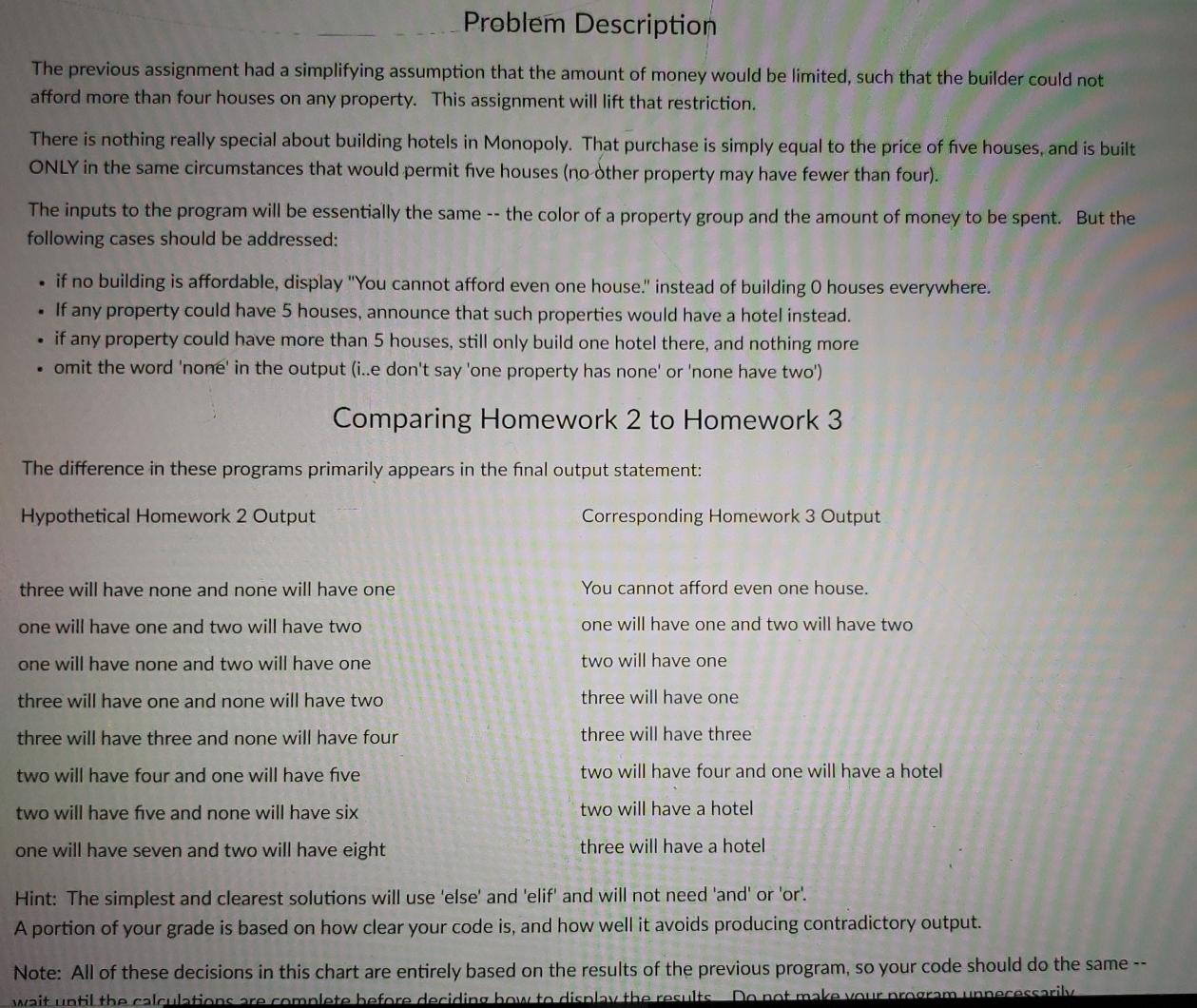
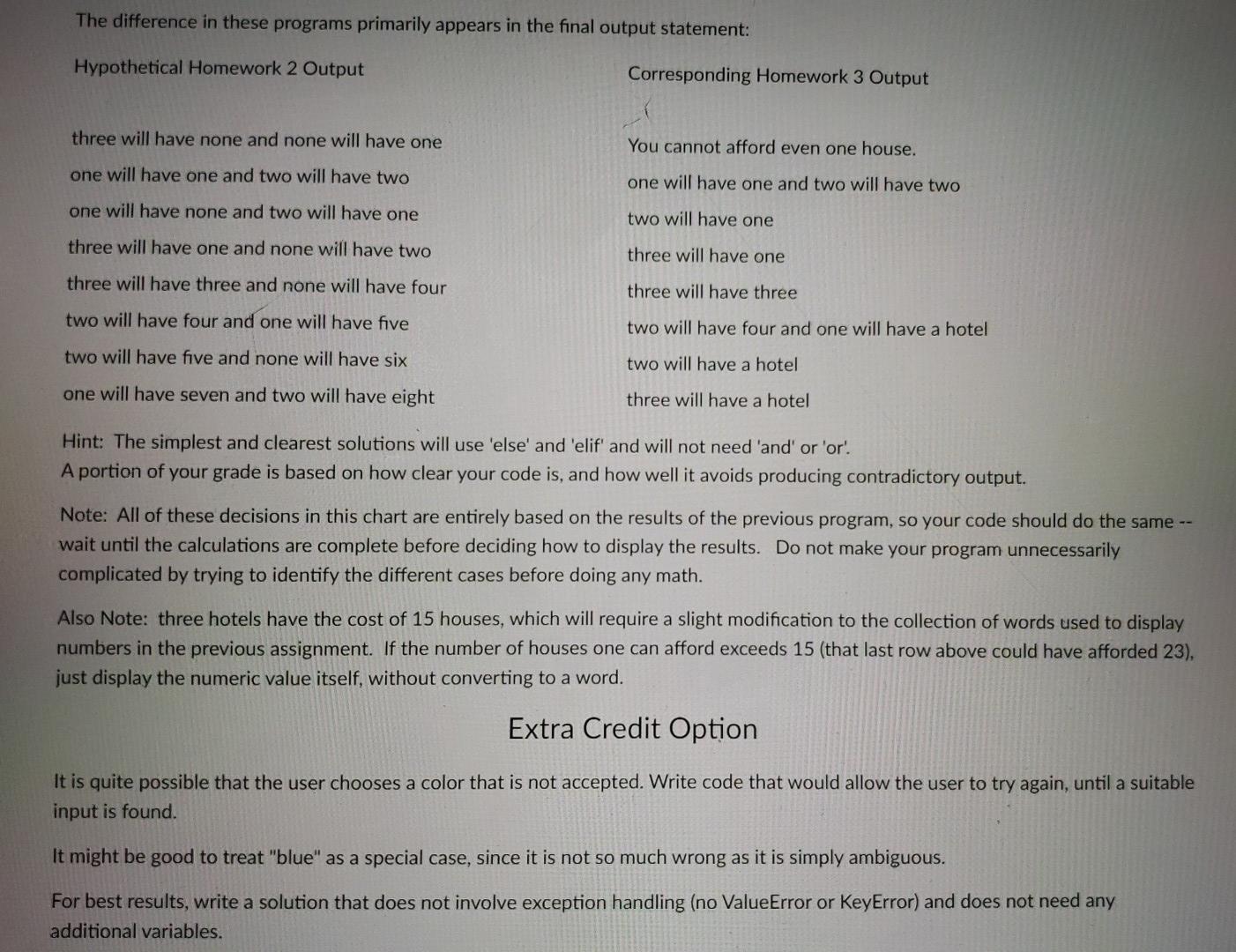
Problem Description The previous assignment had a simplifying assumption that the amount of money would be limited, such that the builder could not afford more than four houses on any property. This assignment will lift that restriction. There is nothing really special about building hotels in Monopoly. That purchase is simply equal to the price of five houses, and is built ONLY in the same circumstances that would permit five houses (no other property may have fewer than four). The inputs to the program will be essentially the same -- the color of a property group and the amount of money to be spent. But the following cases should be addressed: . if no building is affordable, display "You cannot afford even one house." instead of building O houses everywhere. If any property could have 5 houses, announce that such properties would have a hotel instead. . if any property could have more than 5 houses, still only build one hotel there, and nothing more omit the word 'none' in the output (i..e don't say 'one property has none' or 'none have two') Comparing Homework 2 to Homework 3 The difference in these programs primarily appears in the final output statement: Hypothetical Homework 2 Output Corresponding Homework 3 Output three will have none and none will have one You cannot afford even one house. one will have one and two will have two one will have one and two will have two one will have none and two will have one two will have one three will have one and none will have two three will have one three will have three and none will have four three will have three two will have four and one will have five two will have four and one will have a hotel two will have five and none will have six two will have a hotel one will have seven and two will have eight three will have a hotel Hint: The simplest and clearest solutions will use 'else' and 'elif and will not need 'and' or 'or! A portion of your grade is based on how clear your code is, and how well it avoids producing contradictory output. Note: All of these decisions in this chart are entirely based on the results of the previous program, so your code should do the same -- wait until the calculations are complete before deciding how to display the results Do not make your program runnecessari The difference in these programs primarily appears in the final output statement: Hypothetical Homework 2 Output Corresponding Homework 3 Output three will have none and none will have one You cannot afford even one house. one will have one and two will have two one will have one and two will have two one will have none and two will have one two will have one three will have one and none will have two three will have one three will have three and none will have four three will have three two will have four and one will have five two will have four and one will have a hotel two will have five and none will have six two will have a hotel one will have seven and two will have eight three will have a hotel Hint: The simplest and clearest solutions will use 'else' and 'elif' and will not need 'and' or 'or'. A portion of your grade is based on how clear your code is, and how well it avoids producing contradictory output. Note: All of these decisions in this chart are entirely based on the results of the previous program, so your code should do the same -- wait until the calculations are complete before deciding how to display the results. Do not make your program unnecessarily complicated by trying to identify the different cases before doing any math. Also Note: three hotels have the cost of 15 houses, which will require a slight modification to the collection of words used to display numbers in the previous assignment. If the number of houses one can afford exceeds 15 (that last row above could have afforded 23), just display the numeric value itself, without converting to a word. Extra Credit Option It is quite possible that the user chooses a color that is not accepted. Write code that would allow the user to try again, until a suitable input is found. It might be good to treat "blue" as a special case, since it is not so much wrong as it is simply ambiguous. For best results, write a solution that does not involve exception handling (no ValueError or KeyError) and does not need any additional variables. Problem Description The previous assignment had a simplifying assumption that the amount of money would be limited, such that the builder could not afford more than four houses on any property. This assignment will lift that restriction. There is nothing really special about building hotels in Monopoly. That purchase is simply equal to the price of five houses, and is built ONLY in the same circumstances that would permit five houses (no other property may have fewer than four). The inputs to the program will be essentially the same -- the color of a property group and the amount of money to be spent. But the following cases should be addressed: . if no building is affordable, display "You cannot afford even one house." instead of building O houses everywhere. If any property could have 5 houses, announce that such properties would have a hotel instead. . if any property could have more than 5 houses, still only build one hotel there, and nothing more omit the word 'none' in the output (i..e don't say 'one property has none' or 'none have two') Comparing Homework 2 to Homework 3 The difference in these programs primarily appears in the final output statement: Hypothetical Homework 2 Output Corresponding Homework 3 Output three will have none and none will have one You cannot afford even one house. one will have one and two will have two one will have one and two will have two one will have none and two will have one two will have one three will have one and none will have two three will have one three will have three and none will have four three will have three two will have four and one will have five two will have four and one will have a hotel two will have five and none will have six two will have a hotel one will have seven and two will have eight three will have a hotel Hint: The simplest and clearest solutions will use 'else' and 'elif and will not need 'and' or 'or! A portion of your grade is based on how clear your code is, and how well it avoids producing contradictory output. Note: All of these decisions in this chart are entirely based on the results of the previous program, so your code should do the same -- wait until the calculations are complete before deciding how to display the results Do not make your program runnecessari The difference in these programs primarily appears in the final output statement: Hypothetical Homework 2 Output Corresponding Homework 3 Output three will have none and none will have one You cannot afford even one house. one will have one and two will have two one will have one and two will have two one will have none and two will have one two will have one three will have one and none will have two three will have one three will have three and none will have four three will have three two will have four and one will have five two will have four and one will have a hotel two will have five and none will have six two will have a hotel one will have seven and two will have eight three will have a hotel Hint: The simplest and clearest solutions will use 'else' and 'elif' and will not need 'and' or 'or'. A portion of your grade is based on how clear your code is, and how well it avoids producing contradictory output. Note: All of these decisions in this chart are entirely based on the results of the previous program, so your code should do the same -- wait until the calculations are complete before deciding how to display the results. Do not make your program unnecessarily complicated by trying to identify the different cases before doing any math. Also Note: three hotels have the cost of 15 houses, which will require a slight modification to the collection of words used to display numbers in the previous assignment. If the number of houses one can afford exceeds 15 (that last row above could have afforded 23), just display the numeric value itself, without converting to a word. Extra Credit Option It is quite possible that the user chooses a color that is not accepted. Write code that would allow the user to try again, until a suitable input is found. It might be good to treat "blue" as a special case, since it is not so much wrong as it is simply ambiguous. For best results, write a solution that does not involve exception handling (no ValueError or KeyError) and does not need any additional variables
Step by Step Solution
There are 3 Steps involved in it

Get step-by-step solutions from verified subject matter experts
 Study Help