







Question: this is all one question. please be very clear with your answers. thank you plan it 1. Use the shortest-processing-time (SPT) sequencing rules to sequence
this is all one question. please be very clear with your answers. thank you
plan it
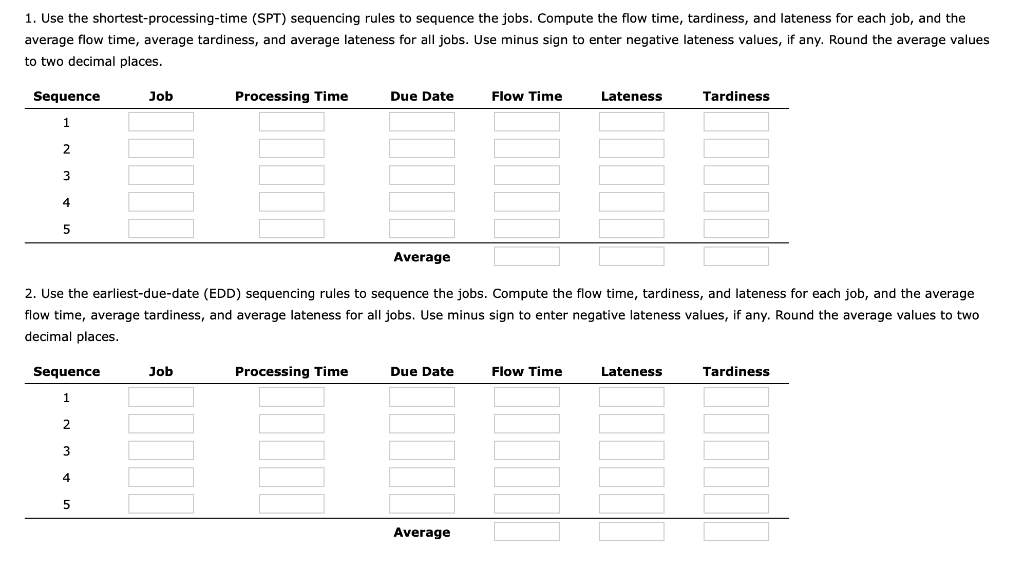
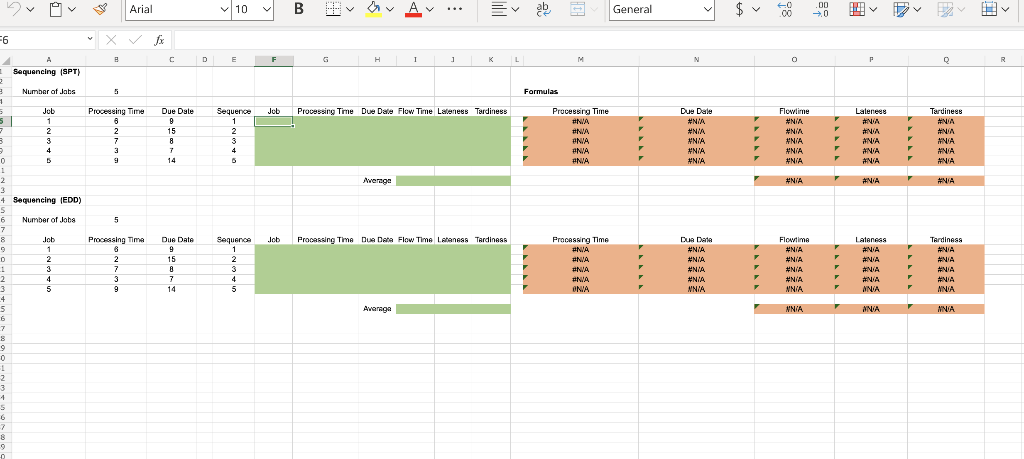
1. Use the shortest-processing-time (SPT) sequencing rules to sequence the jobs. Compute the flow time, tardiness, and lateness for each job, and the average flow time, average tardiness, and average lateness for all jobs. Use minus sign to enter negative lateness values, if any. Round the average values to two decimal places. Sequence Job Processing Time Due Date Flow Time Lateness Tardiness 1 2 3 4 5 Average 2. Use the earliest-due-date (EDD) sequencing rules to sequence the jobs. Compute the flow time, tardiness, and lateness for each job, and the average flow time, average tardiness, and average lateness for all jobs. Use minus sign to enter negative lateness values, if any. Round the average values to two decimal places. Sequence Job Processing Time Due Date Flow Time Lateness Tardiness 1 2 3 4 5 Average 0 Arial 10 y A V = ab, General s] Sequencing (SPT) Number of Jabs - 32 Average Sequencing (EDD) Number of Jaba un >> " +Step by Step Solution
There are 3 Steps involved in it
1 Expert Approved Answer
Step: 1 Unlock

Question Has Been Solved by an Expert!
Get step-by-step solutions from verified subject matter experts
Step: 2 Unlock
Step: 3 Unlock
 Study Help