







Question: This is all that was provided for the question, please let me know what additional information is needed so I can try to ask the
This is all that was provided for the question, please let me know what additional information is needed so I can try to ask the instr to provide them.
Can you explain the depreciation treatment of this case? it'd be great if you can use excel functions to compute any calculations needed. please let me know if you need any additional information. thank you!
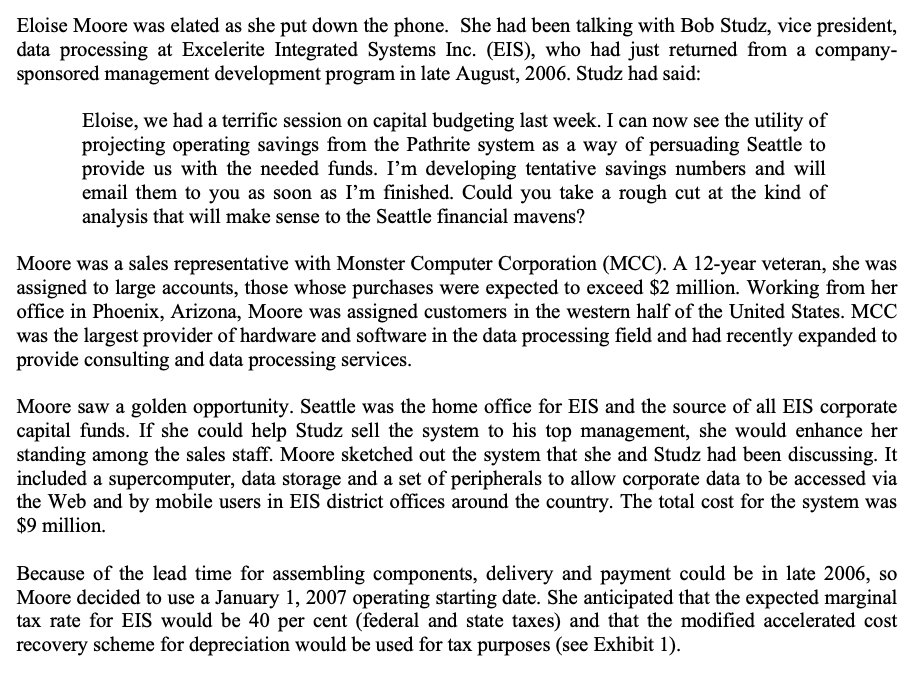
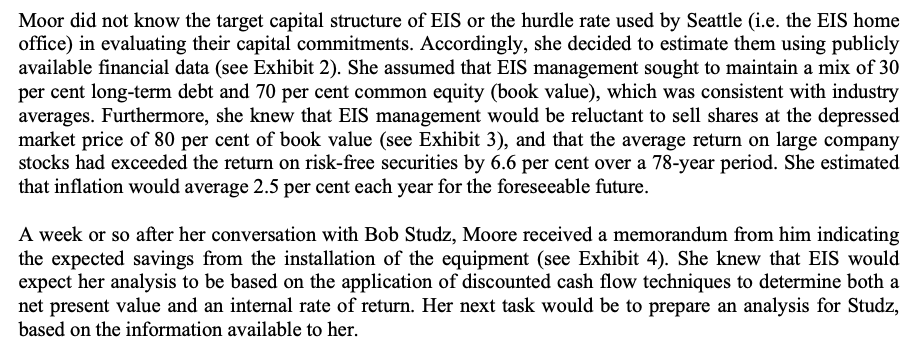
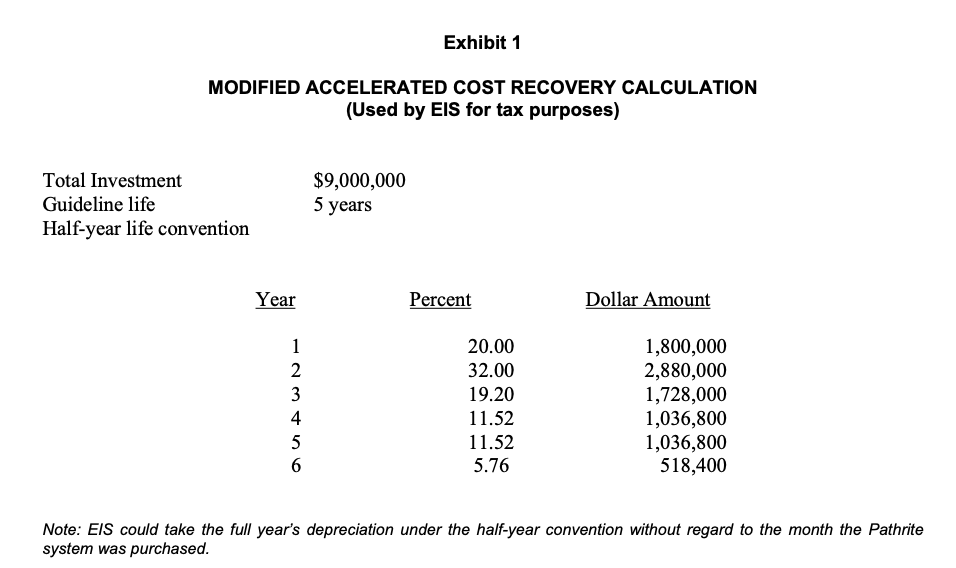
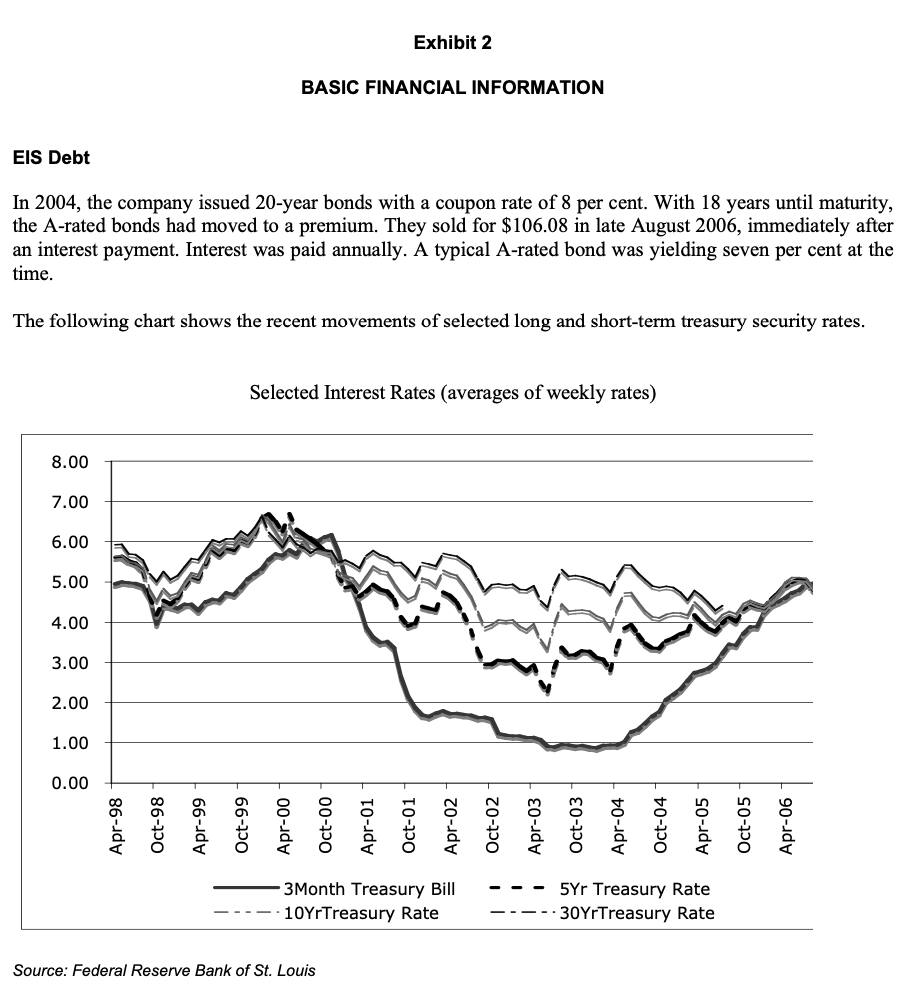
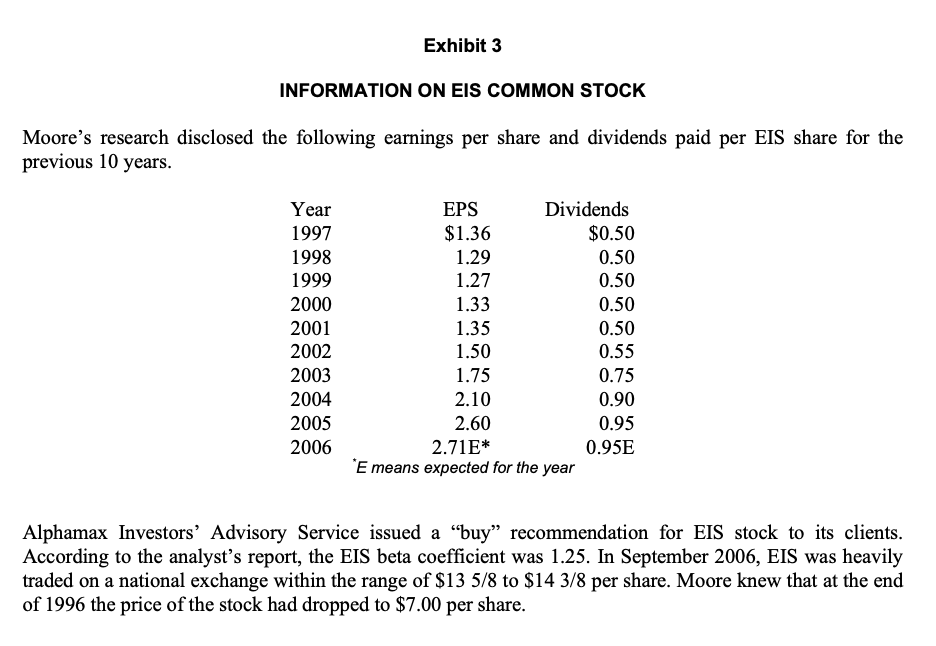 Eloise Moore was elated as she put down the phone. She had been talking with Bob Studz, vice president, data processing at Excelerite Integrated Systems Inc. (EIS), who had just returned from a company- sponsored management development program in late August, 2006. Studz had said: Eloise, we had a terrific session on capital budgeting last week. I can now see the utility of projecting operating savings 'om the Pathrite system as a way of persuading Seattle to provide us with the needed funds. I'm developing tentative savings numbers and will email them to you as soon as I'm finished. Could you take a rough cut at the kind of analysis that will make sense to the Seattle financial mavens? Moore was a sales representative with Monster Computer Corporation (MCC). A 12-year veteran, she was assigned to large accounts, those whose purchases were expected to exceed $2 million. Working from her ofce in Phoenix, Arizona, Moore was assigned customers in the western half of the United States. MCC was the largest provider of hardware and software in the data processing eld and had recently expanded to provide consulting and data processing services. Moore saw a golden opportunity. Seattle was the home ofce for E13 and the source of all EIS corporate capital funds. If she could help Studz sell the system to his top management, she would enhance her standing among the sales staff. Moore sketched out the system that she and Studz had been discussing. It included a supercomputer, data storage and a set of peripherals to allow corporate data to be accessed via the Web and by mobile users in EIS district offices around the country. The total cost for the system was $9 million. Because of the lead time for assembling components, delivery and payment could be in late 2006, so Moore decided to use a January 1, 200'? operating starting date. She anticipated that the expected marginal tax rate for EIS would be 40 per cent (federal and state taxes) and that the modified accelerated cost recovery scheme for depreciation would be used for tax purposes (see Exhibit 1). Moor did not know the target capital structure of EIS or the hurdle rate used by Seattle (i.e. the EIS home ofce) in evaluating their capital commitments. Accordingly, she decided to estimate them using publicly available nancial data (see Exhibit 2). She assumed that EIS management sought to maintain a mix of 30 per cent long-term debt and 70 per cent common equity (book value), which was consistent with industry averages. Furthermore, she knew that EIS management would be reluctant to sell shares at the depressed market price of 80 per cent of book value (see Exhibit 3), and that the average return on large company stocks had exceeded the return on risk-free securities by 6.6 per cent over a 18-year period. She estimated that ination would average 2.5 per cent each year for the foreseeable future. A week or so after her conversation with Bob Studz, Moore received a memorandum from him indicating the expected savings from the installation of the equipment (see Exhibit 4). She knew that EIS would expect her analysis to be based on the application of discounted cash ow techniques to determine both a net present value and an internal rate of return. Her next task would be to prepare an analysis for Studz, based on the information available to her. Exhibit 1 MODIFIED ACCELERATED COST RECOVERY CALCULATION (Used by EIS for tax purposes) Total Investment $9,000,000 Guideline life 5 years Half-year life convention Year Percent Dollar Amount 20.00 1,800,000 32.00 2,880,000 19.20 1,728,000 aUAWNE 11.52 1,036,800 11.52 1,036,800 5.76 518,400 Note: EIS could take the full year's depreciation under the half-year convention without regard to the month the Pathrite system was purchased.Exhibit 2 BASIC FINANCIAL INFORMATION EIS Debt In 2004, the company issued 20-year bonds with a coupon rate of 8 per cent. With 18 years until maturity, the A-rated bonds had moved to a premium. They sold for $106.08 in late August 2006, immediately after an interest payment. Interest was paid annually. A typical A-rated bond was yielding seven per cent at the time. The following chart shows the recent movements of selected long and short-term treasury security rates. Selected Interest Rates (averages of weekly rates) 8.00 7.00 6.00 5.00 4.00 3.00 2.00 1.00 0.00 Oct-05 Oct-04 Oct-00 Oct-02 Oct-03 Oct-01 Oct-99 Apr-01 Apr-06 Oct-98 Apr-00 Apr-04 Apr-99 Apr-02 Apr-05 Apr-98 Apr-03 3Month Treasury Bill - - - 5Yr Treasury Rate 10YrTreasury Rate . 30YrTreasury Rate Source: Federal Reserve Bank of St. LouisExhibit 3 INFORMATION ON EIS COMMON STOCK Moore's research disclosed the following earnings per share and dividends paid per EIS share for the previous 10 years. Year EPS Dividends 1997 $1.36 $0.50 1998 1.29 0.50 1999 1.27 0.50 2000 1.33 0.50 2001 1.35 0.50 2002 1.50 0.55 2003 1.75 0.75 2004 2.10 0.90 2005 2.60 0.95 2006 2.71E* 0.95E '5 means expected for the year Alphamax Investors' Advisory Service issued a \"buy\" recommendation for E18 stock to its clients. According to the analyst's report, the EIS beta coefcient was 1.25. In September 2006, E13 was heavily traded on a national exchange within the range of $13 52'8 to $14 3.8 per share. Moore knew that at the end of 1996 the price of the stock had dropped to $7.00 per share
 Step by Step Solution
There are 3 Steps involved in it
1 Expert Approved Answer
Step: 1 Unlock

Question Has Been Solved by an Expert!
Get step-by-step solutions from verified subject matter experts
Step: 2 Unlock
Step: 3 Unlock
 Study Help