







Question: This is all the information we are given in every question. Background CholesterolLinks to an external site. is essential to the normal function of our
This is all the information we are given in every question.
Background
CholesterolLinks to an external site.is essential to the normal function of our bodies, but too much cholesterol negatively affects health. Cholesterol circulates in the blood, where it accumulates on the walls of arteries and limits the flow of blood. If cholesterol blocks blood vessels severely, a person can suffer aheart attackLinks to an external site.or astrokeLinks to an external site..
Two forms of cholesterol contribute to the total concentration in the blood: high-density lipoprotein (HDL cholesterol) and low-density lipoprotein (LDL cholesterol). HDL cholesterol is absorbed by cells of the liver and used to convert cholesterol into bile salts, which can be excreted from the body through the intestines. LDL cholesterol, however, can accumulate in the walls of arteries, narrowing the path for blood flow and increasing blood pressure. Therefore, doctors closely monitor the concentration of LDL cholesterol in the blood of their patients. In the United States, a concentration of cholesterol greater than 190 mg dL-1would be considered very high. A patient with a high concentration of LDL cholesterol would be treated to prevent heart disease and related illnesses.
Scenario
You are a member of a committee formed to review recommendations for standard medical treatments. Your subcommittee has been assigned to evaluate two common dietary treatments for people with a high concentration of LDL cholesterol - a diet low in cholesterol or a diet low in saturated fats. Additionally, we need your subcommittee to evaluate and recommend an appropriate dose of a drug called a statin, which has been shown to help reduce LDL cholesterol.
To complet e this assignment, take the following steps:
Step 1:Determine how the concentration of LDL cholesterol might exceed the maximum recommended for health.
Step 2:Determine which diet better reduces the concentration of LDL cholesterol in a person's blood.
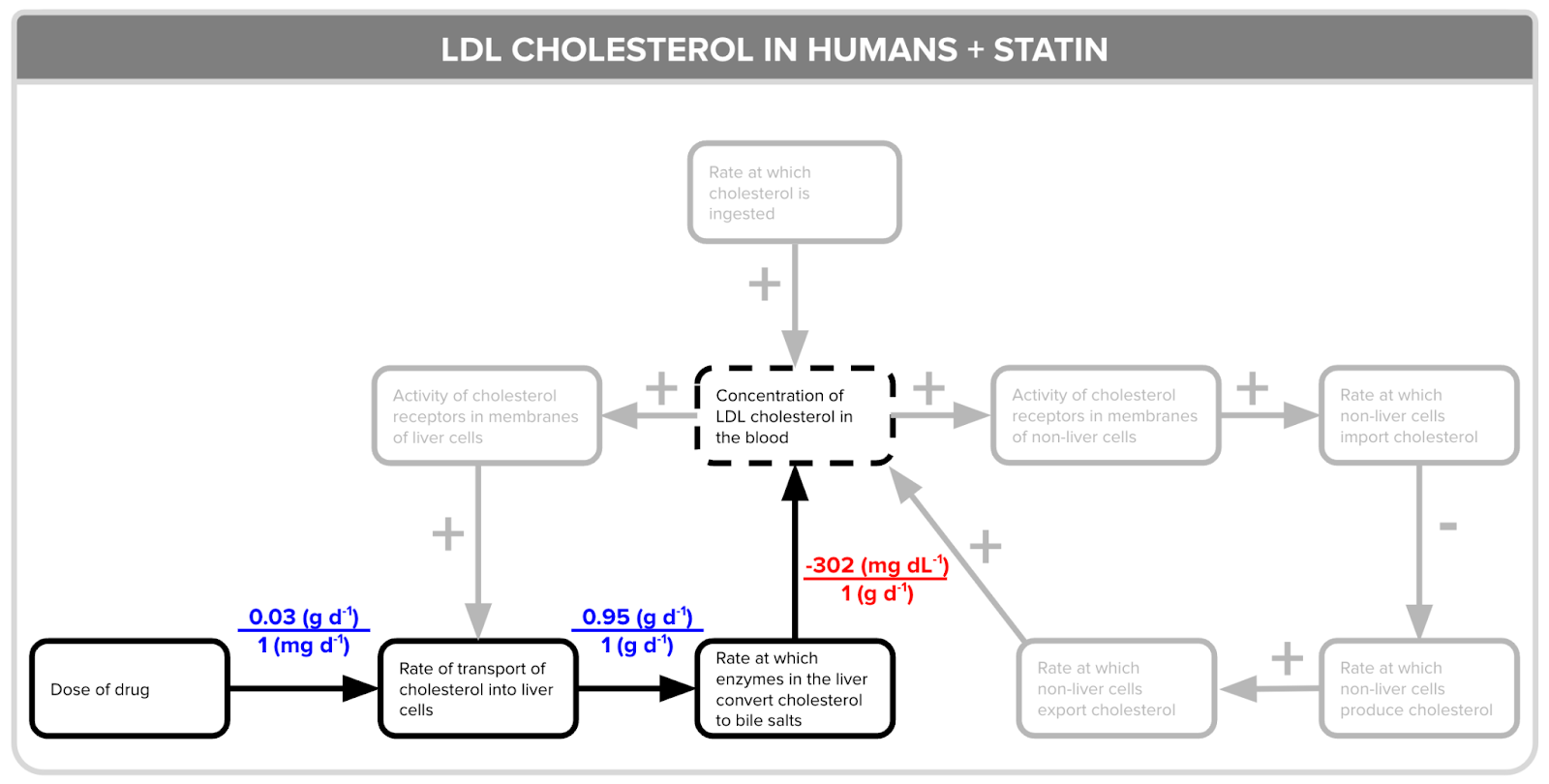
Step 3:Evaluate how statins help to reduce the concentration of LDL cholesterol in a person's blood and recommend an appropriate dose of a statin.
Flag question: Spacer
STEP 1: DETERMINE HOW THE CONCENTRATION OF LDL CHOLESTEROL MIGHT EXCEED THE MAXIMUM RECOMMENDED FOR HEALTH
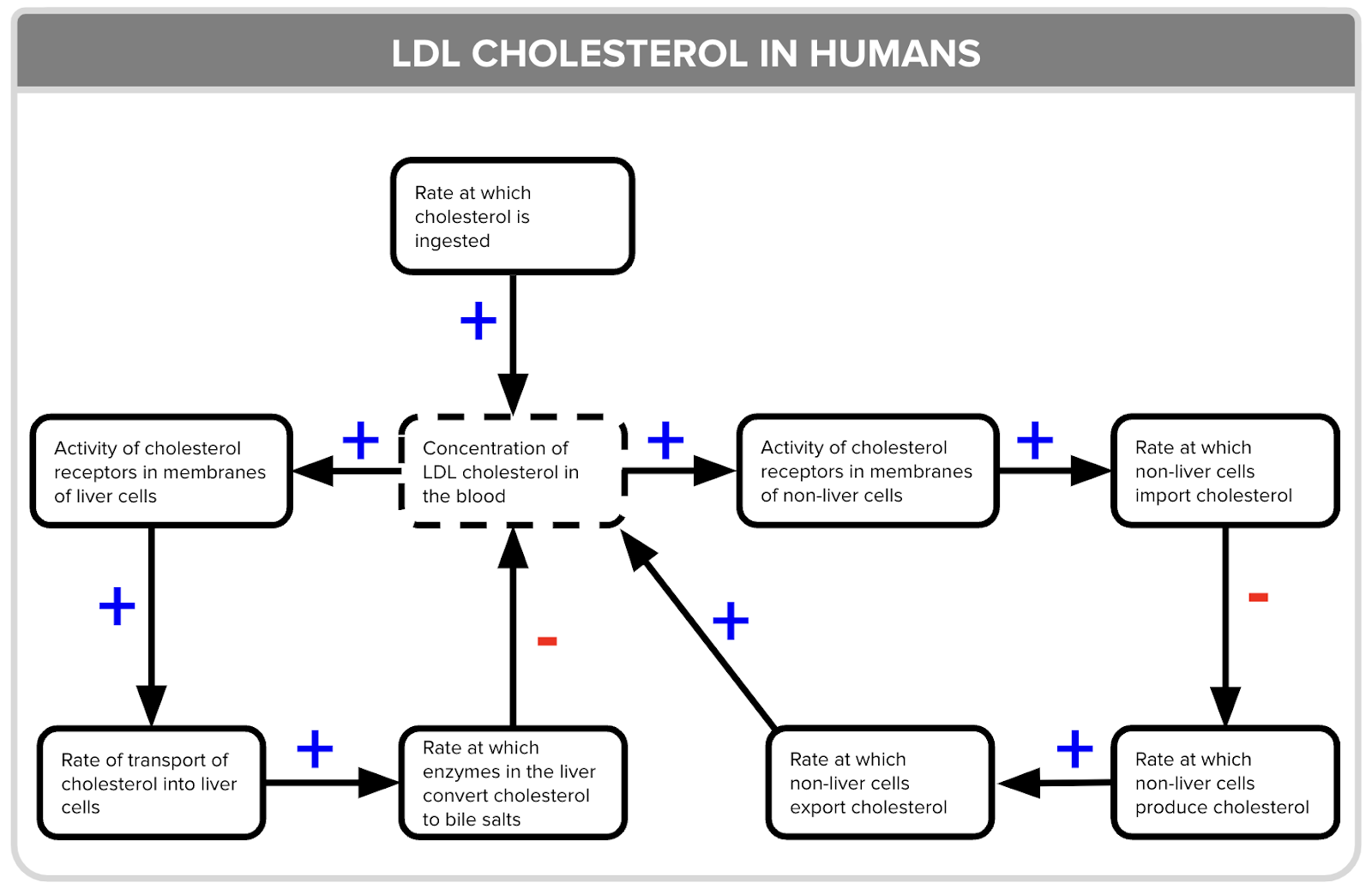
Given the importance of cholesterol to our cells, it should come as no surprise that the human body has a homeostatic system to regulate the concentration of cholesterol in the blood. Figure 1 contains a path model of this system.
Activity of cholesterol receptors in membranes of liver cells Rate ottransport of cholesterol into liver cells LDL CHOLESTEROL IN HUMANS Rate at which cholesterol is ingested LDL cholesterol in I the blood Rate at which enzymes in the liver convert cholesterol to bile salts Activity of cholesterol receptors in membranes of nonliver cells Rate at which nonliver cells export cholesterol Rate at which non-liver cells import cholesterol Rate at which nonliver cells produce cholesterol LDL CHOLESTEROL IN HUMANS + STATIN Rate at which cholesterol is ingested + Activity of cholesterol + Concentration of Activity of cholesterol + Rate at which receptors in membranes LDL cholesterol in receptors in membranes non-liver cells of liver cells the blood of non-liver cells import cholesterol + + -302 (mg dL-]) 1(g d) 0.03 (g d']) 0.95 (g d ') 1 (mg d']) 1(g d' ) Rate at which Rate of transport of Rate at which + Rate at which Dose of drug cholesterol into liver enzymes in the liver convert cholesterol non-liver cells non-liver cells cells to bile salts export cholesterol produce cholesterol
Step by Step Solution
There are 3 Steps involved in it

Get step-by-step solutions from verified subject matter experts
 Study Help