







Question: this is cryptography , please help Symmetric key cryptography provides several modes of operation, including Electronic Codebook (ECB), Cipher-Block Chaining (CBC), Cipher Feedback (CFB), Output
this is cryptography , please help
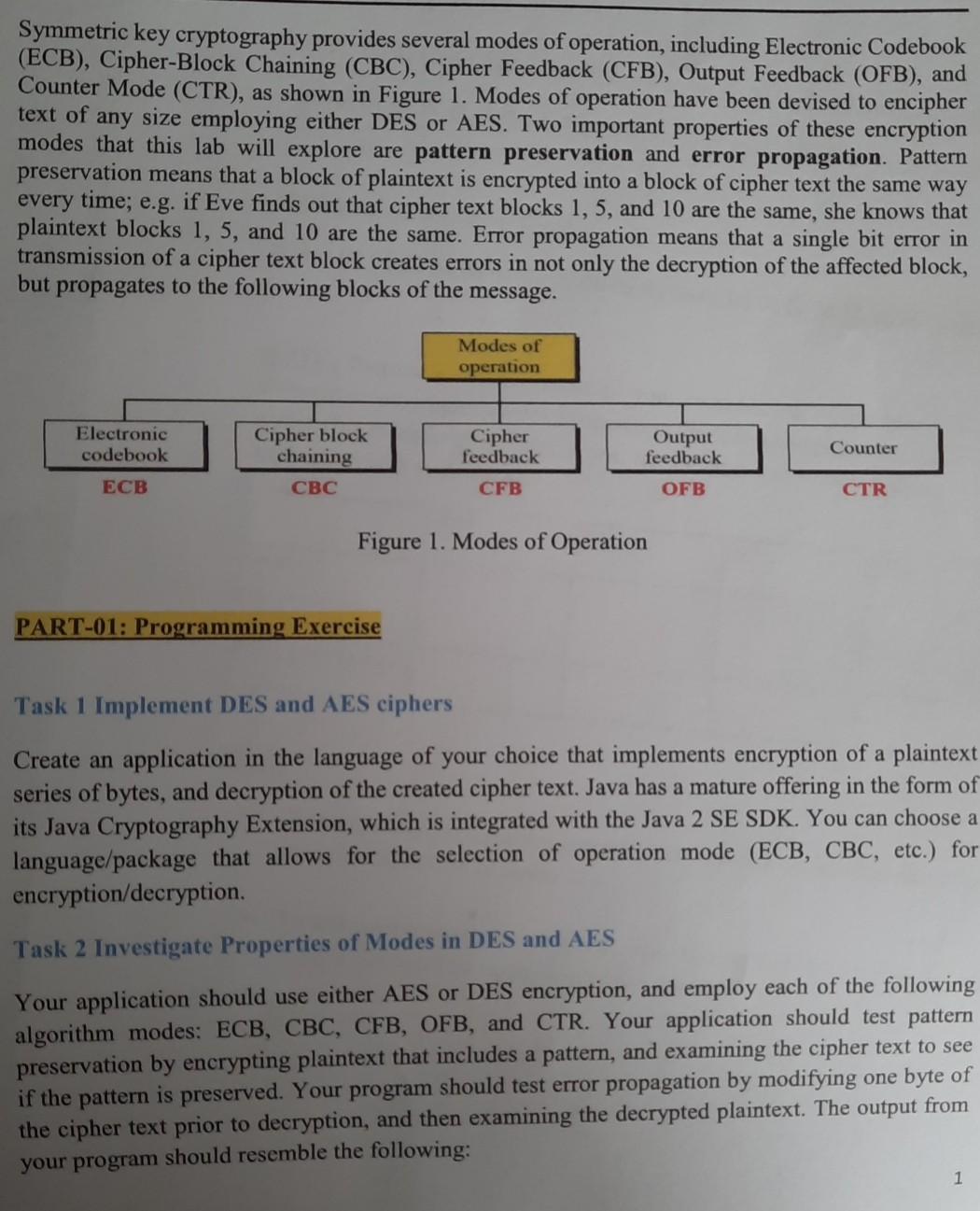
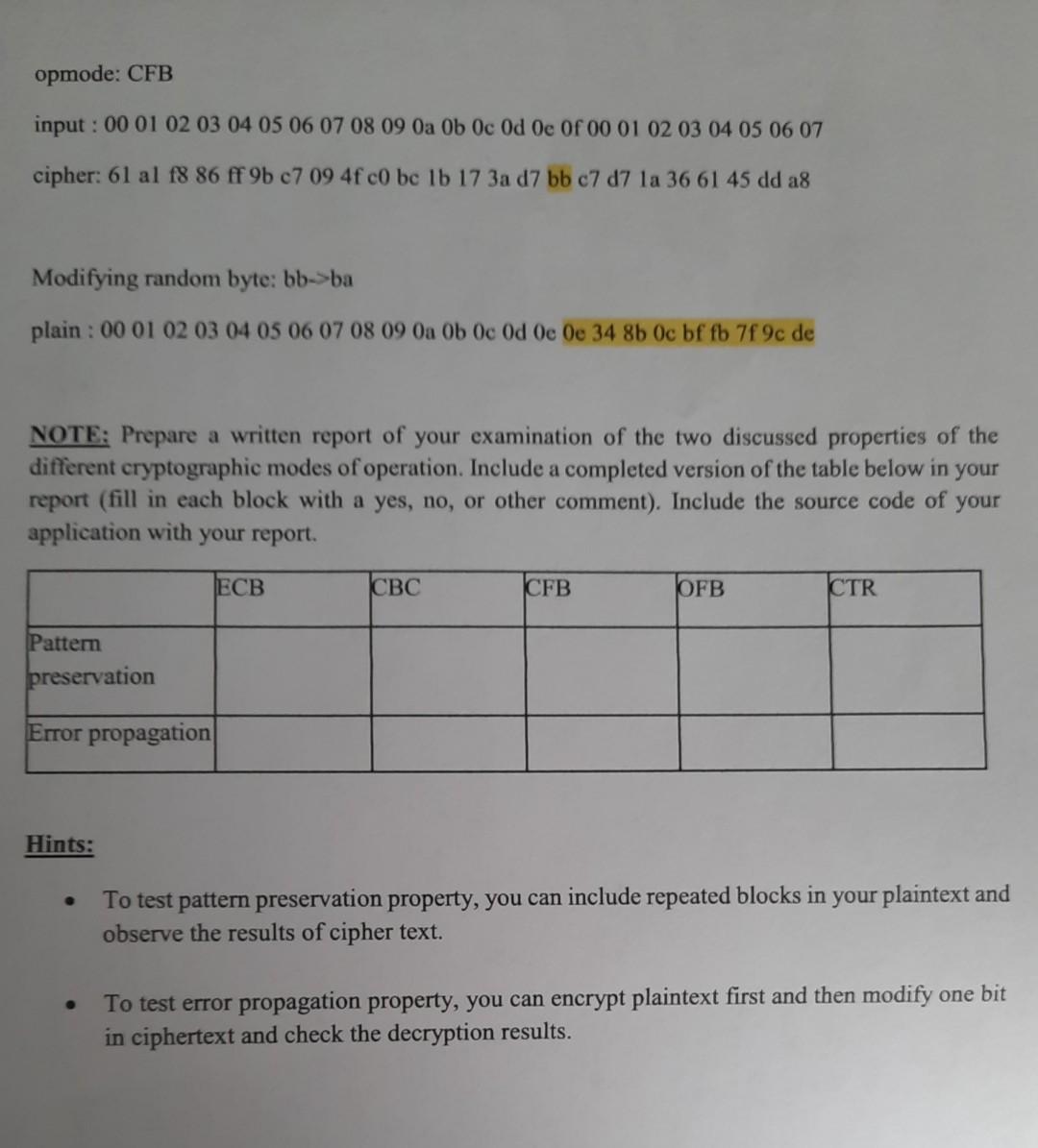
Symmetric key cryptography provides several modes of operation, including Electronic Codebook (ECB), Cipher-Block Chaining (CBC), Cipher Feedback (CFB), Output Feedback (OFB), and Counter Mode (CTR), as shown in Figure 1. Modes of operation have been devised to encipher text of any size employing either DES or AES. Two important properties of these encryption modes that this lab will explore are pattern preservation and error propagation. Pattern preservation means that a block of plaintext is encrypted into a block of cipher text the same way every time; e.g. if Eve finds out that cipher text blocks 1, 5, and 10 are the same, she knows that plaintext blocks 1, 5, and 10 are the same. Error propagation means that a single bit error in transmission of a cipher text block creates errors in not only the decryption of the affected block, but propagates to the following blocks of the message. Modes of operation Electronic codebook Cipher block chaining CBC Cipher feedback Output feedback Counter ECB CFB OFB CTR Figure 1. Modes of Operation PART-01: Programming Exercise Task 1 Implement DES and AES ciphers Create an application in the language of your choice that implements encryption of a plaintext series of bytes, and decryption of the created cipher text. Java has a mature offering in the form of its Java Cryptography Extension, which is integrated with the Java 2 SE SDK. You can choose a language/package that allows for the selection of operation mode (ECB, CBC, etc.) for encryption/decryption. Task 2 Investigate Properties of Modes in DES and AES Your application should use either AES or DES encryption, and employ each of the following algorithm modes: ECB, CBC, CFB, OFB, and CTR. Your application should test pattern preservation by encrypting plaintext that includes a pattern, and examining the cipher text to see if the pattern is preserved. Your program should test error propagation by modifying one byte of the cipher text prior to decryption, and then examining the decrypted plaintext. The output from your program should resemble the following: 1 opmode: CFB input : 00 01 02 03 04 05 06 07 08 09 0a Ob 0c 0d 0e of 00 01 02 03 04 05 06 07 cipher: 61 al 18 86 ff 9b c7 09 4fc0 bc 1b 17 3a d7 bb c7 d7 la 36 61 45 dd a8 Modifying random byte: bb->ba plain : 00 01 02 03 04 05 06 07 08 09 0a Ob 0c 0d 0c 0e 34 8b Oc bf fb 7f9c de NOTE: Prepare a written report of your examination of the two discussed properties of the different cryptographic modes of operation. Include a completed version of the table below in your report (fill in each block with a yes, no, or other comment). Include the source code of your application with your report ECB CBC CFB OFB CTR Pattern preservation Error propagation Hints: To test pattern preservation property, you can include repeated blocks in your plaintext and observe the results of cipher text. To test error propagation property, you can encrypt plaintext first and then modify one bit in ciphertext and check the decryption results. Symmetric key cryptography provides several modes of operation, including Electronic Codebook (ECB), Cipher-Block Chaining (CBC), Cipher Feedback (CFB), Output Feedback (OFB), and Counter Mode (CTR), as shown in Figure 1. Modes of operation have been devised to encipher text of any size employing either DES or AES. Two important properties of these encryption modes that this lab will explore are pattern preservation and error propagation. Pattern preservation means that a block of plaintext is encrypted into a block of cipher text the same way every time; e.g. if Eve finds out that cipher text blocks 1, 5, and 10 are the same, she knows that plaintext blocks 1, 5, and 10 are the same. Error propagation means that a single bit error in transmission of a cipher text block creates errors in not only the decryption of the affected block, but propagates to the following blocks of the message. Modes of operation Electronic codebook Cipher block chaining CBC Cipher feedback Output feedback Counter ECB CFB OFB CTR Figure 1. Modes of Operation PART-01: Programming Exercise Task 1 Implement DES and AES ciphers Create an application in the language of your choice that implements encryption of a plaintext series of bytes, and decryption of the created cipher text. Java has a mature offering in the form of its Java Cryptography Extension, which is integrated with the Java 2 SE SDK. You can choose a language/package that allows for the selection of operation mode (ECB, CBC, etc.) for encryption/decryption. Task 2 Investigate Properties of Modes in DES and AES Your application should use either AES or DES encryption, and employ each of the following algorithm modes: ECB, CBC, CFB, OFB, and CTR. Your application should test pattern preservation by encrypting plaintext that includes a pattern, and examining the cipher text to see if the pattern is preserved. Your program should test error propagation by modifying one byte of the cipher text prior to decryption, and then examining the decrypted plaintext. The output from your program should resemble the following: 1 opmode: CFB input : 00 01 02 03 04 05 06 07 08 09 0a Ob 0c 0d 0e of 00 01 02 03 04 05 06 07 cipher: 61 al 18 86 ff 9b c7 09 4fc0 bc 1b 17 3a d7 bb c7 d7 la 36 61 45 dd a8 Modifying random byte: bb->ba plain : 00 01 02 03 04 05 06 07 08 09 0a Ob 0c 0d 0c 0e 34 8b Oc bf fb 7f9c de NOTE: Prepare a written report of your examination of the two discussed properties of the different cryptographic modes of operation. Include a completed version of the table below in your report (fill in each block with a yes, no, or other comment). Include the source code of your application with your report ECB CBC CFB OFB CTR Pattern preservation Error propagation Hints: To test pattern preservation property, you can include repeated blocks in your plaintext and observe the results of cipher text. To test error propagation property, you can encrypt plaintext first and then modify one bit in ciphertext and check the decryption results
Step by Step Solution
There are 3 Steps involved in it

Get step-by-step solutions from verified subject matter experts
 Study Help